Tommy McGeown and Michael Agnew
TrespassesTommy McGeown and Michael Agnew are linked by a brief meeting that acquires its full weight only after Michael’s murder. Michael’s invitation to a young worker for tea places the two in an ordinary domestic encounter; later, Tommy is convicted of killing the man who had welcomed him inside. The connection remains limited and partly uncertain, shaped less by an established bond than by the terrible contrast between hospitality and violence.
The encounter
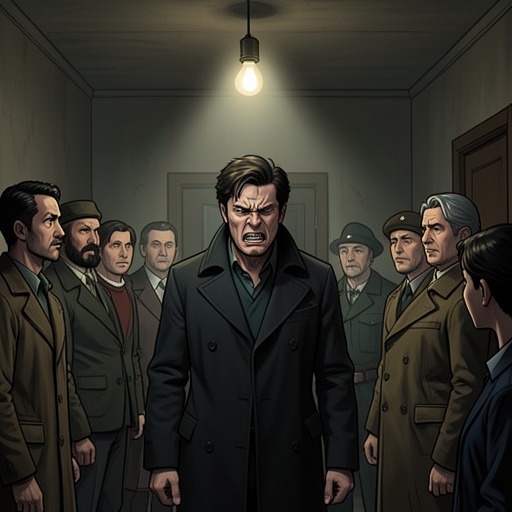
Tommy was working on a house opposite Michael’s, repairing a path. When rain began and Michael knew that his family was out, he asked Tommy in for a cup of tea. Cushla Lavery later imagines Michael moving between the kettle and sink, taking down cups and looking for biscuits, and speaking kindly to an awkward boy in an effort to put him at ease. The scene is presented through Cushla’s reconstruction rather than through a confirmed account of what either man thought or said.
What Tommy may have understood
Cushla wonders whether Tommy noticed a photograph on the dresser showing Michael in his wig and gown and mistakenly concluded that his host was a judge. She cannot know whether that moment suggested an opportunity to him or whether the idea came later, when he told his cousin about his day at work. The distinction matters: the narrative offers a possible path between the tea visit and the murder, but not a definitive explanation of Tommy’s thinking. Cushla’s reflections also connect Tommy’s anger and desire to belong with the prospect of being handed a gun and told to return and kill Michael; these are her attempts to imagine the pressures surrounding the crime, not a recorded conversation between the two men.
Murder and the afterlife of a brief meeting
A newspaper account reports that eighteen-year-old Thomas Ronald McGeown, of Hollyburn Estate, was sentenced to life imprisonment for murdering Michael, a prominent Belfast barrister. Tommy showed no reaction as he was led from the dock. He had refused to recognise the court, offered no defence, and answered no questions; the conviction rested on evidence described as forensic, circumstantial, and damning. The legal outcome establishes the murder, but it does not resolve what passed through Tommy’s mind during the earlier visit.
That unresolved interval defines the relationship. Michael’s welcome may have given Tommy a glimpse of the man he would later kill, while the photograph on the dresser may have altered how Tommy interpreted the encounter; neither possibility is confirmed. The ordinary details Cushla imagines—a cup of tea, biscuits, and an attempt to put a boy at ease—stand against the finality of the life sentence. Their connection is therefore not a friendship or sustained association, but a moment of human contact that the later crime makes impossible to regard as merely incidental.