Cushla Lavery and Michael Agnew
TrespassesCushla Lavery and Michael Agnew have a secret affair whose intimacy is real but whose terms are unequal: Michael has a wife and a separate household, while Cushla is left to fit herself around his limited opportunities. Their relationship moves from protection and tenderness into meetings governed by his availability, then becomes newly legible through police surveillance after his death. Cushla’s eventual recognition that their stories were entangled gives the affair consequences beyond the lovers themselves, while a photograph preserves the closeness they could not openly claim.
Recognition and the Beginning of Intimacy
One early encounter establishes the kind of attention that draws Cushla towards Michael. In a bar, a soldier makes her the target of an unwanted joke; Michael turns towards him and objects that the humor is humiliating because it is not mutual. The intervention does not itself define a relationship, but it shows Michael noticing Cushla’s discomfort and taking her side in public. His response contrasts with the soldier’s attempt to dismiss her unease, and offers a first instance of the protection and recognition that recur in their connection.
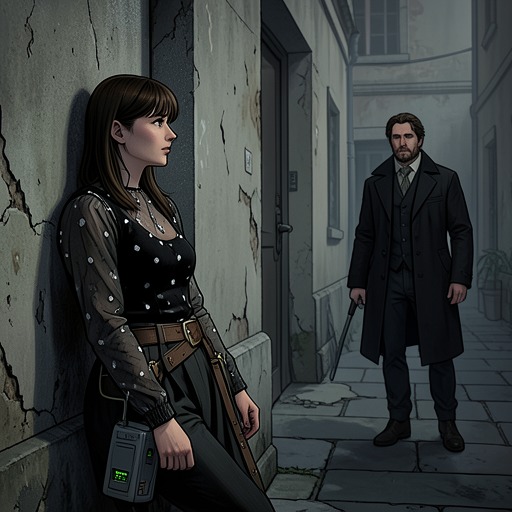
At a gathering, Cushla later finds Michael among friends. He remembers her name, introduces her to Penny and Jim, and presents them as close friends of his. The meeting places her inside his social world, but does not erase the distance between them: she is at a public gathering, where their connection must be managed among other people. The recognition is nevertheless charged for Cushla; seeing him makes her heart lurch. Their closeness develops through such small, socially legible acts before it becomes a clandestine affair.
Michael also speaks of Cushla’s father with personal feeling, telling her that he knew him and thought him a beautiful man. Cushla begins to answer, but the words overwhelm her. His knowledge of her family gives their connection a point of contact beyond attraction, though it also touches grief that belongs to Cushla’s life independently of him. The moment shows Michael’s capacity for tenderness, while making clear that intimacy between them can open feelings neither can easily manage.
Private Meetings and Unequal Terms
A kiss marks a change in their relationship. Before it, Michael takes Cushla’s hand and touches his thumb to her wrist, noticing the blister from her burn and recalling that she had been embarrassed when he ran water over it. The remembered care is specific and attentive. Their kiss is awkward rather than assured; Cushla responds gently, in part to soothe his uncertainty. Michael then says his circumstances are complicated and warns that he will not always be able to get away. The tenderness is mutual, but from its outset it is framed by his constraints and by the expectation that Cushla will have to accommodate them.
That pattern becomes explicit in the arrangements that follow. On Good Friday, Michael calls while Cushla is finishing the traditional meal she has prepared for Gina and asks her to visit him later, after his dinner. She agrees, but feels resentment even as she says yes: he gives her little notice and, in her view, will never offer more than hurried liaisons. Their meetings take place in lay-bys or under pretexts at friends’ houses. Cushla thinks of his wife, but guilt does not displace her jealousy; instead, she imagines the absent woman through a shifting set of invented imperfections. The passage exposes how Cushla manages the moral discomfort of the affair without resolving it. Her imagined rival is less a known person than a figure shaped by the fact that Michael belongs to another household.
The imbalance is also visible in how they leave a private meeting. They depart Michael’s flat in separate cars, with him following Cushla through the city. At a red light she studies him in her mirror: in public, he appears to be an unremarkable middle-aged man in a decent car, which makes the secrecy of what has just occurred feel thrilling. Near her home he signals farewell with two fingers to his forehead and drives away. Cushla then imagines him making himself presentable for his wife while she is still carrying the encounter with her. Their separate cars turn discretion into a practical routine, and the contrast between their brief intimacy and his return to married life sharpens Cushla’s sense of what the arrangement withholds.
Pursuit, Waiting, and Friction
Contact is intermittent, and even the fact of a call can carry uncertainty. Michael tells Cushla that he tried to phone. Gina had reported that the phone rang twice while Cushla was out, but that the caller hung up; Cushla had assumed the calls were pranks and had almost hoped they were not Michael’s. She dislikes imagining him sneaking out to a phone box like an adolescent. The missed connection reveals how secrecy shapes even ordinary communication: neither a completed conversation nor a clear explanation is guaranteed, and the affair can make contact feel both desired and embarrassing.
On another occasion, Cushla is in the pub when Michael arrives looking for her. Her joy at hearing from him quickly dissolves into frustration. She has not heard from him for days, yet he wants her to drop what she is doing and meet him at once. He says he could not get away and asks her to meet; she agrees, but tells him not to park outside the house and says she will walk around the bend. The scene compresses the affair’s repeated bargain: his lack of availability becomes the reason for a sudden request, while Cushla manages the practical risk of being seen. Her willingness to meet does not mean the arrangement satisfies her; affection and resentment coexist in the same response.
Cushla’s later thoughts connect her relationship with Michael to her friendship with Davy McGeown and to the course of events surrounding the McGeown family. She had believed the affair and her support for Davy were proceeding separately. After leaving an RUC interview, she reconsiders that division: Michael’s surveillance, her association with the McGeowns, and the choices each person made now appear to her as strands twisted together. She wonders whether Michael was being followed because of her or had been under observation before she entered his life. She cannot establish the answer. Instead, she revisits contingencies involving Davy, Seamie McGeown, and Tommy McGeown, and asks herself whether Michael would still be alive if he had never met her. This is her anguished counterfactual, not proof that she caused his death.
Surveillance and the Relationship Made Visible
After Michael is shot dead in his family home, the RUC questions Cushla about him. She initially reduces their connection to his visits to the bar and denies meeting him elsewhere. The interview makes the private history of the affair a matter of official inquiry. A photograph placed before her shows her talking while Michael looks towards her; Cushla reads love in his expression. Asked directly whether they had a sexual relationship, she deflects the question and points to the photographs rather than giving a straightforward answer. The evidence of the images unsettles the boundary between what she could keep private and what the authorities had already recorded.
The questioning also fixes a detail of the final period: an officer tells Cushla that her car was seen outside Michael’s house on the night of May 25. She explains that she had been upset because she could not see him and had driven out to check whether he had gone home. The officer then tells her that Michael was shot dead in his family home. The juxtaposition makes the visit part of the police account of the murder, but the evidence supplied does not establish that Cushla knew of, or caused, the killing. What she learns is that her private attempts to reach Michael had been observed and could be placed in an official file.
On leaving the station, Cushla questions how long Michael had been followed and whether the surveillance began before their affair. She recalls that he had seemed harried in his final weeks and had attributed that strain to his movement between two homes and two women. What had looked like the pressure of divided domestic life now seems inseparable from the attention of the police. The photographs do more than expose an affair: they show that the couple’s meetings were visible to observers even when Cushla believed their worlds were separate.
Grief, Recognition, and the Last Image
Later, Victor tells Cushla that Michael had been under pressure to abandon a police-brutality case and that Victor had tried to warn him. Cushla says that Michael could have done without her amid everything else. Victor answers that Michael had been happy in his last months and that Cushla had made him happy. This exchange does not undo the affair’s restrictions or resolve what Michael could have offered her. It gives Cushla an account of her place in his life that she could not obtain from Michael himself. She finally says that she loved him, but could not tell him, and does not know why she is telling Victor. Victor suggests Michael probably understood. Her admission arrives after his death, when love can be spoken but no longer tested by his response.
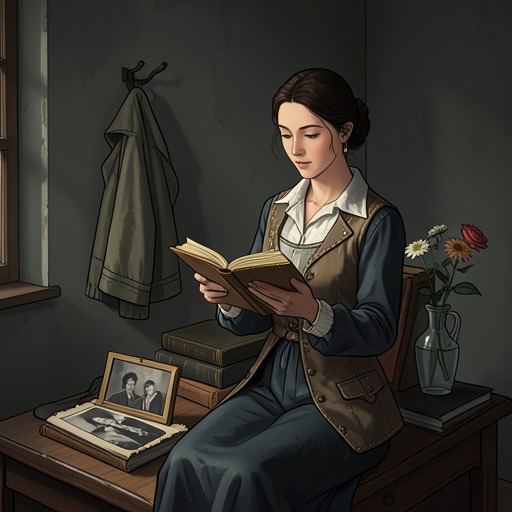
The final photograph brings their intimacy down to a small, nearly completed gesture. Cushla has kept a paper wallet of pictures, but for weeks she has been unable to look at it without remembering the Polaroids laid out during her RUC questioning. Among the photographs from a day in the park is one of Michael at the bar. He is smiling, though their quarrel remains legible in his stooped, defeated posture. Cushla’s hands enter the frame as she slips a beer mat under his whiskey; her fingers almost touch his wrist. Nothing in the picture announces the affair, yet the nearly touching hands hold its private history in plain sight. As Cushla looks at the doorway, she imagines Michael turning away, then gone. The image offers neither reunion nor closure: it preserves a moment of proximity while making his absence final.
Narrative Significance
The relationship is presented through a sustained tension between private feeling and external visibility. In the early scenes, a gesture of defense, a remembered kindness, and an awkward kiss build closeness through small acts. Later, separate cars, hurried arrangements, unanswered calls, and Cushla’s instructions about where Michael may park show how secrecy organizes their time. The affair is not a free-standing romance removed from the setting around it; it occupies the same life in which Cushla teaches, supports the McGeowns, and faces the consequences of police attention.
Its meaning changes after Michael’s death. Before then, Cushla experiences his limited availability as a personal frustration and tries to imagine his wife as an obstacle. After the RUC reveals its photographs and reports that her car was outside his house, she sees that private choices were entangled with forces and relationships she had treated as separate. She cannot know whether their affair brought Michael under observation, or whether surveillance was already underway. The uncertainty matters: the story leaves her with responsibility to examine, not a simple causal verdict. The photograph of their almost-touching hands condenses that unresolved position. Their closeness was real, their circumstances unequal, and the consequences extended beyond the room in which they met.