Michael Agnew and Siobhán de Buitléar
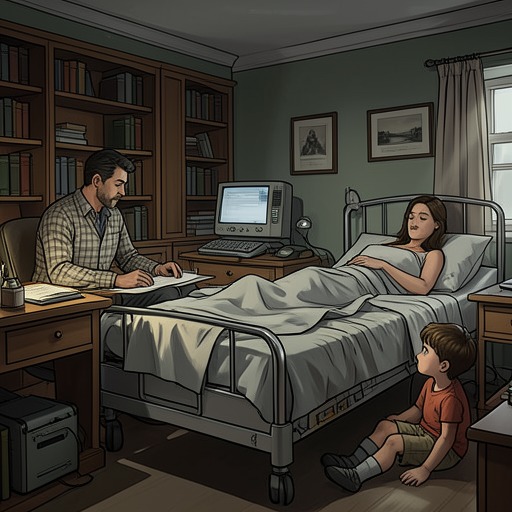
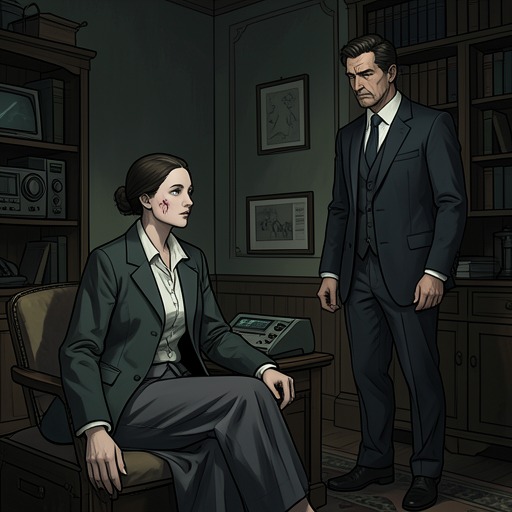
TrespassesMichael Agnew and Siobhán de Buitléar’s marriage shapes the story less through scenes between the spouses than through the evidence of a shared family life and the fragments Cushla Lavery learns about Siobhán. The marriage is at once an intimate fact, a social contrast, and a boundary Michael crosses: Cushla first encounters it indirectly, then recognizes that his departures from her are returns to a wife and son waiting elsewhere.
Identity and Family Context
Cushla initially hears that Michael’s wife comes from a prosperous Protestant family. The detail places Siobhán within a different social and religious background from Cushla’s, but the text supplies no extended account of her family or her own perspective. She is first defined through other people’s shorthand: a wife, a mother, and a woman whose condition is the subject of conversation. This distance matters. The marriage is consequential to Cushla, while Siobhán herself remains largely outside the scenes through which that consequence is understood. A son is part of the marriage’s established family life. Cushla is told that he must be seventeen or eighteen, an age that makes him nearly an adult rather than a small child. The information gives Michael’s marriage a duration and a domestic history beyond the affair, without specifying the son’s name or relationship with either parent. For Cushla, the fact adds a person to the family she had not yet fully pictured; for the reader, it prevents the marriage from remaining an abstract obstacle between two lovers. The novel also links the wife to alcohol through an oblique comparison. As Cushla kisses her mother, Gina Lavery, she notices the smells of perfume, cigarettes, setting lotion, and gin. The narration observes that Michael’s wife is not the only woman fond of drink. It does not establish the extent or circumstances of Siobhán’s drinking, but the comparison quietly places her within a pattern of women whose private distress and habits are glimpsed rather than openly explained. The marriage is therefore not rendered as a settled domestic ideal simply because it stands in contrast to Cushla’s affair.
Traces of Siobhán in Michael’s Home
During a morning in Michael’s flat, Cushla sees the accumulated objects of a life she does not share with him. The kitchen opens off the sitting room, and the dining table is crowded with legal texts and box files bearing handwritten labels. Among them are Liam O’Flaherty’s Dúil and an Irish dictionary by de Bhaldraithe. When Cushla picks up the book, she finds a name written inside in Irish script, with Joanna Butler printed underneath Siobhán de Buitléar. The two forms of the name make the book feel like a surviving personal possession, but the passage does not explain when it belonged to Siobhán or how it came to remain among Michael’s things. Left momentarily alone, Cushla studies the careful handwriting. The fussy letter forms remind her of the way nuns from the south had taught her to write. She wonders about the girl who once owned the book. That act of imagining is one of the few moments in which Siobhán is approached as someone with a past of her own, rather than simply as the wife whose existence limits Cushla’s relationship with Michael. Yet Cushla can only infer that past from a signature; the woman herself is absent. Other details of the flat reinforce the contrast between what Cushla sees and what she cannot know. A drawing of High Street hangs above the record player, while a glass-fronted cabinet holds crystal and old Belleek china. On top of it is a photograph of boys in shorts and rugby jerseys, among whom Cushla recognizes Michael as one of the tallest. The photograph is not identified as a family picture, so it cannot establish anything further about the marriage. Alongside the signed book and the household china, however, it makes Michael’s home appear full of earlier attachments and histories that Cushla can inspect but does not belong to.
The Affair and the Marriage’s Unseen Presence
The marriage becomes most materially present when Michael and Cushla leave his flat after being together. They take separate cars, and Michael follows Cushla through the city. At a red light she checks her mirror, curious about how the pair might look to other people. Michael appears to be an unremarkable middle-aged man in a decent car. That ordinary appearance intensifies the private knowledge of what has just happened: the affair travels through public streets concealed inside an everyday scene. As they near Cushla’s house, Michael touches two fingers to his forehead in farewell and drives away along the hill road. Cushla understands the direction of his departure as a return to his established life. While she had been looking at the pictures on his walls, he had been washing her off himself and making himself presentable for his wife. The sequence makes the marriage an immediate consequence of the intimacy, not merely background information. Michael’s ability to move between the two women’s worlds is visible in the practical transition from the flat to the car and from the affair to the appearance he will present at home. Cushla’s reaction is registered as a physical inward twist rather than explained at length. The gesture of farewell and the ordinary drive away leave her with a sharp awareness of the unequal meanings of the encounter: what has been a secret thrill for her can be cleaned away as Michael prepares to resume the role of husband. The text does not describe a confrontation between Michael and Siobhán, or say what she knows. Its emphasis is instead on Cushla’s recognition that the marriage continues beyond her sight and structures Michael’s choices even when his wife is not in the room.
Recognition and Narrative Significance
Later, Cushla hears Michael’s name mentioned in conversation with Gina. Gina says he was in a very bad mood and remarks that his wife must not be well again, referring to her as Joanna Butler in an imitated brogue. The name makes Cushla feel as though she has been punched: she connects Joanna Butler with the signature she saw and realizes that Siobhán de Buitléar is Michael’s wife. A private clue from the flat and a casual report from home suddenly align. What Cushla had encountered as handwriting becomes an unmistakable relationship. Gina adds that Siobhán has nerves and suggests that marriage to Michael is reason enough. She also describes him, on hearsay, as fond of women and charming. These remarks are not an independent account of the marriage: they are Gina’s interpretation and report, delivered while she discusses Michael’s mood and his wife’s illness. They nevertheless complicate the image of the marriage. Siobhán is spoken of as unwell, while Michael is characterized as a man whose charm extends beyond his marriage; the evidence invites suspicion about the strain surrounding them without establishing a full cause or assigning the wife a voice of her own. The disclosure changes how Cushla understands the intimacy she has entered. The wife is no longer an unnamed absence: she has a name in two forms, a history suggested by a signed book, and a son approaching adulthood. At the same time, the narrative keeps the marriage mediated through Cushla’s discoveries and other people’s remarks. This form makes the relationship’s significance less a matter of what the spouses say to each other than of what their marriage reveals about Michael’s divided life and the limits of Cushla’s access to it.