New England
WaldenNew England is both the immediate audience and the material world examined in Walden: a region where food, shelter, clothing, and fuel define basic needs, where residents might produce their own bread, and where farmers, poor households, laborers, and formerly enslaved people reveal sharply unequal conditions. Its shores and changing terrain also give the book a scale for close observation, joining social criticism to a record of place.
Setting and Material Conditions
The narrator addresses readers said to live in New England, directing attention away from distant peoples and toward their own outward circumstances. The region is not merely scenery: it is the setting in which claims about necessity, work, and independence can be tested against daily life.
The book sorts the necessities of human life in this climate into food, shelter, clothing, and fuel. That practical inventory makes New England’s conditions the basis for a larger question: how much labor is needed to secure the essentials, and how much of life is then left for other purposes? The narrator’s own experience supplies a local measure of what people can manage with a limited set of implements, including a knife, axe, spade, and wheelbarrow.
Agricultural possibility sharpens the contrast between resources and dependence. The narrator argues that New Englanders could readily raise their own breadstuffs in a land of rye and Indian corn, rather than rely on distant and fluctuating markets. The point is not simply that local production is possible; it is that market dependence persists despite that possibility, complicating the region’s image of self-sufficiency.
Work, Poverty, and Social Difference
The farmers of Concord, presented as at least as well off as other classes, have often spent twenty, thirty, or forty years toiling. Their example makes long labor a defining local condition even among people who are comparatively secure. The narrator sets that accumulated work beside the question of what a dwelling ought to provide, challenging the assumption that a life spent obtaining comforts necessarily warrants more elaborate shelter.
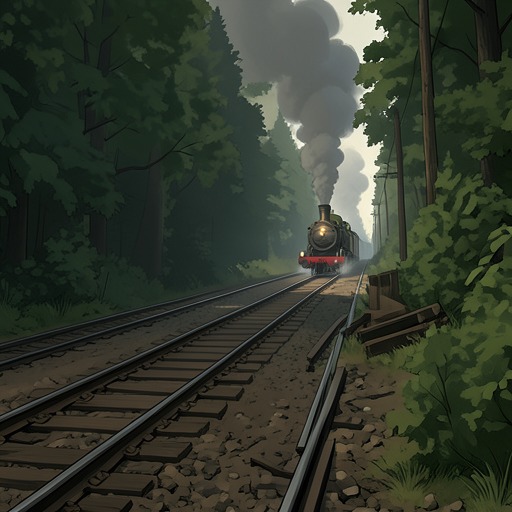
The comparison then turns to the poor. The narrator suggests that some people placed above what he calls the savage condition have been accompanied by others degraded below it, and points to the shanties bordering the railroads as evidence of poverty within a landscape marked by the visible signs of civilization. The railroad therefore serves as more than a measure of improvement: its margins expose who fails to share in the benefits attributed to progress.
Particular lives give this critique a local history. At a cabin, the narrator finds John Field, an Irishman, with his wife and several children; the broad-faced boy is already helping his father at work. The family’s circumstances place household labor and economic hardship beside the narrator’s general claims about necessity, though the account is filtered through his visiting perspective rather than through an extended account in the family’s own words.
Other residents disclose the region’s racial and property relations. Across the road from the narrator’s bean-field lived Cato Ingraham, enslaved by Duncan Ingraham, who had built him a house and permitted him to live there. Down the road, on Brister Hill, lived Brister Freeman, once enslaved by Squire Cummings. The account identifies both men through the history of enslavement and the control of property: even a house or a place to live appears within relations of ownership and permission.
Landscape and Observation
New England’s natural landscape is rendered at a human scale. Walden’s scenery, the narrator says, is beautiful but not grand, and its character may matter most to someone who has frequented the pond or lived beside it. Such familiarity gives landscape its significance: attention and duration, rather than spectacle alone, make a place legible.
The pond’s shore offers a precise physical image of that intimacy. It consists largely of smooth, rounded white stones like paving stones, interrupted by one or two short sand beaches; in many places the bank is steep enough that a single leap reaches the water. The description converts a general claim about beauty into tactile geography, locating the appeal of New England in particular forms and distances.
Observation also follows seasonal change into altered ground. In early 1846, before the ice broke, the narrator surveyed the long-lost bottom of Walden Pond with compass, chain, and sounding line. Later, he took delight in the shapes formed as thawing sand and clay flowed down the sides of a deep railroad cut. The cut makes human infrastructure a passage through which natural processes become visible: winter’s frozen water gives way to moving earth, and the altered landscape becomes an occasion for attention.
Regional Meaning
New England holds together conditions that the book refuses to treat as equivalent: a land capable of producing staple crops, farmers worn by decades of work, poor families beside railroads, and formerly enslaved residents whose homes remain bound to another person’s authority. The region’s material possibilities do not automatically produce independence or shared prosperity.
At the same time, the local landscape resists reduction to an economic backdrop. The pond, its stony shore, and the sand in a railroad cut matter through careful, repeated observation. New England thus becomes the ground on which Walden joins two inquiries: who can meet life’s necessities, and what becomes perceptible when a person attends closely to the place where those necessities are met.