Walden Woods
WaldenWalden Woods is not simply a backdrop to life beside Walden Pond: it is a lived landscape whose remembered roads, dwellings, trees, waters, and seasonal growth reveal how human use changes a place and how the land continues beyond those uses. Thoreau describes woods that once held gardens and familiar inhabitants, a shore and forest later diminished by cutting, and a landscape still active in winter thaw and spring emergence. His account makes local observation a form of environmental history, attentive both to material alteration and to what survives it.
Setting and remembered settlement
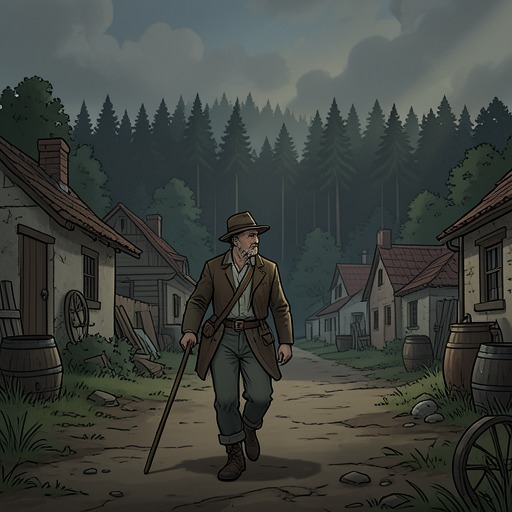
The woods are presented through accumulated traces rather than as untouched wilderness. Within the memory of Concord residents, the road near Thoreau’s house once resounded with the laughter and gossip of inhabitants; the bordering woods were marked by small gardens. The recollection gives the landscape a human history that can no longer be read from the present alone: the road and forest carry evidence of a settled community whose daily life has largely passed from view.
The remains of that settlement are often slight, but specific. A foundation of logs once supported a house along the route from the Stratton, later the Alms-House Farm, toward Brister’s Hill. Across the road from Thoreau’s bean-field stood the home of Cato Ingraham, who was enslaved by Duncan Ingraham. Cato’s cellar-hole survives, though few know of it; a fringe of pines conceals it from travelers, while smooth sumac and an early goldenrod grow in the hollow. The site thus holds two histories together: a life constrained by enslavement and a later landscape in which plants partly obscure the physical evidence of the dwelling.
Other former homes have receded almost entirely into the ground. A dent marks their sites, with cellar stones buried beneath the surface; strawberries, raspberries, thimbleberries, hazel bushes, and sumacs occupy the sunny places. The succession of plants does not restore the people who lived there, but it makes their former clearings legible as a changing ecology. The woods are at once habitat, human record, and a landscape in which traces persist unevenly.
Labor, clearance, and altered scenery
Thoreau’s attachment to the pond’s surroundings depends on a particular arrangement of woods and water. He calls Walden’s scenery humble in scale, beautiful without grandeur, and most meaningful to those who have lived by its shore or visited it over time. The intimacy of that judgment is matched by his description of the shoreline: smooth, rounded white stones form a belt like paving stones, interrupted by one or two short sand beaches; in many places the bank is so steep that a single leap reaches the water. The place’s character comes from its close, specific contours, not from vastness.
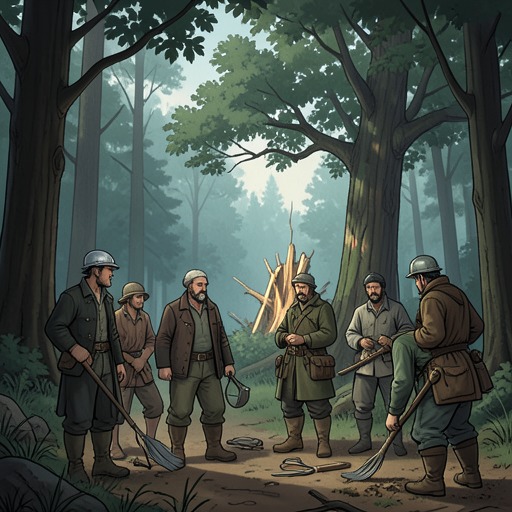
That scenery is also vulnerable to human alteration. After Thoreau left the shores, woodchoppers further laid the woods waste. He anticipates that for years there will be no more wandering through wooded aisles with occasional views of the water. The loss is not only of trees: it breaks the pattern of enclosure and glimpse that had made walking there an experience of forest and pond together. He links the silencing of his own poetic response to the destruction of the birds’ groves, making clearance register as both ecological change and diminished possibility for attention.
The transformation is described through what has disappeared from the pond as well as from its banks. Trunks of trees that once lay on the bottom, an old log canoe, and the surrounding dark woods are gone. Villagers who scarcely know where the pond lies now go there to bathe, a contrast that suggests how familiarity with a place can thin even while its use continues. The account does not treat every human presence as equivalent: remembered homes and gardens, enslaved residence, woodcutting, and recreation leave different kinds of marks and belong to unequal histories.
Work and extraction at the pond
Walden Woods also borders a landscape entered by organized labor and commercial use. In the winter of 1846–47, a hundred men arrived at the pond with teams and a mass of farming-looking equipment, including sleds, plows, and drill-barrows. For sixteen days Thoreau watched a hundred men at work from his window, their teams, horses, and implements turning the frozen pond into a scene that resembled cultivation. The comparison to husbandry makes the ice harvest appear as another kind of working of the land: the pond is treated as a surface from which a useful commodity can be taken.
This labor belongs to the broader human history of the woods and water, but it differs sharply from the small gardens and household traces recalled elsewhere. The arrival of a large workforce and its equipment makes extraction visible at a scale the old cellar holes cannot. Thoreau’s view from the house records not only the work itself but its duration and repeated spectacle: for sixteen days, the pond’s winter surface was occupied by coordinated labor. Set against the later complaint that woodcutters have removed the wooded aisles, the ice harvest adds another pressure on the landscape, one organized around turning natural material into a resource.
Seasonal life and attentive observation
Human changes do not exhaust the woods’ story. Even in midwinter, Thoreau finds warm, springlike swamps where skunk cabbage continues to put forth green growth, and he notes that a hardier bird may already be waiting for spring’s return. These observations qualify any simple picture of winter as lifelessness. Seasonal activity persists in sheltered places, and the woods reward attention to small, local differences rather than broad generalization.
The return of spring is one reason Thoreau gives for living in the woods: he wanted leisure and opportunity to see the season arrive. He follows the pond ice as it becomes honeycombed, and finds particular delight in the shapes made by thawing sand and clay as they flow down the sides of a deep railroad cut. The cut makes transport infrastructure part of the scene, but it also exposes land processes to view. In the flowing earth he sees the planet’s vitality at work, reading the sandy overflow as a kind of living structure. This is a poetic extension of observation, not a claim that the earth is literally an animal: the passage moves from visible forms in the cut to an interpretation of the globe’s inward life.
At night, the woods place human solitude among animal movements. Geese, startled by the light as they drove toward Thoreau’s house, wheeled with hushed clamor and settled in the pond. He shut the door and spent his first spring night in the woods; in the morning he watched the birds from the doorway. The episode gives the landscape its own motion and timing: the inhabitants of the woods are not scenery for a human arrival, but animals whose passage shapes the night and draws the observer back to the threshold.
Significance and ending
The woods in Thoreau’s account are layered rather than static: gardens and dwellings become cellar holes, trees are cut, industrial activity occupies the pond, and vegetation takes root in old clearings, while swamps, birds, thawing earth, and seasonal renewal continue. His attention to both remembered settlement and present ecology makes change visible without suggesting that one can simply recover the past. Some traces are hidden by pines or buried stones; others are lost when trees and the old canoe disappear. Natural growth covers human histories even as observation preserves their outlines.
Thoreau’s first year in the woods ends within this cycle of recurring seasons, and the second is described as similar. He finally leaves Walden on September 6, 1847. That departure closes his residence, not the history of the place: the remembered and altered woods outlast his stay, continuing to register settlement, labor, clearance, and renewal. Walden Woods matters in the narrative because close attention to a particular landscape reveals both its independent life and the human transformations that threaten to make its earlier forms unrecognizable.