Thoreau's imprisonment for refusing to pay the poll tax
WaldenHenry David Thoreau’s imprisonment for refusing to pay the poll tax is a brief arrest with a long political afterlife: a tax refusal brings him into direct contact with the State, and his release returns him to the woods without dissolving the conflict. The episode makes his argument for conscientious noncooperation concrete. When government demands complicity in injustice, the just person must refuse, accept the legal consequence, and avoid becoming an agent of the wrong.
Background and Setting
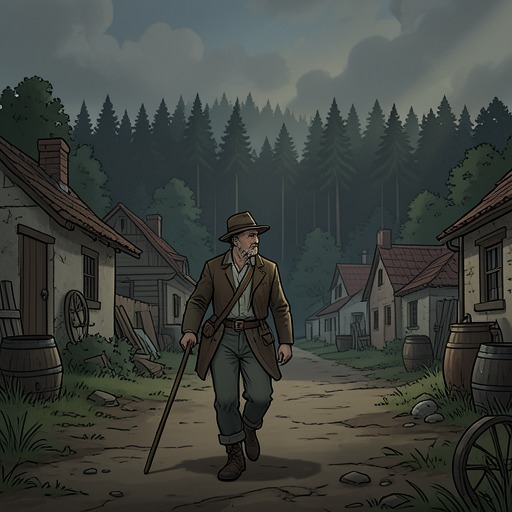
The arrest occurs in the first summer of Thoreau’s stay at Walden Pond, but not in the solitude of the woods. One afternoon, he goes to the village to have a shoe mended. There, he is seized and put in jail because he has not paid a tax and does not recognize the authority of a State that buys and sells men, women, and children as cattle. His refusal is therefore more than a private dispute over money: the authority he rejects is tied to slavery, and paying the tax would mean supporting a political order implicated in that injustice.
The narrative sets the ordinary errand—the trip to the cobbler—against the sudden exercise of state power. The arrest arrives without a battle or a public confrontation; the shoe, the jail, and the unpaid tax bring political principle down to the scale of a single afternoon. The contrast clarifies the stakes: Thoreau is not seeking a dramatic contest, but the routine demand of government makes a decision about complicity unavoidable.
Arrest, Confinement, and Release
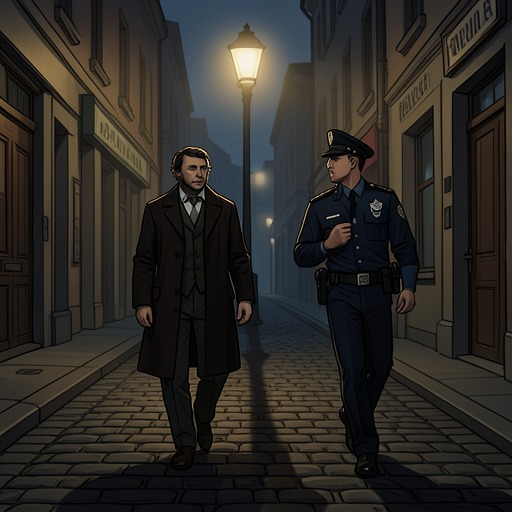
Thoreau says that he might have resisted by force, perhaps with some effect, or run amok against society. Instead, he prefers that society run amok against him, since he considers it the desperate party. His choice makes the jail sentence part of the protest: he does not hide from the consequence of refusing, but neither does he turn refusal into a violent assault on the institutions he opposes.
The confinement is short. The State releases him the next day; he obtains his mended shoe and returns to the woods in time to eat huckleberries on Fair Haven Hill. That sequence gives the episode its distinctive scale. The State can interrupt his movement and imprison him, yet its intervention ends with the completion of the original errand and his return to his chosen life. Thoreau adds that he was never molested by anyone except those who represented the State, making official authority, rather than his neighbors as such, the direct source of coercion in this account.
From Personal Refusal to Political Argument
The later political argument treats the arrest as an instance of a broader rule. Thoreau distinguishes an injustice that may be part of the government machine’s friction from one that requires an individual to become an instrument of injustice against another person. In the latter case, he says, the law should be broken and one’s life should act as counter-friction to stop the machine. The point is not simply to express dissent: refusal withdraws the individual’s cooperation from a wrongful practice.
He describes meeting the American government, or its representative, the State government, directly and face to face once a year, through the tax-gatherer. That limited encounter concentrates the abstract relation between citizen and government into a recurring personal demand. The arrest shows what can follow when he declines that demand: legal power imposes confinement, but the penalty does not persuade him that obedience would have been morally preferable.
Significance and Aftermath
Thoreau’s account connects personal conscience to the public fact of slavery. He does not present prison as evidence that the imprisoned person is unjust; he argues that under a government that imprisons people unjustly, the proper place for a just person may also be prison. The arrest thus reverses the ordinary moral appearance of the cell: confinement marks the state’s coercive response, not a refutation of the prisoner’s judgment.
The episode’s ending is deliberately modest. Thoreau is released, retrieves his repaired shoe, and resumes life in the woods; the account does not claim that this one refusal ends the injustice he opposes. Its significance lies instead in the example and principle it supplies: a person must not lend himself to wrongdoing merely because government makes participation a condition of ordinary civic life. The brief imprisonment becomes a practical demonstration of conscience over civil law and of nonviolent refusal as a way to obstruct injustice without becoming its agent.