Terran Imperial Order
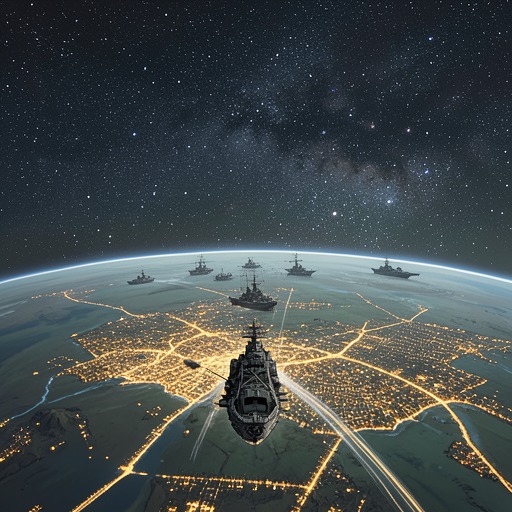
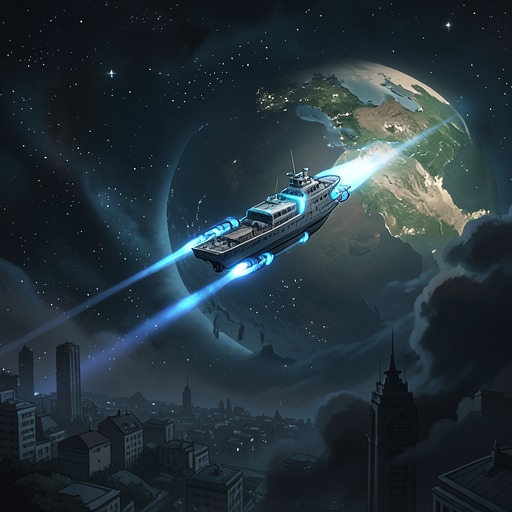
WatchmenTerran Imperial Order is the governing rationale behind the Terran Empire’s claim to rule worlds such as Shinar. In Emil Vorgens’s account, imperial authority is not defended as morally flawless; it is defended as the only institution capable of preventing political fragmentation, economic collapse, and renewed catastrophe on a galactic scale. That argument gives the doctrine both its persuasive force and its deepest contradiction: the same order that supplies law and survival demands cultural submission and answers rebellion with coercion.
Definition and Political Logic
Terran Imperial Order rests on the belief that the Empire is more than a government imposed by conquest. Vorgens tells Fernd Massan that the Terrans carry law, stability, commerce, and order through more than half the galaxy. Even when imperial actions appear evil or arbitrary, he argues, destroying the Empire without replacing it with something better would plunge its subject peoples into chaos and starvation. In this formulation, obedience is justified less by affection for Terran rule than by dependence on the systems that rule maintains.
The doctrine also explains why Shinar cannot simply leave the Empire. Vorgens reasons that if one planet were allowed to withdraw, others would demand the same freedom, making secession the first step toward general disorder. The issue is therefore transformed from a local dispute over Shinar’s political future into a test of imperial continuity. The Empire’s authority depends on treating one rebellion as a precedent whose consequences might spread far beyond the original conflict.
Historical Foundation and Collective Security
Vorgens traces the Empire’s necessity to an unexpected historical inheritance. The Terran Confederation had been fighting for survival against the Masters when the Masters were suddenly defeated and their empire collapsed into Terran hands. The Terrans consequently became responsible for administering, feeding, and governing half the galaxy, despite never having planned to create an empire. Their attempts to let individual star systems govern themselves failed, in his account, and the imperial structure became an imposed necessity rather than a freely chosen design.
The doctrine’s security argument reaches even further into deep history. Vorgens recounts the discovery that an ancient Terran civilization had entered space, encountered a powerful alien race, and been destroyed in a devastating war. The ruins on Mars, the machinery on Titan associated with the Ice Ages, and the remnants of the First Empire all testify to the scale of that earlier collapse. The modern Terrans are therefore building their Empire as solidly as possible because the Others may still exist somewhere among the stars, perhaps even in another galaxy. Imperial centralization is presented as preparation for a future war of species-wide survival: a fragmented humanity could not meet that danger.
This logic makes the Empire simultaneously defensive and expansive. Vorgens maintains that his own people would help fight the Others without being regimented by Terrans, yet he accepts the imperial system because survival has become tied to centralized administration. His homeworld has been transformed into a planet of mines and factories, with a population ten times larger than its own resources could feed. If the Empire collapsed, he estimates that nine people out of ten would starve. The figure turns political loyalty into an economic calculation, while also revealing the dependency created by imperial development.
Order Against Culture and Self-Government
The doctrine is challenged most sharply by Sittas, who asks what the Empire has cost while maintaining itself. In the process of absorbing the former empire of the Masters, the Terrans have obliterated the individual cultures of member planets. On Shinar, the attempt to remake the planet as a Terran-style food-manufacturing world has helped ignite the war. Vorgens acknowledges that his own people have suffered a comparable transformation: their old customs and beliefs survive chiefly as subjects for ancient-history teachers and museum keepers.
This admission exposes the difference between material order and cultural continuity. The Empire may preserve commerce and prevent famine, but it does so by reorganizing entire societies according to imperial needs. Its subjects are protected as populations while being diminished as distinct peoples. The doctrine therefore asks its defenders to regard cultural loss as inevitable or unavoidable, even when that loss is the direct consequence of imperial policy. Sittas’s challenge—whether such destruction truly was unavoidable—marks the unresolved moral question at the center of the system.
The conflict on Shinar demonstrates how quickly the doctrine’s universal claims become coercive. Vorgens is sent to negotiate with the chief of the Komani raiders, offering peaceful return to their homeworld if they immediately stop their raids on Oran VI. He is also instructed to invoke the loyalty of the Komani clan chieftains to the Terran Council, their earlier alliance with the Terrans during the Galactic War, and the claim that attacking imperial territory violates an established friendship. The negotiation treats imperial order as a network of legal obligations and historical debts, but it is backed by the threat that the Empire will crush those who refuse to disarm.
Institutions, Authority, and Enforcement
Terran Imperial Order operates through formal offices as well as military force. Vorgens’s instructions come from Star Watch Headquarters, yet Brigadier Aikens recognizes that centrally processed orders cannot anticipate every detail of a crisis on Oran VI. The tension between universal administration and local judgment is built into the doctrine: imperial rules claim authority across immense distances, while emergencies require officers to interpret or override them.
That tension appears when Vorgens relieves Aikens and assumes command of the Mobile Force. The act is framed as an exercise of Star Watch authority, though Vorgens concedes that whether he had the right to take such authority into his own hands will later be decided by a Star Watch court. The Empire thus presents legitimacy as legal and reviewable even when its officers act through emergency command. Order depends not on the absence of discretionary power but on the promise that such power can eventually be judged by an institution.
The doctrine also encounters competing legal systems. Okatar Kang invokes Komani tradition when he identifies Vorgens as a prisoner who attempted escape and declares that prisoners who reject Komani hospitality are traditionally executed. A Komani officer later claims, in Okatar’s name, that Terrans sheltered by Sittas are prisoners. Sittas rejects that claim outright, while Vorgens later acknowledges that a Star Watch officer’s authority and the legality of using it may be contested in court. These confrontations place imperial law, Komani custom, religious protection, and emergency military jurisdiction in direct competition. The story’s political question is consequently also a question of who has the right to define lawful authority.
Crisis, Containment, and the Cost of Stability
For Vorgens, the most dangerous consequence of Shinar’s rebellion is not merely the loss of one planet. He fears that the anti-imperial movement will spread elsewhere, or that the Komani will attack another imperial world, producing a general war that can no longer be stopped. His insistence that the crisis must remain confined to Shinar shows the doctrine’s strategic priority: preserve the larger order even if the local settlement demands painful concessions.
The food crisis makes that priority concrete. Worlds that depended on Shinar’s production decades earlier are now going hungry to a considerable extent, and the Empire regards the failure of Shinar’s food system as a problem affecting all its neighbors. Vorgens argues that Shinar’s people cannot change their whole way of life overnight, but he also says that the wider consequences of continued failure leave the Empire little time. The doctrine thus converts local autonomy into a regional emergency, making imperial intervention appear necessary while obscuring how imperial development helped create the emergency.
Vorgens embodies the doctrine’s divided conscience. He refuses Massan’s invitation to join the struggle to free Shinar and eventually destroy the Empire, stating that he is a citizen of the Empire, a sworn Star Watch officer, and unable to turn his back on men with whom he has served. Yet he does not deny that the Empire may be evil or that Shinar’s transformation has destroyed a culture. He fights because he believes the imperial system is not the best possible way, but the only way available. Terran Imperial Order is therefore not simply propaganda in his mind; it is an internalized moral and practical framework that makes resistance seem both ethically serious and dangerously irresponsible.
Narrative Significance
As a concept, Terran Imperial Order structures the novel’s central opposition between freedom and survival. Shinar’s rebels demand the right to preserve their own society, while Vorgens fears that political fragmentation will expose millions to famine and leave humanity unable to face the Others. Neither side can dismiss the other without confronting a real danger: imperial unity destroys cultures, but imperial collapse may destroy the populations that depend on it.
The doctrine also reveals how domination can be sustained through consent as well as force. Vorgens does not defend every imperial action, and his acknowledgment of cultural obliteration makes his position more credible than a simple official slogan. He nevertheless accepts the Empire’s definition of necessity: centralized rule becomes common sense because the alternatives are imagined as starvation, chaos, or extermination. The resulting order is powerful precisely because it presents submission as responsible judgment rather than mere obedience.
Terran Imperial Order finally remains an unresolved compromise. Its laws may be just, its institutions may preserve commerce and stability, and its military may be preparing humanity for an ancient external enemy. But its methods turn living cultures into components of an imperial machine, while its fear of precedent denies subject worlds a peaceful path to self-determination. The concept’s decisive significance lies in that contradiction: the Empire survives by claiming that only it can prevent catastrophe, even as its attempt to guarantee survival generates the rebellions that threaten its existence.