
Watchmen
Basic facts
Watchmen is a twelve-issue comic-book series created by the British writer Alan Moore, artist Dave Gibbons, and colorist John Higgins. DC Comics published it monthly from September 1986 to October 1987, followed by a collected single-volume edition in 1987. It is usually described as a superhero graphic novel, but it is also a political thriller, a dystopian narrative, a Cold War drama, and an unusually ambitious experiment in visual storytelling. Its alternate 1985 is shaped by American power, the Vietnam War, the presidency of Richard Nixon, and the constant possibility of nuclear war.
Story
The plot begins with the murder of Edward Blake, a government operative formerly known as the Comedian. Rorschach, a violent and uncompromising former vigilante, suspects that the killing is part of a campaign against retired masked heroes. His investigation brings him into contact with Dan Dreiberg, the second Nite Owl; Laurie Juspeczyk, the second Silk Spectre; the original Nite Owl and Silk Spectre; and Adrian Veidt, once known as Ozymandias. It also draws Jon Osterman, Doctor Manhattan, back into the lives of people from whom his near-godlike abilities have separated him.
The investigation gradually reveals a world in which superheroes have not made humanity morally better. The Comedian embodies state violence and cynical power, while Rorschach turns a rigid belief in absolute good and evil into cruelty. Nite Owl longs for a heroic past but struggles with passivity, Silk Spectre confronts inheritance and identity, and Doctor Manhattan experiences time and matter in ways that make ordinary human attachment increasingly difficult. A murder mystery expands into a crisis involving political authority, public fear, mass destruction, and the fate of the entire world. Its resolution is deliberately unsettling: peace, if it can be achieved, may depend on sacrifice and a carefully maintained lie, leaving readers to judge whether such a bargain is justice, necessity, or another form of tyranny.
Themes and form
Watchmen deconstructs the superhero myth by asking who should supervise people who act above the law, whether extraordinary power can remain humane, and whether violence becomes legitimate merely because it is performed in the name of salvation. It examines heroism alongside narcissism, trauma, prejudice, militarism, political manipulation, and the desire to impose order on an apparently chaotic world. The book does not simply replace heroic certainty with nihilism. Instead, it shows how courage, compassion, vanity, fear, and destructive idealism can occupy the same person.
Its formal design is as important as its subject. Moore and Gibbons use multiple timelines and points of view, recurring images, carefully controlled color, symmetry, and a highly regular nine-panel grid. Rorschach’s journal and other fictional documents broaden the narrative beyond the visible action, while the embedded pirate comic, “Tales of the Black Freighter,” reflects the characters’ anxieties about isolation, terror, and self-justifying violence. The blood-stained yellow smiley face, Doctor Manhattan’s blue figure, the recurring clock imagery, and the contrast between bright comic-book colors and grim subject matter have become among the medium’s most recognizable visual motifs.
Background and legacy
Moore originally developed the project from a proposal involving characters associated with Charlton Comics. The concept was subsequently reshaped around new characters, giving the creators greater freedom to determine the cast’s history and fate. The series appeared during a period when American and British comics were becoming more willing to address adult political and psychological subjects. Alongside other landmark works of the era, it helped establish the graphic novel as a form capable of sustained literary complexity.
Watchmen received major critical recognition, won the Hugo Award, and was selected by Time among the best English-language novels published since 1923. It is widely regarded as the only graphic novel to receive the Hugo Award and as one of the foundational classics of modern comics. Its influence can be seen in later superhero comics, film, television, academic scholarship, and the broader acceptance of comics as serious art. More than a dark revision of costumed adventurers, it remains a study of how stories about heroes can conceal political choices—and how the medium of comics can make those choices visible through structure, rhythm, color, and juxtaposition.
About the Author
Early life and education
Alan Moore was born in 1953 in Northampton, England, and grew up in a working-class family. He attended Northampton School for Boys and became an avid reader of science fiction, fantasy, horror, mythology, and comics while still young. His experience of a provincial industrial town and his awareness of class division later informed his interest in social power, marginalized people, and institutions that claim moral authority. As a teenager he drew and attempted to publish comics. He was expelled from school after producing and distributing an underground publication, and he did not attend university. Instead, he developed his education through extensive reading, self-directed study, drawing, and writing.
Career in comics
Before becoming a professional writer, Moore held ordinary jobs while contributing cartoons and stories to local and underground publications. By the late 1970s and early 1980s he was gaining recognition in British comics, writing for 2000 AD and contributing to science-fiction material including Future Shocks. Beginning in 1982, he wrote Marvelman for Warrior. The series reconsidered the nature of superhero power, identity, morality, and divinity, establishing Moore as a writer who could transform familiar genre conventions into psychologically and philosophically demanding fiction.
Moore then moved into prominent work for DC Comics, most notably his run on Swamp Thing. He expanded a conventional monster premise into a sophisticated exploration of ecology, embodiment, desire, fear, and identity. From 1986 to 1987 he collaborated with Dave Gibbons on Watchmen, his defining work and one of the central achievements of modern comics. The series combined Cold War politics, nuclear anxiety, vigilantism, and the superhero myth with multiple timelines, invented documents, recurring visual patterns, and unusually exacting page design.
His other major works include Batman: The Killing Joke with artist Brian Bolland in 1988; V for Vendetta, begun in serial form in 1982 and completed through later publication in the 1980s; From Hell with Eddie Campbell, produced between 1989 and 1996; Promethea, which ran from 1999 to 2005; and The League of Extraordinary Gentlemen, begun in 1999. These books range across superhero fiction, political dystopia, historical horror, fantasy, and literary pastiche. Moore’s writing is distinguished by dense language, structural experimentation, historical and mythological references, and an interest in the ethical consequences hidden inside apparently entertaining genres.
Later years and reputation
Moore has been outspoken about creator rights, ownership, adaptations, and the treatment of writers and artists by major comic-book publishers. Disputes over contractual control, royalties, and screen adaptations contributed to his withdrawal from much of the mainstream comics industry. He continued to write independently and to pursue broader artistic and literary interests. Although his work is often bleak and violent, it repeatedly examines human connection, imagination, freedom, responsibility, and the possibility of dignity under political or institutional pressure.
As of 2026, Alan Moore is living; there is no death date to report. He is widely regarded as one of the most important English-language comics writers of the late twentieth century. Watchmen, V for Vendetta, Swamp Thing, From Hell, Promethea, and The League of Extraordinary Gentlemen remain in print, studied, adapted, and debated. His influence extends beyond superhero comics into film, television, horror, science fiction, and visual culture. Whether readers accept or reject his politics, Moore’s redefinition of comics form, genre tradition, and the responsibilities of authorship has made him an unavoidable figure in the history of the graphic novel.
StoryFlow
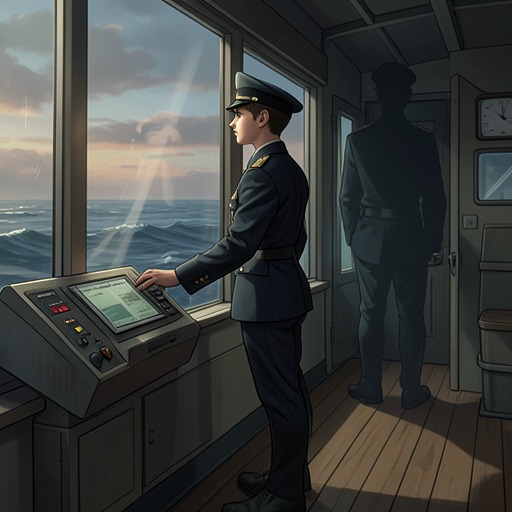
Vorgens Learns Command
This flow traces Emil Vorgens from an uncertain junior officer into a responsible commander who chooses negotiation and limited force over military pride.
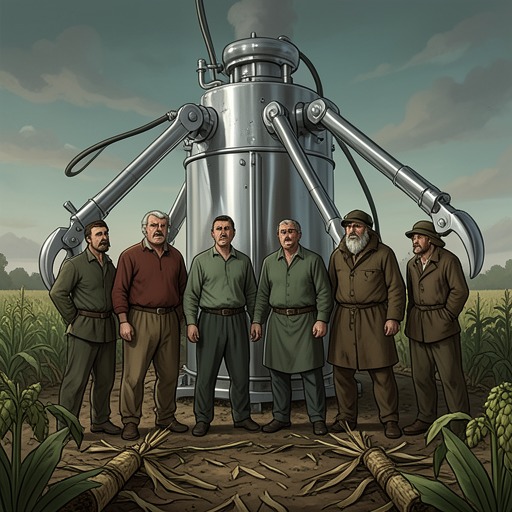
Shinar’s Political Awakening
This flow follows Shinar’s movement from passive colonial resentment through rebellion and negotiation toward the possibility of self-government.
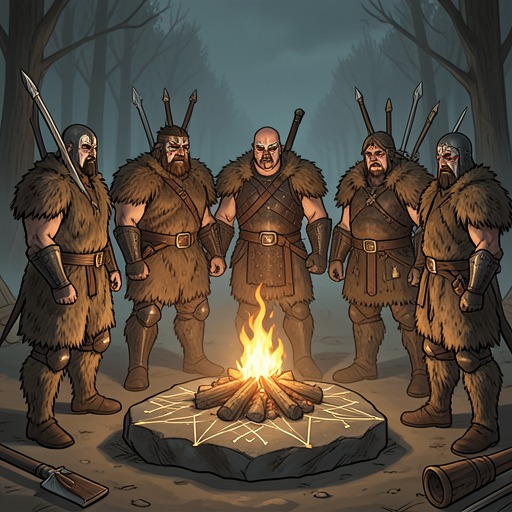
The Komani Gamble
This flow traces how the Komani move from invited allies to imperial challengers and finally lose their strategic position on Shinar.
