Carag mistaken for an amnesiac
WoodwalkersCarag’s supposed amnesia is not a loss of memory but a carefully maintained false identity. While newspapers and television describe him as a mysterious boy found in the forest who cannot remember who he is, Carag knows exactly what he remembers. The lie lets him enter human society, but it also makes those who care for him mistake a chosen silence for a wound that might heal.
The public story and the truth
The press names Carag the “Mystery Boy” and reports that he has emerged from the forest without any knowledge of his identity. The story is dramatically convenient, but false: Carag’s memory works perfectly, and he recalls the day he first received permission to approach humans. The gap between public account and private knowledge is therefore present from the outset. His mystery is not that his past has vanished, but that he keeps it from the people trying to explain him.
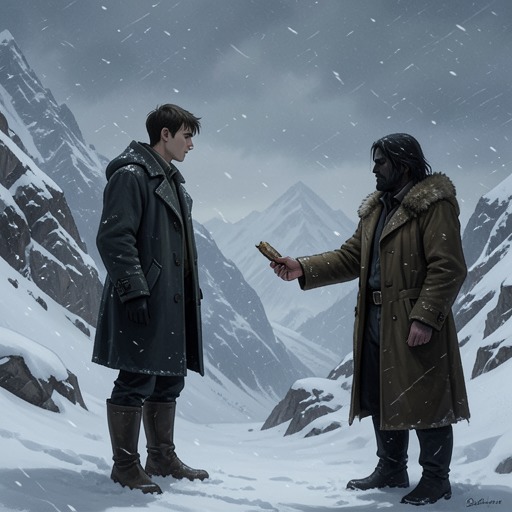
That concealment begins as he leaves his puma family. His human eyes fill with tears when he tries to explain that being only a puma is not enough for him, a feeling his mother cannot fully answer while remaining in her puma form. Before departing, he embraces Mia and his parents. His mother sends him a mental warning to be careful; his father does not return the embrace or look at him. Carag leaves unsettled but determined, carrying the emotional cost of separation into the human identity he is about to construct.
A lie that secures a human identity
Carag retrieves his clothes from the family’s hiding place, descends toward the first buildings in human form, and walks barefoot through woods and clearings to the police station in Jackson Hole. There, he claims not to know who he is or where he comes from. The plan succeeds: the police take him for a human and give him the papers he needs. The amnesia story is thus more than a rumor imposed on him by reporters; it is also the account he deliberately presents to an institution in order to make a place for himself among humans.
By thirteen, he is known as Jay and has begun seventh grade at the Junior High School in Jackson Hole. He starts school only after receiving private lessons at his adoptive family’s home to learn about the human world. His short sand-colored hair, green-gold eyes, jeans, sneakers, and backpack help him pass as an ordinary student, and most people have grown accustomed to him. The ordinary details of Jay’s appearance and routine sit against the extraordinary truth he withholds: the boy who seems to have no past remembers a life his new community cannot see.
The foster family’s mistaken belief
Donald, Carag’s adoptive father, treats the amnesia as real and hopes that some memory will eventually return. When Carag reads a newspaper story about an evacuated campground, Donald eagerly asks whether the article has awakened a recollection. Carag answers that it has not. Donald has tried deep-psychology techniques and even hypnosis, but neither exposes the deception; Carag has remained tenaciously attached to his claim of remembering nothing.
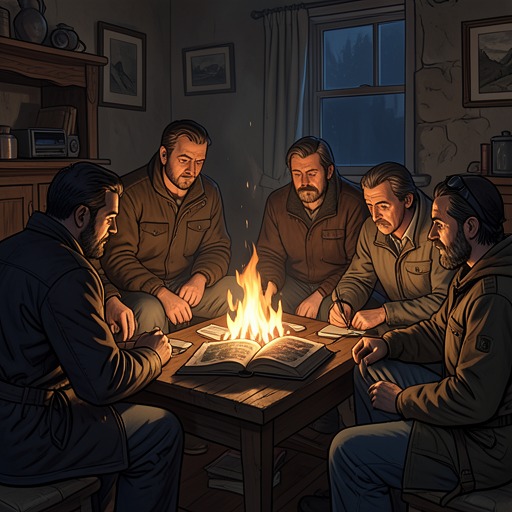
The attempted hypnosis briefly reverses the imbalance between them. Carag is apprehensive about the procedure, yet his feline eyes seem to hypnotize Donald instead: Donald’s gaze goes unfocused, and he mutters that a car accident was his fault. The episode does not recover Carag’s memories, because there are none to recover. Instead, the supposed patient’s hidden nature unsettles the person trying to diagnose him, while Donald’s own concealed burden surfaces in fragments.
The strain of maintaining the cover
Carag’s account of himself depends on managing what different people know. In public, he is the amnesiac boy; at home, Jay is the name used for a human life built on that story; his remembered puma life remains concealed. The deception brings practical benefits—papers, lessons, and a route into school—but it also leaves his adoptive family interpreting his deliberate withholding as helplessness and hoping for a revelation that will never come.
Even the name Jay does not erase Carag’s other identity completely. When visitors approach his room at Clearwater High, he notices that the door bears “Carag” beside Brandon’s name rather than “Jay” and tries to redirect them before they see it. The moment makes visible the small, concrete risks of living through an alias: a name on a door can contradict the human story as surely as a memory might. Yet the central contradiction remains with the adults around him. They believe his past is inaccessible; Carag remembers it, and chooses not to disclose it.