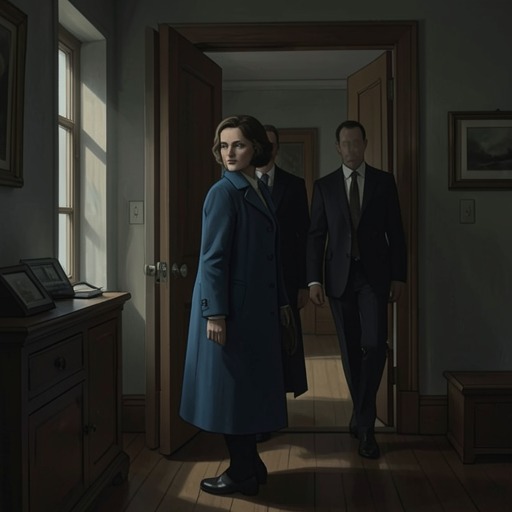
À l’époque, personne ne savait ce qui allait arriver
1Q84The expression “À l’époque, personne ne savait ce qui allait arriver” names the gap between living through history and knowing what it will become. As Aomamé listens to Janáček’s Sinfonietta in a taxi stalled in traffic, a musical theme prompts her to imagine 1926 and to reflect on how later catastrophe is invisible to those who stand on its threshold.
The expression in context
Aomamé recognizes the opening measures of the Sinfonietta, a piece few listeners would identify immediately. Its history gives her a route into the past: Janáček composed the short symphony in 1926, and its principal theme had originally been conceived for a fanfare at a sporting event. The music’s celebratory origin contrasts with the historical weight Aomamé brings to it.
An unknowable future
In her imagined Czechoslovakia, the country has emerged from long Habsburg rule after the First World War. People drink Pilsner beer in cafés, make efficient and finely crafted machine guns, and enjoy a passing peace in Central Europe. Kafka, still little known, died two years earlier; Hitler has not yet appeared to overwhelm the country. Aomamé’s vision holds these circumstances together with the knowledge of what will come, while the people of 1926 possess no such foreknowledge.
The maxim that no one then knew what was about to happen turns that contrast into a concise observation about historical experience. The past can look like a sequence of warning signs when viewed retrospectively, but those living within it encounter only their own uncertain present. Aomamé imagines winds sweeping across the Bohemian plains as her thoughts wander through this history; the music becomes a medium for feeling the distance between an era’s apparent calm and its later fate.
Japan and the return of the pattern
The reflection returns to Japan in 1926, the year Emperor Taishō died and the Shōwa era began. Aomamé connects this change of era with another brief interlude: modernism and democracy had their moment, then fascism would impose its rule. The comparison broadens the expression beyond Czechoslovakia. Different countries and transitions share the same historical limitation: people cannot know, as they live through the present, which forces will soon define it.
The line’s force also comes from its placement within an ordinary scene. The Sinfonietta plays on the taxi radio while the driver watches the endless queue of cars and Aomamé listens with her eyes half closed. From that stalled present, the narrative opens onto distant historical time, then returns with a warning that feels less like prediction than recognition of uncertainty itself.