Les Témoins
1Q84Les Témoins are a Christian-derived religious group whose apocalyptic teachings and practices govern the childhood of one of Tengo’s classmates. Through the girl’s daily exclusions and the Sunday rounds she shares, unwillingly and silently, with Tengo, the group becomes part of a memory about religious obligation, childhood isolation, and the small recognition possible between children assigned adult roles.
Beliefs and Practices
The group is described as a dissident movement originating in Christianity. It preaches the end times, takes biblical writings literally, and teaches that its faithful alone will survive the end of the world as God’s chosen people, living for a thousand years in a blessed world. That promise is paired with strict prohibitions: members refuse blood transfusions, leaving them with very limited chances of survival after serious injury, and are forbidden major surgery.
The group’s evangelizing mission is treated as a sacred obligation, not an optional activity. Children are expected to join their parents once they can walk; from around the age of three, they commonly accompany their mothers from house to house. The girl’s mother carries a cloth bag full of copies of the pamphlet Before the Flood and explains the doctrine to householders. Most doors are shut against them, but the faithful continue for the sake of the rare person who will listen or attend a meeting. The account describes the effort as sustained by the conviction that persistence in an unwelcome duty will bring a more brilliant reward.
The Classmate in Tengo’s Memory
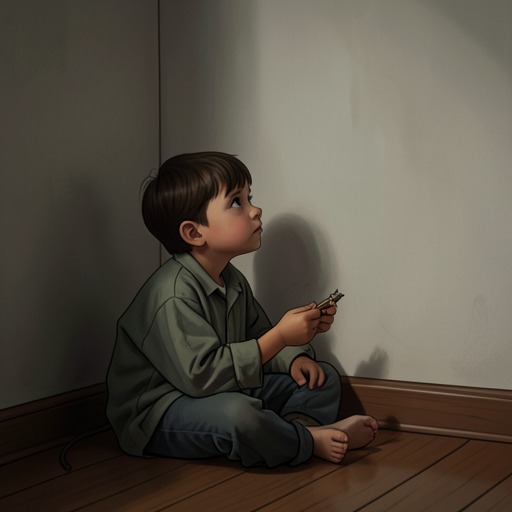
The girl is remembered as quiet and conspicuously self-contained. She has large, beautiful eyes, but her face seems veiled, as though signs of life have been extinguished; her thin lips remain tightly closed, and she speaks in front of others only when necessary. Tengo and the girl are in the same class, yet they never speak or even greet one another.
Her religion sets her apart in public, school-based life. She does not attend Christmas celebrations, school trips or excursions that include a Buddhist temple or Shinto shrine, and she takes no part in the Gymnastics Festival. She also does not sing the national anthem or the school song. Her observances make her conduct seem extreme and incomprehensible to her classmates, deepening her isolation. Before lunch, she must recite a special prayer aloud, clearly enough for everyone to hear. The account suggests that she may not wish to say it in public, but the teaching that Jehovah sees everything makes the obligation impossible for her to evade.
Sunday Rounds and a Shared Burden
Tengo first takes notice of the girl because he recognizes the burden of her weekend routine. On Sundays and holidays, she follows her mother from house to house to preach; on those same days, Tengo accompanies his father on rounds collecting NHK fees. The work differs, but both children are made to ring strangers’ doorbells in the service of a parent’s adult duty.
They encounter one another several times during these rounds and recognize each other without speaking. The girl follows a few paces behind her mother, who carries the pamphlets and usually an umbrella. Tengo sees a fleeting light in the girl’s eyes when they cross paths. Their parents are absorbed in their respective tasks—his father in collection targets, her mother in preaching the approaching end of the world—so the children exchange only brief glances. Tengo sympathizes with her because he understands that the assigned role wounds a child’s heart, even though he never finds an opening to approach her.
Prayer, Memory, and Narrative Significance
Years later, Tengo can still recall the words of the girl’s prayer. Its plea for God’s Kingdom to come prompts his childhood speculation about what that kingdom would be like, including whether it would have an NHK and require payment of its fees. The thought turns the grand promise of another world into a child’s wry comparison with the work imposed on him every Sunday. The prayer remains in his memory not as doctrine alone, but as language heard in the same rounds that connected the two children.
The episode is presented through Tengo’s recollection, which preserves both the girl’s visible difference and his limited knowledge of her. He never speaks with her, and the narrative does not claim access to her private feelings; instead, it sets her compulsory public prayer and silent separation beside Tengo’s own Sunday obligation. Les Témoins therefore matter here through the concrete pressures their practices place on a child and through the slender, wordless recognition that survives between two children who cannot choose how their Sundays are spent. This recalled account concerns Les Témoins and should not be conflated with the Pioneers, the separate religious community described elsewhere in the novel.