Event 1
The 1905 Russian Revolution

[The 1905 Russian Revolution](entity:event-recall-event-1905-21a3c2020305) is presented as a failed revolt whose aftermath forms the subdued political climate surrounding [Count Alexander Ilyich Rostov](entity:character-recall-character-count-alexander-ily-83aa9b72a1d2)’s early poetry. The novel gives no account of the uprising’s course; instead, it shows how the event is remembered and interpreted through the later reception of Rostov’s poem *[Where Is It Now](entity:expression-recall-expression-where-is-it-now-4e350eab35e6)?*.
## The Failed Revolt and Its Aftermath
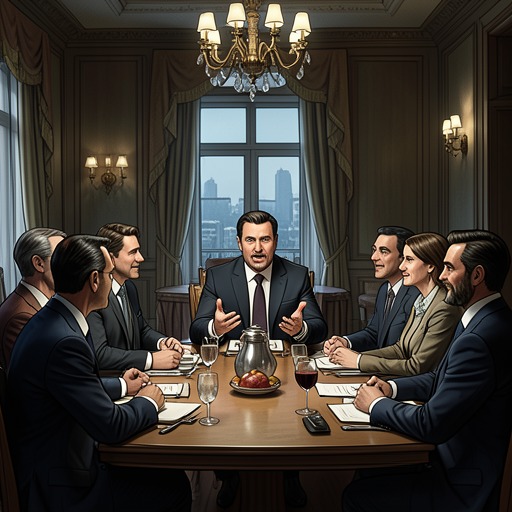
During an interrogation before the Emergency Committee, Prosecutor Vyshinsky places Rostov’s 1913 poem in the years following the failed revolt of 1905. He describes those years as more subdued, making the uprising a historical point of reference rather than a directly narrated episode. The evidence establishes the revolt’s failure and its place in the political atmosphere that followed, but does not specify its participants, actions, or immediate consequences.
## A Poem Read as a Call to Action
Vyshinsky tells Rostov that many readers considered *Where Is It Now?* a call to action. Rostov accepts the broader principle behind that interpretation, answering that all poetry is a call to action. The exchange links the failed revolt to the poem not by claiming that the poem recounts the event, but by showing how readers could hear political urgency in a work written in its aftermath.
Rostov identifies the poem’s origin as the south parlor at [Idlehour Estate](entity:location-recall-location-b8c27227fcf6), the Rostov family estate in [Nizhny Novgorod](entity:location-recall-location-5f6818c48b0d). He describes its composition as something the poem itself demanded, while he happened to be sitting at the particular desk on the particular morning. In the interrogation, this account of poetic inspiration sits beside the prosecutor’s political reading: the poem’s meaning is not treated as private property, but as something that can acquire public force in a charged historical climate.
## Retrospective Historical Meaning
The novel frames historical turning points as judgments made with the benefit of hindsight. In that account, dates become markers by which later observers identify decisive changes. The failed revolt of 1905 functions in this way as a landmark behind the poem: the uprising itself is not staged, but its remembered failure lends context to the subdued years in which the poem appeared and to the later claim that it called readers to action.
Event 2
Russo-Japanese War ending in 1905
The [Russo-Japanese War](entity:time-recall-time-7207e087dbfa) is recalled chiefly through its 1905 peace settlement, the Treaty of Portsmouth, and through the novel’s use of that settlement to connect national upheaval with private memory. Its ending marks a brief historical interval of peace, while a photograph of the delegates gives the event a personal connection to [Grand Duke Demidov](entity:character-recall-character-grand-duke-demidov-02f3644cbedc) and the Rostov family.
## The War’s End and Its Historical Measure
In September 1905, members of the delegation signed the Treaty of Portsmouth to end the Russo-Japanese War. The novel later uses that peace as a chronological measure: by the time the Count raises a glass to the health of the nation, seventeen years have passed since the treaty. Those years, the narrative observes, brought [Russia](entity:location-recall-location-e36341713c23) a world war, a civil war, two famines, and the [Red Terror](entity:event-recall-event-d59e4118f1df). The settlement therefore stands less as a claim that peace had secured stability than as a marker against which the country’s subsequent upheavals can be counted.
## The Treaty in a Photograph
The treaty’s delegates reappear in a black-and-white photograph kept in a long, narrow frame atop a familiar bookcase. [Mishka](entity:character-recall-character-mishka-58198ebf8709) studies the formally arranged Russian and Japanese representatives, whose high collars, moustaches, and bow ties give the image a composed, official air. Their expressions suggest accomplishment, yet the narrative places an irony beside that appearance: the delegates have ended, with a stroke of a pen, a war begun by men like themselves. The photograph makes diplomacy visible as both ceremony and aftermath, compressing a conflict and its negotiated conclusion into a single domestic object.
## Grand Duke Demidov and Family Memory
Among the delegates, just left of center, stands Grand Duke Demidov, identified as the Tsar’s special envoy. His presence connects the public history of the treaty to the Count’s family past. Grand Duke Demidov had represented Russia at Portsmouth and was also the Count’s godfather and guardian after the Count’s parents died. The photograph thus records more than a diplomatic gathering: it preserves an image of a man whose public service and private responsibility intersected in the Count’s life.
## Historical Remembrance
The war’s ending is recalled from later moments rather than presented as a battlefield episode. Its significance comes through the contrast between the delegates’ formal image and the instability that followed, and through the way the photograph carries national history into a family setting. The treaty’s memory gives the novel a compact emblem of how political events persist: first as public milestones, then as objects and relationships through which later generations encounter the past.
Event 3
World War I

[World War I](entity:event-recall-event-dc540822680c) is a defining part of the upheaval surrounding [Count Alexander Ilyich Rostov](entity:character-recall-character-count-alexander-ily-83aa9b72a1d2): it frames [Russia](entity:location-recall-location-e36341713c23)’s troubled recent history and gives a private episode of violence a later, fatal conclusion. The novel presents the war through both broad historical reflection and Rostov’s memory of one man whose injury did not keep him from returning to the front.
## Background and Place in Russia’s Recent History
In reflecting on the years since the Treaty of Portsmouth ended the [Russo-Japanese War](entity:time-recall-time-7207e087dbfa) in 1905, Rostov counts World War I among the successive crises Russia had endured. By the time of his toast to the nation, that list also included the civil war, two famines, and the [Red Terror](entity:event-recall-event-d59e4118f1df). The war thus belongs to a sequence of upheavals that, in his view, had spared no one, regardless of political allegiance or whether personal circumstances had improved or worsened.
## Rostov’s Personal Connection to the War
Rostov’s recollection gives the war a personal history: before it began, he had shot a Hussar officer during a confrontation and then bound the man’s wound and driven him home in his overturned troika. The officer survived, but his right arm was left lame, forcing him to surrender his commission. When his father filed an official complaint, Rostov’s grandmother sent him to [Paris](entity:location-recall-location-657453741ed3), following the custom of the time.
The injury did not end the officer’s military career. When war broke out later that summer, he insisted on returning to lead his regiment despite his damaged arm. At the [Second Battle of the Masurian Lakes](entity:event-recall-event-8468f8bcef34), an Austrian dragoon knocked him from his horse and killed him with a bayonet. The memory links Rostov’s earlier act of violence to a death in battle without making the two events equivalent: Rostov had helped the officer survive the shooting, yet later carried an enduring sense of guilt for the chain of events.
## The War as Retrospective History
World War I reaches the reader not through a battlefield scene but through its aftermath and its place in memory. A conversation looks back from the later consequences of the Hussar’s death to the earlier shooting, then outward to a war that had already unsettled Russia. This retrospective movement makes the war both a historical rupture and the setting in which a personal story reaches its end: the officer’s return to his regiment leads not to recovery of his former life but to his death at the Second Battle of the Masurian Lakes.
## Responsibility and the Limits of Guilt
After hearing how the Hussar’s injury, return to service, and death followed one another, Rostov’s companion distinguishes responsibility from the burden Rostov has placed on himself. He regrets that the officer died in battle but tells Rostov that he has assumed more than his share of guilt. The exchange does not undo the connection between Rostov’s earlier violence and the officer’s later fate; instead, it makes that connection the subject of moral judgment, asking where responsibility ends when a surviving man chooses to return to war.
Event 4
Russian Civil War between Reds and Whites

The [Russian Civil War between Reds and Whites](entity:event-recall-event-2e8848dd8381) is invoked as one item in a compressed history of national upheaval. The Count places it among the crises that had touched [Russia](entity:location-recall-location-e36341713c23) in the seventeen years since the Treaty of Portsmouth, making the conflict part of the shared burden behind a gathering otherwise marked by celebration.
## Place in a Period of Upheaval
The reference is anchored to September 1905, when the Treaty of Portsmouth ended the [Russo-Japanese War](entity:time-recall-time-7207e087dbfa). In the seventeen years that followed, Russia had experienced a world war, the Russian Civil War between Reds and Whites, two famines, and the [Red Terror](entity:event-recall-event-d59e4118f1df). The narration gives no account of the Civil War’s course; its force here comes from its place in this accumulating list of hardships.
## Political Division and Shared Hardship
The Count recognizes that the guests’ good cheer cannot be explained solely by his narrow escape. Their circumstances and political leanings differ: some may be left or right, Red or White, and personal fortunes may have improved or worsened. Yet the history he recalls has spared none. The conflict therefore belongs to a reckoning that crosses political lines rather than to an account of one faction’s victory or loss.
## Meaning in the Gathering
Against this background, the proposed toast to the nation is not merely a celebration of the evening. It acknowledges a country emerging from years in which war, famine, and political terror had affected people across divisions. The Russian Civil War between Reds and Whites is significant in the passage as part of that collective history: named briefly, but placed among the forces that make shared endurance—and a toast to the nation—meaningful.
Event 5
Red Terror

The [Red Terror](entity:event-recall-event-d59e4118f1df) is invoked as part of the succession of national catastrophes that reshaped [Russia](entity:location-recall-location-e36341713c23) between the end of the [Russo-Japanese War](entity:time-recall-time-7207e087dbfa) and the Count’s later life under Soviet rule. The novel does not dramatize the terror as a discrete episode; instead, it gives the name weight through its place in a compressed history of upheaval and through later scenes in which political authorities make violence an explicit instrument of control.
## Historical Context
In September 1905, the Treaty of Portsmouth ended the Russo-Japanese War. Seventeen years later, as the Count received friends who were celebrating his narrow escape, he reflected that Russia had endured a world war, a civil war, two famines, and the so-called Red Terror in the intervening years. The list treats the terror not as an isolated disturbance but as one catastrophe among several that had touched the whole country. The Count’s response is not to claim that his own escape alone deserves celebration: he recognizes a wider exhaustion, and sees the gathering as an occasion to drink to the nation after an era that had spared none.
The phrasing also keeps some distance from the label. Calling it the so-called Red Terror acknowledges the name without turning the passage into a detailed account of its causes, victims, or chronology. The narrative supplies no such particulars here. Its emphasis is instead on the cumulative scale of national suffering and on the difficulty of separating political loyalties from shared exposure to upheaval.
## Later Political Coercion
The Committee’s judgment of the Count gives that historical background a severe later echo. It condemns the former revolutionary poet as corrupted by his class and a threat to the ideals he once supported. Although senior Party figures regard him as a hero of the prerevolutionary cause, the Committee returns him to the Metropol and warns that he will be shot if he leaves. This is not identified as part of the Red Terror; it is a later threat, made in the language of political judgment, that shows how readily the state can place lethal force behind its decisions.
The narrative traces further forms of coercion without folding them into the Red Terror. It describes [Article 58 of the Soviet Criminal Code](entity:rule-recall-rule-article-58-of-the-soviet-8ed1e5010545) as a net that would eventually ensnare everyone. Later, the drive to increase agricultural output brings the exile of a million kulaks, rising quotas, and grain requisitions enforced at gunpoint; the resulting pressures contribute to widespread hardship and starvation in the agricultural provinces. These episodes extend the book’s account of violence from historical catastrophe into systems of classification, policy, and enforcement, while remaining distinct events rather than a definition of the Red Terror itself.
## Narrative Significance
The Red Terror’s brief mention helps establish the scale against which individual survival is measured. At the gathering, people of different political leanings and changed circumstances can share a toast because the preceding era has inflicted upheaval across those divisions. The moment does not erase political conflict; it makes the shared cost of history visible alongside it.
The novel’s handling of the subject is consequently indirect but pointed. Rather than reconstructing the terror through a scene of arrest or execution, it places the name in a roll call of national losses, then lets later judgments, threats, and coercive policies show how political power continues to shape ordinary lives. The distinction matters: the Red Terror is a named historical reference, while the Count’s confinement and the later campaigns belong to other moments in the book’s account of state force.
Event 6
Execution of the Tsar

The execution of the Tsar is presented as a turning point in [Count Alexander Ilyich Rostov](entity:character-recall-character-count-alexander-ily-83aa9b72a1d2)’s life: once news of it reaches him in [Paris](entity:location-recall-location-657453741ed3), he sets out for [Russia](entity:location-recall-location-e36341713c23), abandoning the life he had been living abroad. The event’s significance in this account lies less in a description of the execution than in the immediate journey and family separation it precipitates.
## News and Departure
The execution itself is not staged or described. Instead, the narrative gives its consequence: when word reaches Count Alexander Ilyich Rostov, he leaves Paris at once. The abrupt departure makes the news a decisive break in his life abroad and the direct cause of his return to a country already on the verge of upheaval.
## The Journey to [Idlehour](entity:location-recall-location-idlehour-64fcca2467bc)
The Count’s return takes twenty days. He crosses six nations and skirts eight battalions fighting under five different flags before arriving at Idlehour on 7 August 1918. He reaches the estate with nothing but a rucksack, a stark measure of how little of his former life he has carried back with him.
## Family Consequences
At Idlehour, the Count finds the household distressed, while his grandmother, the Countess, remains composed. He explains that she must leave the country and describes the arrangements he has made for her passage. Although every servant is willing to accompany her, she understands that she must travel with only two; she also understands why her grandson and only heir, whom she raised from the age of ten, will not go with her. The execution thus marks the beginning of a separation: the Count’s return brings him to his family, but does not reunite the household for long.
Event 7
Rostov's 1918 Return to Russia
[Count Alexander Ilyich Rostov](entity:character-recall-character-count-alexander-ily-83aa9b72a1d2)’s 1918 return to [Russia](entity:location-recall-location-e36341713c23) was less a restoration than a passage into upheaval. He came back from [Paris](entity:location-recall-location-657453741ed3) after the Tsar’s execution, found his family estate and household under strain, and arranged for [Countess Rostov](entity:character-recall-character-countess-rostov-11a17a0140dc) to leave the country without him. He then shuttered [Idlehour Estate](entity:location-recall-location-b8c27227fcf6) and continued to [Moscow](entity:location-recall-location-moscow-b59c72aac896), carrying only a wagon of selected furniture. The journey brought him home, but its decisive acts were separation, relinquishment, and the beginning of another uncertain life in Russia.
## The Journey Back
Word of the Tsar’s execution reached Rostov in Paris, and he set out for Russia at once. The journey took more than twenty days: he crossed six nations and skirted eight battalions fighting under five different flags. He arrived at Idlehour Estate on August 7, 1918, with nothing but a rucksack on his back. The scale of the route and the spareness of his luggage make his return a striking reversal of the life he was leaving: a transnational journey through a continent at war ended not in comfort but at a family home already on the verge of upheaval.
That arrival did not restore the household to its former order. The countryside was unsettled, and the estate was in distress. Countess Rostov, characteristically composed, received her grandson and only heir, whom she had raised from the age of ten. Her calm welcome stood against the circumstances awaiting them: the family would have to divide, and the estate could not simply continue as before.
## Countess Rostov’s Departure
Rostov explained that Countess Rostov needed to leave the country and described the passage he had arranged for her. She understood that there was no alternative. Although every servant in her employ was prepared to accompany her, she would have to travel with only two. She also understood that Rostov, her grandson and only heir, would not be going with her. His return thus brought him directly to a separation he had chosen to make possible, even as he remained in the country himself.
Their parting was shaped by an earlier lesson. When Rostov was seven, a defeat at draughts had left him in tears and the game pieces scattered across the floor. Countess Rostov came to him not to deny the sting of losing, but to teach him not to give his opponent the satisfaction of seeing his distress. Years later, that remembered counsel informed the way they parted at the docks in Peterhof: without tears. The restraint did not make the separation slight; it gave them a way to endure it without turning the farewell into a display of grief.
## Closing Idlehour Estate
After Countess Rostov’s departure, Rostov returned to the estate to administer its closing. The work proceeded in practical stages: chimneys were swept, pantries cleared, and furniture shrouded. The routine resembled preparation for the family’s seasonal return to [St. Petersburg](entity:location-recall-location-9f1d225f9690), but the resemblance broke at the details that could not be reversed. The dogs were released from their kennels, the horses from their stables, and the servants from their duties. The household was not being readied for another season; it was being dismantled.
Rostov selected some of the finest furniture belonging to the Rostov family and loaded it into a single wagon. Then he bolted the doors and set out for Moscow. That small inventory of what could be carried gives the return a material consequence: a home was reduced to what could be removed, while the locked estate and released household marked what had to be left behind. His arrival with a rucksack had become a departure with one wagon, not a recovery of the possessions and order he had lost.
## Homecoming and Exile
The novel later places Rostov’s return against his reflections on exile. Looking out over Moscow from the hotel roof, he considers the Russian practice of sending people into exile within their own country, rather than forcing them to begin again abroad. In his account, being confined at home can sharpen attachment to the place one cannot freely enjoy: Moscow remains visible, but not fully available. That later understanding gives the 1918 return an irony it could not yet resolve. Rostov had crossed borders to come back to Russia; in the years that followed, home would also become a place from which movement could be restricted.
The event’s force lies in the difference between geographical return and restoration. Rostov reaches [Idlehour](entity:location-recall-location-idlehour-64fcca2467bc), but finds upheaval rather than continuity; he ensures Countess Rostov’s departure, then closes the estate and takes a reduced remnant of family property toward Moscow. The journey begins with the news of a political rupture and ends with a private one: the old household dispersed, and the returned heir left to make a life in the country whose changing order had called him back.
Event 8
Rostov Sentenced to House Arrest at the Metropol Hotel
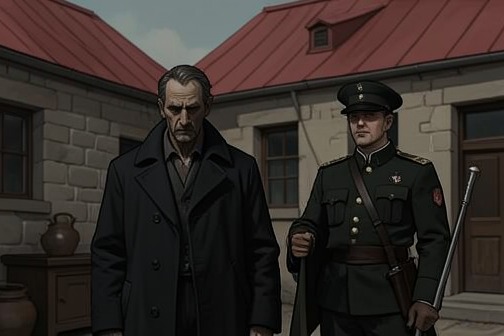
[Rostov Sentenced to House Arrest at the Metropol Hotel](entity:event-recall-event-b227fcf9cf4f) is the political hearing and forced relocation that remake [Count Alexander Ilyich Rostov](entity:character-recall-character-count-alexander-ily-83aa9b72a1d2)’s life: on 21 June 1922, the [Emergency Committee of the People's Commissariat for Internal Affairs](entity:organization-recall-organization-08457791ee4d) sends him back to the hotel where he has lived for nearly four years, but now under an explicit death threat if he crosses its threshold. The ruling preserves his life while stripping away his freedom of movement and his former rooms. Its consequence is not an abstract sentence: it is a new, diminished daily world inside the same building.
## The hearing and its contradictions
The hearing record identifies the date, the committee’s presiding members, and prosecutor A. Y. Vyshinsky. Asked to state his name, Rostov gives not only his name but his titles: recipient of the Order of Saint Andrew, member of the Jockey Club, and Master of the Hunt. Vyshinsky then establishes his identity as Alexander Rostov, born in [Saint Petersburg](entity:location-recall-location-saint-petersburg-30abed414d45) on 24 October 1889, a fact Rostov confirms. The exchange makes the old rank and ceremony of his self-presentation part of the political case against him.
The prosecutor asks where Rostov lives, and the answer is [Suite 317](entity:location-recall-location-317-e1001ea5ed99) at the [Metropol Hotel](entity:location-recall-location-metropol-hotel-65f38c441f1f) in [Moscow](entity:location-recall-location-moscow-b59c72aac896). Rostov says he has resided there since 5 September 1918, just under four years. His account of his days—dining, discussing, reading, and reflecting—conveys a life organized around leisure rather than employment. When challenged about occupation, he says that it is not the business of gentlemen to have one. The committee thus hears both a personal defense and evidence of the class identity it considers politically disqualifying.
The questioning also brings his literary past into the room. Vyshinsky asks about the 1913 poem *[Where Is It Now](entity:expression-recall-expression-where-is-it-now-4e350eab35e6)?*, attributed to Rostov, and about its origins at the [Rostov estate](entity:location-recall-location-04a6c588ca90) in [Nizhny Novgorod](entity:location-recall-location-5f6818c48b0d). The poem appeared in the subdued years after the failed revolt of 1905 and was taken by many as a call to action. Rostov accepts the broader proposition that poetry calls people to action, but describes the poem as having demanded to be written rather than as the product of a political plan. Asked about leaving [Russia](entity:location-recall-location-e36341713c23) for [Paris](entity:location-recall-location-657453741ed3) the following spring, he recalls the apple blossoms; asked why he returned in 1918, he gives the weather as his reason. His wit repeatedly unsettles the hearing’s demand for solemn submission, while his evasions leave the committee to define his political meaning for him.
## The ruling: reprieve with a boundary
Secretary Ignatov’s assessment turns on a contrast between the author of the poem and the man before the committee. The committee concludes that the clear-eyed spirit behind *Where Is It Now?* has been irretrievably corrupted by class and that Rostov now threatens ideals he once supported. Ignatov says that, on this basis, the committee might have him taken from the chamber and shot. Yet senior Party members count him among the heroes of the prerevolutionary cause. That judgment changes the outcome: instead of execution, the committee orders him returned to the hotel he professes to like.
The reprieve is conditional and precisely bounded. The order states that if Rostov ever sets foot outside the Metropol again, he will be shot. The committee therefore leaves him physically alive but makes the hotel perimeter the limit of his permitted life. Its ruling does not erase the threat it has just considered; it relocates that threat to the threshold he will encounter every day. The distinction between being sent back to familiar surroundings and being free to leave them is the sentence’s central irony.
## From Suite 317 to the attic
The narrative shows the sentence being carried out in the hotel. At half past six on 21 June, after being escorted through the gates of the [Kremlin](entity:location-recall-location-kremlin-927792b53b5f) onto [Red Square](entity:location-recall-location-red-square-326566e0b8ae), Rostov walks back toward the Metropol. He greets Fyodor, the fruit seller, about the early blackberries, passes through Resurrection Gate, and turns his back on the lilacs of the [Alexander Gardens](entity:location-recall-location-10717b093e8b). At [Theatre Square](entity:location-recall-location-622ddea9071d), he winks to Pavel, the afternoon doorman, then turns to the two soldiers following him. His composed return contrasts with the force waiting inside.
On the third floor, the open doors of Suite 317 no longer welcome him. A captain of the guards stands there with Pasha and Petya, the hotel bellhops, whose embarrassment suggests that they have been assigned a task they dislike. The captain tells Rostov that these are no longer his quarters. Rather than restore him to the connected bedroom, bath, dining room, and grand salon, the guards lead him through an inconspicuous door to a utility stair in the hotel’s core.
The route itself marks his descent in status. The dim stair turns sharply every five steps and climbs three flights to a narrow corridor serving a bathroom and six small bedrooms. The attic had once housed guests’ butlers and ladies’ maids; after that use fell out of fashion, its rooms became storage for lumber, broken furniture, and other debris. Rostov’s assigned room has been cleared only of most of its contents: it contains a cast-iron bed, a three-legged bureau, and years of dust. A small closet occupies one corner, the roof slopes low, and the only place he can stand at full height is beneath a dormer window the size of a chessboard. The captain explains that the bellhops are there to move the few belongings the room can accommodate. Asked about the rest, he is told that it becomes the property of the People. Confinement is thus enacted through both a locked boundary and the dispossession of the life that had filled his suite.
## The sentence measured in time
The next year makes the boundary legible as duration. On 21 June [1923](entity:time-recall-time-1923-879c255c9288), at five in the afternoon, Rostov stands before his closet considering a plain gray blazer before his weekly trip to the barbershop and a meeting with [Mishka](entity:character-recall-character-mishka-58198ebf8709) at the [Shalyapin](entity:location-recall-location-shalyapin-68fb2bcb9f99). The date is one year since he last set foot outside the Metropol. He hesitates over whether to mark the anniversary: house arrest is a clear infringement of liberty, but it is also meant to humiliate, making celebration seem at odds with both pride and common sense.
The narrative sets his private accounting against the indistinguishable days of confinement. People isolated at sea or in prison may cut 365 notches into wood or scratch them into a wall, both to imagine the changes occurring in the lives they have left behind and to record a year of hardship endured. The marks become proof of survival. For Rostov, the anniversary gives the sentence a countable form: the year has passed, and he has remained within the limit imposed on him.
Time also takes material form in the twice-tolling clock made for Rostov’s father by Breguet. Its white enamel face, about the size of a grapefruit, and sloping lapis lazuli body make it a family object as well as a precision instrument. During an eagerly awaited noon appointment, Rostov finds his attention drifting from Montaigne’s essays to the clock; he can hear every tick. Under confinement, an appointment and a chime lend shape to hours that might otherwise blur together. The clock cannot open the hotel doors, but its measured intervals help organize the life on their confined side.
## A life reorganized inside the hotel
Confinement changes the setting of Rostov’s existence without removing him from the community and routines of the Metropol. In later years, even the [Boyarsky](entity:location-recall-location-boyarsky-fd3969ba4e82)’s restaurant staff are assembled to hear new procedures for taking, placing, and billing orders. A waiter must write an order on a pad, bring it to a bookkeeper, and wait for a chain of ledger entries, cooking slips, confirmation slips, and stamped receipts before retrieving a dish. The procedure turns an ordinary meal into a sequence of regulated steps. Rostov’s interest in the written word is distinguished from simple affection for paperwork: he values writing for the power it has had to move readers and preserve words for posterity. The episode shows how the confined hotel remains a site of daily change, not a frozen room outside history.
Rostov had once prided himself on being unmoved by clocks. He rejected the hurried habits of those who timed breakfast, walks, and even the hanging of a hat, choosing instead a deliberately unhurried life without a watch. He valued a leisurely lunch or a walk along the embankment over appointments with bankers and trains, and gave cups of tea and friendly conversation the precedence that hurried people denied them. The sentence exposes the vulnerability in that preference: a man who had treated time as something he could let pass at his own pace must now endure years whose boundaries are set by others. Yet his own rituals—appointments, reading, attention to the clock, and the marking of an anniversary—give that imposed duration a structure. The judgment confines him, but the ensuing life also reveals the small practices by which he continues to inhabit time as his own.
Event 9
Opening of Rostov's Secret Study in the Metropol Attic
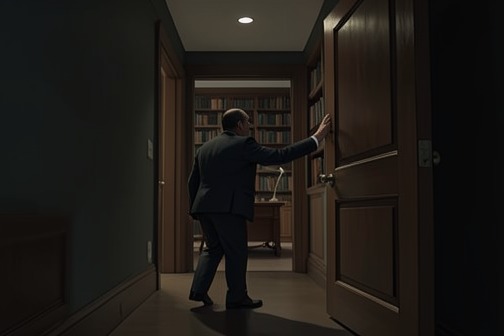
The opening of [Count Alexander Ilyich Rostov](entity:character-recall-character-count-alexander-ily-83aa9b72a1d2)’s secret study transforms an overlooked space inside [The Metropol](entity:location-recall-location-659eb4e31846) into a private refuge. The discovery follows a visit to [Suite 317](entity:location-recall-location-317-e1001ea5ed99), where the traces of an ordinary afternoon at liberty sharpen his awareness of confinement. By forcing a passage through the back of his closet, furnishing the room he finds, and closing its hallway entrance with nails, he makes a space that is physically no larger than his bedroom yet feels expansive because it belongs to his own intention.
## From Suite 317 to the closet wall
Later that night, alone on his bed, the Count revisits the scene in his old suite. The family clock is still ticking by the door, and the architecture and view are impressive, but it is the tea service beside a folded paper that remains with him. From these modest objects he reconstructs the absent resident’s afternoon: returning from an outing at four, hanging up a jacket, calling for tea and an afternoon edition, and settling on the couch before dressing for dinner. What he has witnessed, he realizes, is more than tea; it is a moment in the daily life of a gentleman at liberty.
The contrast makes his own hundred-square-foot room seem smaller than before. The bed crowds the coffee table, the table crowds the high-back chair, and the chair must be moved whenever the closet is opened. There is no room for the unhurried, civilized interval he has just imagined. Yet the Count’s attention shifts from the room’s limits to the possibility that its boundaries conceal another space. The thought that there are rooms behind rooms and doors behind doors becomes not merely a reflection on the hotel but a practical suggestion.
## Breaking through and finding another room
The Count rises and examines the closet’s elegant molding, wondering whether the structure might occupy an older doorway. He moves his clothes aside and taps the back wall. Its thin, flexible sound encourages him to test it more forcefully. After removing all his jackets, he braces himself against the jambs and kicks until the barrier cracks and splinters. He pulls the broken planks into his room and slips through the opening.
Beyond the breach is a dark, narrow space smelling of dry cedar, apparently the inside of the neighboring closet. The Count turns its knob and enters a room that mirrors his own in shape and size. Five unused bedframes have been stored there; two have fallen against the wall and pinned the hallway door shut. He shifts them, opens the door, removes the stored objects, and begins to refurnish the newly accessible room. The discovery is both architectural and practical: a hidden passage through the closet has led to a whole adjoining room, while the fallen frames explain why its ordinary entrance was inaccessible.
## Furnishing a room of his own
He first brings the two high-back chairs together with his grandmother’s coffee table. Then he makes three separate trips down the belfry stairs to the basement cabinet of curiosities for a rug, a standing lamp, and a small bookcase. On one final trip he carries up ten weighty novels that had been abandoned there. The furnishings are not gathered as a random store of necessities: the chairs and table establish a place to sit, the lamp and rug make it habitable, and the bookcase and books give it the character of a study.
To secure the room’s privacy, the Count borrows the roofer’s hammer and five nails. The hammer recalls his boyhood at [Idlehour Estate](entity:location-recall-location-b8c27227fcf6), where he helped the old caretaker repair fencing in early spring. His first stroke now lands on his thumb; the next glances off the nail. By the third blow he finds his rhythm again. Within half an hour, he has driven four nails through the door’s edge into its frame, so that the study can thereafter be entered only through the sleeves of his jackets. He reserves the fifth nail for the wall above the bookcase, where it will hold [Helena Rostov](entity:character-recall-character-helena-rostov-afd4197bcaea)’s portrait. The improvised barrier both conceals the new room and turns the closet into its sole passage.
## A secret space and its meaning
When the work is done, the Count sits in one of the high-back chairs and feels an unexpectedly deep sense of bliss. His bedroom and study have identical dimensions, but their effects on him could hardly be more different. The bedroom, with its bed, bureau, and desk, answers practical necessities. The study gathers objects connected with memory and inward life: his grandmother’s table, the books, [The Ambassador](entity:object-recall-object-the-ambassador-8de3c4fd827c), and Helena Rostov’s portrait. Its character comes not only from what it contains but from how it came to exist.
The room’s secrecy changes the meaning of its smallness. The bedroom belongs to an arrangement imposed by others; the study has been made through the Count’s own ingenuity, labor, and choices. Its dimensions remain unchanged, yet it can seem as vast as he wishes because its existence is not governed by the same authority as his assigned quarters. The event thus answers confinement with a modest act of spatial invention: rather than escaping The Metropol, he discovers how to enlarge his life within it.
He takes the largest of the ten recovered volumes, settles back with one foot on the coffee table, and balances the chair on its hind legs. Opening the book, he reads, “All happy families are alike; each unhappy family is unhappy in its own way.” The study’s first completed moment is therefore not a further act of construction but a return to reading. After the strain of breaking through, carrying furniture, and hammering nails, the Count occupies the room as a reader, in a space arranged to serve the spirit as well as the body.
Event 10
Russian Revolution
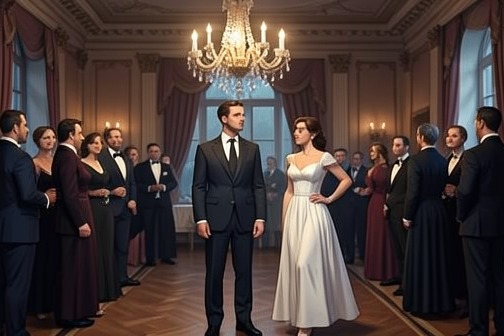
The [Russian Revolution](entity:event-recall-event-russian-revolution-6444f80ee8e1) is presented not only as the overthrow of an old order but as a force that rearranges lives, institutions, and the meaning of exile. For [Count Alexander Ilyich Rostov](entity:character-recall-character-count-alexander-ily-83aa9b72a1d2), it is the reason he returns to [Russia](entity:location-recall-location-e36341713c23) from [Paris](entity:location-recall-location-657453741ed3) rather than a danger from which he tries to escape. Its consequences reach from the ballroom where citizens debate the country’s future to a political poem whose assumed authorship later changes the Count’s fate.
## Background and the Count’s Return
The Count explains his return in retrospect: he was in Paris when the Hermitage fell, having left Russia before the war because of unspecified circumstances. Asked whether he had tried to leave after the Revolution, he answers that he came back because of it. The account makes the Revolution a decisive reversal in his life: the upheaval that might have kept an émigré abroad instead draws him home.
A later conversation supplies one immediate purpose for the journey. After the Count made his way back, he arranged for his grandmother to escape the country safely. When asked why he stayed after securing her departure, he gives cuisine as a deliberately facetious answer, then resists treating that as a sufficient explanation. The novel leaves the choice more complicated than a single practical motive. In a later conversation with [Sofia](entity:character-recall-character-sofia-9c2254d138c5), he describes his return and subsequent life in the hotel through the language of purpose and chance: he believes that life needed him in a particular place when Sofia’s mother brought her to the Metropol. His recollection makes the Revolution the beginning of a chain of circumstances whose deepest personal consequence, in his view, was his meeting with Sofia’s family.
## A New Order in Unsettled Rooms
The Revolution’s institutional aftermath is shown as a period in which old practices had been abandoned before new ones were established. The Count explains that trade unions, citizens’ committees, and commissariats gathered in the Metropol’s ballroom to work out what should replace them. The room becomes a practical setting for political change: national direction is debated amid shuffled chairs, speeches, and the chairman’s gavel rather than already settled by a stable system.
The Count recalls that Sofia’s mother, as a nine-year-old, watched these assemblies from behind the ballroom balcony’s balustrade. She found the proceedings thrilling, and in hindsight he grants that her excitement was justified: the country’s course was being charted before them. His own experience was less comfortably elevated; because she insisted he join her behind the balustrade, the Count remembers the physical discomfort of crawling and crouching, including the crick in his neck. The contrast lets a child’s fascination and an adult’s bodily inconvenience coexist with the historical importance of the meetings. Political transformation is at once a spectacle, a negotiation, and an awkwardly intimate memory.
## Revolution, Political Writing, and Personal Risk
The novel places the Revolution within a longer history of political danger. In 1913, after the revolt of 1905 and the repressions that followed, writing poems expressing political impatience remained hazardous. [Mishka](entity:character-recall-character-mishka-58198ebf8709)’s background made him particularly vulnerable to arrest by the Okhrana. One night at [Idlehour](entity:location-recall-location-idlehour-64fcca2467bc), he and the Count decided to publish Mishka’s poem under the Count’s name. The Count’s aristocratic standing appeared to offer protection: authorities were less likely to act against someone identified as a member of the Jockey Club and a godson of a counselor to the Tsar.
That protection produced an irony visible only in retrospect. The Count later says that the poem saved his life, not Mishka’s: without the decision to put his name on it, he believes he would have been shot in 1922. The Revolution and its aftermath therefore do not erase the earlier risks that shaped the Count’s friendships. Instead, a pre-revolutionary act of literary concealment acquires a later, life-changing consequence. The episode connects political repression across different periods without making the poem or its authorship a simple emblem of liberation.
## Exile at Home and the Longer Aftermath
On the hotel roof, shortly before midnight, the Count looks out across [Moscow](entity:location-recall-location-moscow-b59c72aac896), recognizing the Boulevard and Garden Rings by their street lamps and seeing the [Kremlin](entity:location-recall-location-kremlin-927792b53b5f) at the center of the city. The view prompts him to consider exile as an ancient punishment, then to distinguish Russia’s particular version: exile inside one’s own country. He traces the practice to the Tsars’ decision, beginning in the eighteenth century, to send enemies to [Siberia](entity:location-recall-location-siberia-6bda40295568) rather than expel them abroad. In his reasoning, a person sent to another country might build a new life; someone confined to exile in Russia remains close to the country from which he is excluded.
The Count extends that logic to the [Minus Six](entity:rule-recall-rule-minus-six-ecf9f120b6b3) restriction as well as Siberian exile. A person banished within Russia does not simply lose the homeland through distance or forgetfulness. Moscow remains visible, imaginable, and just beyond reach. The Revolution thus belongs to a continuing history of political displacement, while the Count’s own life gives that history a specific form: he is separated from freedom and from the city’s ordinary life without being removed from Moscow.
The wider consequences of revolutionary change remain visible in the account of the early 1930s. The famine of 1932 contributed to migration from the countryside into cities, where housing became overcrowded and essential goods scarce; hooliganism also increased. Urban workers tired under the continuous workweek, artists faced tighter limits on what they could imagine, and churches were closed, repurposed, or destroyed. After Sergei Kirov’s assassination, politically unreliable people were purged. Stalin’s later declaration that life had improved and become more joyous is presented against this accumulation of hardship. The Revolution’s aftermath is therefore not a single completed transition: its promises and official reassurances coexist with deprivation, constraint, and political violence.
## Narrative Significance
The Revolution’s significance in the novel rests on the tension between historical upheaval and personal attachment. It brings the Count home, exposes him to danger, and creates the unsettled public spaces in which the next political order is debated. Yet his most intimate retrospective judgment is not about office or influence. When Sofia asks whether he regrets returning, he treats the question as one adult asking another to account for a life’s choices. He answers that his essential moment was being at the Metropol when Sofia’s mother brought her there, and that no political title could compensate for missing it.
That answer does not diminish the Revolution’s violence or the changes it set in motion. It shows how the novel measures history through the lives that happen to intersect within it. For the Count, the Revolution is at once a public rupture, a return from Paris, the setting for a new and unstable order, and the remote beginning of the family bond he ultimately values above power.
Event 11
1923 First Congress of the Russian Association of Proletarian Writers
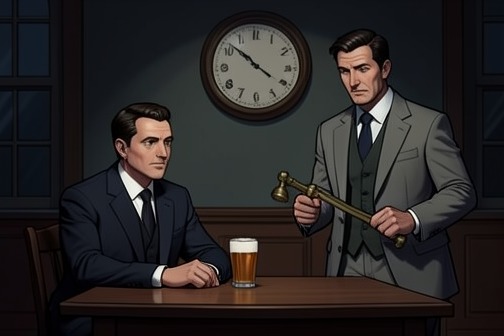
The [1923 First Congress of the Russian Association of Proletarian Writers](entity:event-recall-event-1923-rapp-6dd3ed23d093) appears through [Mishka](entity:character-recall-character-mishka-58198ebf8709)’s recollection as a gathering where literary work became an emphatic public performance. Its first day joined paperwork and proclamations to solidarity across occupations, then carried that energy into a dinner that lasted until eleven and a speech by [Vladimir Mayakovsky](entity:character-recall-character-6ee12468ce37) delivered from atop a chair. The episode’s significance lies in this collision of organizational labor, political allegiance, and theatrical spectacle—and in the lively, skeptical way Mishka recounts it to the Count.
## Setting and recollection
The congress enters the story through an evening at [Shalyapin](entity:location-recall-location-shalyapin-68fb2bcb9f99). The Count, newly trimmed and shaved, has taken a corner table to wait for Mishka, who is in town for the inaugural congress. The two friends meet after the Count has offered Mishka the banquette; the gesture is courteous, but also keeps his fidgeting companion in his seat. Over beers, the Count asks how the congress is progressing. Mishka responds that it is the topic of the hour, soon to engross [Russia](entity:location-recall-location-e36341713c23) and, as he grandly puts it, perhaps the world.
This framing makes the account both a report from the congress and a scene of friendship. The Count had hoped to share roasted duck at the [Boyarsky](entity:location-recall-location-boyarsky-fd3969ba4e82) and a particular Grand Cru with Mishka, but Mishka cannot stay for dinner. The anticipated leisurely meal gives way to beer and an urgent account of the day. The Count listens from across the table; Mishka’s restless manner suggests that describing the congress is almost another way of taking part in it. The event is therefore filtered through a participant’s animated recollection, not presented as an impersonal record of proceedings.
## Declarations and solidarity
Mishka contrasts the congress’s activity with the inertia he says was absent that day: there were no hushed voices, dozing, or pencil-fiddling. In every corner, people had work to do. The Count’s account identifies some of that work as drafting “Declarations of Intent,” “Proclamations of Allegiance,” and “Open Statements of Solidarity.” These formulations give the gathering a formal, programmatic dimension: its participants are not merely discussing literature but publicly defining commitments and affiliations.
The stated reach of that solidarity is striking. The [Russian Association of Proletarian Writers](entity:organization-recall-organization-f9a64f5bb22c) declares it not only with writers, publishers, and editors, but also with masons and stevedores, welders and riveters, and street sweepers. The list stretches from cultural occupations to manual and municipal labor, making the congress’s political self-presentation broader than a professional gathering of authors. Its language of solidarity places literary work alongside forms of labor that are materially and socially distinct. The account does not specify what practical consequences followed from these declarations; it shows instead the ambition and breadth of the allegiance being voiced.
## The late dinner and Mayakovsky’s performance
The first day is so fevered that dinner is not served until eleven. At a table set for sixty, Vladimir Mayakovsky addresses those present without a lectern. When the plates arrive, he bangs on the table and stands on his chair. The scene makes the speech’s setting part of its force: the table is at once a place to eat and the platform from which the poet commands attention. Formal equipment is unnecessary; a physical gesture transforms ordinary furniture into a stage.
Mishka’s retelling repeats that transformation on a smaller scale. In the interests of realism, he tries to stand on the banquette, nearly toppling his beer, then settles for an oration from his seat, one finger raised. He recalls Mayakovsky’s poem as an assertion of shining everywhere and at full strength, even at the expense of everything else. The detail of the near-spilled beer keeps the imitation comic and tangible: Mishka is moved by the speaker’s example, but cannot reproduce the chair-top spectacle without risking the drink in front of him. The episode thus links the congress’s rhetoric to the bodily business of performing it.
Mayakovsky’s poem prompts unrestrained applause and the smashing of glasses. As the company settles and prepares to eat chicken, another participant, Zelinsky, gets onto a chair. The transition from acclaim to the next speaker is abrupt, and Mishka punctures the moment with a disparaging comparison: Zelinsky, he says, stands as little shoulder to shoulder with Mayakovsky as with a bottle of milk. The contrast records the fervor of the room while exposing Mishka’s impatience with a speaker he considers unworthy of the same platform.
## Public fervor and private judgment
The account holds enthusiasm and skepticism together. The congress produces hours of work, a broad declaration of solidarity, and an audience capable of responding to poetry with applause and broken glass. Yet Mishka does not treat every raised speaker as equally deserving of attention. His mockery of Zelinsky distinguishes the poet he admires from the man who follows him, even as both occupy a chair before the dinner crowd. The shared platform does not, in Mishka’s judgment, confer shared stature.
The episode also turns the congress into a story told across a small restaurant table. The Count’s seating choice restrains Mishka’s impulse to pace; Mishka’s attempt to imitate Mayakovsky nearly sends his beer over; and his final sip leaves the critique hanging on a modest, everyday gesture. These details do not diminish the event’s political declarations. They show how its energy persists in a friend’s restless performance and sharp recollection, where organized literary solidarity, public oratory, applause, and personal judgment remain inseparable.
Event 12
Soviet Union Recognized by Germany, Britain, and Italy
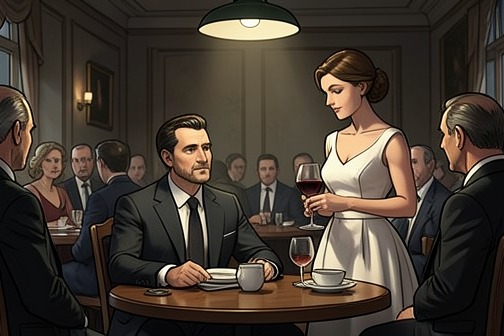
The Soviet Union's recognition by Germany, Britain, and Italy is presented as a diplomatic turning point with an immediate, ordinary consequence: at the [Boyarsky Restaurant](entity:location-recall-location-78cb14f965c2), a few minutes' wait for a table had become increasingly common. The episode links the country's return to international acceptance with the renewed practical rhythms of trade and public life.
## International Recognition and Trade
The passage describes the recognition as a recent development and frames it as the price of being welcomed back into the sisterhood of nations and the brotherhood of trade. It does not specify the dates or terms of recognition; instead, it emphasizes the broader consequence of renewed international relations, connecting diplomatic standing to commercial exchange.
## The Restaurant as Evidence of Change
At the Boyarsky Restaurant, the political shift is registered through a modest inconvenience: a diner may have to wait a few minutes for a table. The detail makes international change legible in everyday life. Recognition is not elaborated through a treaty or public ceremony; it appears in increased demand at a restaurant, where a busier room signals the return of trade and social activity.
## Narrative Significance
The episode places national reintegration beside the Count's routine work in the restaurant. Its scale is deliberately small: a change in international status is measured by the altered pace of service. That contrast gives the event its narrative force, showing how political developments reach the hotel's daily life without displacing its familiar rituals.
Event 13
The Gambling Debt Incident at Princess Novobaczky's Birthday Party

## Setting and the turn in the weather
The party takes place on an inclement autumn evening. At five o’clock, the temperature is 34 degrees Fahrenheit, the sky is clouded over, and drizzling rain threatens to leave the guests cold and wet. By the time Rostov sets out at six, the temperature has fallen just enough for the rain to become the season’s first snow. The change alters the evening’s character: what might have dampened the celebration instead lends the snowfall a magical air.
Watching the flakes spiral, Rostov is nearly run off the road by a troika driven at full gallop by a young Hussar officer. He spends an hour getting his carriage out of a ditch and arrives late. The weather’s small shift thus begins a sequence of disruptions and encounters that, in Rostov’s later account, becomes an example of how seemingly slight changes can redirect events.
## Dinner and the card game
At the party, Rostov arrives alongside a portly friend from his academy days. The friend throws back his shoulders and tests the formality of the footmen, only to slip on the icy drive and land on his backside. Rostov helps him up and escorts him into the house as the other guests leave the drawing room. Later, sore from the fall and unable to dance, the friend asks Rostov to play cards.
The young lieutenant, who has spent three months subsisting on army-kitchen cabbage and potatoes, is captivated by Mrs. Trent’s roast beef. He eats generously and drinks wine. When the orchestra begins tuning and the guests rise from dinner, he passes the Princess’s arm to another gentleman and joins Rostov and his friend at the card table, calling for another glass. The change from dinner to dancing leaves him free to play, and he enters the game in a boisterous mood, confident that he can teach the well-dressed men a lesson in games of chance.
There are five players and three observers. After two hours, the lieutenant has lost 1,000 rubles, and Rostov holds his marker. The loss reverses the officer’s confident entrance: the man who joined the game expecting to instruct others is now in debt to the player he had underestimated.
## The torn IOU and its public effect
Rostov says he has no wish to put the lieutenant in a difficult position on the Princess’s birthday. He declares the debt even in her honor, tears the IOU in two, and tosses its halves onto the baize. The lieutenant responds not with visible gratitude but with disorder: he sweeps his wineglass to the floor, knocks back his chair, and stumbles through the terrace doors into the night.
The gesture does not remain private. Although only the small group at the card table witnessed the game directly, the story of the torn IOU spreads around the ballroom. The Princess seeks Rostov out to thank him for what appears to be an act of gallantry. As he bows and dismisses the gesture, the orchestra strikes up a waltz; he takes the Princess in his arms and dances with her across the floor. The lieutenant’s loss, Rostov’s apparent generosity, and the Princess’s public gratitude transform a card-table incident into the evening’s circulating story.
## The chain Rostov later recounts
Years later, Rostov tells Charles the story as part of a much longer account of why he left [Russia](entity:location-recall-location-e36341713c23). Charles finds the birthday-party episode splendid but doubts that it explains the departure. Rostov answers by looking beyond the night’s immediate outcome. He says that he knew the tale of his generosity would reach the Princess and took satisfaction in using it to turn the tables on the lieutenant. The act was not simply an effort to spare a young officer embarrassment; it was also a calculated move in their contest.
Rostov then describes the consequences as a chain. Had he not so smugly put the lieutenant in his place, he says, the officer would not have pursued [Helena Rostov](entity:character-recall-character-helena-rostov-afd4197bcaea) or humiliated her. Rostov would not have shot him; the officer might not have died in Masuria; and Rostov might have been beside his sister ten years later when she breathed her last. He specifically rejects the idea that Helena died of a broken heart, saying that she died of scarlet fever. The regret concerns not a romantic explanation for her death but Rostov’s own absence at its end, which he connects retrospectively to the choices set in motion at the party.
## Significance
The episode turns a small act with a conspicuous public effect into a retrospective account of unintended consequence. At the ballroom, the torn marker appears to settle a debt and win the Princess’s appreciation; in Rostov’s later telling, it is also a deliberate humiliation that helps set further events in motion. His explanation does not establish that every link in the chain was inevitable. Instead, it shows how he understands his own past: a moment of pride at the card table becomes inseparable from his later regret that he was not at his sister’s side.
Event 14
Rostov Shoots the Hussar Lieutenant

[Rostov Shoots the Hussar Lieutenant](entity:event-recall-event-a2b06a6bd940) is a remembered episode in which [Count Alexander Ilyich Rostov](entity:character-recall-character-count-alexander-ily-83aa9b72a1d2) turns from watching his sister’s courtship to confronting the man who has humiliated a household servant. The encounter leads to a pistol shot on the family drive, but its consequences prove less immediate and more complicated than the Count’s first account suggests.
## The Courtship and the Birthday
Before the shooting, the lieutenant had appeared to behave with conspicuous restraint toward [Helena Rostov](entity:character-recall-character-helena-rostov-afd4197bcaea). Over several weeks, the Count watched their courtship at lunches, teas, and walks through the gardens. The lieutenant pulled out Helena’s chair, picked blossoms, and read and wrote verses. The Count, already alert to the possibility that the man’s conduct would betray him as it had at the Novobaczkys’, waited for that seeming polish to fail.
The decisive occasion was Helena’s twentieth birthday. The lieutenant was away on maneuvers when the Count and Helena visited a neighbor; at dusk they returned to find his troika outside their house. Helena took its arrival as a sign that he had rushed back from his battalion to wish her well. Instead, inside the entry hall, they found Nadezhda, Helena’s handmaiden, visibly humiliated, her clothing disordered and her arms crossed over her chest. Helena stumbled into a chair and covered her face. The lieutenant grinned at the Count, then left without acknowledging Helena. The birthday visit thus overturned the courtship’s carefully maintained appearance and gave the Count an immediate reason to intervene.
## The Decision and the Shot
At the entry hall, the Count’s earlier watchfulness gave way to action. He crossed to a pair of pistols hanging beneath the family crest. Helena caught at his sleeve and asked where he was going, but he left without looking back at her. In the recollection told to Charles, that gesture remains a source of self-reproach: he recognizes that, in responding to the lieutenant’s cruelty, he also abandoned his sister at the moment she needed him.
The lieutenant had only a brief head start. Rather than galloping away, he moved his troika at little more than a trot. The Count describes this contrast as characteristic: the man had hurried toward parties but seemed unhurried in leaving the scene of his own misconduct. The route made an interception possible. A pair of opposing arcs, lined with apple trees, joined the house to the main road; the Count’s horse was still tied by the house. He mounted and galloped in the opposite direction, reaching the point where the arcs met the road before the lieutenant arrived. There he dismounted and waited.
The scene he recalls is strikingly open and calm: the Count alone on the drive, with blue sky, a breeze, and apple trees in bloom. The lieutenant, who had been moving slowly, rose in his troika, lifted his whip, and drove the horses at full speed toward him. The Count understood the approach as an attempt to run him down. He raised his arm, steadied his aim, and fired. The shot knocked the lieutenant from his feet; the reins came free, the horses veered off the drive, and the troika overturned. The lieutenant lay still in the dust. The recollection presents the shot as a sudden answer to an imminent charge, but not as a clean resolution: the Count’s intervention has begun a chain of consequences that he will later recount with an enduring sense of responsibility.
## The Wound and Its Aftermath
The apparent fatality was a misreading of the scene. When Charles later asked about the interval before the lieutenant’s death, the Count dated the shooting to February 1915 and explained that he had meant to hit the man in the heart. He had been known since youth for his marksmanship, but the uneven road, the lieutenant’s moving reins, and apple blossoms blowing across his line of sight threw off his aim. The bullet struck the lieutenant in the right shoulder instead. The Count’s remembered certainty that he had killed him gives way to a more difficult account: the shot wounded him, but did not end his life.
After the troika overturned, the Count bound the lieutenant’s wound, righted the vehicle, and drove him home. The injured man cursed him throughout the journey, a response the Count considered deserved. Although he survived, his right arm remained lame, forcing him to surrender his Hussar commission. When the lieutenant’s father filed an official complaint, the Count’s grandmother sent him to [Paris](entity:location-recall-location-657453741ed3), following the custom of the time. The confrontation therefore carried consequences beyond the immediate injury: it altered both men’s paths and separated the Count from home.
Later that summer, despite his injury, the lieutenant insisted on returning to the head of his regiment. At the [Second Battle of the Masurian Lakes](entity:event-recall-event-8468f8bcef34), an Austrian dragoon knocked him from his horse and killed him with a bayonet. His death came in battle, not from the Count’s bullet, but the earlier shot had left him lame and had already cost him his commission. The distinction does not erase the Count’s sense of responsibility. When Charles expresses sympathy for the death while suggesting that the Count has assumed more than his share of guilt, the episode closes on the gap between causal responsibility and self-accusation: the Count did not kill the lieutenant with that shot, yet he continues to carry the encounter as part of the chain that led to his death.
## The Limits of the Count’s Account
The episode’s moral tension lies not only in the bullet’s consequences but in the Count’s choice of what to notice and what to leave behind. He condemns the lieutenant for leaving Helena without a glance, yet acknowledges that he himself did the same when she caught his sleeve. The parallel does not make their actions equivalent: the lieutenant had humiliated Nadezhda, while the Count was setting out to confront him. But the repeated gesture unsettles a simple account of the Count as a defender acting without cost to those he meant to protect. His own later shake of the head, condemning his behavior, preserves that unease rather than excusing it.
Event 15
Helena Rostova's Death
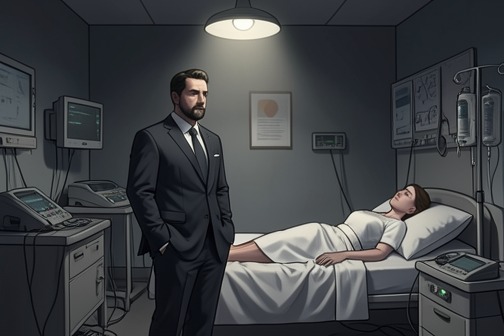
[Helena Rostov](entity:character-recall-character-helena-rostov-afd4197bcaea)’s death is a family loss that [Count Alexander Ilyich Rostov](entity:character-recall-character-count-alexander-ily-83aa9b72a1d2) remembers not as a romantic tragedy but as the final consequence of choices that kept him away from his sister. Her death from scarlet fever, while he was in [Paris](entity:location-recall-location-657453741ed3), becomes the center of a counterfactual chain through which he judges his own past.
## Date and Circumstances
In [1926](entity:time-recall-time-1926-c89227047595), the Count identifies the twenty-second of June as the tenth anniversary of Helena’s death. He recalls that she died ten years earlier, while he was biding his time in Paris. The anniversary fixes the event’s date as June 22, 1916, and its defining circumstance: he was not at her side when she died.
The loss returns as the Count prepares to mark the anniversary. In a cellar, he searches systematically through the wine racks and selects a bottle embossed with two crossed keys. He intends to drink to his sister’s memory on June 22, then die. The bottle makes remembrance a deliberate ritual, while the intended ending gives the anniversary a personal consequence in the present.
## Cause of Death
When another person suggests that Helena died of a broken heart, the Count rejects the explanation. He states that she died of scarlet fever, distinguishing the actual illness from a familiar literary convention in which young women die of heartbreak. The correction is pointed: her death is not presented as a romantic emblem but as a particular physical loss.
That distinction also sets a limit on what the account establishes. It gives the cause of death but no details of Helena’s illness or final hours. The emotional weight falls instead on the Count’s knowledge that he was elsewhere, and on the chain of decisions he believes led to that absence.
## The Count’s Chain of Responsibility
The Count links his absence in Paris to an earlier incident at the Novobaczkys’: he tore up a man’s marker, knowing that news of the gesture would reach the Princess, and took satisfaction in turning the tables on the man. In his reconstruction, the man then pursued Helena and humiliated her; the Count shot him, and the man may have died later in Masuria. The Count imagines that, had he not so smugly put the man in his place, those later events might not have followed—and he might have been with Helena when she took her last breath.
This is the Count’s retrospective account of causation, not proof that every link was inevitable. Its force lies in how he connects a seemingly satisfying act of retaliation to a chain of violence, Helena’s suffering, and his own absence. Her death becomes, in his reckoning, both an irreversible loss and the point at which the consequences of his earlier choices converge.
Event 16
Second Battle of the Masurian Lakes
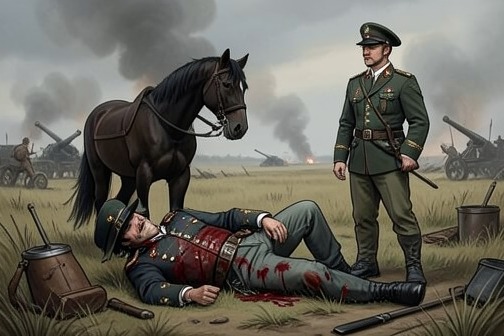
The [Second Battle of the Masurian Lakes](entity:event-recall-event-8468f8bcef34) is the final event in the account of a Hussar lieutenant whom [Count Alexander Ilyich Rostov](entity:character-recall-character-count-alexander-ily-83aa9b72a1d2) had wounded before the war. Recalled by the Count during a later conversation, the battle clarifies the distinction between the lieutenant’s earlier injury and his eventual death: after recovering enough to resume command, he was killed in combat by an Austrian dragoon.
## Background to the Battle
Before the war, Count Alexander Ilyich Rostov shot the lieutenant. The lieutenant survived, but his right arm was left lame, and he had to surrender his Hussar commission. After the lieutenant’s father filed an official complaint, the Count’s grandmother sent the Count to [Paris](entity:location-recall-location-657453741ed3), as custom required.
## Return to Command and Death
Later that summer, war broke out. Despite the injury that had ended his commission, the lieutenant insisted on returning to his place at the head of his regiment. At the Second Battle of the Masurian Lakes, an Austrian dragoon knocked him from his horse and killed him with a bayonet.
## Retrospective Significance
The battle enters the narrative through the Count’s recollection of the chain of events surrounding the shooting. The lieutenant’s death in combat does not erase the consequences of the Count’s earlier action: the wound had already left him lame and forced him to give up his commission. But the lieutenant later chose to return to his regiment, and it was the battle—not the original gunshot—that ended his life. The distinction gives context to the Count’s sense of responsibility and to his companion’s judgment that he had assumed more than his share of guilt.
Event 17
Admiral Stepan Makarov's Death

[Admiral Stepan Makarov's Death](entity:event-recall-event-0e59440c6607) is recalled as a stark reversal: after victory at sea, Makarov's flagship struck a mine on the calm journey back to port, and the admiral died with his ship. The Count places the episode among the stories that shaped his own effort to master the circumstances of house arrest.
## Background and Battle
Makarov was a close friend of [Grand Duke Demidov](entity:character-recall-character-grand-duke-demidov-02f3644cbedc) and commanded the [Imperial Russian Navy](entity:organization-recall-organization-5cc14a3b14e8) during the [Russo-Japanese War](entity:time-recall-time-7207e087dbfa). On April 13, 1904, with Port Arthur under attack, he led his battleships into action and drove the Japanese fleet back into the Yellow Sea. The account establishes a clear first outcome: the Russian force had won the battle and was returning to port.
## The Flagship's Loss
The return began on calm seas, but the flagship struck a Japanese mine and started taking on water. With the shores of his homeland in sight, Makarov ascended to the helm in full military dress and went down with the ship. The reversal—from driving the enemy fleet away to losing the flagship on the way home—makes his death the episode's decisive turn.
## The Count's Recollection
The episode is presented not as a scene witnessed by the Count, but as a story he recalls. On the first night of house arrest, he had committed himself to mastering his circumstances in the spirit of his godfather's maxim. Looking back, he recognizes another story told by his godfather as equally worthy of emulation: Makarov's conduct after victory, when return to safety became a final confrontation with death. The recollection links the admiral's fate to the Count's search for a model of resolve under conditions he did not choose.
Event 18
Rostov's Rooftop Suicide Attempt

[Rostov's Rooftop Suicide Attempt](entity:event-recall-event-a49705ad0b0b) brings [Count Alexander Ilyich Rostov](entity:character-recall-character-count-alexander-ily-83aa9b72a1d2) to the brink of death on the roof of [The Metropol](entity:location-recall-location-659eb4e31846), then turns him back through an encounter with [Abram](entity:character-recall-character-abram-ef6c0db9315b) and the bees. The scene begins as a carefully prepared farewell: Rostov has chosen the anniversary of [Helena Rostov](entity:character-recall-character-helena-rostov-afd4197bcaea)'s death, carried wine to the roof, and brought himself to the parapet. It ends not with a leap but with honey whose flavor returns him, in a sudden and particular way, to home.
## The anniversary and the intended ending
The attempt has been planned around June 22, [1926](entity:time-recall-time-1926-c89227047595), the tenth anniversary of Helena's death. Earlier, in the cellar, Rostov searched systematically through the wine racks until he found a bottle marked with two crossed keys. He chose it for the day on which he expected to drink to his sister's memory and then die. The anniversary gives the attempt its private calendar: death is not an impulse with no history, but an ending he has attached to a precise date and a particular loss.
On the roof, shortly before midnight, the plan is still active. Rostov has capped a snifter of brandy with six glasses of vodka, and his steps weave across the roof as the wind makes the building seem to shift beneath him. He steadies himself at a chimney, then picks his way toward the northwest corner. The physical instability of the roof and his intoxication make the danger immediate, while the scene's measured progress shows that he is nevertheless moving toward a deliberate act.
The attempt is also bound to guilt over events he understands as a chain. Rostov recalls the gambling incident at the Novobaczkys', when he tore up a man's marker, and the consequences that followed: the man pursued Helena, humiliated her, and was shot by Rostov. Rostov connects that shooting to the man's possible death in Masuria, and then to his own absence when Helena finally died. His explanation makes the rooftop crisis inseparable from the belief that earlier actions helped place him away from his sister at the moment he most wanted to be beside her.
## The farewell on the roof
At the northwest corner, Rostov looks over a city that is both his and not his. From the distribution of street lamps he can pick out the Boulevard and Garden Rings, with the [Kremlin](entity:location-recall-location-kremlin-927792b53b5f) at their center and [Russia](entity:location-recall-location-e36341713c23) beyond. The view makes his position legible: he is still physically in [Moscow](entity:location-recall-location-moscow-b59c72aac896), but his reflections describe the estrangement of a man exiled inside his own country. The city remains visible and beloved precisely as something he cannot freely possess.
He retrieves a Bordeaux glass from [The Ambassador](entity:object-recall-object-the-ambassador-8de3c4fd827c) and sets it on a chimney. The wine is the unlabeled Châteauneuf-du-Pape he took from The Metropol's cellar in [1924](entity:time-recall-time-1924-6c12e279cb38); as he pours, he judges it an excellent vintage, perhaps from 1900 or 1921. He raises it toward [Idlehour Estate](entity:location-recall-location-b8c27227fcf6) and drinks to Helena Rostov, recalling her as the flower of [Nizhny Novgorod](entity:location-recall-location-5f6818c48b0d), a lover of Pushkin, a defender of Alexander, and an embroiderer of pillowcases. The toast gives her memory concrete particulars before reducing the farewell to the brevity of her life and the kindness of her heart.
Rostov does not pour a second glass or throw the first one away. He sets it carefully on the chimney top and approaches the parapet, standing at full height before the illuminated city. With his right foot on the edge, he says, "Good-bye, my country." [Mishka](entity:character-recall-character-mishka-58198ebf8709)'s tower beacon blinks in reply. The gesture and the signal leave the farewell suspended between a solitary decision and the continuing presence of the people and places connected to him.
The narration then dwells on the mechanics of the leap. Rostov imagines the fall from six stories as a brief journey, comparing its speed with the fall of ordinary objects, and frames it as a return to oblivion. This precise, almost measured account slows the instant before the act: the leap is made to seem simple, yet its description holds the reader at the threshold long enough for interruption to remain possible.
## Abram, the bees, and the taste of home
Abram calls from behind him: "Your Excellency!" The old handyman is so excited that he shows no surprise at finding Rostov poised at the roof's edge. He insists that Rostov must come with him and hurries toward his rooftop encampment without waiting for an answer. Rostov begins to explain, but Abram's urgency overtakes the farewell. With a sigh, Rostov tells the city he will be back in a moment and follows.
Abram points toward the northeast corner, where tiny shadows dart against the bright backdrop of the [Bolshoi Theatre](entity:location-recall-location-4790faaff350). The bees have returned. Their appearance is already a startling interruption, but Abram has brought Rostov to the hives to show him something more. At the makeshift table, he places a tray from one of the hives, cuts into the honeycomb, spreads honey on a spoon, and offers it to Rostov. The ordinary actions of serving and tasting replace the prepared ritual of wine and farewell.
Rostov expects the honey's first sweetness to give way to the scents of Moscow's flowering trees: lilacs from the [Alexander Gardens](entity:location-recall-location-10717b093e8b) or cherry blossoms from the [Garden Ring](entity:location-recall-location-f9a63c7cd910). Instead, he detects a grassy riverbank, a summer breeze, and a pergola, above all the essence of a thousand apple trees in bloom. Abram identifies the flavor as Nizhny Novgorod. The taste makes home present through the bees' labor, not as an abstract idea but as a specific landscape that Rostov recognizes in his mouth. The men watch the bees wheel above the hives, and Abram whispers that they must have been listening to them all these years.
## The return and its significance
The encounter changes the course of the night without erasing what brought Rostov to the roof. He has not solved his grief over Helena or disproved his account of the chain of events that led to his absence. Instead, the immediate act is interrupted by Abram's appeal and by a sensory recognition neither man could have produced by argument. The movement from the edge to the honeycomb is a movement back into company, attention, and the living world of the hotel.
Nearly two in the morning, Rostov bids Abram goodnight and returns to his bedroom. He takes the gold coin from his pocket and places it back on the stack hidden inside the leg of his godfather's desk. The coin, set aside for death, remains untouched for another twenty-eight years. The next evening at six, he is the first person through the doors of the [Boyarsky Restaurant](entity:location-recall-location-78cb14f965c2) and asks [Andrey](entity:character-recall-character-andrey-21147ea6b79d) for a moment. The return is therefore marked not only by his survival but by his re-entry into the hotel's daily life: after the roof's imagined finality, there is a room, a hidden coin, a familiar restaurant, and a request to speak.
The scene's reversal depends on scale. Rostov approaches the city, country, and oblivion through expansive reflections, but the event that stops him is modest: Abram's excited summons, a spoon, and a taste. The bees do not undo the past; they carry a trace of Nizhny Novgorod into the present. By making that trace physically recognizable, the episode turns the roof from an ending into a place from which Rostov can still return.
Event 19
Bukharin Expelled from the Politburo
[Bukharin Expelled from the Politburo](entity:event-recall-event-cf2bbe2274bf) is presented as a decisive political defeat on November 17, 1929, when [Joseph Stalin](entity:character-recall-character-joseph-stalin-b2f2c907a5f9) outmaneuvered Nikolai Bukharin and ousted him from the [Politburo](entity:organization-recall-organization-politburo-a1267db9ccb7). The novel identifies Bukharin as a founding father, editor of Pravda, and the last true friend of the peasant; his removal marks a narrowing of political possibility and clears the way for a return to autocracy in all but name.
## The Date and Its Political Setting
The episode appears in a retrospective account of the late 1920s, alongside two other dates treated as historical markers: the drafting of Article 58 of the Criminal Code on February 25, 1927, and the launch of the [First Five-Year Plan](entity:event-recall-event-first-five-year-plan-2b4cbbb64338) on January 3, 1928. The juxtaposition places Bukharin’s ouster within a sequence of political and administrative changes, without claiming that they happened as one sudden transformation.
The First Five-Year Plan aimed to turn [Russia](entity:location-recall-location-e36341713c23) from an agrarian society into an industrial power. The policy drive that followed sought to exile a million kulaks, even though they were among the regions’ most capable farmers. Peasants resisted unfamiliar agricultural methods, tractors were scarce, and unfavorable weather damaged output. The response to the resulting decline in harvests was to raise grain quotas and enforce requisitions at gunpoint. In this broader account, Bukharin’s defeat stands beside the policies that would intensify pressure on the countryside, though the narrative does not attribute each later measure directly to his removal.
## The Ouster and Its Immediate Meaning
The narrative gives the event a concise political outline: Stalin outmaneuvered Bukharin, and Bukharin was ousted from the Politburo. Its emphasis falls on the consequence of that defeat. Because Bukharin is described as the last true friend of the peasant, his removal is framed as clearing the way for autocracy in all but name, not merely as a change in the membership of a governing body.
The account does not stage the expulsion as a public confrontation or provide details of a meeting, vote, or speech. Instead, it treats the date as a point that later historians can identify from a distance: a turn in the political pattern whose full significance was not immediately visible to people living through it.
## Consequences Unfolding Over Time
The novel cautions against imagining that the date itself transformed [Moscow](entity:location-recall-location-moscow-b59c72aac896) overnight. The launch of the plan, Bukharin’s fall, and the expansion of the Criminal Code are described as tidings, omens, and underpinnings; their effects took a decade to be fully felt. The image is not of a curtain abruptly revealing a wholly new political world, but of a gradual rearrangement whose eventual pattern becomes legible only afterward.
That slow unfolding gives the event its wider historical weight. By 1932, the interaction of agricultural demands, peasant resistance, poor harvests, and forceful requisitions would bring widespread hardship to the agricultural provinces and starvation to millions of peasants in Ukraine. These later consequences belong to the larger process described in the novel, rather than to a single direct causal claim about Bukharin’s expulsion.
## Narrative Significance
The event exemplifies the novel’s distinction between a date later called decisive and the experience of change as it happens. A historian can point to November 17, 1929, as a turning point, but the people of the period did not necessarily experience the political order changing all at once. The late 1920s are instead likened to a kaleidoscope: small pieces shift into a new arrangement, and only with hindsight does its design seem clear.
Within that pattern, Bukharin’s removal matters both for what it says about power and for what it anticipates. The defeat of a figure associated with the peasantry accompanies the rise of industrial planning and increasingly coercive rural policies. The event is therefore presented not as an isolated political maneuver, but as one ominous adjustment in a larger transformation whose human costs came into focus over time.
Event 20
Launch of the Soviet Union's First Five-Year Plan
The [Launch of the Soviet Union's First Five-Year Plan](entity:event-recall-event-d0a794527a0f) is presented as a landmark in [Russia](entity:location-recall-location-e36341713c23)’s industrial transformation—and as a policy whose consequences emerged gradually, through a widening gulf between the state’s ambitions and rural life. Announced on January 3, 1928, the plan promised to remake an agrarian society as an industrial power. Its construction drive depended, however, on grain-producing regions already strained by coercive measures, scarce machinery, and failing harvests.
## A Turning Point Seen in Hindsight
The narrative places the launch among dates that historians later identify as decisive. From the comfort of hindsight, a date can be marked as the turning point, as though one event had abruptly changed the course of history. The plan’s launch is named alongside Nikolai Bukharin’s ouster from the [Politburo](entity:organization-recall-organization-politburo-a1267db9ccb7) and the drafting of Article 58 of the Criminal Code: separate developments that together signal an increasingly coercive political order.
Yet January 3 did not bring an immediate, visible transformation to [Moscow](entity:location-recall-location-moscow-b59c72aac896). The city was not suddenly remade; the launch was instead an underpinning, an omen whose effects would take a decade to be fully felt. The account resists the neatness of a single fateful date. The late 1920s pass more like a kaleidoscope, with separate pieces shifting into patterns whose meaning becomes clear only later.
## Industrial Ambition and Rural Demands
The plan called for Russia to move from a nineteenth-century agrarian society into a twentieth-century industrial power. As the effort unfolded, tens of thousands of urban workers labored to build power stations, steel mills, and factories for heavy machinery. The industrial drive depended on the countryside supplying more grain to feed the cities, so agricultural production was expected to rise along with urban construction.
That demand was imposed amid a sweeping assault on the rural population. A million kulaks—described by the authorities as profiteers and enemies of the common good—were to be exiled. Yet these were also the regions’ most capable farmers. The narrative sets the language of national progress against the loss of agricultural knowledge and experience that the policy entailed.
## Shortages, Coercion, and Famine
The remaining peasants regarded new agricultural methods with resentment and suspicion, resisting even modest innovations. Tractors, intended to bring in a new era of farming, were in short supply. Uncooperative weather compounded those practical difficulties, and agricultural output collapsed. Rather than easing the pressure when harvests declined, authorities raised quotas and requisitions to meet the cities’ need for bread, enforcing them at gunpoint.
In 1932, these forces combined to bring widespread hardship to the agricultural provinces of old Russia and starvation deaths among millions of peasants in Ukraine. The famine is not described as the immediate result of one date alone: it follows from the interaction of ambitious production demands, the removal of skilled farmers, resistance to imposed methods, scarce equipment, adverse weather, and intensified requisitioning. The distance between the plan’s industrial promise and the countryside’s suffering is central to the event’s significance.
## The Plan as a Gradual, Uneven Transformation
The account’s treatment of the launch distinguishes a program’s official beginning from the slower unfolding of its effects. A calendar date can make historical change look instantaneous, but the plan’s consequences accumulated through labor drives, grain demands, administrative coercion, and agricultural breakdown. What appeared at first as a policy initiative became part of a transformation whose burdens fell unevenly: factories and power stations were built in the cities while rural communities faced dispossession, scarcity, and famine.
The launch therefore functions both as a historical marker and as an early sign of what was to come. The narrative links industrial modernization not to progress alone, but to the methods used to secure it and to the human costs those methods produced.
Event 21
Drafting of Article 58 of the Soviet Criminal Code
The [Drafting of Article 58 of the Soviet Criminal Code](entity:event-recall-event-58-69af34c7d950) is presented as a quiet but consequential step in the construction of political repression: a provision that widened the grounds for arrest to include anyone even countenancing dissension. The narrative places its drafting on February 25, 1927, among developments that initially seemed like tidings or omens, but whose accumulated force would later be felt across the country.
## Date and Political Context
The date given for the drafting is February 25, 1927. In the narrative’s historical sequence, Article 58 appears alongside the launch of the [First Five-Year Plan](entity:event-recall-event-first-five-year-plan-2b4cbbb64338) on January 3, 1928, and Nikolai Bukharin’s removal from the [Politburo](entity:organization-recall-organization-politburo-a1267db9ccb7) on November 17, 1929. These events belong to different aspects of political transformation: industrial planning, the defeat of a prominent political figure, and the enlargement of criminal law’s reach. Their juxtaposition makes the code provision part of a developing structure of power rather than an isolated legal detail.
The account describes Article 58 as a net that would eventually ensnare everyone. Its defining feature, as stated here, is the breadth of its reach: arrest could extend to anyone even countenancing dissension. The evidence identifies that expansive threshold, but does not detail the article’s clauses, procedures, or individual prosecutions; its significance in this episode comes from the principle the narrative says it established.
## A Measure Without an Immediate Upheaval
The passage distinguishes the drafting of the article from the later consequences of its use. The day itself did not bring an unmistakable rupture in ordinary life. The calendar page was turned, but [Moscow](entity:location-recall-location-moscow-b59c72aac896) did not suddenly become a different city: no sudden transformation announced that a new political order had fully arrived. Article 58, like the other developments grouped around it, is described instead as an underpinning—an early sign whose implications were not yet fully visible.
That contrast between a precise date and an indistinct immediate effect shapes the event’s meaning. The drafting can be named and placed on a calendar, yet its power lies in what it makes possible over time. The narrative resists the idea that historical change always arrives as a single spectacle; here, a legal provision is consequential precisely because its reach can grow beyond the moment of its creation.
## Delayed Consequences and Historical Meaning
The account stresses that it would be a decade before the effects of the late-1920s developments were fully felt. Article 58 therefore functions as a warning whose consequences arrive later than its drafting. The stated breadth of the provision links political dissent to the possibility of arrest, while the delay separates the announcement of that possibility from the period when its force becomes unmistakable.
The episode’s historical framing also complicates the search for a single turning point. A historian, looking backward, may identify a particular date as decisive; the narrative sets that retrospective certainty against the gradual experience of change. In this telling, the draft of Article 58 matters not because the day itself visibly remade the city, but because a legal foundation had been laid for a repression whose effects would accumulate. Its importance is structural and prospective: the law is one of the quiet conditions from which a more coercive order could develop.
## Narrative Function
Article 58 is introduced within a reflection on how history identifies momentous events only after their consequences can be seen. The account first names the draft as a landmark, then immediately limits any impression that it caused instant upheaval. That movement—from precise historical date to delayed, dispersed effect—makes the event an example of change that is difficult to recognize while it is unfolding.
The image of a net gives the provision a different scale from the calendar entry that records its drafting. A date marks a point; a net suggests a system whose reach can extend and catch people beyond the moment when it was made. By placing the draft beside political and economic developments but distinguishing it from a sudden public rupture, the narrative presents Article 58 as an ominous piece of groundwork: modest in its immediate visibility, expansive in its eventual implications.
Event 22
Collectivization Campaign in Ivanovo Province
The [Collectivization Campaign in Ivanovo Province](entity:event-recall-event-2bde0a9135b2) appears as a youth-led mobilization into the countryside, linking the Soviet policy of collective farming to the work of cadres in a specific rural district. Through [Nina Kulikova](entity:character-recall-character-nina-kulikova-ff284123b7b8)’s account of the group’s imminent departure, the campaign is shown not only as a change in farm organization but as an undertaking justified in the language of shared land, collective labor, and historical necessity.
## Mobilization in the [Kady District](entity:location-recall-location-83dd0384229d)
The four young people were due to leave the next morning with ten additional [Komsomol](entity:organization-recall-organization-0c1572b0cc2a) cadres for the Kady District, described as an ancient agricultural center in the heart of [Ivanovo Province](entity:location-recall-location-a44c45b34460). Their stated task was to aid the local shock workers in collectivizing the region. The account gives the mission a practical shape: a team of young organizers traveling from their present surroundings to an agricultural district to assist an ongoing transformation of rural life.
[Nina](entity:character-recall-character-nina-507986764de1) speaks of the work as demanding rather than romantic. Although the Count suggests adventure, she replies that there will mostly be a great deal of work. The contrast keeps the campaign grounded in labor even as its ideological purpose is made explicit. Her companions are still waiting on the other side of a potted palm while she elaborates on what lies ahead, absorbed enough in the subject to lose track of her promise to speak only briefly.
## Nina’s Case for [Collectivization](entity:concept-recall-concept-2005ace24f37)
Nina explains the campaign through the contrast between land farmed by kulaks for themselves and common land put to common use. She presents the organization of peasant labor around private ends as an arrangement that must give way, and compares collective responsibility to the ordinary duties of a teacher or physician: neither serves only their own family. In her account, collectivization is both an ethical claim about whom the land should serve and an asserted historical necessity.
The Count is initially struck by Nina’s exacting language and her certainty about the kulaks and the inevitability of collectivization. He then recognizes in her commitment the same seriousness and precision she had brought to studying mathematics with Professor Lisitsky. The scene thus connects her new political cause to an established disposition: Nina approaches the campaign with sustained attention and an appetite for serious ideas, rather than treating it as a passing adventure.
## The Campaign’s Reported Scale
The passage supplies a sharp measure of the change underway. At the end of 1928, only 10 percent of farms in Ivanovo Province were operating as collectives; by the end of 1931, nearly all would be. The Kady mission belongs to this compressed period of expansion. The figures indicate the scale and speed of the provincial transformation, while the young cadres’ assignment shows one means by which that transformation was pursued: organizers were sent into an agricultural district to assist local shock workers.
The narrative presents the campaign through a small departure scene rather than a survey of its full administration or its effects on individual farms. Its emphasis falls on the distance between the scale of the policy and the immediate human work it requires: a group preparing to travel, a district identified as the destination, and Nina explaining why she believes the change is necessary.
Event 23
Anna Urbanova's Fall from Stardom

[Anna Urbanova](entity:character-recall-character-anna-urbanova-8d7c450e6a60)’s fall from stardom in 1928 shows how quickly artistic celebrity could be undone by a change in film technology and how little fame protected her from political and material reversals. At twenty-nine, she still had one of the screen’s most alluring faces, but audiences who had imagined her voice in silent films recoiled when they heard her husky tenor in talking pictures. Her career could not survive the transition from an imagined voice to a recorded one.
## Political and Professional Vulnerability
[Anna](entity:character-recall-character-anna-ea2421a71401)’s decline began amid the troubles of Rosotsky, whose latest film had drawn attacks for its nostalgia, focus on individual experience, and apparent distance from collective struggle. After the criticism was repeated in other publications, the film received only limited distribution in second-rate theaters, and Rosotsky’s political reliability came under question. Anna understood that his fall from favor could pull her down with him. She began avoiding public appearances in his company and praised the aesthetics of other directors, a calculated effort to find another route to stardom.
That maneuver did not secure her future. The arrival of talking pictures made her voice, rather than her association with Rosotsky, the decisive obstacle: her screen image remained compelling, but audiences were unprepared for the husky tenor they heard. In spring 1928, the narrator describes her as a has-been. The reversal was especially stark because she was only twenty-nine and had been a celebrated screen presence.
## Loss of Property and a Refusal to Return
Her professional collapse coincided with the removal of the material world she had built around herself. The gilded chairs, painted armoires, and Louis Quatorze dresser were reclaimed, as were the fur merchant’s mansion and the Peterhof dacha. Within months, Anna was left with two trunks of clothing and train fare in her purse for her hometown outside [Odessa](entity:location-recall-location-681f5d732390). The loss was not simply a reduction in luxury: the objects and residences that had marked her former life could be reclaimed through the stroke of a pen.
Anna did not use the fare to go home. Instead, she moved into a one-room apartment with her sixty-year-old dresser, determined never to return to her hometown. The decision gives the episode its strongest measure of resolve: deprived of her grand residences and public standing, she chose an uncertain life away from home over retreat to the place she had left.
## A Later Appearance
Eight months after losing her mansion, in November 1928, Anna appeared again at the [Boyarsky Restaurant](entity:location-recall-location-78cb14f965c2). She entered in a red sleeveless dress and high-heeled shoes while [Count Alexander Ilyich Rostov](entity:character-recall-character-count-alexander-ily-83aa9b72a1d2) was pouring water for an Italian importer. [Andrey](entity:character-recall-character-andrey-21147ea6b79d) led her to a table for two in the corner, where she explained that a guest would soon join her. The scene does not establish that her career had recovered; it shows instead that, after the sharp losses of the spring, she remained socially present and continued to make plans.
## Significance
Anna’s fall is driven by two forms of dispossession. A new medium exposes a quality of her performance that the silent screen had allowed audiences to imagine, while the state’s reclaiming of serial-numbered furnishings and properties dismantles the material setting of her former celebrity. Her attempt to distance herself from Rosotsky addresses the political danger but cannot protect her from technological change or property loss. The later glimpse of her at the restaurant leaves her story open: stardom has ended, but she has not gone home or disappeared from the life of the city.
Event 24
Anna Urbanova's Comeback
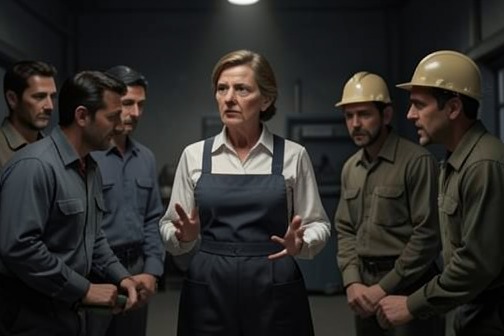
[Anna Urbanova](entity:character-recall-character-anna-urbanova-8d7c450e6a60)'s comeback is a recovery from fading stardom, achieved not through a glamorous leading role but through a brief performance as a factory worker. The episode traces how a small part lets her voice and stage-trained skill become newly valuable to Soviet cinema, while resisting the neat fiction that one influential admirer alone restored her career.
## Background and Opportunity
A dinner with an old director friend leads to [Anna](entity:character-recall-character-anna-ea2421a71401) being cast in a single scene. The director has reason to wonder whether her days of stardom are over, yet sees a possible fit for her in a small second-act role. The opportunity is modest: she is not asked to return as the young, ravishing star she once was, but to play a middle-aged worker in a factory that is falling behind its quota.
The scene is set near the end of a quarter, with only two weeks remaining. The workers gather to write to the Party leadership, explaining why they expect to miss their target. As they list obstacles, Anna's character rises and delivers a short, impassioned argument for pressing on. The part gives her no grand setting or elaborate plot; its force depends on whether the woman speaking can make persistence sound earned rather than rehearsed.
## The Factory Performance
The film's camera moves closer to Anna's character. She is shown as no longer young or conventionally beautiful, but still proud and unbent. The performance makes age and experience part of the character's authority instead of treating them as reasons to dismiss her. Anna's voice is the scene's decisive instrument: it carries the wear of unpaved roads, childbirth, and calling to women across a factory floor. The narration presents it as recognizable and shared—a voice belonging not to an abstraction called the worker, but to a sister, wife, mother, or friend.
Her speech changes what happens in the factory. The women redouble their efforts and exceed the quota. The part therefore joins an individual performance to a collective result: Anna's character does not merely explain hardship or display resolve; she persuades others to act. The scene gives Anna a kind of prominence suited to the story it tells, rooted in an experienced voice and the credibility of a woman who has endured work rather than in youthful glamour.
## Recognition and the Return of Work
At the film's premiere, a round-faced, receding-haired man in the fifteenth row responds strongly to Anna's performance. He once met her at the [Shalyapin](entity:location-recall-location-shalyapin-68fb2bcb9f99) bar in [1923](entity:time-recall-time-1923-879c255c9288), when he was director of the [Moscow](entity:location-recall-location-moscow-b59c72aac896) Department of Cinematographic Arts. He has since become a senior official in the Ministry of Culture and is rumored to be the likely successor to its current chief. Moved by the factory speech, he soon asks directors within earshot whether they have seen Anna's performance. When she is in Moscow, he sends lilies to her room.
This attention helps explain how the role leads to renewed opportunities, but the account explicitly refuses to make patronage the whole explanation. Anna is a genuine artist trained on the stage. As a member of the [Confederacy of the Humbled](entity:concept-recall-concept-192b5334dbdd), she has become punctual, knows her lines, and does not complain. Those habits matter in the work she is offered: reliability and preparation make her useful to directors, while her seasoned beauty and husky voice suit a shift toward films marked by realism and perseverance. Her resurgence comes from factors both within and beyond her control, not from a single favor or a sudden reversal of taste.
## Changed Status and Narrative Meaning
The episode closes on a changed everyday life. Anna is once again a star, with a house on the Fontanka Canal and copper ovals nailed to her furniture; now, when guests arrive, she greets them at the door. These details make the return tangible without presenting it as a simple restoration of her former position. Her success gives her a home and renewed standing, while the changed manner of welcoming guests hints at a different relation to the people around her.
The narration also challenges the satisfying story in which a comeback can be traced to one decisive intervention. It acknowledges the official's influence, then places that influence beside Anna's training, disciplined conduct, vocal quality, and the industry's new appetite for realism. Her return is at once personal and institutional: an artist's abilities find renewed use because the cultural preference governing available roles has changed. The single factory scene becomes the point where those circumstances meet, while the account preserves the less tidy truth that neither talent nor opportunity acts alone.
Event 25
Mishka and Katerina Break Up
[Mishka and Katerina Break Up](entity:event-recall-event-95cd56d1ff48) marks the loss that continues to govern [Mishka](entity:character-recall-character-mishka-58198ebf8709)’s life after their shared move to [Kyiv](entity:location-recall-location-615f8407bea1). [Katerina Litvinova](entity:character-recall-character-katerina-litvinova-d4bb51e895b5) left him for another man; the separation did not end his attachment, but became a lasting source of grief that he encountered again in the places they had once walked together.
## Background and Separation
Four years before the spring night recalled in the narrative, Mishka had moved to Kyiv with Katerina Litvinova. A year before that night, she left him for another man. The account gives no further circumstances for the breakup, keeping its emphasis on the fact of her departure and the time that has passed since it.
## The Aftermath in [Saint Petersburg](entity:location-recall-location-saint-petersburg-30abed414d45)
Six months after Katerina left, Mishka returned to Saint Petersburg and barricaded himself once again behind his books. Yet the withdrawal did not free him from the relationship’s hold. At four in the morning on a spring night, unable to sleep, he found himself walking along [Nevsky Prospekt](entity:location-recall-location-63ffd5825a3f), following the route he and Katerina had taken on the day she first took his hand.
The Count recognizes the direction of Mishka’s thoughts from the beginning of his friend’s letter. He considers whether Mishka still pines for Katerina and whether retracing their old route is a morbid return to a failed romance. The narrative answers plainly: Mishka will pine for her for the rest of his life, and Nevsky Prospekt will never again be free of an unbearable sense of loss.
## The Meaning of Heartbreak
The separation is presented not as a feeling that time should simply erase, but as the lasting consequence of having loved. Mishka’s grief survives distance, the return to Saint Petersburg, and his retreat into books; the familiar route makes that persistence visible. The narrative treats heartbreak as a defense against the idea that love is merely temporary: the continuing pain itself testifies to what the relationship meant.
Event 26
Russian Revolution of 1917
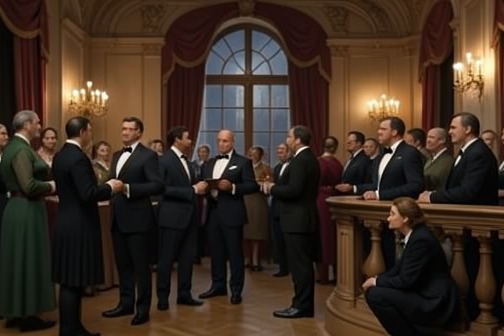
[Russian Revolution of 1917](entity:event-recall-event-russian-revolution-of-1-f112fa44ebf7) enters the novel less as a battlefield chronicle than as a rupture experienced in rooms, recollections, and altered expectations. Through [Count Alexander Ilyich Rostov](entity:character-recall-character-count-alexander-ily-83aa9b72a1d2)’s memories, the Revolution unsettles the old social order while leaving a period in which new rules have yet to settle: assemblies debate the country’s course, personal lives are redirected, and the world after the upheaval becomes difficult to imagine in terms of the one before it.
## Disruption and the Unsettled Order
The Count describes the Revolution as a moment when the old ways of doing things across [Russia](entity:location-recall-location-e36341713c23) were abandoned, while new ways had not yet been established. In that interval, trade unions, citizens’ committees, and commissariats gathered in rooms like the ballroom at [The Metropol](entity:location-recall-location-659eb4e31846) to argue matters out. The Revolution is thus made visible not through a single decisive confrontation but through the work of collective discussion and the uncertainty of a country whose direction was still being charted.
The ballroom gives this political transition a specific, remembered setting. When the Count’s future wife was nine, she would crouch behind the balcony balustrade for hours, watching the assemblies below: chairs shuffled, speakers addressed the room, and a gavel struck. As a child, she found the proceedings thrilling; looking back, the Count recognizes that she was watching a new course for the country take shape. His comic recollection of the discomfort of crouching and hunching preserves the physical detail of that childhood vantage without diminishing the historical scale of what she witnessed.
## Rostov’s Passage Through the Revolution
A later conversation places Rostov in [Paris](entity:location-recall-location-657453741ed3) during the Revolution and has him say that he returned home shortly afterward. The exchange also recalls an earlier act of political violence: Rostov says that he shot a man because the man was an aristocrat. The colonel he is speaking with treats that explanation as an idea the [Bolsheviks](entity:organization-recall-organization-5133e982d5e0) ought to understand, then links Rostov’s return to a possible effort to help his grandmother leave the country. Rostov confirms his presence in Paris and his return, but the excerpt leaves the colonel’s proposed motive—and his follow-up question about why Rostov stayed—unresolved.
That account makes the Revolution part of Rostov’s personal chronology without turning the novel’s retrospective scenes into a complete history of the uprising. The evidence gives the reader the broad itinerary—Paris during the Revolution, then a return to Russia—and the political charge of Rostov’s own explanation for a shooting. It does not supply a fuller account of the incident or specify what ultimately determined his choice to remain.
## Social Divisions and the World Before
The novel’s pre-Revolutionary background gives the rupture a social dimension. When Rostov and [Mikhail Fyodorovich Mindich](entity:character-recall-character-mikhail-fyodorovich-ce9b237f1713) first met at the Imperial University in [Saint Petersburg](entity:location-recall-location-saint-petersburg-30abed414d45) in 1907, their upbringings could hardly have been more different: Rostov came from a twenty-room mansion served by fourteen staff, while Mindich had grown up with his mother in a two-room apartment. Rostov was at home in the capital’s salons; Mindich preferred reading alone to frivolous conversation. Their friendship began not as the expected outcome of shared class or temperament, but when Rostov defended Mindich in a fight and the two helped each other up afterward.
Their bond does not explain the Revolution, and the narrative does not present it as a simple political allegory. It does, however, place sharply unequal lives and social worlds in the years before the upheaval, then shows the two men drawn together through ideals and personal loyalty. In this light, the Revolution’s abandonment of old arrangements resonates against a society whose distinctions had been present in the most ordinary facts of upbringing and daily life.
## Aftermath and Historical Memory
The Revolution’s consequences also appear in the changed horizons of Soviet life. The narrative describes Russians adapting to a Soviet climate by learning to make conversation with strangers in line, organize their belongings within shared domestic space, and draw imaginary buildings in sketchbooks. For Russians who had seen Paris before the Revolution, one aspect of that adaptation was accepting that they would never see it again. The Count’s later confirmation that [Sofia](entity:character-recall-character-sofia-9c2254d138c5) will travel to Paris through [VOKS](entity:organization-recall-organization-voks-bd905320f74e) complicates this expectation, but does not erase the sense of closure that the Revolution imposed on an earlier generation.
The novel therefore holds two scales of change together: the public effort to determine a new national course and the intimate adjustments by which people learn to live within the order that follows. The ballroom assemblies make political transition visible; the recollections of Paris and the habits of Soviet daily life show how that transition persists in private memory and expectation. The Revolution’s significance lies not only in what was overthrown, but in the uncertain interval and transformed life that came after.
Event 27
Russian Civil War

The [Russian Civil War](entity:event-recall-event-russian-civil-war-f017f1c212ca) is presented here through [Count Alexander Ilyich Rostov](entity:character-recall-character-count-alexander-ily-83aa9b72a1d2)’s decision not to take up arms with the Whites, rather than through a battlefield account. Asked why he stayed out of the fighting, he grounds his refusal in a promise made before the war: after leaving for [Paris](entity:location-recall-location-657453741ed3) in 1914, he swore never to shoot another of his countrymen. The exchange makes his nonparticipation a matter of principle, not an accusation of cowardice.
## Background and Personal Context
The Count’s capacity to defend an outnumbered person is established long before the civil conflict. At the Imperial University in [Saint Petersburg](entity:location-recall-location-saint-petersburg-30abed414d45) in the fall of 1907, he met [Mikhail Fyodorovich (Mishka)](entity:character-recall-character-mikhail-fyodorovich-ac5d48315c80), whose background and temperament differed sharply from his own. The Count had grown up in a twenty-room mansion with fourteen staff; Mikhail had been raised with his mother in a two-room apartment and preferred reading to frivolous conversation.
Their friendship began not in shared circumstances but in a shared scrape. Mikhail would readily throw himself into a dispute, even against numerous opponents, while the Count was inclined to defend a man who had been outnumbered, whatever the merits of his cause. On the fourth day of their first year, the two helped each other up from the ground, wiping dust from their knees and blood from their lips. That episode gives the later discussion of war a personal counterpoint: the Count was willing to intervene for an individual in immediate danger, yet rejected taking part in a larger armed struggle against his own people.
## Refusal to Join the Fighting
In the exchange about the war, the Count is asked whether he fought with the Whites. He answers no. When the questioner suggests that this does not fit cowardice, the Count affirms that he would hope not to be regarded as a coward, but does not replace the question with a claim of bravery. Instead, he is asked directly why he did not join the fray, and he explains that his decision followed an oath made when he left for Paris in 1914.
His stated reason is specific: he had promised himself that he would never shoot another of his countrymen. The account does not describe his military activity, the course of the war, or the positions of its other participants; it establishes only that he did not join the Whites and identifies his oath as the reason he gives. His earlier statement that his days of leaving [Russia](entity:location-recall-location-e36341713c23) were behind him also sets his refusal against the possibility of departure, without changing the stated basis of his decision.
## Personal Principle and Narrative Significance
The Count’s response distinguishes two kinds of action that might otherwise appear contradictory. He once defended Mikhail in a campus fight because the young man was outnumbered; when asked about the Civil War, he refused to take arms against fellow countrymen. The narrative links both moments to a personal disposition toward defending people, while showing that, for the Count, such loyalty does not require participation in every conflict.
The war is therefore defined in this account by the limit the Count places on violence. The conversation does not settle the broader political or military history of the Russian Civil War; it reveals the private rule by which he explains his own absence from the fighting. His answer turns a question about courage into a statement about what he was unwilling to do.
Event 28
First Five-Year Plan

The [First Five-Year Plan](entity:event-recall-event-first-five-year-plan-2b4cbbb64338) is presented as a state-directed effort to remake [Russia](entity:location-recall-location-e36341713c23): industrial expansion in the cities depended on a corresponding increase in agricultural production, while the methods used to pursue that goal helped bring hardship and mass starvation to the countryside. Its launch marks a turning point in the book’s national history, but the account also shows how a sweeping plan could collide with local resistance, scarce resources, and the realities of the harvest.
## Background and Aims
The book gives the Plan a precise place in its chronology: historians identify 3 January 1928 as its launch. From the perspective of later events, it was a decisive step in transforming Russia from a nineteenth-century agrarian society into a twentieth-century industrial power. The date is presented as one of the moments historians mark as a turning point, even as the narrative cautions that consequential changes do not always announce themselves with such clarity.
The Plan’s industrial ambitions depended on food. As power stations, steel mills, and heavy-machinery plants were built in urban centers, the grain-producing regions were expected to meet the cities’ increased demand for bread through sharply increased agricultural output. Industry and agriculture were therefore not separate campaigns: the intended acceleration of one placed new demands on the other.
## Agricultural Measures and Their Limits
To prepare for this transformation, the authorities deemed it necessary to exile a million kulaks, designated as profiteers and enemies of the common good. The account stresses the contradiction in that designation: the people expelled were also the regions’ most capable farmers. Their removal did not simply eliminate political opponents; it deprived agricultural districts of experienced producers at a moment when production was expected to rise.
The remaining peasants regarded new agricultural methods with resentment and suspicion, resisting even modest efforts at innovation. Tractors, meant to usher in a new era of farming, were in short supply. Uncooperative weather further reduced output. Rather than easing demands as the harvest faltered, the state increased quotas and enforced requisitions at gunpoint. The gap between the Plan’s targets and conditions in the fields thus became a source of compounding pressure: the demand for more grain intensified precisely as the capacity to produce it was undermined.
## Consequences
The book traces these accumulating forces toward the widespread hardship of 1932. [Collectivization](entity:concept-recall-concept-2005ace24f37) and the drive to feed the cities formed part of the background to a precipitous agricultural decline; increased quotas and armed requisitions added coercion to scarcity. The stated outcome is death by starvation for millions of peasants in Ukraine. The passage presents this catastrophe as still in the future when [Nina Kulikova](entity:character-recall-character-nina-kulikova-ff284123b7b8)’s train reaches [Ivanovo](entity:location-recall-location-ivanovo-34164bdd3598), but it makes clear that the decisions and failures leading toward it were already in motion.
That contrast gives the historical account a human scale without making [Nina](entity:character-recall-character-nina-507986764de1)’s journey a direct consequence of the Plan. She and her three companions travel east with energy, excitement, and a sense of purpose. On arrival, Nina is nearly overwhelmed by the beauty of the landscape and feels that her life has just begun. The open fields of young wheat carry both promise and unease: the landscape appears abundant, while the narrative has already shown how political demands, disrupted farming, and poor harvests can turn agricultural abundance into vulnerability.
## Historical Time and Administrative Order
The Plan appears within a narrative that repeatedly sets measured time against lived experience. Its launch is given an exact date, and the historian’s backward glance turns that date into a marked point in a much larger transformation. Elsewhere, the Count’s twice-tolling clock makes minute-by-minute precision tangible, while his reflections on confinement present a year endured as a measure of survival. These different scales do not make the Plan a personal clockwork mechanism; they place a national timetable beside the slower, uncertain time of individuals and seasons.
The book also places the Plan’s drive to coordinate production alongside more immediate systems for making work legible. At the [Boyarsky](entity:location-recall-location-boyarsky-fd3969ba4e82), new procedures require an order to pass through a waiter’s pad, a bookkeeper’s ledger, a kitchen log, and stamped slips before the dish reaches the table. That restaurant procedure is not part of the Plan, but it offers a smaller-scale parallel: both systems translate complex activity into records and stages that can be tracked. In the agricultural campaign, however, the distance between administrative targets and conditions on the ground carries far more severe consequences. The Plan’s significance lies not only in its industrial ambition, but in the human cost of trying to make production conform to that ambition.
Event 29
Soviet Forced Collectivization and Dekulakization
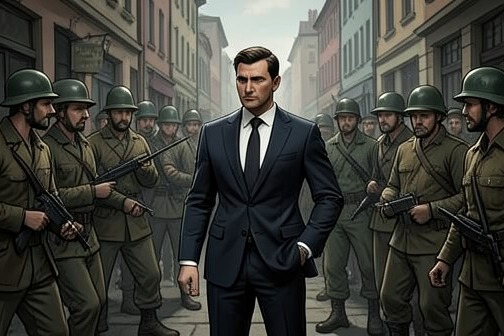
[Soviet Forced Collectivization and Dekulakization](entity:event-recall-event-802b1d323f09) is depicted as a state effort to reorganize agriculture and extract more grain for the cities during the [First Five-Year Plan](entity:event-recall-event-first-five-year-plan-2b4cbbb64338). Its central reversal is that the policy sought greater production by exiling a million of the regions’ most capable farmers, while resistance, inadequate machinery, poor weather, and escalating requisitions compounded the agricultural crisis. The narrative treats this outcome not as inevitable, but as the consequence of choices made under the pressure of ambitious national plans.
## Industrial aims and agricultural demands
Since the launch of the First Five-Year Plan in 1928, workers in urban centers had been building power stations, steel mills, and plants producing heavy machinery. The plan’s industrial ambitions depended on the grain-producing regions: they were expected to meet the increased demand for bread in the cities through sharp gains in agricultural output. The countryside was therefore made responsible for sustaining a transformation whose most visible projects lay elsewhere.
The language of planning presents this as a problem of production and supply, but the narrative emphasizes the human and practical realities that the plan could not simply command into existence. Agricultural output was expected to rise at the same time that the government set about removing a million kulaks. They were denounced as profiteers and enemies of the common good, yet the targeted group also included the regions’ most capable farmers. The policy thus risked dismantling expertise in the very places from which greater production was demanded.
## Dekulakization, resistance, and coercion
The remaining peasants regarded new agricultural methods with resentment and suspicion, and they resisted even small efforts at innovation. Tractors, intended to usher in a new era of large-scale production, were in short supply. The discrepancy between ambitious plans and available equipment made implementation more difficult, while uncooperative weather added another pressure on harvests.
Resistance could take destructive forms. Recalling the mandatory collectivization announced in [1930](entity:time-recall-time-1930-299e5a23e81b), [Mikhail Fyodorovich Mindich](entity:character-recall-character-mikhail-fyodorovich-ce9b237f1713) cites the killing of livestock on a vast scale: half the peasants, he says, slaughtered their animals rather than surrender them to the cooperatives. The resulting loss amounted to fourteen million head of cattle. His gesture with the untouched veal on his plate gives the statistic a concrete presence: the policy’s conflict over livestock is brought into an ordinary meal, where the meat itself becomes an occasion to remember what had been destroyed.
As agricultural output collapsed, the state did not ease its demands to match the worsening harvest. The imperative to feed the cities instead brought increased quotas and requisitions enforced at gunpoint. The account sets administrative targets against the conditions on the ground: experienced farmers had been exiled, peasants resisted the new system, tractors were scarce, and weather was damaging production. Force could compel the seizure of grain, but it could not resolve those underlying failures.
## Consequences and the question of inevitability
The account traces the convergence of these pressures into widespread hardship across the agricultural provinces of old [Russia](entity:location-recall-location-e36341713c23). In 1932, it says, millions of peasants in Ukraine died of starvation. This outcome follows from a chain in which the state demanded sharply increased agricultural output while removing capable farmers, failing to supply enough machinery, confronting peasant resistance, and meeting a falling harvest with still more coercive requisitioning.
The Count challenges the language of inevitability when discussing collectivization and dekulakization. He accepts that these policies appear highly probable, even likely, but distinguishes probability from an outcome that could not have been otherwise. That distinction matters to the novel’s account: the catastrophe is not framed as a force of nature. Weather is one part of the crisis, but policy determines how shortages are met and whose needs are subordinated to the demand for grain.
## Narrative framing and significance
The account first places the crisis within the First Five-Year Plan’s sweeping ambition, then slows down over the practical obstacles and the peasants’ response. Against the grand language of industrial transformation, it sets the shortage of tractors, the loss of livestock, and the enforcement of quotas at gunpoint. This contrast makes the gap between a plan’s legible targets and agricultural life central to the episode: production can be counted and demanded, while local knowledge, resistance, and material limits cannot be made to disappear by decree.
The scene of Mindich discussing the slaughtered cattle over an untouched meal and the Count’s insistence that the policies were not inevitable give the episode both a material and a moral emphasis. Food is simultaneously the goal of the state’s demands and evidence of what those demands have damaged. [Collectivization](entity:concept-recall-concept-2005ace24f37) is therefore presented not merely as an agricultural reorganization, but as a coercive transformation whose costs fall most heavily on rural people and whose consequences reach far beyond the plans that justified it.
Event 30
1932 Soviet famine

The [1932 Soviet famine](entity:event-recall-event-1932-651b40d06586) is presented as the devastating outcome of a drive to transform agriculture and feed rapidly expanding cities. The narrative traces the crisis from the launch of the [First Five-Year Plan](entity:event-recall-event-first-five-year-plan-2b4cbbb64338) through forced changes in the countryside, falling harvests, and the use of coercion to meet rising grain demands. It also sets this impending catastrophe against ordinary scenes of food and work, making the distance between national plans and lived scarcity sharply visible.
## Background and the drive for production
The First Five-Year Plan began in 1928, when tens of thousands of workers in urban centers were building power stations, steel mills, and heavy-machinery plants. This industrial effort depended on the grain-producing regions supplying more bread to the cities. Agricultural production was thus assigned a national task: it had to rise in step with the demands of industrial transformation.
The policy chosen to prepare the countryside for that task included the exile of a million kulaks, described as profiteers and enemies of the common good. The account underscores the contradiction in this justification: those targeted were also the regions’ most capable farmers. Their removal weakened the very productive capacity the campaign required, while the peasants who remained regarded new agricultural methods with resentment and suspicion.
## Why the harvest failed
The campaign’s ambitions met practical limits. Tractors, expected to usher in a new agricultural era, were in short supply. The remaining peasants resisted even small efforts at innovation, and uncooperative weather compounded these difficulties. The resulting collapse in agricultural output did not prompt a reduction in the demands placed on rural communities. Instead, because the cities still had to be fed, quotas and requisitions increased as the harvest declined.
This sequence makes the famine more than a story of failed crops. The state’s demand for grain intensified precisely when production was contracting, and the shortfall was met through measures enforced at gunpoint. The account’s causal emphasis falls on the interaction of forced removals, distrust of imposed methods, inadequate equipment, poor weather, and escalating requisitions—not on a single obstacle in isolation.
## Starvation and the narrative’s warning
The narrative places the consequences in 1932: these intractable forces brought widespread hardship to the agricultural provinces of old [Russia](entity:location-recall-location-e36341713c23) and death by starvation for millions of peasants in Ukraine. Its retrospective discussion of historical turning points lends the crisis a wider frame, but the famine is not treated as an abstract date in a sequence of political decisions. The chain of policy and production failures culminates in mass human suffering.
The warning is sharpened by the scene immediately before this account of the crisis. [Nina Kulikova](entity:character-recall-character-nina-kulikova-ff284123b7b8) arrives in [Ivanovo](entity:location-recall-location-ivanovo-34164bdd3598) as fields of young wheat stretch across the landscape; she is overwhelmed by their beauty and by the feeling that her life has just begun. The narration then turns toward the agricultural disaster still to come. That contrast does not identify Ivanovo as the site of the famine described, but it places an individual’s hopeful encounter with the countryside beside a history of mounting hardship in the agricultural regions.
## Scarcity in everyday life
Elsewhere, the aftermath of the Revolution is rendered through the diminished larder of [The Metropol](entity:location-recall-location-659eb4e31846). Economic decline, failed crops, and halted trade leave refined ingredients scarce in [Moscow](entity:location-recall-location-moscow-b59c72aac896), and chef [Emile Zhukovsky](entity:character-recall-character-emile-zhukovsky-0098632daa56) must work with what he can obtain. His improvised saltimbocca replaces veal with chicken, Parma prosciutto with Ukrainian ham, and sage with a more bitter herb. This episode does not itself depict the 1932 famine, but it gives material form to the wider scarcity that follows upheaval and failed harvests: shortages enter daily life through altered ingredients and constrained choices.
The famine’s decisive significance lies in the gap between the promise of increased production and the methods used to pursue it. Industrial expansion depended on rural grain, yet the campaign removed capable farmers, lacked sufficient machinery, encountered resistance and poor weather, and answered falling output with harsher demands. In that progression, the plan’s measurable targets meet the limits of agricultural life—and the cost of refusing to adjust them is counted in starvation.
Event 31
Assassination of Sergei Kirov

The assassination of Sergei Kirov is presented as a consequential political rupture in an already strained Soviet society. The narrative does not depict the killing itself; instead, it places the event within a broader account of hardship and identifies the purge that followed as its national consequence.
## Historical Context
The event belongs to the unsettled early 1930s, when the famine of 1932 had driven peasants toward cities already burdened by overcrowded housing and shortages of essential goods. Urban workers faced the demands of the continuous workweek, while artists encountered tighter limits on what they could imagine. The account sets the assassination against these overlapping pressures rather than isolating it from the conditions around it.
## The Assassination and Its Consequences
The narrative identifies Sergei Kirov as a revolutionary hero and states that his assassination was followed by the purging of an array of politically unreliable elements. It supplies no scene of the killing, account of its circumstances, or further identification of those purged. Its emphasis falls instead on the political aftermath: the assassination marks a moment after which state repression widened.
## Narrative Significance
The event is framed through the narrator’s distinction between the dates historians later identify as decisive and the larger historical forces those dates stand for. In this account, Kirov’s assassination is one such marker: a discrete event placed amid social and economic crises, with its significance measured by the purge that followed. The novel thereby presents it not as an isolated episode, but as a hinge between accumulated strain and intensified political repression.
Event 32
Burning of Moscow in 1812
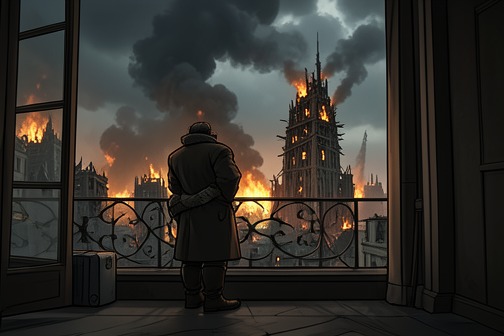
The [Burning of Moscow in 1812](entity:event-recall-event-1812-af2b648ec06e) is presented as more than a military catastrophe: [Mishka](entity:character-recall-character-mishka-58198ebf8709) describes it as a vivid instance of Russians destroying what they have made. Recalled in conversation with [Count Alexander Ilyich Rostov](entity:character-recall-character-count-alexander-ily-83aa9b72a1d2), the fire becomes both a dramatic episode in the encounter with Napoleon and an argument about a recurring pattern in Russian history.
## Background and Recollection
Mishka introduces the fire as a fifth contribution to a discussion of [Russia](entity:location-recall-location-e36341713c23)’s history. He tells Count Alexander Ilyich Rostov that he had thought of it one night some years earlier, framing the historical episode as part of a personal conversation rather than as a detached chronicle. The Count is taken aback and asks whether Mishka means the events of 1812; Mishka confirms that he does.
## The City Set Ablaze
Mishka asks the Count to imagine Napoleon being roused at two in the morning and stepping from his newly made bedroom in the [Kremlin](entity:location-recall-location-kremlin-927792b53b5f). Napoleon had claimed [Moscow](entity:location-recall-location-moscow-b59c72aac896) only hours before, yet the city had been set on fire by its own citizens. The contrast is central to the account: possession of the city has just been asserted, but the city itself is already being destroyed.
## Mishka’s Interpretation
Mishka calls the burning especially Russian, not because it stands alone, but because it exemplifies what he calls a form of event. In his interpretation, it is one instance drawn from a much longer history in which Russians have proved unusually capable of destroying what they have created. The claim turns the fire from a single episode into a lens through which he reads a broader national pattern; the passage offers that interpretation as Mishka’s, rather than establishing it as an independent historical conclusion.
## Narrative Significance
The scene’s force comes from the collision of triumph and ruin: Napoleon has claimed the city, but its citizens’ act of destruction makes that claim precarious. Mishka’s quiet laugh as he imagines Napoleon’s expression gives the recollection a wry edge, while his distinction between a discrete event and a recurring form makes the fire serve as a compact argument about Russia’s history. The Count’s surprise marks the moment when the conversation shifts from an individual historical episode to Mishka’s larger interpretation of national self-destruction.
Event 33
German Invasion of the Soviet Union in 1941
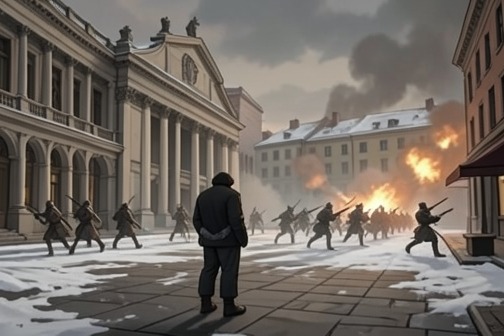
The [German Invasion of the Soviet Union in 1941](entity:event-recall-event-c5af39f67a6c) brought more than three million German soldiers across the frontier and carried the Wehrmacht to the outskirts of [Moscow](entity:location-recall-location-moscow-b59c72aac896). In the novel, the offensive is recalled against a view of the capital’s surviving landmarks: the approaching threat gives new weight to the city’s endurance, while the account of evacuation plans and defiance makes clear that Moscow’s survival was never assured.
## The offensive and advance on Moscow
Five years after the invasion began, a lone figure pauses in [Theatre Square](entity:location-recall-location-622ddea9071d) and looks from the [Palace of Unions](entity:location-recall-location-ca236f4c7fd0) to the [Bolshoi Theatre](entity:location-recall-location-4790faaff350), the [Maly Theatre](entity:organization-recall-organization-5b899e5e07e7), and the [Metropol Hotel](entity:location-recall-location-metropol-hotel-65f38c441f1f), wondering at how many old facades remain unspoiled. The narration then turns back to the day the Germans launched their offensive, which sent more than three million soldiers across the Russian frontier, from [Odessa](entity:location-recall-location-681f5d732390) to the Baltic.
Hitler estimated that the Wehrmacht would secure Moscow within four months. After taking Minsk, Kiev, and Smolensk, German forces had advanced nearly six hundred miles by late October. They were closing on Moscow from the north and south in a pincer movement, and within days the city would be within artillery range. The account sets the speed and scale of the advance against the capital’s increasingly precarious position.
## A capital preparing for defeat
As the Germans approached, lawlessness spread through Moscow. Refugees and deserters crowded the streets, sleeping in makeshift encampments and cooking looted food over open fires. The government was preparing to move to Kuybyshev, and the city’s sixteen bridges had been mined for possible demolition. Within the [Kremlin](entity:location-recall-location-kremlin-927792b53b5f) walls, classified files were burned; outside them, municipal and factory workers, unpaid for months, watched the fortress’s usually illuminated windows go dark one by one.
These preparations make the danger tangible: evacuation was under way, key routes could be destroyed, and even the Kremlin’s familiar lights were disappearing. The threatened loss of Moscow is also measured against the figure’s later walk through Theatre Square, where the old buildings still stand. The contrast does not erase the crisis; it shows what the city had risked losing.
## Defiance underground and on [Red Square](entity:location-recall-location-red-square-326566e0b8ae)
On the night of October 30, while the Germans were closing in, laborers carried chairs from the Bolshoi Theatre to Mayakovsky Metro Station. Later that night, the full [Politburo](entity:organization-recall-organization-politburo-a1267db9ccb7) assembled on the station platform, a hundred feet below ground, and sat at a long table set with food and wine. Stalin arrived by train in full military dress and told the leadership that, although its members could leave for Kuybyshev, he intended to remain in Moscow. He also announced that the annual Revolution commemoration would proceed on Red Square on November 7.
The underground meeting and the announced parade turn political resolve into action. For many Muscovites, hearing [The Internationale](entity:expression-recall-expression-39c01ed859af) accompanied by fifty thousand marching boots, with Stalin standing on the rostrum, became a turning point that strengthened confidence and resolve. The narration also complicates any single explanation for that change: it notes that seven hundred thousand soldiers held in reserve in the Far East were being moved toward Moscow even as the celebration took place.
## The retreat and the event’s remembered meaning
The account offers further material factors behind the German failure to take the city. Snow fell on twenty-eight of December’s thirty-one days, grounding the Luftwaffe, while the average temperature dropped to minus twenty degrees, a climate as alien to the Wehrmacht as it had been to Napoleon’s forces. Whatever the balance among military reserves, weather, and Soviet resistance, the Germans never passed through Moscow’s gates.
After taking more than one million prisoners and causing one million deaths, German forces began their retreat in January 1942, leaving the city surprisingly intact. The recollection of the invasion thus carries two scales of meaning: the immense cost of the German advance and the fact that the capital, despite preparations for its possible evacuation and destruction, remained beyond the invader’s reach.
Event 34
1941–1942 Battle for Moscow
The [1941–1942 Battle for Moscow](entity:event-recall-event-578d1867db52) was the German advance on the Soviet capital and its defeat at the city’s outskirts. In the novel’s retrospective account, [Moscow](entity:location-recall-location-moscow-b59c72aac896)’s survival emerges from several forces acting together: a public display of defiance, the arrival of reserves from the Far East, and severe winter weather. The battle is also remembered through what remained visible afterward: the city’s old facades, still standing when [Count Alexander Ilyich Rostov](entity:character-recall-character-count-alexander-ily-83aa9b72a1d2) walked across [Theatre Square](entity:location-recall-location-622ddea9071d) five years later.
## The German Advance and Moscow in Crisis
The offensive began with more than three million soldiers crossing the Russian frontier, from [Odessa](entity:location-recall-location-681f5d732390) to the Baltic. Adolf Hitler estimated that the Wehrmacht would secure Moscow within four months. After capturing Minsk, Kiev, and Smolensk, German forces had advanced nearly six hundred miles by late October 1941 and were approaching the capital from the north and south in a pincer movement. Within days, the city would be within artillery range.
The threat was accompanied by upheaval inside Moscow. Refugees and deserters crowded the streets, sleeping in makeshift encampments and cooking looted food over open fires. As the government began relocating to Kuybyshev, the city’s sixteen bridges were mined for possible demolition. Classified files burned in bonfires above the [Kremlin](entity:location-recall-location-kremlin-927792b53b5f) walls, while municipal and factory workers, unpaid for months, watched the fortress’s familiar illuminated windows go dark one by one. The account sets the battle against a city preparing for the possibility that its political and civic order might collapse.
## The Decision to Remain
On October 30, laborers directed by the secret police carried chairs from the [Bolshoi Theatre](entity:location-recall-location-4790faaff350) to Mayakovsky Metro Station. That night, one hundred feet below the city, the full [Politburo](entity:organization-recall-organization-politburo-a1267db9ccb7) assembled at a long table laid with food and wine. At nine o’clock, a train arrived and [Joseph Stalin](entity:character-recall-character-joseph-stalin-b2f2c907a5f9) stepped onto the platform in full military dress. He told the assembled leaders that they could make their way to Kuybyshev, but that he would remain in Moscow until the last drop of Russian blood had been spilled. He also declared that the annual Revolution anniversary would be celebrated on [Red Square](entity:location-recall-location-red-square-326566e0b8ae) on November 7.
The parade went ahead as announced. Many Muscovites later recalled the sound of [The Internationale](entity:expression-recall-expression-39c01ed859af) accompanied by fifty thousand marching boots, with Stalin standing on the rostrum, as a turning point that bolstered confidence and hardened resolve. The account does not make the parade the sole cause of the change in fortune; instead, it shows how a public ritual gave defiance a visible, collective form while the military struggle continued.
## Reserves, Winter, and Retreat
Other explanations for the reversal sit alongside the parade in the account. Seven hundred thousand soldiers held in reserve in the Far East were transferred across the country to Moscow’s aid, even as the celebration was taking place. December brought snow on twenty-eight of its thirty-one days, grounding the Luftwaffe, and an average temperature of minus twenty degrees—a climate as alien to the Wehrmacht as it had been to Napoleon’s forces. The narrative thus resists reducing the outcome to a single gesture or circumstance: political resolve, military reinforcement, and weather all shaped the defense.
German troops had taken five months to march from the frontier to the outskirts of Moscow, but they never passed through the city’s gates. After taking more than one million prisoners and causing one million deaths, they began retreating in January 1942. Moscow was left surprisingly intact. The account describes the result as a victory with immense human cost, not an untouched triumph.
## The Battle in Retrospect
Five years after the German offensive began, Rostov pauses in Theatre Square and looks from the [Palace of Unions](entity:location-recall-location-ca236f4c7fd0) to the Bolshoi Theatre, the [Maly Theatre](entity:organization-recall-organization-5b899e5e07e7), and the [Metropol Hotel](entity:location-recall-location-metropol-hotel-65f38c441f1f). He marvels that so many old facades remain unspoiled. The scene places the battle’s aftermath in the ordinary geography of the city: buildings that had stood within reach of the advancing army are still part of the route through which people move.
That retrospective juxtaposition gives the battle its narrative significance. The account first shows a capital preparing for evacuation and possible destruction, then returns to a city whose familiar architecture has endured. Its survival is presented not as proof that the danger was slight, but as the consequence of a defense assembled under extreme pressure, and as a condition that can be recognized only by looking back at what Moscow narrowly escaped.
Event 35
1941 Revolution Day Parade in Red Square
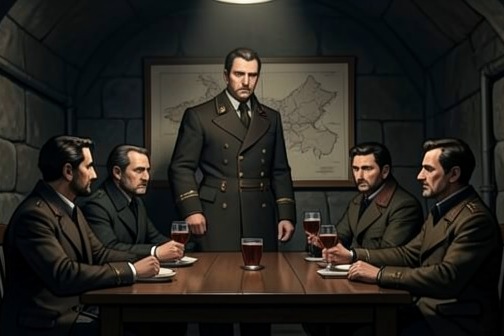
The [1941 Revolution Day Parade in Red Square](entity:event-recall-event-1941-a6ecd402c02f) took place amid the German advance on [Moscow](entity:location-recall-location-moscow-b59c72aac896), after [Joseph Stalin](entity:character-recall-character-joseph-stalin-b2f2c907a5f9) declared that he would remain in the capital rather than evacuate to Kuybyshev. The annual commemoration became a public display of defiance: for many Muscovites, the sound of [The Internationale](entity:expression-recall-expression-39c01ed859af) and the sight of Stalin on the rostrum marked a turning point in their confidence and resolve.
## Crisis and decision
By late October, Moscow was under severe strain. Refugees and deserters crowded the streets, bridges had been mined for possible demolition, and classified files burned above the [Kremlin](entity:location-recall-location-kremlin-927792b53b5f) walls as the government prepared to relocate to Kuybyshev. Against this uncertainty, a small cadre of laborers carried chairs from the Bolshoi to the Mayakovsky Metro Station, where the full [Politburo](entity:organization-recall-organization-politburo-a1267db9ccb7) assembled underground, a hundred feet below the city and beyond the reach of German artillery.
At nine o’clock, the assembled leaders sat at a long table set with food and wine. Joseph Stalin arrived by train in full military dress and took the place at the head of the table. He told the leadership that they were free to go to Kuybyshev, but that he had no intention of leaving Moscow; he would stay until the last drop of Russian blood had been spilled. He also announced that the Revolution’s annual commemoration would be held on [Red Square](entity:location-recall-location-red-square-326566e0b8ae) on November 7, as usual. The parade was therefore not simply a scheduled observance: it followed a decision to maintain the public ritual in a city preparing for the possibility of evacuation and destruction.
## The parade
On November 7, the commemoration brought the ceremony back to Red Square. Muscovites later remembered the heart-swelling sound of The Internationale accompanied by fifty thousand marching boots, while their leader stood defiant on the rostrum. The scale and familiar form of the parade gave a public shape to Stalin’s earlier declaration: the city would continue to mark the anniversary despite the danger at its gates.
For many who witnessed it, that combination of music, marching troops, and leadership presence made the day feel like a decisive change in the course of the crisis. Their recollection was not merely of a ceremony but of a moment when resolve seemed to become visible and collective. The narrative presents the parade as a powerful source of confidence without making it the sole explanation for Moscow’s survival.
## Memory and military outcome
The parade’s status as a turning point is set beside other explanations. Some observers emphasized that Stalin had kept seven hundred thousand soldiers in reserve in the Far East and that these troops were being moved west to aid Moscow even as the celebration took place. Others pointed to the weather: snow fell on twenty-eight of December’s thirty-one days, grounding the Luftwaffe, while the average temperature dropped to minus twenty degrees, a climate as unfamiliar to the German forces as it had been to Napoleon’s.
The German army had taken five months to advance from the Russian frontier to the outskirts of Moscow, but it never entered the city. After taking more than a million prisoners and causing a million deaths, the troops began their retreat in January 1942, leaving Moscow surprisingly intact. The narrative thus preserves both the parade’s emotional importance and the difference between a remembered symbol of reversal and the several material factors behind the military outcome.
Event 36
Sofia's Fall and Emergency Surgery
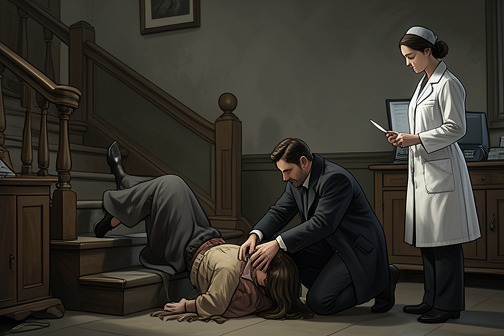
[Sofia](entity:character-recall-character-sofia-9c2254d138c5)’s fall and emergency surgery turn a sudden accident at the [Metropol Hotel](entity:location-recall-location-metropol-hotel-65f38c441f1f) into a test of [Count Alexander Ilyich Rostov](entity:character-recall-character-count-alexander-ily-83aa9b72a1d2)’s composure and a moment of acute uncertainty about her future. A fracture near the front of her skull makes immediate treatment necessary; after surgery, the surgeon identifies a concussion but expects her to recover. The episode moves from the Count’s precise account of the accident to the doctor’s clinical assessment, then narrows to the reassurance he gives a father who cannot yet bring himself to ask whether his daughter will be all right.
## The Accident and Medical Emergency
Sofia has fallen while running up a staircase at the Metropol Hotel. The Count tells the surgeon that she may have struck her head on the edge of the landing and estimates that the accident occurred no more than thirty minutes earlier. Asked whether she had been drinking, he rejects the suggestion with startled incredulity: she is a child. His account is brief and practical, but its precision establishes both the short interval available for treatment and the domestic setting from which the emergency has abruptly taken them.
The crisis is already unfolding in a surgery when a tall man in his late forties arrives with a primly dressed associate and asks who is in charge. Kraznakov claims that authority and challenges the newcomer’s presence. The newcomer’s intervention soon makes clear that he is the surgeon whose judgment will determine what happens to Sofia. Rather than linger over the dispute about control, the scene shifts toward diagnosis and action.
## Diagnosis and Immediate Treatment
The surgeon identifies a fracture at the front of the left parietal bone and a likely risk of subdural hematoma. He orders Antonovich to suit up and asks him to improve the lighting, converting the assessment into an immediate plan for treatment. The reference to the room’s lighting is a concrete reminder that urgent care depends not only on medical knowledge but also on the conditions in which a procedure must be performed. The surgeon then clears the room and tells the Count that Sofia will be attended to at once.
He explains that the danger is swelling rather than direct damage, and compares the skull’s capacity to withstand rough treatment with the possibility of a serious complication. The Count must wait outside while the doctors operate. The hallway is cleared, including the two gurneys and their sleeping patients; Antonovich returns in scrubs, whistling as he goes into Surgery Four, while a man in a black suit holds the door for him. Once the door closes, the Count is left alone in the empty corridor. The action’s focus shifts from the clinical team’s purposeful preparation to the helplessness of waiting beyond the operating room.
## Prognosis and Reassurance
After the operation, the surgeon reports that the risk of swelling has been alleviated. Sofia has suffered a concussion, described as a bruising of the brain, and is expected to have headaches and need substantial rest. The prognosis is specific: in a week, she should be up and about. The account thus distinguishes the immediate danger from the recovery still ahead; the operation has addressed the most pressing risk, but Sofia’s return to ordinary activity will require time.
The Count extends a hand to Dr. Lazovsky and begins to speak, but cannot find the words to form his question. The surgeon understands the question without requiring him to say it and assures him that Sofia will be every bit herself. That assurance answers more than a request for a medical timetable: it speaks to the fear that the injury might have changed her in a lasting way. As the Count begins to offer thanks, [Osip Glebnikov](entity:character-recall-character-osip-glebnikov-aa0ac0c7e5d3) arrives, and the surgeon turns to him. The scene’s reassurance is therefore a decisive pause in the larger movement of events, not a claim that Sofia’s recovery is already complete.
## Narrative Significance
The episode is organized around a sharp contrast between action and waiting. In the surgery, the diagnosis produces orders, preparation, and intervention; outside it, the Count has no task beyond remaining on the bench until someone returns. The empty hallway makes that division visible. His brief, exact account of the fall gives way to a period in which no further effort on his part can determine the outcome.
The surgeon’s final reassurance supplies the event’s emotional resolution without erasing its physical consequences. Sofia has sustained a skull fracture and concussion; she faces headaches and a period of rest, even as the immediate danger has been treated and the doctor expects her to recover. The episode’s movement is from an uncertain injury to a qualified but firm assurance about her future, with the Count’s unspoken question marking the personal stakes of the medical report.
Event 37
Sofia's Discovery as a Pianist
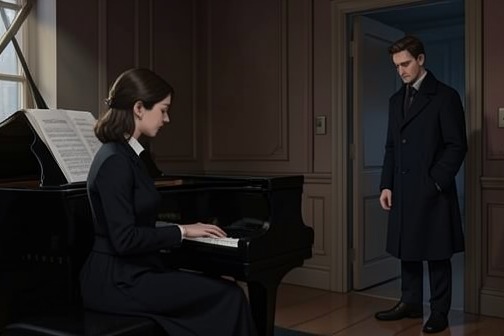
[Sofia](entity:character-recall-character-sofia-9c2254d138c5)'s discovery as a pianist is a turning point in which private, self-taught ability becomes a practice recognized and nurtured by a teacher. [Viktor Stepanovich Skadovsky](entity:character-recall-character-viktor-stepanovich-3176c03b19b8) finds her at the keyboard after hearing a Mozart Variation in the ballroom of the [Hotel Metropol](entity:organization-recall-organization-hotel-metropol-44431b09c647); the lessons that follow lead to a performance of Chopin that astonishes the Count with its expressive depth. The event joins an accidental encounter to a more sustained revelation: Sofia has not merely learned notes, but has developed a way of making music speak.
## Discovery in the Ballroom
The discovery begins with sound carrying beyond its source. Viktor Stepanovich Skadovsky is walking down a hallway when a Mozart Variation reaches him from the ballroom. Intrigued, he looks inside and finds Sofia at the keyboard. The encounter is accidental, but its consequence is immediate: the sound prompts him to investigate, and the sight of Sofia playing transforms an unexplained melody into evidence of an ability he can recognize.
Sofia has not been studying with a teacher. She has learned the piece by listening to one of the recordings [Richard Vanderwhile](entity:character-recall-character-richard-vanderwhile-0ade02afdf78) gave the Count, then sounding out the notes one by one. That sequence matters: the record provides a model, but the labor of hearing and finding each note belongs to Sofia. Her playing has emerged through patient, self-directed work rather than formal instruction. Viktor's discovery makes that solitary process visible to someone able to respond to it.
The account of the encounter reaches Richard through the Count, who presents it as the extraordinary thing that has happened. The phrase catches the event's double perspective: for Viktor, a sound in a hallway leads to an unexpected student; for the Count, learning what Sofia has been doing opens a new understanding of her. The discovery is therefore both an incident in the ballroom and a revelation that travels outward through the people around her.
## From Self-Instruction to Lessons
Viktor is so impressed by Sofia's natural ability that he takes her on as a student at once. He begins teaching her the classical repertoire in the ballroom, where the lessons continue. This change does not erase the self-taught beginning. Rather, instruction follows it: Sofia has already demonstrated enough initiative and capacity to make a professional musician recognize what she might do with guidance.
The ballroom becomes a place of work as well as performance. The piano is not incidental to the discovery: the melody draws Viktor into the room, and the keyboard gives Sofia a means to show what she has learned. In a later scene, the Count initially mistakes the arrangement before him. He is holding an apparent cad by the lapels when he learns that the man is Sofia's instructor. Looking more closely, he realizes that the loveseat is the bench of a piano and that the place where the pair's hands had been intertwined is an orderly row of ivory keys. The comic misreading gives way to the actual explanation: the closeness he saw belongs to a lesson at the instrument.
Viktor's quick series of nods confirms the instructor's role in that moment. He then joins Sofia on the bench and invites her to play. What began as an unexpected sound in the ballroom has become a continuing exchange between student and teacher, with the Count now present to hear what their work has made possible.
## Chopin and the Count's Recognition
Sofia straightens her posture, places her fingers on the keys, and begins delicately. The piece is Chopin's Nocturne, Opus 9, No. 2 in E-flat major. The Count recognizes it almost at once: the melody would have been familiar to him even after thirty years away from it, or if he had encountered it unexpectedly in Florence. As the first measure reaches him, he steps backward; as the melody returns and gathers emotional force, he retreats again and finds himself seated.
The movement from standing to sitting makes his response visible before he can explain it. He is accustomed to being proud of Sofia's success at school, her composure and beauty, and the affection hotel workers show her. But he distinguishes that familiar pride from what he feels while listening. Pride, as he understands it, carries prior knowledge and the satisfaction of having been right about someone. This performance instead takes him beyond what he knows: he is astonished.
The astonishment has several levels. The Count is surprised that Sofia can play at all, and that she handles the primary and subordinate melodies with such skill. Most striking to him is her expressive sensitivity: the capacity to understand a composer's feeling and communicate it through performance, beyond the mastery of technique alone. The scene thus answers the first question raised by her discovery while making the answer larger. Sofia has not simply acquired the ability to reproduce a piece; she can shape its feeling for an audience.
## What the Discovery Reveals
Chopin's music gives the Count a way to recognize both the force and the uncertainty of Sofia's expression. He considers the heartache the composition might carry, whether born of lost love or of a more fleeting sense of anguish, and hears that feeling made present in the ballroom a century after the composer's death. He wonders how a seventeen-year-old could perform with such understanding without drawing on a sense of loss and longing of her own. The question is his inference, not a confirmed explanation of Sofia's inner life; what the performance establishes is its expressive power.
As Sofia begins another iteration of the melody, Viktor Stepanovich Skadovsky looks over his shoulder with raised eyebrows, sharing the Count's amazement without interrupting her. He turns the page for her with the attentiveness of an apprentice assisting a master. The reversal is quiet but telling: the teacher who recognized a gifted beginner now serves the music as Sofia carries it forward. The discovery's decisive result is not a declaration about her future, but the scene itself—a self-taught student at the piano, a teacher responding with respect, and a listener forced to recognize an ability he had not known was there.
Event 38
Sofia's Conservatory Competition Victory

[Sofia](entity:character-recall-character-sofia-9c2254d138c5)’s Conservatory Competition Victory is presented not through a view of the stage but through the excited account [Anna](entity:character-recall-character-anna-ea2421a71401) gives after bringing Sofia to [Count Alexander Ilyich Rostov](entity:character-recall-character-count-alexander-ily-83aa9b72a1d2). The telling makes the result plain: Sofia’s Mozart performance turns a formal competition into a shared recognition of her achievement, while the announcement draws from her father a shout he has not given in twenty years.
## Announcement and framing
The news arrives as a surprise. A closet door swings open in the Count’s study, and Anna charges in, bringing Sofia with her and announcing that Sofia has won. The sudden entrance gives the victory the force of an interruption: the private stillness of the study is broken by news too important to deliver quietly. The Count’s immediate response is a shout of laughter, marking how far the moment carries him beyond his usual composure.
The scene then slows to make room for the story. The Count offers the two visitors chairs, but settles himself on the edge of [The Ambassador](entity:object-recall-object-the-ambassador-8de3c4fd827c), watching Sofia expectantly. Sofia smiles shyly and defers to Anna. When her father presses for the details, Sofia asks him to let Anna tell them. That small exchange establishes both the Count’s eagerness and Sofia’s modesty, while allowing Anna, who witnessed the competition, to shape the account.
## The competition and Sofia’s performance
Anna places Sofia’s appearance in the context of a substantial program. Five performers preceded her: two violinists, a cellist, a French-horn player, and another pianist. They played works by Tchaikovsky, Rimsky-Korsakov, and Borodin, and, in Anna’s telling, all represented the Conservatory professionally and with precision. Sofia’s success therefore follows a full evening of capable performances; it is not described as a victory over incompetence, but as the moment that changes the audience’s attention.
Before Sofia plays a note, her entrance has already made an impression. Anna recalls an audible gasp as Sofia crossed the stage to the piano without the slightest rustle of her dress, seeming to float. Sofia credits her aunt with teaching her that manner of entering, but Anna distinguishes a learned lesson from an individual quality: the manner of Sofia’s entrance, she says, cannot be taught. The Count agrees. The exchange treats the performance as more than a matter of notes: Sofia’s command of the stage is part of what the audience sees, while her presence remains recognizably her own.
The choice of Mozart’s Piano Sonata No. 1 initially meets resistance. When the director announces the piece, some listeners mutter and shift in their chairs. Anna’s account emphasizes the contrast between that unsettled reception and the response once Sofia begins. The audience is overcome; Sofia plays with tenderness and joy, and faces across the hall turn into smiles. The crowd’s change of feeling supplies the clearest measure of the performance’s effect: the skepticism does not need to be argued away, because Anna describes it giving way as the music unfolds.
## Reception and victory
The applause after Sofia finishes is so strong that Anna remembers it shaking dust from the chandeliers. The image makes the response physical as well as social: the sound seems to travel through the hall itself. The Count claps and rubs his hands together while listening, sharing in the excitement before the account has even reached its conclusion.
Anna says the competition was already over in everyone’s mind. The boy scheduled to perform after Sofia had practically to be dragged onstage, a sharp contrast to the attention Sofia had commanded. At the reception she became the belle of the evening, toasted from every corner. The evidence of victory thus extends beyond applause: the audience’s response displaces the remaining contest, and the reception gives Sofia public recognition among those gathered.
## Family response and narrative significance
The victory is also a family event. Anna tells the story as Sofia’s aunt and as the actress who accompanied her, while Sofia is present to listen and occasionally correct her father’s interruptions. The Count’s questions reveal how avidly he wants the details; his eagerness is affectionate, but the scene does not make him the source of the achievement. Anna narrates what she saw, and Sofia’s performance remains at the center of her account.
The shift from the Count’s initial silence to his laughter and animated attention gives the announcement a particular emotional weight. His shout is identified as his first in twenty years. The competition’s result therefore alters the atmosphere of the study as well as Sofia’s standing at the Conservatory: public acclaim reaches into a private relationship and elicits an unusually unguarded response from her father. The scene ends not with a formal award or a stated judging procedure, but with the force of the audience’s verdict, the toasts at the reception, and the Count reaching for champagne to celebrate.
Event 39
Stalin's Death and the Soviet Succession Crisis
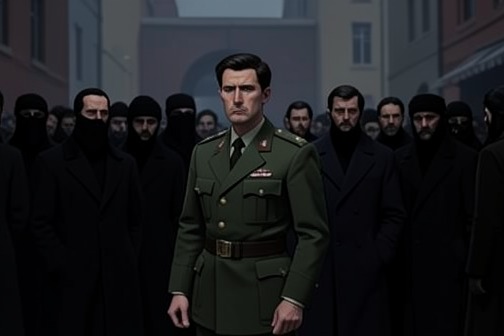
[Joseph Stalin](entity:character-recall-character-joseph-stalin-b2f2c907a5f9)’s death on [3 March 1953](entity:time-recall-time-3-march-1953-2703430376ed) transformed the problem of political authority into an immediate succession crisis: no successor had been designated, and eight figures within the [Presidium](entity:organization-recall-organization-6eceed551e05) could plausibly claim the right to lead. The public funeral revealed the varied meanings attached to Stalin’s rule, while the political settlement that followed rejected the concentration of top offices in one person and left authority divided between Malenkov and [Nikita Khrushchev](entity:character-recall-character-nikita-khrushchev-311cf3b4cb8e).
## Historical Background
The episode belongs to a wider account of political change in which the scale of a turning point is often clearest only in retrospect. The narrative describes historians identifying consequential dates from the comfort of hindsight, then points to transformations already reshaping the Soviet state: the launch of the [First Five-Year Plan](entity:event-recall-event-first-five-year-plan-2b4cbbb64338) in 1928, the removal of Bukharin from the [Politburo](entity:organization-recall-organization-politburo-a1267db9ccb7) in 1929, and the drafting of [Article 58 of the Soviet Criminal Code](entity:rule-recall-rule-article-58-of-the-soviet-8ed1e5010545) in 1927. These developments are not presented as direct causes of Joseph Stalin’s death. They establish a political landscape marked by industrial ambition, concentrated authority, and a widening capacity to classify and constrain people.
The First Five-Year Plan placed heavy demands on agricultural regions, which were expected to supply more grain as urban industry expanded. The policy drive to exile a million kulaks removed many of the regions’ most capable farmers; other peasants resisted new agricultural methods, tractors remained scarce, and poor weather compounded the decline in output. Despite falling harvests, authorities raised requisition quotas and enforced them at gunpoint. In 1932, these pressures brought widespread hardship and starvation to millions of peasants in Ukraine. This background gives the succession crisis a particular weight: it followed decades in which state plans and political decisions had reached deep into ordinary life, even as the future direction of the government remained unsettled.
## Death and Public Mourning
Joseph Stalin died at his residence in Kuntsevo in the aftermath of a stroke. The following day, workmen and trucks carrying flowers arrived at the [Palace of Unions](entity:location-recall-location-ca236f4c7fd0) on [Theatre Square](entity:location-recall-location-622ddea9071d). Within hours, the building’s façade bore a portrait of Stalin three stories high. The public staging of grief was large in scale, but the narrative resists treating those who came to mourn as a single, easily explained crowd.
On 6 March, Harrison Salisbury, the new [Moscow](entity:location-recall-location-moscow-b59c72aac896) bureau chief of The New York Times, watched from rooms once occupied by the Count and then used by the Mexican chargé d’affaires as members of the Presidium arrived in ZIM limousines. Stalin’s coffin was carried in from a bright blue ambulance. When the Palace of Unions opened to the public on 7 March, the line of citizens waiting to pay their respects stretched five miles across the city. More than a million people stood in line. Some mourned the leader associated with victory in the [Great Patriotic War](entity:time-recall-time-great-patriotic-war-d80065f4e220); others mourned the man credited with driving [Russia](entity:location-recall-location-e36341713c23) toward world-power status; still others faced the loss as the beginning of an uncertain era. The length of the queue registers the scale of the moment, but the different reasons for grieving prevent that scale from becoming a simple measure of political loyalty.
## The Succession Crisis
Joseph Stalin’s death left no plan of succession and no obvious designee. Within the Presidium, eight men could reasonably claim leadership: Beria, Minister of Security; Bulganin, Minister of the Armed Forces; Malenkov, Deputy Chairman of the [Council of Ministers](entity:organization-recall-organization-7eef607f6a66); Mikoyan, Minister of Foreign Trade; Molotov, Foreign Minister; Secretariat members Kaganovich and Voroshilov; and Nikita Khrushchev, formerly the mayor of Moscow. The list makes the institutional vacuum concrete. Authority did not pass automatically to a named heir; it was contested among figures already positioned within the state’s upper ranks.
In the immediate aftermath of the funeral, Malenkov seemed the likeliest candidate to prevail. He was a progressive internationalist and an outspoken critic of nuclear arms, and, like Joseph Stalin, he held both the premiership and the position of General Secretary of the [Central Committee](entity:organization-recall-organization-288549bbdede). That combination appeared to offer a clear center of power, but it also revived the problem of concentrating both offices in one person. A consensus quickly formed among the Party’s senior ranks that this should not happen again.
## The New Balance of Power
Ten days after the funeral, Malenkov was forced to pass his chairmanship of the Secretariat to the conservative Khrushchev. The change did not establish an uncontested successor; it divided authority between two men of opposing views and uncertain alliances. Their duumvirate provided a provisional answer to the immediate vacancy while preserving instability at the top. The leadership arrangement kept the wider world guessing for the next few years, and the episode’s emphasis falls less on a clean transfer than on the fragile balance assembled in the absence of an agreed succession.
## Political Order and Narrative Form
The account sets this crisis beside smaller systems for making people and actions administratively legible. At the [Boyarsky](entity:location-recall-location-boyarsky-fd3969ba4e82), new procedures required an order to pass from waiter to bookkeeper, ledger, kitchen slip, cooking log, confirmation slip, stamped receipt, and finally the table. Each stage recorded that the previous one had occurred. The procedure made a meal traceable through paperwork; it also displaced the direct, attentive service customers had come to expect. The comparison does not make restaurant administration a cause of the succession crisis. Instead, it places political change within a recurring concern with how institutions organize human activity through records, rules, and chains of authorization.
The hotel’s files offer a more unsettling version of the same impulse to record. Alongside operational reports on revenue, occupancy, staffing, maintenance, and inventories, cabinets held individual files on guests and staff members, including [Arkady](entity:character-recall-character-arkady-93a6dfb667fc), [Vasily](entity:character-recall-character-vasily-a20234873723), [Andrey](entity:character-recall-character-andrey-21147ea6b79d), [Emile](entity:character-recall-character-emile-78152359aa81), and [Marina](entity:character-recall-character-marina-634ff8f0a512). The staff dossiers collected instances of tardiness, impertinence, disaffection, drunkenness, sloth, and desire. The narrative observes that these flaws were not necessarily invented, but that a file could not account for the virtues of the person it reduced to them. Read alongside the succession struggle, these episodes sharpen the contrast between orderly administrative records and the unruly human motives they cannot settle. Joseph Stalin’s death is a decisive political break, but the story presents its consequences not as the execution of a prepared plan: the state has no designated heir, its leading figures compete over the shape of authority, and the resulting settlement remains provisional.
Event 40
Mikhail Mindich's Death

[Mikhail Mindich](entity:character-recall-character-mikhail-mindich-2d7b5ca697fe)’s death is disclosed not through an account of his final hours but through the woman who had been with him during the last six months of his life. [Katerina Litvinova](entity:character-recall-character-katerina-litvinova-d4bb51e895b5) comes to tell [Count Alexander Ilyich Rostov](entity:character-recall-character-count-alexander-ily-83aa9b72a1d2) in person, one week after Mikhail’s death, and to fulfill his request that she bring the Count something. The news ends the Count’s connection to everyone who had known him as a younger man; what remains is a book, an old photograph, and the obligation to remember.
## The news and its silences
The meeting begins with a small gesture of hospitality: the Count offers Katerina a chair. She sits with her satchel in her lap, then removes her kerchief to reveal light brown hair cut as short as a man’s. After a moment, the Count recognizes her and asks whether Mikhail is dead. Katerina confirms it. When he asks when, she answers that it was a week ago that day.
The exchange is remarkably spare. The Count does not ask how Mikhail died, and Katerina does not volunteer an explanation. The narration says it was plain that Mikhail had been betrayed by his times, but it gives no specific cause or circumstances of death. That distinction matters: the loss is certain, while its particulars remain unspoken. The Count’s quiet acceptance suggests that he had expected the news for some time, though the scene does not explain what had led him to expect it.
When he asks whether Katerina was with Mikhail, she first answers a question about children curtly, then softens and explains that she received word from Mikhail in January, went to him in [Yavas](entity:location-recall-location-yavas-158c90ac3e69), and had been with him for the last six months. She adds that he spoke of the Count often. Her account places the death within a continuing relationship rather than presenting Mikhail as wholly alone, but leaves their final days undescribed.
## A request carried to the Count
Katerina’s visit is not only a notification. When the Count expresses gratitude for her coming, she dismisses the thanks and explains that she came at Mikhail’s request. From her satchel she takes a rectangular parcel wrapped in plain brown paper and tied with twine. The Count can tell from its weight that it is a book.
The package turns Mikhail’s last known intention into an action completed after his death. Katerina has crossed the distance to the Count because Mikhail asked her to bring him something; the object reaches its recipient through her, rather than through a letter or an account of what Mikhail meant by it. The scene does not state exactly when or how he made the request. Its force lies instead in the fact that he had thought of the Count and arranged for a final communication between them.
Before leaving, Katerina responds to the Count’s offer with a brief instruction: “Remember him.” She then goes out. The words make remembrance the encounter’s explicit obligation, but the object she has delivered gives that obligation a material form. The Count returns to his chair and, after sitting in silence for several minutes, unties the parcel.
## The book and the shared past
Inside is a small leather-bound volume titled *[Bread and Salt](entity:object-recall-object-8fb2b1291d38)*. Its simple geometric tooling and roughly cut pages, with loose threads at the binding, show that it was made by a dedicated amateur. The book is not merely a possession handed over after Mikhail’s death: its handmade construction carries the evidence of sustained labor, and the Count recognizes in its pages the characteristic feistiness of Mikhail’s project.
Tucked into the seam of the title page is a photograph taken in 1912 at the Count’s insistence, much to Mikhail’s chagrin. The young Count stands on the left in a top hat, with an evident glint in his eye and a moustache extending beyond his cheeks; Mikhail stands beside him, looking as if he is about to sprint out of the frame. Mikhail had kept the picture all these years. The old image makes their shared youth visible at the moment the Count learns that its last surviving witness has died. The photograph’s preservation also complicates the old irritation surrounding its taking: what Mikhail once resented became something he retained.
As the Count reads, the book’s citations connect Mikhail’s work to other texts and to a specific memory of vulnerability. After a passage from “The Grand Inquisitor,” the book cites *The Brothers Karamazov* and the story of Ilyushechka, the boy hounded by schoolmates who falls gravely ill. A request associated with the boy’s death—that bread be crumbled on his grave so sparrows will come—leads the Count to break down and weep. The book does not simply preserve Mikhail’s thoughts; through its citations, it brings the Count to a passage in which the dead are not to be left alone.
## Grief, memory, and the final pages
The Count weeps for Mikhail, whom he remembers as generous yet temperamental, and as someone who had only briefly found his moment in time. He also weeps for himself. Despite his friendships with [Marina](entity:character-recall-character-marina-634ff8f0a512), [Andrey](entity:character-recall-character-andrey-21147ea6b79d), and [Emile](entity:character-recall-character-emile-78152359aa81), his love for [Anna](entity:character-recall-character-anna-ea2421a71401), and the extraordinary blessing of [Sofia](entity:character-recall-character-sofia-9c2254d138c5), Mikhail’s death means that the last person who knew him as a younger man is gone. Katerina’s instruction to remember Mikhail therefore carries a double weight: the Count can preserve his friend in memory, but he can no longer share that memory with another person who lived the same earlier years.
After taking a deep breath, the Count tries to compose himself and continues reading the final pages of Mikhail’s final discourse. Its citations span more than two thousand years but stop in June 1904, with sentences cut from a letter by [Anton Chekhov](entity:character-recall-character-9ff04d57bebf). In that passage, Chekhov describes enjoying bread while traveling in [Berlin](entity:location-recall-location-769cdeac2511). The Count supposes that, given the hardships of the 1930s, a censor such as Shalamov or his superiors might have removed the lines on the assumption that they could provoke discontent. Yet the censorship has produced an irony: Chekhov’s observation is no longer accurate, because the Russian people now know better than anyone in Europe how good a piece of bread can be.
The book’s endpoint makes Mikhail’s death resonate beyond private mourning without supplying a cause for it. A work assembled from citations ends on a passage that has itself been cut; its final subject is bread, a basic measure of pleasure made newly charged by deprivation and censorship. The Count encounters both the friend’s intellectual temperament and the history that has narrowed the conditions in which his words can be read. Mikhail is gone, but his book reaches the Count, and the act of reading becomes the form their friendship can still take.
Event 41
Sofia's Stalingrad Orchestra Assignment Is Averted

The appointment of [Sofia](entity:character-recall-character-sofia-9c2254d138c5) to the [Red October Youth Orchestra](entity:organization-recall-organization-694ecef02ed6) in [Stalingrad](entity:location-recall-location-4b711f654663) is presented as a cultural opportunity but arrives with the force of an imposed transfer. A requisition and an appointment have already been granted, and Sofia is told to report on September 1 to a city six hundred miles from [Moscow](entity:location-recall-location-moscow-b59c72aac896). The Count’s first response is nausea; when he recognizes the [Bishop Leplevsky](entity:character-recall-character-bishop-leplevsky-9c98158a1b9d)’s spite in the announcement, that bewilderment gives way to fury. [Anna Urbanova](entity:character-recall-character-anna-urbanova-8d7c450e6a60)’s intervention changes the encounter: the orchestra director withdraws his letter, and Sofia’s immediate departure is averted.
## The appointment and its destination
The visitor, Frinovsky, identifies himself as director of the Red October Youth Orchestra. Sofia has recently come to the organization’s attention as a gifted pianist, and Frinovsky says he attended her performance that evening before coming to offer her a position as the orchestra’s second pianist. The offer initially sounds like recognition of her ability and an opportunity within Moscow’s cultural life. The Count’s delighted question about where the orchestra is housed makes that assumption plain.
Frinovsky then corrects him: the orchestra is not in Moscow but in Stalingrad. The change of destination transforms the apparent honor. The position would take Sofia far from the capital, and the letter specifies that she is to report on the first of September. Its language is technical and welcoming, but the Count understands its practical consequence as a move to an industrial city six hundred miles away. The distance, the deadline, and the official formality make the appointment more than an informal invitation.
The distinction between an offer and an order is deliberately unsettled by Frinovsky’s explanation. He says a requisition has been made and an appointment granted by the regional undersecretary of cultural affairs. The document bears the undersecretary’s signature, which Frinovsky points out to the Count. The director presents this authorization as an accomplished administrative fact, not as a decision the family is being asked to consider. For the Count, reading the letter turns an apparently celebratory visit into a threat to Sofia’s future in Moscow.
## The Count’s reaction and the Bishop’s role
The Count reads the letter with a feeling of nausea. The response is physical before it becomes openly confrontational: the official welcome cannot soften the prospect it describes. Then he looks up and catches a flash of spite in the Bishop’s smile. In that instant, his nausea and bewilderment are replaced by cold fury. The reaction links the transfer to the Bishop’s apparent hostility, though the scene does not specify how the appointment was secured or establish the Bishop’s precise role in arranging it.
The Count stands to his full height and steps toward the Bishop, intending to seize him by the lapels or, better still, by the throat. The contemplated violence is not carried out. Before he reaches the Bishop, the closet door opens and Anna Urbanova enters. Her arrival interrupts the movement at the point where the Count’s anger is about to become physical, redirecting the confrontation from force toward persuasion.
The Bishop’s earlier remark about how exciting the Stalingrad appointment must be for the Count had already framed the news as a taunt. His smile confirms for the Count that the announcement is not experienced as neutral by everyone in the room. By contrast, Frinovsky’s later discomfort matters: when the political implications change, he looks to the Bishop as if he has been placed in an awkward position through no fault of his own. The scene distinguishes the director, who carries the appointment, from the Bishop, whose apparent spite gives the event its personal edge.
## [Anna](entity:character-recall-character-anna-ea2421a71401)’s intervention
Anna crosses to the Count and places a hand delicately at the small of his back. The gesture both positions her beside him and checks the scene’s immediate escalation. She studies the expressions of the two men in the doorway, then addresses the Bishop with a smile. Rather than challenge the appointment’s authority directly, she introduces a competing claim of influence: she asks whether Frinovsky knows Panteleimon, the Minister of Culture.
When Frinovsky says he has never had the honor, Anna describes Panteleimon as a supporter of youthful artistry and says that he has taken a personal interest in Sofia. She further claims that at dinner the previous night he spoke of watching Sofia’s talent develop and having great plans for her in the capital. The account supplies no independent confirmation of what the Minister said; within the encounter, however, it gives Frinovsky reason to reconsider the certainty with which he presented the Stalingrad appointment. Anna’s tact lies in invoking a higher cultural authority without openly accusing the director or challenging the regional undersecretary’s signature.
Frinovsky looks to the Bishop with the expression of someone caught in an uncomfortable position through no fault of his own. He turns back to the Count, delicately retrieves his letter, and recasts the placement as a possibility Sofia might choose in the future. He hopes the family will contact him if she ever becomes interested in performing in Stalingrad. The letter’s withdrawal is the decisive practical reversal: what had just been presented as an appointment with a reporting date is no longer pressed as an immediate requirement.
## Outcome and significance
The Count thanks Frinovsky, who apologizes for disturbing them at an unsuitable hour. He puts on his hat and hurries toward the belfry, with the Bishop close behind. The encounter ends without the Count striking the Bishop and without Sofia being sent away on the stated September schedule. The account establishes that the immediate transfer is averted; it does not say that Sofia later joins the Stalingrad orchestra or that all possibility of such a move disappears.
The episode turns on the contrast between artistic recognition and administrative compulsion. Sofia’s talent earns her a second-pianist position, but the opportunity arrives already attached to a distant destination and a fixed reporting date. The official letter makes that pressure look settled; Anna’s appeal to the Minister of Culture makes it negotiable. In the room, influence is answered with influence, while the Count’s physical anger is arrested before it can become an assault. The scene’s outcome is therefore limited but consequential: the appointment is withdrawn from the encounter, the family retains the immediate prospect of Sofia in the capital, and the Bishop’s apparent hostility is exposed to the Count without being settled by a direct confrontation.
Event 42
Sofia's Decision to Join the Conservatory's International Tour

[Sofia](entity:character-recall-character-sofia-9c2254d138c5)'s decision to join the [Moscow Conservatory Orchestra](entity:organization-recall-organization-769a4f3ca489)'s international tour makes artistic opportunity inseparable from family separation. After she initially declines the invitation, [Count Alexander Ilyich Rostov](entity:character-recall-character-count-alexander-ily-83aa9b72a1d2) learns that the choice was hers, not an order he had given or a retreat from stage fright. With the orchestra's itinerary about to be announced, he urges her to defend her own talent. The conversation leads toward the [Paris](entity:location-recall-location-657453741ed3) journey that she will undertake without him: for Sofia, the tour means stepping into a future she has the power to choose; for her father, it means helping her go where his own confinement prevents him from following.
## Opportunity and Stakes
The opportunity takes shape through [VOKS](entity:organization-recall-organization-voks-bd905320f74e), the [All-Union Society for Cultural Relations with Foreign Countries](entity:organization-recall-organization-d87acb0abcc8). The Count confirms that, six months later, on June 21, Sofia is expected to be in Paris. The itinerary places the Moscow Conservatory Orchestra in Minsk, Prague, and Paris, where she is to perform Rachmaninov at the [Palais Garnier](entity:location-recall-location-88e049355354). The plan belongs to a larger program of international cultural travel: a ballet company is to go to New York in April and a dramatic ensemble to London in May. The prospect is therefore both a personal opening for Sofia and part of a state-organized presentation of Soviet artists abroad.
The news unsettles those around her. [Emile Zhukovsky](entity:character-recall-character-emile-zhukovsky-0098632daa56) asks whether the country really has cultural relations with foreign countries, giving the announcement an air of improbability. [Viktor Stepanovich Skadovsky](entity:character-recall-character-viktor-stepanovich-3176c03b19b8), by contrast, treats Sofia's place on the tour as important to her prospects. He tells the Count that she will graduate in six months and that refusing the invitation could hamper her chance of securing a worthy position. In his view, the tour is not simply a prestigious engagement: it is an opportunity that could affect the professional future for which she has trained.
## The Refusal and the Deadline
The immediate crisis begins when Viktor Stepanovich Skadovsky reports a call from Director Vavilov: Sofia has declined the invitation. He had assumed the Count instructed her to withdraw, and had secured twenty-four hours before the director appointed someone else. The delay is tied to a firm deadline. The orchestra's itinerary and musical program are to be announced on Friday, and its performers must be settled beforehand. If Sofia has made the decision herself, the Count must speak with her that night; there will be no leisurely period in which she might reconsider.
The Count is genuinely unaware of the refusal. He tells Viktor Stepanovich Skadovsky that he agrees Sofia's future depends on performing on the tour, and the two men are left dumbfounded by the discovery that neither has directed her choice. The distinction matters: Sofia has not been withdrawn by a protective father, nor is the invitation being rejected on his behalf. She has acted for herself, and the adults who wish to preserve the opportunity must confront her decision rather than assume its cause.
At table ten in the [Boyarsky](entity:location-recall-location-boyarsky-fd3969ba4e82), the Count initially appears ready to continue their usual game of [Zut](entity:concept-recall-concept-zut-86ef31555480). He has prepared a category on common uses for wax, but instead sets it aside and begins telling Sofia a story from his past about Ribbon Day at the academy. The change of subject makes the meal a setting for persuasion rather than play. When he wonders whether anxiety lies behind her refusal, Sofia makes clear that she is not afraid to perform before an audience. She is also not persuaded by the Count's first explanation: she says plainly that anxiety has nothing to do with her choice, and that she simply does not want to go. The narrative gives no further reason for that reluctance, leaving it as her own stated preference rather than supplying a motive on her behalf.
## Persuasion and the Meaning of Acclaim
The Count's response draws on an earlier turning point in Sofia's life: the Conservatory competition she won with [Anna Urbanova](entity:character-recall-character-anna-urbanova-8d7c450e6a60). He says that his greatest pride did not arrive when Sofia and [Anna](entity:character-recall-character-anna-ea2421a71401) brought home news of victory. It came earlier, when he watched Sofia leave the hotel for the concert hall. For him, the essential act was venturing out before anyone could promise applause. His argument therefore does not reduce her decision to a calculation of honors or professional advancement. He presents courage as the willingness to perform when acclaim remains uncertain.
That distinction gives the exchange its force. Viktor Stepanovich Skadovsky stresses the practical consequences of missing the tour; the Count instead speaks of the moment before success, when Sofia chose to leave the hotel without knowing how she would be received. He is not asking her to prove that she can win another competition. He asks her to recognize that the uncertainty she once accepted is part of what made the earlier act meaningful. Sofia listens and nods, but the conversation does not erase the independence of her initial refusal. Her eventual course is framed as a choice she must make herself, not as obedience to either man's authority.
After a moment, Sofia says that if she is to play the piano in Paris, she wishes her father could be there in the audience. The wish turns the professional opportunity into a question of separation: Paris is valuable to her, but she imagines the performance in relation to the person who will not hear it beside her. The Count smiles. The scene does not report a formal declaration of acceptance in that exchange; instead, the subsequent itinerary and Sofia's later presence in Paris establish that she goes. Her decision thus emerges through the movement from refusal, through an honest account of what the refusal is not, toward the possibility of performing despite the cost of leaving her father behind.
## Paris, Exile, and the Cost of Going
The tour's promise carries particular weight for the Count because his own life is defined by confinement in [Moscow](entity:location-recall-location-moscow-b59c72aac896). In a later reflection from the hotel's roof, he looks across the city, identifying the Boulevard and Garden Rings around the [Kremlin](entity:location-recall-location-kremlin-927792b53b5f), and considers exile at home: a person can remain within his native country yet be cut off from the life and places he longs for. He describes the Russian form of exile as more than removal from one location; it makes the inaccessible homeland an object of intensified attention. The contrast with Sofia's journey is sharp. She can travel to Paris, while her father, looking out over a city that is and is not his, cannot simply accompany her.
The Count's practical help gives that separation a further consequence. When Sofia later leaves a performance at the [Salle Pleyel](entity:location-recall-location-salle-pleyel-4a56cac226c9), she goes out through the rear exit as the final movement begins. She carries a small map her father has cut from a [Paris Baedeker](entity:object-recall-object-2162c685636b) and folded to the size of a matchbook. Its route leads away from the concert hall and toward the [American Embassy in Paris](entity:location-recall-location-a1ac8d81b769). Instead of taking the direct road, the Count has drawn a detour designed to get her away from the venue quickly and let her disappear into the anonymity of the Champs-Élysées. The episode shows that his involvement in her journey extends beyond encouraging her to perform: he has prepared for her movement through a foreign city, where the opportunity to travel is also bound up with a dangerous escape.
The later scene gives the earlier decision a double edge. The daughter who once said she did not want to go eventually enters the world beyond the hotel; her father supports that passage even though he cannot be present as the audience she wished for. The tour is at once a public artistic undertaking, a private step toward independence, and the setting for their separation. Its emotional center is not applause itself, but the difficult act of going forward when neither acclaim nor reunion can be guaranteed.
Event 43
The Battle of Berlin

[The Battle of Berlin](entity:event-recall-event-the-battle-of-berlin-717a2020cefa) is remembered here through its intimate aftermath: Ilya, [Andrey](entity:character-recall-character-andrey-21147ea6b79d) and his wife’s only child, was killed in the battle just months before the war ended. His death left the couple with a room whose untouched belongings became both a refuge from loss and, eventually, a place that seemed to prolong it.
## The News and Its Immediate Aftermath
After learning that Ilya had been killed, Andrey and his wife left every blanket, book, and piece of clothing exactly where it had been when the news arrived. The room thus became a material record of a particular moment: rather than rearranging their son’s belongings, the couple kept the space as it had stood at the instant their lives changed.
The preservation was a shared response, but the passage reveals its meaning to Andrey through his solitary visits. He would enter the room when alone and notice the depression on the bed where his wife must have sat while he was at work. Their grief is registered not through a conversation about Ilya, but through the objects left in place and the traces of where his parents had been.
## A Room That Changes Meaning
At first, the preserved room brought Andrey great comfort. Its unchanged contents gave him a place to return to, and its stillness held the family’s loss in a form he could approach. But with time, he began to fear that the room was sustaining their grief rather than easing it. What had initially offered consolation now risked keeping the bereavement fixed in the same arrangement as the day they received the news.
Andrey recognizes that the belongings will eventually have to be cleared away, yet he does not raise the matter with his wife. Even as he thinks about the need to let the room go, he walks to the bed and smooths the blankets where she had been sitting. Only after this small act does he turn out the light. The gesture preserves, for one more moment, the care bound up with the room, without resolving whether the couple is ready to relinquish it.
## Housing Pressure and the Return of Ordinary Life
The room’s future is threatened not only by the couple’s grief but also by the practical demands of housing. Andrey expects that someone in the building will eventually bring Ilya’s death to the attention of the housing authorities. The couple might then be moved to an even smaller apartment or required to take in a stranger. In either case, they would lose control of the space, and another use would be imposed on it.
Andrey imagines that life will reclaim the room as its own. That prospect makes the room’s preservation temporary, even as the family’s private mourning has made it feel set apart from ordinary time. The Battle of Berlin is therefore present in the consequences it leaves behind: a death that alters a household, a bedroom held in suspension, and the external pressures that may finally force it back into use.
Event 44
1954 Combined Dinner of the Presidium and Council of Ministers

On June 11, 1954, [Count Alexander Ilyich Rostov](entity:character-recall-character-count-alexander-ily-83aa9b72a1d2) presided over a joint dinner of the [Presidium](entity:organization-recall-organization-6eceed551e05) and [Council of Ministers](entity:organization-recall-organization-7eef607f6a66) in Suite 417 of the Metropol. What began as a meticulously managed state occasion also became a display of political rank: the guests received no seating plan, yet settled into positions that made the hierarchy visible. As the evening drew toward eleven, [Nikita Khrushchev](entity:character-recall-character-nikita-khrushchev-311cf3b4cb8e) turned the gathering’s attention to an announcement about the [Obninsk](entity:location-recall-location-a8cd0c4b4a31) power plant and its imminent delivery of electricity to [Moscow](entity:location-recall-location-moscow-b59c72aac896).
## Return to the headwaiter’s post
At 6:45 in the evening, Rostov stood in Suite 417 in the white jacket of the [Boyarsky](entity:location-recall-location-boyarsky-fd3969ba4e82), checking the place settings and the appearance of his staff before the doors opened. His return to this responsibility followed an abrupt change in circumstances. Eleven days earlier he had been excused from the duty; on the afternoon of June 10, Maître d’ [Andrey Duras](entity:character-recall-character-andrey-duras-5ebc2517cd8f) came to the restaurant’s daily meeting with a tremor in his hands. Duras said the condition seemed consistent with the onset of palsy, and demonstrated how severely his right hand shook. The ability that had distinguished him in his work was now compromised, and the dinner required a replacement.
The young liaison Comrade Propp was relieved to have Rostov in charge. Propp did not know that the headwaiter was under house arrest at the Metropol or that he was a [Former Person](entity:expression-recall-expression-former-person-7bf34cb4eef9). He knew him instead as a man who attended to every detail and responded at once to a customer’s dissatisfaction—a dependable presence for an evening whose failures might otherwise be blamed on the liaison himself. At their morning meeting, Propp reviewed the arrangements: doors at nine, a U-shaped table with twenty seats along each side and six at the head, a Russian feast interpreted by Chef Zhukovsky, Ukrainian white wine, and candles to be extinguished at exactly 10:59. He also showed Rostov the guest list. Rostov recognized the names not only from formal functions in the Red and Yellow Rooms, but from the more intimate Boyarsky tables where he had served them with wives or mistresses, friends or enemies, patrons or protégés.
## A table without a seating plan
When Rostov asked for the seating arrangement, Propp told him there would be none. Rostov welcomed the decision, confident that the evening would succeed without one. The absence of a plan did not mean an absence of order. The forty-six attendees, he expected, would find their proper places with little jostling; their apparently spontaneous choices would reveal the governing structure more plainly than an official diagram could.
The doors opened at precisely 9:00 p.m. By 9:15, the men had taken seats appropriate to their station. Bulganin, Khrushchev, Malenkov, Mikoyan, Molotov, and Voroshilov occupied the head of the table, with the two central seats reserved for Premier Malenkov and General Secretary Khrushchev. Khrushchev himself did not go straight to the head when he entered. He first exchanged remarks with Vyacheslav Malyshev, the Minister of Medium Machine Building, who sat near the table’s end. Only after the others were settled did Khrushchev pat Malyshev on the shoulder and take the last empty chair beside Malenkov. The delay made the eventual placement no less exact: the arrangement emerged through social movement rather than explicit instruction.
Over the next two hours, the men ate heartily, drank freely, and offered toasts ranging from serious to humorous, all in a patriotic spirit. Rostov kept the meal moving, presenting courses, replenishing glasses, replacing utensils, clearing plates, and sweeping crumbs from the linens. The guests talked across the table, conferred with neighbors, and muttered beneath the general hum. The service routine and the political gathering occupied the same space: Rostov maintained the material order of the feast while the guests enacted the order of rank.
## The announcement from the windows
After a toast to Sverdlov, Khrushchev announced that those present had the honor of witnessing another historic event at the Metropol and invited them to the windows. The forty-four other attendees pushed back their chairs and gathered there, where Malyshev was waiting. The interruption redirected the dinner from its internal arrangements toward a public claim about Soviet technological achievement.
Malyshev recalled that construction of the new power plant at Obninsk had begun three and a half years earlier. He announced that it had become fully operational on Monday afternoon, six months ahead of schedule. He then specified the next milestone: at exactly eleven o’clock that night, in less than two minutes, the plant would begin providing power to half of Moscow. The account records the announcement and its stated timetable; it ends before describing the promised start of delivery.
## Timing, order, and narrative significance
The dinner’s precise schedule—the doors at nine, the candles at 10:59, and the promised transfer of power at eleven—gives the event a clock-bound structure. That precision resonates with the novel’s recurring attention to measured time, from the twice-tolling clock made for Rostov’s father to Rostov’s reflections on how isolated people mark each endured year. At the dinner, time is not only something endured or contemplated: it organizes labor, ceremony, and the announcement’s claim to punctual achievement.
The episode also sets Rostov’s habitual attention to detail against a state apparatus whose hierarchy is present even when its seating instructions are absent. His work is at once practical and interpretive: he makes the meal run smoothly, while the guests’ self-placement supplies a lesson in power. The final movement to the windows enlarges that spectacle. A dinner whose order has been legible in the arrangement of bodies turns outward to the city, where the announced flow of electricity is to become another carefully timed demonstration of Soviet capacity.
Event 45
Commissioning of the Obninsk Nuclear Power Plant

The [Commissioning of the Obninsk Nuclear Power Plant](entity:event-recall-event-commissioning-of-the-ob-a1f2542c8509) is presented as both an industrial milestone and a carefully staged spectacle: at a state dinner, officials watch [Moscow](entity:location-recall-location-moscow-b59c72aac896)’s lights go dark and return as the new plant begins supplying the capital. The ceremony makes technological progress visible across the city, but its dramatic blackout also brings the achievement down to domestic scale, registering in stopped clocks, silent radios, frightened children, and a typist’s accidental mistake.
## Announcement and inauguration
Three and a half years after construction began, Minister Malyshev announces that the [Obninsk](entity:location-recall-location-a8cd0c4b4a31) facility became fully operational on Monday afternoon, six months ahead of schedule. He delivers the news at the [Metropol Hotel](entity:location-recall-location-metropol-hotel-65f38c441f1f), addressing the assembled state officials after [Nikita Khrushchev](entity:character-recall-character-nikita-khrushchev-311cf3b4cb8e) has invited them to the windows overlooking [Theatre Square](entity:location-recall-location-622ddea9071d). The plant’s readiness is thus announced not at its site but before an audience gathered in the capital, with the city itself soon to serve as the demonstration’s backdrop.
Malyshev adds that the plant will begin providing power to half of Moscow at precisely eleven o’clock that night, less than two minutes away. The announcement gives the gathering a deadline and turns a technical change into a watched event. As Malyshev faces the windows, [Count Alexander Ilyich Rostov](entity:character-recall-character-count-alexander-ily-83aa9b72a1d2) and Martyn quietly extinguish the candles on the table. Inside, the room’s light is deliberately removed just as the city outside is about to become the focus of attention.
## The blackout and return of light
At first, Moscow appears unchanged. Its lights continue to glimmer in their familiar fashion while the officials wait, shift on their feet, and exchange remarks. Then an entire neighborhood, ten blocks square in the far northwest, goes dark at once. The blackout spreads into an adjacent quarter and moves across the city like a shadow over a plain. At roughly 11:02, the [Kremlin](entity:location-recall-location-kremlin-927792b53b5f)’s normally illuminated windows go black; a few seconds later, the Metropol Hotel is dark as well.
The darkness changes the mood in the room. Mutters of expectation become louder and take on a note of surprise and consternation. Malyshev, however, neither speaks nor moves; his silhouette remains fixed at the window. The lights then begin returning from the northwest, with illumination travelling back across Moscow. The Kremlin windows flash on, followed by the chandelier above the dinner. The gathered officials applaud. The sequence makes the power transfer legible as a citywide movement from darkness to light, and the electricity from what the narration identifies as the world’s first nuclear power plant seems to make the city’s lights burn brighter.
## Political spectacle and civic cost
The dinner’s finale is described as an exceptional piece of political theater: the officials’ attention, Malyshev’s stillness, the extinguished candles, and the advancing darkness combine to make the plant’s operation a public performance for the assembled leadership. Yet the account immediately turns from the audience inside the hotel to citizens outside it. It asks whether anyone was inconvenienced when the lights went out, puncturing the triumphal scene with the practical consequences that the ceremony’s staging leaves beyond the windows.
In 1954, Moscow was not yet a capital filled with electrical appliances, but the brief outage still stops at least 300,000 clocks, silences 40,000 radios, and darkens 5,000 televisions. The interruption is also rendered through the small mishaps of ordinary life: dogs howl, cats meow, standing lamps topple, children cry, and parents bang their shins against coffee tables. Drivers who look up through their windshields at the abruptly dark buildings collide with the cars ahead. These details give the blackout a human scale that the officials’ applause cannot contain; the same coordinated switching that creates a magnificent view from the hotel unsettles homes and streets across the city.
## The report that goes wrong
The outage reaches beyond household inconvenience. In a small gray building on Dzerzhinsky Street, a typist tasked with recording waitresses’ eavesdroppings continues working through the loss of light. His practiced ability to type without seeing the keys initially keeps the report moving. But when someone stumbles in the hallway and startles him into looking up, his fingers shift one column to the right. The second half of his report becomes either unintelligible or, depending on how it is read, a code.
The episode supplies an unintended coda to the official demonstration. The plant’s new power briefly extinguishes the city’s visible lights, but the typist’s work continues until darkness and a sudden noise disrupt its routine. A ceremony designed to present technological control therefore produces an error inside the machinery of surveillance as well as inconvenience in private life. The lights return, and the officials applaud; the report, however, remains compromised in a way that the staged finale does not resolve.
Event 46
June 11, 1954 Joint Dinner of the Soviet Council of Ministers and Presidium

The [June 11, 1954 Joint Dinner of the Soviet Council of Ministers and Presidium](entity:event-recall-event-1954-6-11-7f3c8fe3135c) was both a state dinner and a carefully staged political maneuver. Held unexpectedly in suite 417 of the [Metropol Hotel](entity:location-recall-location-metropol-hotel-65f38c441f1f), it paired the spectacle of a city lit by nuclear power with a quieter spectacle at the table: [Nikita Khrushchev](entity:character-recall-character-nikita-khrushchev-311cf3b4cb8e)’s alignment with Malyshev, and Malenkov’s awkward loss of his place beside the General Secretary. The account survives as part of [Count Alexander Ilyich Rostov](entity:character-recall-character-count-alexander-ily-83aa9b72a1d2)’s report, later read by [Richard Vanderwhile](entity:character-recall-character-richard-vanderwhile-0ade02afdf78).
## The Report and the Setting
Richard finds the Count’s report concealed in the shoulder strap of [Sofia](entity:character-recall-character-sofia-9c2254d138c5)’s clothing: a tightly rolled sheet hidden behind a seam. Its front bears a diagram titled for the combined dinner, with a long U-shaped table and forty-six names around its edge. Each name is accompanied by a title and a three-word characterization. On the reverse, the Count records the evening’s events, emphasizing not only the announcement of the [Obninsk](entity:location-recall-location-a8cd0c4b4a31) nuclear power plant and its theatrical connection to the [Moscow](entity:location-recall-location-moscow-b59c72aac896) grid, but also the social meanings carried by the guests’ movements and seating.
The dinner took place in suite 417 rather than in one of the formal rooms of the [Boyarsky Restaurant](entity:location-recall-location-78cb14f965c2), where nearly all the guests had expected to dine. That change of venue made the gathering surprising before anyone had spoken. The Count’s account singles out Nikita Khrushchev as the exception: he arrived with the composed satisfaction of someone who already knew where the dinner would be held and was pleased that its arrangements were in order.
## Nuclear Power as Political Theater
The plant announcement gave the evening its public spectacle. The staged connection to the Moscow grid transformed the news into a visible display of a city shining with nuclear power. In the Count’s interpretation, this was more than a celebration of technology. It allowed Nikita Khrushchev to present nuclear development as a source of progress and public benefit, rather than as the threat of an arms race.
That presentation mattered because Malenkov had openly disagreed with Nikita Khrushchev over nuclear armament. Malenkov had warned that a nuclear arms race with the West could have devastating consequences, describing the policy as apocalyptic. The evening’s imagery offered a political counterstroke: the prospect of a brightly lit city could make Nikita Khrushchev appear forward-looking while casting his opponent as resistant to the future. The report presents the spectacle as a carefully chosen contrast, not merely an impressive technical demonstration.
## Seating, Alignment, and Displacement
The most revealing maneuver unfolded through ordinary movement around the room. With the city lights shining and freshly chilled bottles of vodka on the table, Malyshev crossed to confer with Nikita Khrushchev. While the other guests continued to mill about, Malyshev took the empty chair at the General Secretary’s side. The gesture made their alignment visible without requiring a formal announcement.
When the guests began returning to their places, Malenkov found himself stranded behind Nikita Khrushchev and Malyshev. As Premier, he had to wait awkwardly for the conversation to end before reclaiming his seat. The others at the table showed no reaction. That studied lack of acknowledgment sharpened the exclusion: a shift in political standing appeared as a minor seating inconvenience, while the people present treated it as unremarkable.
## Significance and Transmission
The dinner’s force lies in the way its two displays work together. The public presentation of nuclear power suggested a future of light and technological achievement; the choreography of the table suggested who might control that future. The Count’s attention to the venue, the placement of an empty chair, and the failure of anyone to acknowledge Malenkov’s predicament turns etiquette into evidence of political alignment.
The report also gives the episode a second consequence beyond the dinner itself. Richard reads the Count’s description and recognizes its author’s cursive on a separate note, which contains instructions for confirming that Sofia has arrived safely at the embassy. The political account is thus carried in the same concealed communication as a practical step in Sofia’s escape. A record of how power operates at a dinner table becomes part of a plan to get someone beyond the reach of that power.
Event 47
Sofia Rostova's Escape to the U.S. Embassy in Paris

[Sofia Rostova](entity:character-recall-character-sofia-rostova-1594fa761540)’s escape to the U.S. Embassy in [Paris](entity:location-recall-location-657453741ed3) is both a practical flight and a rupture with the life prepared for her: after a performance at the [Salle Pleyel](entity:location-recall-location-salle-pleyel-4a56cac226c9), she cuts and dyes her hair, abandons most of her recognizable belongings, and crosses the city in disguise. Her father, [Count Alexander Ilyich Rostov](entity:character-recall-character-count-alexander-ily-83aa9b72a1d2), has planned the route and supplied the means, but the final decisions—and the risks of carrying them out—belong to [Sofia](entity:character-recall-character-sofia-9c2254d138c5). The escape succeeds in bringing her to [Richard Vanderwhile](entity:character-recall-character-richard-vanderwhile-0ade02afdf78), even as Soviet officials begin asking after the missing Conservatory student.
## Preparation and Decision
On the night before the escape, the Count lays out the items gathered for Sofia beside her empty suitcase and knapsack. He has already explained what she must do, but she challenges the delay: she objects to the plan and asks why he waited until so late to tell her. The Count admits that he feared she would resist. Their disagreement is not a passing hesitation; it gives the plan its personal stakes. He asks her to trust him, and she ultimately does, listening as he reviews each step in detail.
The decision requires Sofia to accept a course of action whose immediate cost is clear while its eventual outcome remains uncertain. The Count’s appeal rests on a longer view: what seems objectionable at the first step may still be the best course. Once Sofia agrees, father and daughter move from argument to preparation. The night before the escape, he explains the procedure; on the night itself, he checks the assembled belongings again, making sure nothing has been overlooked. The preparations are practical, but the repeated explanation also marks a transfer of responsibility: Sofia must remember and execute the plan herself.
## Departure from the Salle Pleyel
The escape unfolds alongside Sofia’s public success. At the Salle Pleyel, she gives what Director Vavilov calls her finest performance yet. She has been so immersed in playing that the audience’s applause brings her back to the fact that she is being heard. She acknowledges the orchestra and conductor, takes a final bow, and then leaves the stage for the dressing room. The ovation is real, but it cannot become the next chapter of her life. Her departure has been arranged to begin while the concert is still in progress.
In a bathroom reserved for the musicians, Sofia changes out of the beautiful blue dress made by [Marina](entity:character-recall-character-marina-634ff8f0a512) and removes the necklace [Anna](entity:character-recall-character-anna-ea2421a71401) gave her. She puts on slacks and an oxford shirt that the Count purloined from an Italian gentleman. The scissors he supplied, shaped like an egret and treasured by his sister, prove ill-suited to cutting long hair. The rings bite into Sofia’s fingers as she struggles to shear it. She begins to cry with frustration, stops, wipes her face, and works methodically in smaller cuts. Following her father’s instruction, she flushes the severed hair away.
She then uses a small black bottle once used by the Metropol barber to dye gray hair. Sofia brushes its dye over the white streak that has defined her appearance since she was thirteen, turning it black. The transformation is made from humble objects and deliberate actions: scissors, a bottle, borrowed clothes, and a cap. Only after packing away the scissors and dye does she discover a flaw in the plan: no one considered her shoes. The only pair she has is the elegant high-heeled pumps Anna helped select for the Conservatory competition. She throws them away and leaves barefoot.
Sofia also discards the blue dress, because its conspicuous femininity could identify her if her bag were searched. She puts the necklace into her pocket instead. That small exception complicates the otherwise strict logic of concealment: the dress is too dangerous to carry, while the necklace remains with her. She secures the knapsack, pulls the Italian’s cap low, listens at the bathroom door, and times her exit to the music. As the strings swell toward the end of the third movement, she leaves the dressing-room area and heads behind the stage. With the first notes of the final movement, she passes through the rear exit into the night.
## The Route Through Paris
Sofia does not run. She circles the Salle Pleyel to the well-lit entrance on the Rue du Faubourg Saint-Honoré, crosses the street, and steps into a doorway. There she removes the Italian’s cap and retrieves the small map the Count cut from a Baedeker and folded to the size of a matchbook. The red line directs her along the Avenue Hoche to the Arc de Triomphe, then left onto the Champs-Élysées toward the [Place de la Concorde](entity:location-recall-location-954da830ada3).
The route is a calculated detour. The Count could have sent her straight along the Rue du Faubourg Saint-Honoré, but instead chose a path that would get her away from the concert hall quickly and let her disappear into the anonymity of the Champs-Élysées. It adds only a few minutes, and he calculates that she should still reach the embassy before her absence is discovered. The plan treats time and visibility as practical dangers: speed matters, but so does having a crowd and a changing urban setting in which to become less noticeable.
The map cannot account for the city’s effect on Sofia. She has seen the Arc de Triomphe and the Louvre before, but only through a bus window. Now she encounters Paris on foot, at the beginning of summer, after an ovation and a transformation of her appearance, with the night opening around her. At the Place de la Concorde, she stops and turns slowly, allowing herself a moment with the illuminated city even though the schedule leaves little time to spare. The pause briefly interrupts the route without undoing it: she is not merely being moved through a plan but seeing, and recognizing, the world in which she is newly free to act.
## Arrival and Immediate Consequences
At the U.S. Embassy in Paris, Richard Vanderwhile recognizes Sofia beneath the disguise. His attaché initially mistakes her for a young man; Richard identifies her and approaches, and Sofia answers him with evident relief. Richard explains that he and his household had expected her because the Count had told him she was coming. He had not, however, been told when, where, or how she would arrive. The secrecy that frustrates Sofia earlier has also kept the operational details from Richard, leaving the encounter to depend on recognition at the destination.
Richard remarks on her arrival disguised as a barefoot boy and asks whether the knapsack contains everything she brought. The question gives the escape its visible measure: her former clothes, shoes, and most of the possessions that could expose her are gone, while her entire travel burden is reduced to what she can carry on her back. Her relief at seeing Richard confirms that she has reached the intended refuge; the scene does not make the journey’s emotional cost disappear, but it changes her immediate situation from a solitary flight through Paris to a meeting with people who were expecting her.
The consequences also begin to appear in [Moscow](entity:location-recall-location-moscow-b59c72aac896). An official receives word early the next morning that a student on the [Moscow Conservatory](entity:location-recall-location-10c9ea382d43)’s goodwill tour has gone missing in Paris. Asked whether the student is male or female, the lieutenant reports that the missing student is a young woman. The inquiry turns the personal escape into an official absence, but the report as presented has not yet supplied the student’s name. The passage thus cuts between Sofia’s escape and the first administrative signs that her disappearance has been noticed.
## Confinement, Service, and the Escape’s Method
The Count’s planning draws on a life spent learning how identities are performed and read. When the Metropol manager tells him that staff have continued to address him as Your Excellency, the Count accepts that times have changed and that a gentleman must change with them. His former title is not simply erased; he adapts his conduct to the role imposed on him. This history gives the escape’s disguise a wider resonance: Sofia’s changed clothes and hair are an urgent means of survival, while her father has spent years learning how to act within a social identity no longer of his choosing.
The Count’s years of hotel service also sharpen his attention to the spaces between public speech and private intention. When invited to sit with a solitary diner, he hesitates because, dressed to wait on the table, sitting seems a breach of decorum. He accepts the chair but leaves the napkin off his lap. Later, while serving at a political dinner, he hears every word exchanged around the table. The narrative presents overhearing as part of competent waiting: the servant’s apparent background position gives him access to what more prominent people say when they think attention is elsewhere. These details do not establish a particular conversation as the cause of Sofia’s flight; they show the accumulated habits of observation, discretion, and procedural care that accompany the Count’s preparations.
The escape therefore joins two forms of adaptation. Sofia changes her appearance and moves through Paris according to a route designed to conceal her; the Count’s own life has taught him that survival can depend on knowing how a role is read, when to remain unobtrusive, and how to adjust to altered circumstances. The result is not a flight without feeling or risk. It is a carefully organized passage whose most memorable details—the matchbook-sized map, the discarded pumps, the hair flushed away, and the necklace kept in a pocket—make concealment concrete while preserving the attachments and choices that the disguise cannot entirely remove.
Event 48
Alexander Rostov's Escape from the Metropol Hotel
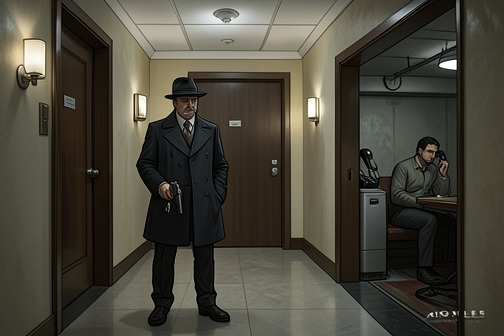
[Alexander Rostov's Escape from the Metropol Hotel](entity:event-recall-event-140a1eaf9340) is the decisive break in the Count’s decades-long confinement: when an overlooked map threatens his plan and puts [Sofia](entity:character-recall-character-sofia-9c2254d138c5) at risk, he abandons careful preparation for a swift, improvised operation. He uses [Nina Kulikova](entity:character-recall-character-nina-kulikova-ff284123b7b8)’s passkey and hidden pistols to take control of [Bishop Leplevsky](entity:character-recall-character-bishop-leplevsky-9c98158a1b9d)’s office, destroys the dossiers the Bishop has kept on hotel staff, and leaves the Bishop locked in a basement room. At midnight, thirty telephones ring throughout the hotel; as the night staff and guests react, Rostov walks out in a journalist’s hat and coat. [Viktor Stepanovich Skadovsky](entity:character-recall-character-viktor-stepanovich-3176c03b19b8)’s parallel journey and planted evidence complete the escape’s deception.
## The Plan Put at Risk
For six months, Rostov had planned and carried out his preparations with care. That work is suddenly endangered when he realizes that he had failed to burn a map and had instead slipped it into a drawer. The mistake does more than threaten the plan: it makes him fear that his carelessness has put Sofia in danger. The crisis briefly leaves him overwhelmed by fury, disbelief, self-reproach, and fear, but the pause lasts only seconds. He turns immediately from regret to action.
The scene makes the escape hinge on a small, concrete oversight rather than on any failure of nerve. Rostov’s preparations have been painstaking, yet a single map can unravel them. The reversal gives his resolve a practical form: he does not try to repair the mistake from a distance, but follows Bishop Leplevsky down from the attic and into the hotel’s executive offices, where the danger can be confronted directly.
## The Bishop’s Office
Still in his stocking feet, Rostov follows the Bishop. He initially takes the belfry stairs, then leaves them at the fifth floor, hurries along the hallway, and descends the main staircase—the same route Sofia had run at thirteen. He reaches the executive offices unseen, only to find the Bishop’s door locked. [Nina](entity:character-recall-character-nina-507986764de1)’s passkey, still in his pocket, gets him inside; he relocks the door behind him.
The office has changed since Mr. Halecki’s time: filing cabinets now stand where Halecki’s chaise had been. Rostov counts from the portrait of Karl Marx to find the second panel to the right, presses its center, and opens the concealed compartment. Inside is an inlaid box. He takes out the two pistols, loads them, and waits in the manager’s chair for the Bishop to return. Though he expects to have only seconds, he uses them to steady his breathing and lower his heart rate. By the time the key turns, he has made himself calm enough to meet the Bishop without betraying his alarm.
The Bishop enters so surprised to find Rostov behind the desk that he has already swung the door shut before noticing him. Even then, his first response is to insist on the authority of office protocol, ordering the headwaiter to leave. Rostov’s position in the room has reversed their usual balance: the man who has spent years being treated as a subordinate now holds the pistols and controls the encounter.
## The Dossiers and the Basement
Rostov takes his bearings from the Bishop’s watch: it is 2:30 in the morning. He reloads one pistol, tucks it through his belt, and points the other at the Bishop. The files he directs the Bishop to carry expose the private machinery of the hotel administration. Some cabinets contain operating reports on revenue, occupancy, staffing, maintenance, inventories, and discrepancies; others contain files on guests and employees, arranged alphabetically.
Among the staff files are records on [Arkady](entity:character-recall-character-arkady-93a6dfb667fc), [Vasily](entity:character-recall-character-vasily-a20234873723), [Andrey](entity:character-recall-character-andrey-21147ea6b79d), [Emile](entity:character-recall-character-emile-78152359aa81), and [Marina](entity:character-recall-character-marina-634ff8f0a512), as well as Rostov’s own. They collect specific instances of tardiness, impertinence, disaffection, drunkenness, sloth, and desire. Rostov recognizes that the accusations need not be invented to be unjust: the failings may be real, but they are only a fraction of what could be recorded about the virtues of the people concerned. His own file is among the thickest. He pulls the files of his friends and his own from the cabinets, places them on the desk, and makes the Bishop carry them away.
Rostov leads him through the empty offices, into an enclosed stairwell, and down two flights below street level. The Bishop, despite his command of the hotel’s minutiae, has apparently never been in the basement. At Rostov’s direction and under the pressure of the gun, he enters the boiler room and feeds the dossiers into the furnace through its small door. The destruction is literal: records that reduce the staff to their faults are turned into fuel, and the Bishop is made to perform the act himself.
The next stop is a bright blue door. Rostov opens it with Nina’s key and orders the Bishop inside. He tells him he will not return. The Bishop protests that it might take weeks for anyone to find him, but Rostov points out that the Bishop attends the daily meeting of the [Boyarsky](entity:location-recall-location-boyarsky-fd3969ba4e82) and that a ballroom banquet is scheduled for Tuesday night. The promise of an eventual discovery is also a sentence of confinement: Rostov closes the door and locks him in the room where pomp bides its time.
## The Midnight Distraction
Rostov’s exit depends on a diversion prepared in advance. When he reaches the lobby with a rucksack on his shoulder, he sits between the potted palms and waits without fidgeting, pacing, reading the evening edition, or checking the time on the Bishop’s watch. What he expected to be an anxious wait instead feels peaceful. He watches hotel guests come and go, sees the elevator doors open and close, and hears music and laughter from the [Shalyapin Bar](entity:location-recall-location-eb2c7698df12).
Almost exactly at midnight, the instructions he has written to [Richard Vanderwhile](entity:character-recall-character-richard-vanderwhile-0ade02afdf78) take effect. Thirty telephones begin ringing at once: those at the main desk, by the elevator, at Vasily’s desk and the bell captain’s station, as well as phones in the [Piazza](entity:location-recall-location-piazza-435dbad9410b), the coffeehouse, the executive offices, and on the Bishop’s desk. The sudden, simultaneous sound unsettles everyone. The limited night crew runs from phone to phone but cannot bring itself to answer any of them. Guests from the [Shalyapin](entity:location-recall-location-shalyapin-68fb2bcb9f99) spill into the lobby, while people awakened upstairs come down the stairs.
Rostov moves through that confusion quietly. He puts on the journalist’s hat and coat, shoulders his rucksack, and walks out of the [Metropol Hotel](entity:location-recall-location-metropol-hotel-65f38c441f1f). The scale of the diversion matters: a single ringing telephone prompts an immediate response, but thirty at once make the staff stop and stare. The hotel’s own network of calls, desks, and procedures becomes the cover for a departure its ordinary routines might otherwise have noticed.
## Skadovsky’s Part and the Escape’s Meaning
The escape also depends on Viktor Stepanovich Skadovsky. After bidding Rostov goodbye, Skadovsky boards the Helsinki-bound train wearing the journalist’s hat and coat and carrying the Baedeker. At [Vyborg](entity:location-recall-location-776e746349c6), he removes the maps and leaves the guide, along with the other items, on a counter in the station washroom; he then returns to [Moscow](entity:location-recall-location-moscow-b59c72aac896) on the next train empty-handed. The account identifies him as the person who left the damning evidence in the Vyborg terminal washroom. His journey gives the disguise and travel materials a trail separate from Rostov’s quiet exit.
Rostov’s escape is therefore both a physical departure and a carefully staged misdirection. It brings together a hidden compartment, a passkey retained in a pocket, a cache of pistols, a compromised plan, and a mass of ringing telephones. Just as important, it turns the Bishop’s system of surveillance against itself: the files are burned, their keeper is confined, and the staff and guests are drawn into a commotion that masks the Count’s departure. The escape’s final image is not a public confrontation or a triumphal announcement, but Rostov slipping out of the hotel while everyone else is occupied by the ringing.
Event 49
Rostov Returns to His Family Home

[Count Alexander Ilyich Rostov](entity:character-recall-character-count-alexander-ily-83aa9b72a1d2)’s return to his family home is a quiet reckoning with time: the mansion he has been absent from for decades is gone, but the journey does not end in desolation. He meets the altered landscape with a wistful serenity, proceeds to a surviving village inn, and finds a woman waiting at a table for two.
## The Journey Back
On one of the first afternoons of summer in 1954, Rostov appears in the high grass among ragged apple trees in [Nizhny Novgorod Province](entity:location-recall-location-769f183b01fb). His beard is beginning to grow, his boots are dirty, and he carries a rucksack, giving the impression that he has been hiking for several days. He does not appear weary. In the trees, he makes out an old road, overgrown after years of disuse, and turns onto it with a smile that is both wistful and serene.
A boy and a girl lead him along the road, which bends in a long, lazy arc. After about ten minutes on foot, they reach the site of the mansion. Its disappearance is explained not by distance or concealment but by destruction: it burned to the ground decades earlier. The remains are two tilting chimneys at opposite ends of a clearing still dusted with ash.
## The Ruins and the Past
The return places Rostov against a familiar warning: that people who have been away from a beloved home for decades should not go back. The narrative invokes Odysseus, who left Ithaca again after returning, and Robinson Crusoe, who set sail once more for the island from which he had longed to escape. In both examples, the passage of time and the force of remembered affection make homecoming vulnerable to disappointment. A landscape may lose its remembered beauty; old customs and buildings may disappear; the returning person may no longer be recognized.
Rostov’s response differs from that cautionary pattern. Before the burned mansion, he shows neither shock nor indignation nor despair. The serene smile he wore on finding the old road remains. His return is not made painless by the survival of the house—it has not survived—but by his readiness to encounter the place as it is rather than demand that it match memory. The event gives concrete form to a qualified possibility: the past can be revisited pleasantly when the visitor expects nearly everything to have changed.
## The Village Inn
After wishing the children well, Rostov walks about five miles to a nearby village. Many old landmarks have disappeared, but the inn at the edge of town is still standing, a survival that brings him relief. He enters carrying his rucksack and asks the innkeeper for a room, though he wants something to eat first. She directs him toward the tavern.
Inside, only a few people sit at the old wooden tables. Some eat cabbage-and-potato stew; others drink vodka. Rostov nods to those who look up and goes to a small room at the back, where an old Russian stove stands. In its corner, at a table for two, a willowy woman with gray in her hair is waiting. The homecoming thus closes not with the lost mansion restored, but with Rostov moving through the changed village toward a meeting whose quiet presence gives the return a human destination.