Friendly Fire
AfterburnFriendly Fire is the danger that a force will attack its own personnel, and in the novel it becomes more than a combat mishap: the shootdown of a U.S. Army helicopter flying a United Nations mission in Georgia reveals how a mistaken identification can emerge from failures across an entire chain of command. The aircraft is lost, though no one is killed; the subsequent inquiry and discussion resist treating the outcome as an inexplicable accident or excusing it as an ordinary feature of war.
Definition and Stakes
The novel defines friendly fire plainly as accidental attacks against one’s own people. That definition names the result, but not its causes. When Coyote tells Matt “Tombstone” Magruder that such incidents happen, Magruder rejects the remark as an explanation. The difference matters: recognizing that a danger is recurrent does not account for the specific decisions and omissions that brought it about, nor does it settle what should change afterward.
The material consequences are concrete. Magruder acknowledges that the Navy jet wrecked an aircraft worth roughly fifteen million dollars to taxpayers. The loss was serious, but the absence of fatalities also marks a limit on the damage: the shootdown did not become a loss of life. In this episode, the value at stake is therefore both immediate—people and aircraft exposed to weapons—and institutional, as the incident calls into question whether units operating together can recognize one another in time.
The Georgia Shootdown
The incident is discussed two days after a Navy jet shoots down a U.S. Army helicopter flying a United Nations mission. The account places the aircraft in the Georgia no-fly zone and makes clear that the Navy personnel making decisions in the carrier battle group had not been told that Army helicopters were operating there with the United Nations team. The failure was not confined to one conversation: officials describe communication breakdowns up and down the chain of command and identify flaws in interservice operations.
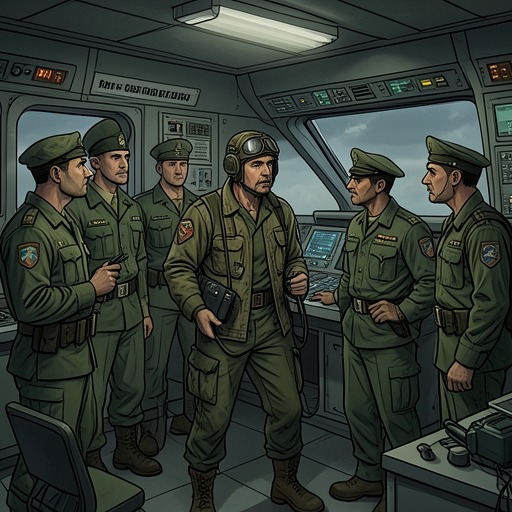
The helicopter’s Identification Friend or Foe system becomes an immediate question in the debrief. Batman asks what happened to it; the answer is that the carrier group had not been notified that the Army helicopters had been sent into Georgia to work with the United Nations team. The scene thus presents recognition as a system problem as well as a moment of judgment. An identification device cannot by itself resolve a situation if the units involved have not been properly informed of one another’s presence and mission.
Decision Under Uncertainty
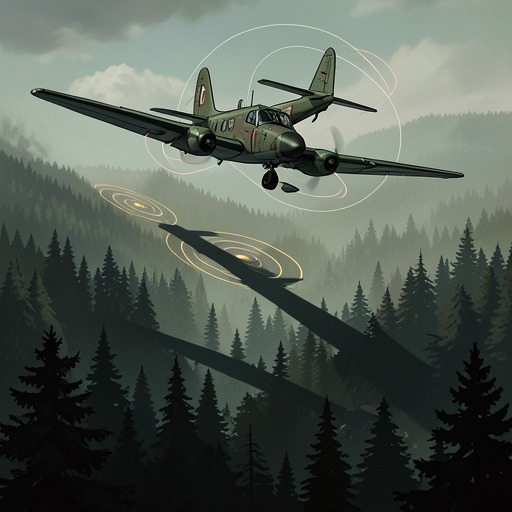
Batman’s account gives the mistake a specific operational context. The helicopters were being painted by a Gun Dish signal from the ground, probably from a ZSU. Batman says he based his decision on a report from one of his aviators and acknowledges that he could have ordered a second check. But time was critical, and there was also a possibility that the enemy was engaging the United Nations flight. The narrative therefore presents a choice made under pressure, with a warning signal and an uncertain picture—not a decision made with full knowledge that the target was friendly.
That context helps explain the decision without erasing its consequence. Magruder accepts that Batman made a mistake and names the cost of the wrecked aircraft, but the exchange does not allow explanation to become absolution. Batman’s pride in his abilities as an aviator is also shown against the blemish left on the record he keeps in his mind. The personal dimension of the error sits beside the procedural one: the decision belongs to an individual, while the conditions that shaped it include missing information and a failure to verify the target.
Recurrence and the Fog of War
Magruder connects the shootdown to a 1994 incident in the no-fly zone over northern Iraq, when two U.S. Air Force fighters engaged and destroyed two Army helicopters. In that earlier case, pilots were edgy, AWACS procedures had broken down, and the helicopters’ IFF systems had been turned off. As in Georgia, a U.S. Army Black Hawk was confused with a Soviet-made Hind. The parallel makes recurrence visible without making the two incidents identical: in both, aircraft belonging to the same national forces were misidentified amid failures of procedure or identification.
The novel places such errors within what it calls the fog of war, arguing that modern electronic battlefields do not eliminate the uncertainty associated with earlier warfare. Its historical comparison stretches from the 1994 incident to Napoleon and Sargon the Great, emphasizing the persistence of confusion across very different eras. Yet the Georgia episode also specifies failures that can be examined: the carrier group lacked notice of the Army mission, the Identification Friend or Foe system was questioned, and Batman says a further target check was possible but not ordered. The fog is real, but it does not make every contributing failure unknowable.
Accountability and Coordination
The incident moves beyond the flight deck into a political and institutional review. In a meeting, Samantha Reed tells officials that no one was killed, but that the shootdown has exposed weaknesses in interservice operations and communication throughout the command chain. The contrast between the fortunate absence of casualties and the seriousness of the coordination failure keeps the near miss from being dismissed as harmless.
Elsewhere, a weapons instruction offers a compact counterpoint: weapons are authorized, but targets must be marked. The emphasis on target identification shows that permission to fire and confidence about what is being targeted are separate matters. A different submarine passage makes the limits of simple rules equally clear: the instruction to fire only if fired upon cannot be applied to submarine combat, where a commander may have only sonar indications amid churning, echoing water. That situation is not itself an instance of friendly fire, but it reinforces the novel’s broader concern with decisions made under incomplete information. Together, these moments make Friendly Fire a problem of judgment and coordination: responsibility remains necessary precisely because uncertainty is unavoidable.