Georgia No-Fly Zone Policy
AfterburnThe Georgia No-Fly Zone Policy was the stated framework for overseeing the airspace over Georgia, but it never operated as a simple boundary between permitted and forbidden flight. Its rules had to be interpreted amid a widening regional crisis, while naval forces, the United Nations, and the United States navigated overlapping responsibilities. The policy’s significance lies in this tension: a mission presented as limited became a test of how far military action, command authority, and the meaning of peace could be stretched.
Purpose and Regional Setting
The deployment’s original purpose was to oversee the no-fly zone over Georgia. That task had become necessary after Turkey denied basing privileges and permission connected with the operation, leaving the force to carry out its assignment under constrained conditions. The policy therefore depended not only on the rules applied in the air, but also on access, deployment choices, and the ability to maintain a credible presence without the expected local support.
The naval presence was part of the United Nations’ effort to support its position in the region. Off the Georgian port of Poti, the Jefferson was preparing to add its air wing to that effort. The United Nations also hoped that a strong military presence might help defuse other regional problems: Turkey had repeatedly threatened to invade Armenia to suppress unrest there. In this setting, an operation designated for Georgia’s airspace carried political significance beyond the immediate task of monitoring flights.
The mission took place against a crisis that was becoming more dangerous by the day. If the northern Black Sea, from Odessa to Gagra, became a war zone, it could become difficult or impossible for the UN and United States to carry out their intended work. This possibility sharpened the difference between the policy’s bounded stated purpose and the increasingly unstable environment in which it had to function. A no-fly zone could be defined geographically, but the consequences of enforcing or adjusting it could not be kept within the same neat boundary.
Rules and Operational Ambiguity
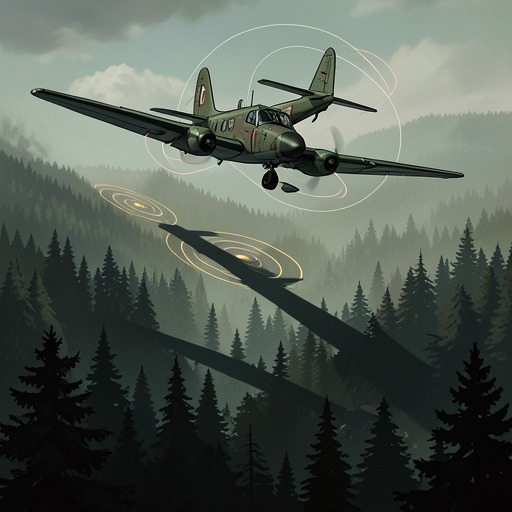
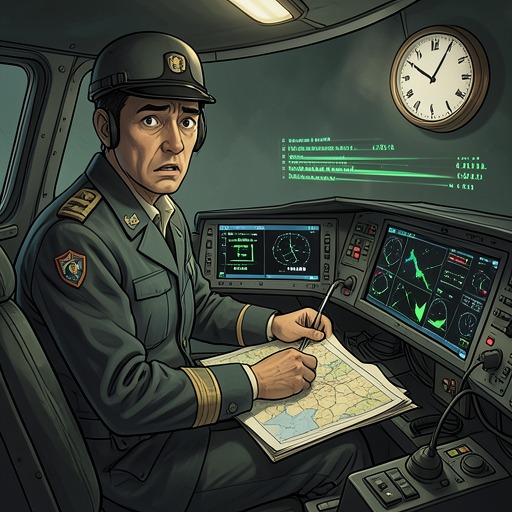
The policy required pilots and commanders to distinguish routine presence from a reason to enter the airspace. According to the operational plan seen by one officer, Navy fighters were supposed to fly racecourse tracks over the sea unless a specific reason justified flying inland. A violation of the no-fly zone was one such reason. The distinction made compliance depend on identifying and interpreting circumstances in real time, rather than on a standing authorization for unrestricted inland flight.
That ambiguity became especially consequential when an incident involving a United Nations helicopter drew attention to the presence of reporters aboard. Matthew Magruder described the no-fly-zone operation as one of the most difficult missions the group had undertaken: there was no clear-cut enemy, only vague rules that had to be interpreted while the force tried to accomplish its work and avoid creating further problems. The reporters’ presence made the incident not merely an operational matter but one with potential public and political consequences. The episode exposed how enforcement decisions could be judged by more than their immediate military rationale.
The policy’s uncertainty was not the same as an absence of rules. The flight plan imposed a default pattern over the sea, and an identified violation could justify a departure from it. The difficulty was deciding when the exception applied and what response it warranted. In that sense, the policy’s practical force depended on disciplined interpretation: acting too freely could exceed the mission, while failing to respond to a violation could undermine it.
Command and Political Limits
The question of placing American forces under United Nations commanders had been debated for many years. The Georgia mission brought that broader institutional disagreement into the practical setting of an active deployment. Separately, the National Command Authority had issued a firm limit: United States forces were not to involve themselves in fighting between the Red and Blue Russian factions. The Marines were to go ashore at Poti under a restricted mission. This prohibition marked a boundary around the operation even as the surrounding crisis threatened to pull it toward wider intervention.
The limits sat uneasily beside the United Nations’ ambitions. A strong military presence was intended to help manage more than the immediate airspace problem, and the effort was seen as a step toward legitimizing the idea of a United Nations with military force behind its decisions. At the same time, the President was taking heavy criticism over foreign policy, and some advisers believed he should concentrate on domestic problems rather than undertake another ill-advised foreign adventure. The policy thus existed within competing pressures: demonstrate that international decisions could be supported, while avoiding an expansion of American involvement that might become politically costly.
As the crisis developed, the Georgia operation was not formally suspended, but it was assigned lower priority than new operational orders. The shift illustrates how a mission’s importance could change without its original authorization simply disappearing. The no-fly-zone task remained in place, yet commanders had to treat other instructions as more urgent. That distinction left the policy active but no longer at the center of operational planning.
Wider Crisis and Significance
Debate over the mission’s purpose reflected a deeper disagreement about what counted as preserving peace. When a United States official challenged the claim that intervention would maintain peace by asking what peace remained in an area tearing itself apart, the exchange revealed how the same military presence could be understood either as a stabilizing measure or as a response to a crisis already escaping control. The no-fly-zone policy was caught within that dispute: its justification rested on preventing or containing danger, even as the wider situation made containment less certain.
The crisis also placed the policy alongside a separate transfer of command authority. For the Crimean Peacekeeping Operational Zone, the United Nations requested operational authority over United States forces and Washington granted it for the mission’s duration. The commander explained that the forces would operate under United Nations command until the President said otherwise. This arrangement concerned the Crimean zone, not the original definition of the Georgia no-fly zone, but it demonstrates the larger command problem surrounding the deployment: American military action could be subject to international operational direction while remaining bounded by national authority and political decisions.
The policy’s narrative function is therefore less that of a settled technical rule than a measure of the mission’s strain. Its offshore patrol pattern, exception for a suspected violation, reporting complications, national restrictions, shifting priorities, and surrounding regional threats all show how a formally limited assignment could become entangled with wider choices. The no-fly zone provided a defined purpose; it did not resolve who should interpret that purpose, which dangers deserved priority, or how far an international peacekeeping presence could go before it became another participant in the crisis.