Cosmic irony
AnimalsCosmic irony is Laura Joyce’s way of reading the gap between what people expect and what happens to them. The universe seems less indifferent than amused: coincidences acquire the shape of a joke, even when their punchline is painful or no meaning can be confirmed. The idea moves between comic embarrassment, domestic reversal, and the fear that apparent significance may conceal nothing at all.
Meaning and Naming
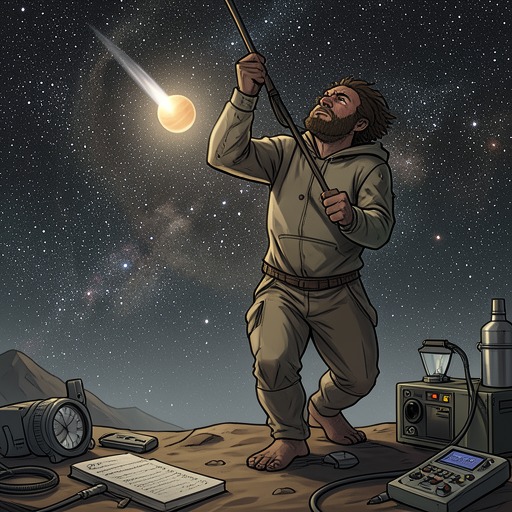
Laura gives the concept its most explicit formulation after Mrs Coan tells her that she tries too hard. The advice becomes entangled with Laura’s name: when she later submits writing, rejection letters point out the discrepancy between her work and that of a streamy namesake. To Laura, the mismatch is a cosmic joke, an example of irony waiting in abundance like the elusive dark matter scientists seek. Her formulation makes the universe feel not merely indifferent but amused, as though even a writer’s name could be arranged to sharpen the joke.
That sense of cosmic authorship remains Laura’s interpretation, not a proven account of how events work. Its force lies in the way she detects patterns that seem at once too apt to dismiss and too absurd to trust. The joke may be in the event itself, or in the human desire to find a design behind it.
Domestic Reversals
The same pattern appears in the family’s politics. Laura and Mel had congratulated themselves on persuading their parents to stop buying the Sun, only to find that the replacement was the Daily Mail. The change offers no straightforward progress; it turns their small victory into another reversal. Laura’s exasperated appeal to the universe’s sense of humor places this household detail within the same comic logic as the mismatch between her name and her writing.
Irony and Mortality
The idea darkens when Laura considers her father’s account of a historical brink and the possibility of a renaissance. She believes he is sincere, but also suspects that his talk of an extraordinary future is driven by terror: the need to imagine something mind-blowing before the curtain is pulled back on nothing. That private reading follows his cancer diagnosis. Bill had learned of it six months earlier and, at his wife’s insistence, told Laura and Mel five months earlier, two days before his operation. Against that knowledge, cosmic irony becomes more than a joke about coincidence. It names the unstable space between hope that events contain meaning and fear that, behind the pattern, there may be only emptiness.