Trying too hard
AnimalsTrying too hard is Laura Joyce’s name for a persistent mismatch between effort and ease: she presses so intensely toward doing things well that the effort itself becomes a problem. First identified by a teacher at school, the pattern later reaches beyond performance into Laura’s self-understanding, her drinking, and her reflections on what it means to try to become everything.
Naming the Pattern
In a school discussion, Rachel offers an answer about an artist retreating into art, and Mrs Coan approves it. Laura speaks up without being invited, disagreeing that the explanation is sufficient. Mrs Coan’s response turns the exchange toward Laura herself: she identifies trying too hard as Laura’s problem. The diagnosis lands not as an abstract lesson about effort but as a judgment from a teacher who has watched Laura struggle to sit still, chew her fingers, whisper during assembly, and redden when attention falls on her.
Laura recalls this assessment as both embarrassing and clarifying. It gathers a set of visible habits under one phrase, suggesting that her difficulty is not simply that she cares about doing well, but that she cannot easily moderate the force she brings to things. Her recollection also gives the concept a social dimension: the effort that feels internally like application appears to others as excess. The teacher’s verdict names a recurring friction between Laura’s intentions and the impression she makes.
Effort in Ordinary Life
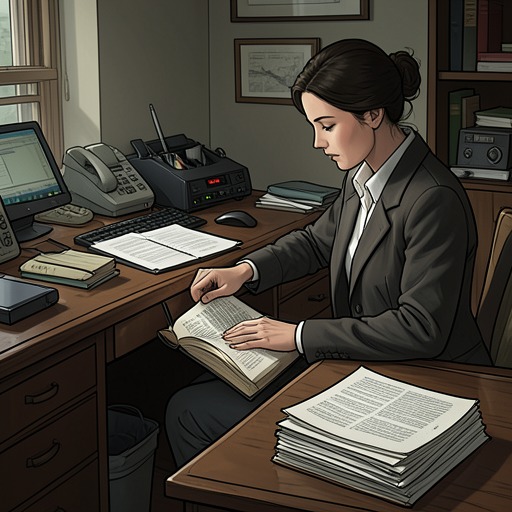
Laura later recognizes the pattern across disparate activities. She tried too hard at school; she sketched with such intensity that Miss Spooner threatened to make her draw more lightly. She brushed her teeth too vigorously, prompting a dentist to warn Mrs Joyce about the risk to her gums, and played netball with a force that repeatedly sent her shots past their target. The examples move from schoolwork to bodily routine to sport. Their range makes trying too hard less a single failure than a habit of overshooting, even when the task calls for restraint.
That repetition gives the idea its particular tension: effort is usually praised as a virtue, but Laura’s examples show it becoming counterproductive. The problem is not a lack of commitment. It is commitment without a reliable brake. In this account, the same impulse can distort a sketch, threaten a practical consequence, or miss a target. Laura’s later question about trying too hard to be everything extends the pattern from individual tasks toward identity itself, without resolving how a person might keep striving while ceasing to overreach.
Drinking and Self-Solidarity
Laura connects the pressure to drink with the pressure she places on herself. She describes alcohol not as a means of producing inspired work but as a way of quieting the part of herself concerned with whether she will create. Drinking, in her formulation, is a form of self-solidarity: it settles the battles within, or at least holds them temporarily still. That distinction matters. The relief she seeks is not a burst of creative power but a pause in the demand to prove herself through creation.
Her account makes the habit ambivalent rather than triumphant. Alcohol offers a temporary suspension of self-judgment, while the underlying concern about effort and achievement remains available to be named. In the same reflection, she recalls sitting with whisky and a book of poetry, unable to settle into reading. The scene gives the abstract struggle a concrete form: even an attempt to stop striving can become another occasion for watching herself and finding that the attempt has not worked.
Jim’s Counterpoint
Laura’s thoughts turn to Jim, whom she misses with an intensity she describes as physical. She rejects the comforting idea that distance automatically strengthens affection; instead, separation feels like a cord stretched between them. The image makes attachment another place where effort and strain are present, though the passage does not suggest that trying too hard is the cause of their separation.
She remembers Jim’s account of character as a matter of how people try to be, then asks what happens when someone tries too hard to be everything. His answer is not another demand to improve: he tells her to lie down and be still. Against Laura’s catalogue of overshooting, the instruction offers a different relation to effort, one based on stopping rather than adding more. The concept therefore reaches beyond her teacher’s criticism. It becomes a question about whether striving can be moderated without abandoning the wish to become better, and whether stillness can interrupt the pressure to perform.