Writing, audience, and legacy
AnimalsWriting, audience, and legacy is a recurring concern in Laura Joyce’s reflections on authorship and identity. Writing gives form to her need for an audience, but it also exposes the unease behind that need: she wonders whether an imagined reader improves her work or makes it narcissistic, and later recognizes how readily she has become what another person wanted. Her unfinished novel becomes a place where these questions meet, while its changing title and repeated beginnings leave legacy as an aspiration rather than an accomplished fact.
Audience, Belief, and the Need to Be Seen
In a conversation about religion, Laura Joyce says that she never feels alone, even when she is outside the religious belonging associated with her father’s Catholic upbringing. She connects that persistent sense of being observed to writing: she feels a need for an audience and cannot decide whether that need makes her a better writer or merely a narcissist. The question gives the audience two meanings. It is a hoped-for reader, but also a presence before whom Laura measures herself.
The person speaking with her responds by advising her to trust the audience she most wants to impress. The exchange offers no assurance that Laura’s self-consciousness will disappear. Instead, it treats the desired audience as something she may have to rely on while remaining uncertain about her own motives. Laura’s reply that without worry she would not write makes anxiety part of the practice rather than an obstacle she can simply remove. The exchange’s joking close, about ensuring that the audience is as drunk as she is, punctures the solemnity without resolving the underlying dependence on being read.
Writing as Self-Recognition
On a delayed plane journey, Laura Joyce thinks about how she has changed within her relationship with Jim. She understands her detachment not as a sudden break but as something that developed gradually, and considers whether she had taken a twisted satisfaction in becoming what another person wanted. In her reflection, accommodating someone else’s desire can feel powerful because it brings the knowledge of how to give that person what they want; that power gives way to emptiness when she recognizes herself as a creation shaped by another.
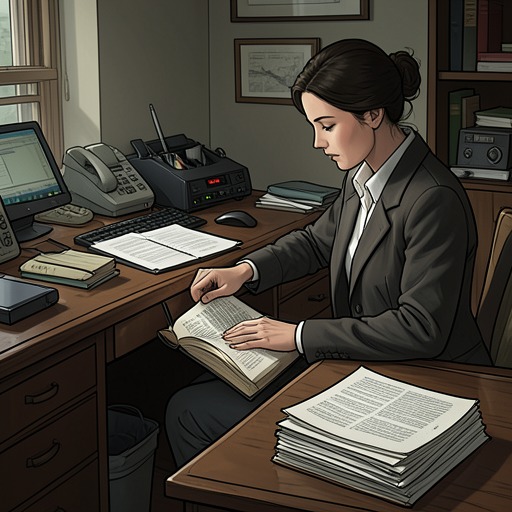
Laura then turns to her writing for evidence about her own habits. She describes herself as good at beginnings and sees her past work as a series of perfect false starts. The repeated idea of beginning carries both promise and limitation: a fresh start may be a genuine possibility, but it may also be the only form of completion she can imagine for herself. She considers that a life composed of beginnings might be sufficient. The thought does not establish that she has finished or abandoned a particular manuscript; it shows her using the pattern she sees in her writing to make sense of her life.
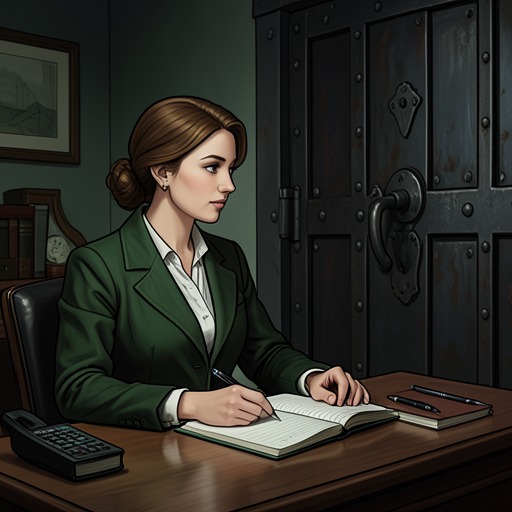
The notebook gives that reflection a concrete form. Laura discovers that she has written the words Killing and The repeatedly down the page, fragments associated with the title she is reconsidering. The repetition turns an abstract crisis of identity into a visible mark of the work in progress: the title is not settled, and neither, in her account, is the meaning she is trying to give her experience.
The Novel and Its Public Identity
At a gathering outside a marquee, Marty Grane introduces Laura Joyce to Liz as a writer. Laura quickly objects to being introduced that way. When Liz asks whether anything has been published, Laura answers that she is working on a novel. The distinction matters: Laura claims the work and the effort of writing, but the evidence does not present her as an established or published author. Her correction resists having an unfinished practice converted into a public credential before she has chosen how to describe it herself.
Asked for the novel’s title, Laura explains that it had been Bacon but that she is reconsidering it as Killing the Changes. She wants the new title to sound mysterious and complex, although she describes the book’s subject as something simple: love. The contrast between the elaborate title and the simplicity she assigns to the subject captures her simultaneous desire to shape how a reader approaches the work and to reach something emotionally direct. The title is an act of presentation, but also a sign that the book remains unsettled.
Marty Grane’s introduction and Laura’s objection establish a tension between wanting an audience and controlling the terms on which she is presented to one. She tells Liz her name, Laura Joyce, and Liz indicates recognition. The encounter gives Laura a moment of visibility, but it does not show that her novel has appeared or that she has secured the literary legacy she may hope for. What is present is the threshold: a writer at work, speaking about a book that is still being named, and a possible reader who may look out for her.
Beginnings, Titles, and What Remains
Across these moments, writing is both a craft and a diagnostic instrument. Laura’s concern about impressing an audience reveals how strongly she imagines herself under another’s attention; her plane reflections then connect that susceptibility to the way she has allowed herself to be shaped by someone else. The novel does not stand outside her life as a settled statement about it. Its changing title, its association with false starts, and the repeated words in her notebook make the work part of her ongoing effort to understand what she has become.
The evidence leaves the question of legacy open. Laura is working on a novel and wants its title to promise mystery and complexity, yet she also wonders whether beginnings may be all she is good for. That uncertainty is not resolved by the conversation with Liz or by the imagined trust of a desired audience. Instead, the concept’s significance lies in the gap between wanting to be read and not yet knowing what the completed work—or the self behind it—will say.