Laura and Jim’s final meeting
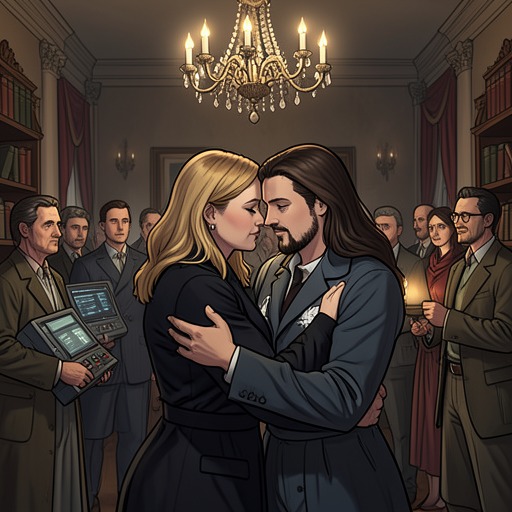
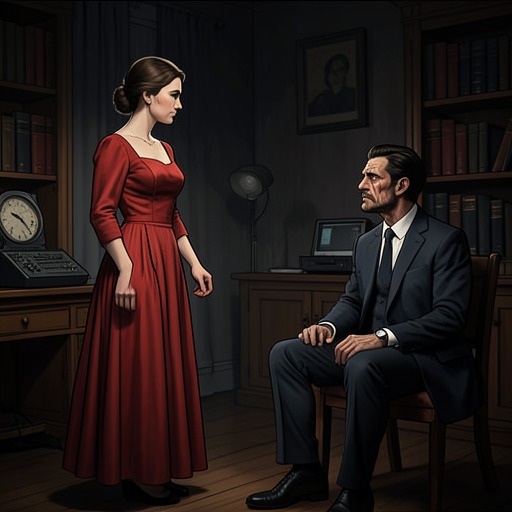
AnimalsLaura and Jim’s final meeting is a last, uncertain test of whether their relationship can be renewed after more than a week without contact. Called together to sort out practical fallout, they arrive at the Circus Tavern carrying different expectations: Jim asks for a way to repair the damage to their families, while Laura waits for a more personal overture. Wine briefly opens a door between them, but her answer to his question about love leaves the possibility of reconciliation suspended rather than secured.
The Call and the Appointment
Jim’s call begins with the pressure of consequences beyond the couple. His parents are beside themselves, he says; money has been committed, and everything is on hold. He acknowledges that Laura has every right to ignore him, but emphasizes that more than a week has passed. His proposal is practical and tentative: they need to sort things out, so he will be at the Circus Tavern at three the next afternoon.
Laura’s response on the call is spare. After hanging up, she slides down the wall and curls into a ball. The gesture marks the distance between agreeing to meet and being ready for what the meeting might demand. Jim has framed the situation through family distress and suspended plans; Laura is left to face a conversation whose emotional terms have not yet been stated.
An Awkward Reunion
At the Circus Tavern, the meeting begins without the ordinary gestures of reunion. Jim is seated in a back corner with two large glasses of white wine in front of him. He does not stand. They do not kiss or shake hands. Laura sits beside him, looks at the wine, and waits. Jim takes a sip, and she picks up the other glass. His exhausted appearance gives their encounter a physical stillness, while Laura’s aside about his possible exhaustion from sleeping with string players shows that anger and suspicion remain active beneath the quiet.
Seeing Jim drink brings Laura an unwelcome flicker of pleasure. She cannot deny that it feels good to see him have a drink. The detail complicates the reunion: wine is both a shared object that gives them something to do and a source of immediate bodily relief for Laura, who welcomes the quickening in her blood. Their first exchange is breezy on the surface. Laura asks how the wine is going down, then recognizes the mismatch between that light question and the depth of what separates them. She has been making plans with Jim and has been in love with him, yet in the moment she cannot find a thing to say.
She sets her glass on the hammered-copper table and holds it briefly to check that it does not wobble. The small act gives her hands a task while the larger conversation remains unstable. Jim calls the wine disgusting, takes another drink, and grins without his eyes joining in. Laura senses the possibility of renewal opening, and the wine’s effect makes that possibility feel briefly immediate. Yet neither the grin nor the shared drinking resolves what brought them there.
The Question of Repair
When Laura asks what Jim thinks, he turns first to the family consequences. He asks whether she will apologize to his parents for all the fuss. The request catches in her throat. She recognizes that, until that moment, she may have been enjoying his pain, or may still have been simply angry; now pity for herself and her own tender heart enters the response. Jim lifts his glass, sips, and puts it down. His look recalls a familiar pattern for Laura, as though the two of them have reached this dissonant point before.
Laura describes the feeling as a bittersweet déjà vu: reassuring at the surface and profoundly depressing beneath it. The scene’s backward pull makes the prospect of renewal inseparable from repetition. She has encountered this emotional position before, and the familiar feeling does not promise that the outcome will be different. Instead, it presses the history of the relationship into the present meeting, where even a small opening toward closeness carries the memory of earlier hurt.
Laura then clarifies the question she actually wants answered: not what Jim thinks about the apology, but how he feels about them. She drinks several times before responding to his next question. Her answer draws on Yeats, saying that the dream itself had enchanted her. Jim does not understand and asks plainly whether she loves him. Laura puts down her glass and looks at him before answering: sometimes.
An Unsettled Ending
The answer does not amount to a declaration that she no longer loves Jim, but neither does it affirm the stable, mutual commitment a reconciliation would require. The word preserves the inconsistency Laura has just described: love is present at times, yet cannot be offered as an enduring guarantee. In the space between Jim’s direct question and Laura’s qualified reply, the meeting’s tentative possibility of renewal fails to become a promise.
The scene also reverses the practical emphasis of Jim’s call. He had begun by speaking of distressed parents, money, and plans on hold; face to face, the decisive question is whether Laura loves him. The apology he requested remains part of the encounter, but it cannot settle the intimate uncertainty at its center. After Laura answers, the narrative marks a six-month passage. That jump leaves no reconciliation scene to confirm a renewed relationship and gives the meeting its finality: the pair have faced the question directly, but Laura’s answer offers no dependable future together.