Laura leaves Mel’s wedding reception
AnimalsLaura leaves Mel’s wedding reception after retreating from the party to its roof terrace, where Tyler’s unexpected arrival briefly brings old familiarity into a night dominated by Laura’s estrangement from Jim. Rather than return to the celebration, Laura takes the stairs to the street, travels alone to Blackley, and goes home to Zuzu and her writing. The movement from a crowded wedding to a small, unchanged room makes the scene a quiet account of separation and self-possession: Laura ends the night alone, but in a place that feels something like hers.
The wedding and Tyler’s arrival
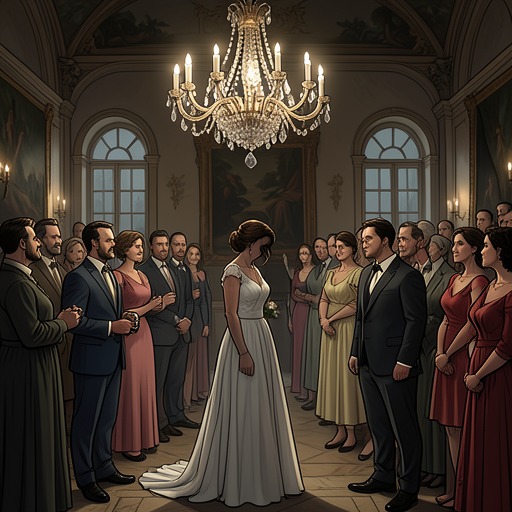
It is February, and Laura is cold on the roof terrace in a maroon dress whose lace arms offer little protection. She regrets putting her hair up instead of leaving it down around her neck, while the terrace heater’s short timer makes repeated attempts to warm herself more irritating than simply standing in the cold. The physical discomfort sets the scene apart from the celebration inside, where Mel and Julian slow-dance at the centre of the dancefloor.
The terrace door opens, and Tyler appears. Laura knows she was invited but did not expect her to come; another girl follows her outside. Bill greets Tyler, who kisses him on the cheek and congratulates him on the good news about his cancer. Tyler then hugs Laura. The familiar smell of her nearly overwhelms Laura, a bodily jolt of recognition that arrives before either sister has to explain what their reunion means. Tyler introduces the girl as Valerie, and Laura and Valerie shake hands; Valerie’s hand is hot.
Laura has already withdrawn from the reception after the seventh person in a row asked where Jim was. Her answer—that she had no idea these days and felt relieved by the absence—makes the breakup audible within the family gathering. Tyler does not ask about Jim. Laura cannot tell whether this restraint means Tyler understands or no longer cares, and the uncertainty remains unresolved. The wedding puts familial closeness and romantic absence side by side: Tyler can still feel familiar to Laura, while Jim’s place at the celebration has become a question she is tired of answering.
Leaving the reception
Laura wonders when it would be acceptable to leave her own sister’s wedding. The question is less a practical request for permission than a measure of her disconnection from the room: the couple are dancing, guests are asking after Jim, and Laura has exiled herself to the terrace. She looks across the roof and sees an iron staircase on the other side, leading down to the street. The route out is already visible before she takes it.
The scene does not make the departure into a confrontation. Laura does not announce a grievance or ask Tyler to come with her; she simply leaves the reception behind. That quiet choice shifts the evening away from the social performance of the wedding and towards the life Laura has made outside it. The celebration marks Mel and Julian’s union, but Laura’s attention turns to the possibility of getting home, where there is no need to account for Jim or to remain among the guests.
The journey to Blackley
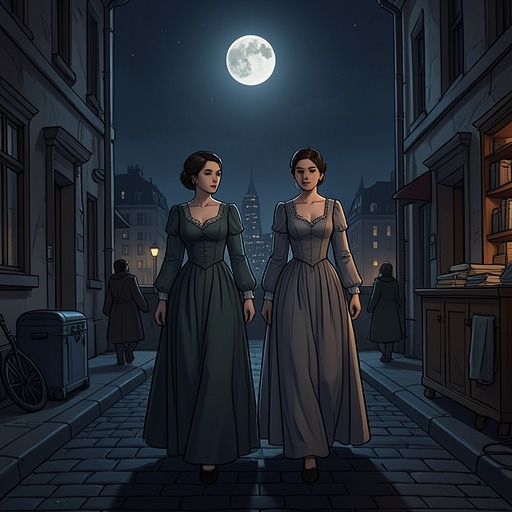
From Deansgate, Laura hails a cab and asks to go to Blackley. The journey takes her northeast through Ancoats and the old newspaper quarter, which she sees as sullen with redundancy, then past the Green Quarter, where To Let signs stand out across the lawns of tower blocks. She gets out before the cab reaches her destination and walks the remaining distance along the main road.
As she walks, an old rush comes over her: wind in her ears at a crossroads, the elements stirring and clouds shifting over the moon. The scene moves from external navigation through Manchester to an inward sense of anticipation. Laura imagines something waiting in a small, unchanged room, in the blank screen of her laptop. The destination is not another gathering or a new relationship but the private space where she can face her own work.
She stops at an off-licence and takes the coldest bottle of wine from the back of an overstocked fridge. While waiting for her change, she feels the keys in her pocket, their rows of teeth hard against her hand, and strokes her nails along them. At the house, she looks up at the skylight, open a crack as she remembers leaving it. These small details make returning home a tactile sequence: wine, keys, familiar street, the visible sign of her own earlier presence.
Home, Zuzu, and tentative belonging
Before Laura can use her keys, a woman dressed for town comes out of the front door, nods, and holds it ajar. Laura hears a lighter’s flint and then the click of the rimlock. Inside, motion detectors switch on the bulbs one by one as she climbs two flights of stairs to a freshly painted blue door without marks or scratches. The carefully described passage upward ends at the place she has made her own.
Laura hangs up her coat, turns on the light, and enters the bathroom she has done up in a nautical style, without sentimental attachment. She takes off her boots, dress, and tights, loosens her hair, and unpacks her bags. Zuzu emerges from her box beneath the bed, yawning and blinking before stretching each of her supple back legs. The cat’s appearance gives the return a living presence: after the cold terrace and the journey through the city, Laura is met not by guests or questions but by the animal who shares her nights at home.
Zuzu’s place in the room carries the history of Laura’s rescue. She had gone to get the cat from Marie’s after drinking three margaritas, taking a pair of kitchen scissors in her satchel and travelling by bus to Belle Vue. No one answered the door; a passer-by told her that no one had been there since the previous week. Laura pushed the door open and found the house ransacked, with clothes, CDs, and broken furniture scattered around. She heard a faint cry, searched through the hall, and found Zuzu behind the sideboard in the front room. Now the cat comes out from beneath Laura’s own bed, a change from being alone amid the wreckage to keeping Laura company in the home she has established.
The room is spare but inhabited. There is one upturned tumbler on the drainer by the sink; guests drink wine from mugs, and some soon forget it. Laura has put no pictures on the walls, but books fill the shelves, and a few favourites lie open mid-flight on the carpet beside the desk. The desk stands under the window. She sits there, pours wine, and looks out at the dark sky, which seems like a great hole to fall into. Light-headed, she contemplates gravity and the repeated fact of being here. The wedding’s crowded questions and public expectations give way to ordinary objects, her books, her laptop, and Zuzu. Laura’s ending is not a declaration that she is fully settled; it is the narrower, more tentative recognition that everything is in its place and that she is something like belonging.