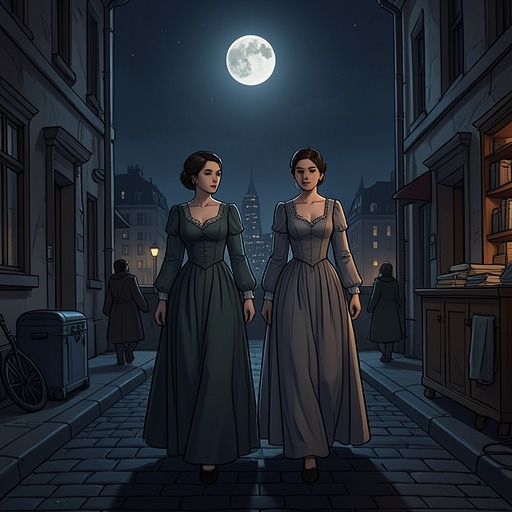
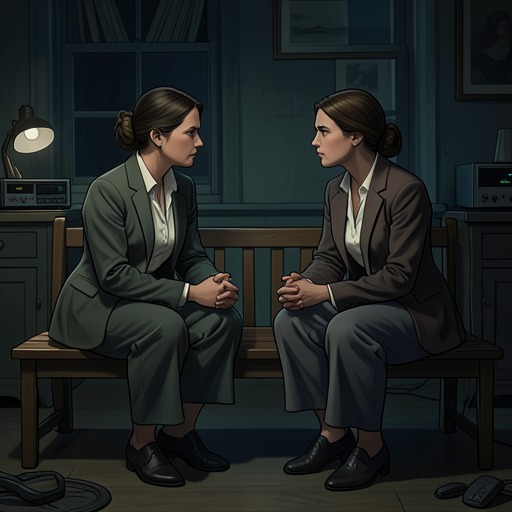
Laura and Tyler argue about the wedding
AnimalsSetting and Background
The argument follows Laura Joyce and Tyler Johnson’s failed search for a wedding dress. After abandoning their car near Cheshire, the two walk from Salford to one of their favourite pubs, a Victorian chophouse with tiled walls and bow-tied bartenders. They talk over ale and red wine in its beer garden, taking apart the day and the choices that have brought them there. The setting is familiar and shared; the subject is a change neither can treat as merely practical.
Tyler dismisses the shop they visited and urges Laura to buy an ordinary dress from an ordinary store. For her, the elaborate search makes a wedding seem like an imposed performance. Laura, meanwhile, has begun to feel the reality of marriage pressing in on an idea she had previously used almost abstractly. She had spoken of being married without dwelling on what it meant; now the commitment seems enormous, costly, and difficult to know how to handle. The dress-shopping dispute gives that unease a concrete object, but the argument quickly moves beyond clothing.
The exchange also belongs to a longer pattern of unease around change in Tyler’s closest relationships. When Jean Johnson became pregnant at twenty-eight, Tyler reacted as if she had lost her close companion for a decade. The comparison does not make the wedding argument identical to that earlier rupture, but it helps clarify why a new household and a changed friendship might feel to Tyler like another impending separation.
From the Dress to the Meaning of Marriage
Tyler argues that Laura should wear a favourite maroon lace dress rather than buy something special. She objects to the idea of documenting life through photographs and imagines that, years later, people may look back on albums and regret having watched an occasion through a camera instead of participating in it. Her point is not simply thrift or dislike of bridal fashion: she wants Laura to reject the assumption that a wedding requires a special costume and prescribed display. She presents the maroon dress as a way to make the day Laura’s own.
The discussion then shifts from the dress to marriage itself. Tyler calls marriage an anachronistic convention and contrasts its public ceremony with the absence of a comparable ritual for friendship. She asks whether Laura’s decision means that their bond is not meaningful or durable. Tyler makes that implication sound logical, but it also exposes the emotional stake beneath her argument: she wants their friendship to count as a lasting commitment, not as a lesser relationship displaced by marriage.
The confrontation sharpens when Tyler presses Laura to deny that she is needy. Her demand makes the conversation personal rather than theoretical. She has mocked the supposed need for a special dress and for a wedding, but she also asks Laura to reassure her directly that she herself is not needy. The gesture reveals a contradiction within Tyler’s position: she challenges Laura’s dependence on conventional milestones while urgently seeking assurance about her own place in Laura’s life.
Two Ideas of a Shared Future
Laura answers that she is not trying to ruin Tyler’s life and that her life extends beyond their friendship. She says that she is marrying Jim because she loves him, and describes the decision as progress. She cannot quite call it an adventure, even though she is trying to name it as a positive movement into a different future. Marriage therefore represents both a choice she wants and a change whose weight she is still confronting.
Tyler answers by invoking the system the two women have built together. She questions whether marriage is another thing people do because they believe they should, rather than because they genuinely want it. That challenge puts Laura’s stated love for Jim beside Tyler’s suspicion of social expectation: the dispute is not resolved by the mere fact of the wedding, because each woman interprets the same decision through a different account of freedom and obligation.
Laura’s idea of marriage is also an idea about forming a new team. She wants to join Jim in facing the world, even as she recognizes that the formulation sounds sentimental. Tyler’s questions—why Laura would marry Jim and why she would insist on upheaval—show that she does not accept this new partnership as an uncomplicated addition to Laura’s life. For her, the change threatens the arrangement that has already sustained the two friends.
Consequences and Significance
The argument does not end with a clear agreement. Tyler asks why Laura needs her around if Laura is choosing a new life, while the thought neither woman says aloud is that they used to be a team. Both recognize the unspoken question, yet neither is ready to voice it. Tyler lights a cigarette, and the scene closes on that silence rather than on reassurance or a practical resolution about the dress.
The wedding dispute makes visible the unequal meanings the two friends attach to commitment. Laura sees marriage to Jim as an expression of love and a possible expansion of her life; Tyler fears that the same act will devalue a friendship that has been central to their shared system. The conflict is therefore not simply an argument against marriage or a disagreement about a wedding outfit. It marks the difficulty of preserving intimacy when one person’s next step looks, to the other, like departure.
Later, Tyler’s response to questions about having a baby echoes her distrust of turning intimate choices into exclusive social events. She says that, if she chooses to have a child, she will do it rather than present it as a special occasion to be sold to others, and acknowledges that she expects always to carry a lonely longing. That later exchange does not settle the wedding argument, but it extends the pattern evident in the pub: Tyler resists conventional milestones while revealing how deeply questions of belonging and being left out matter to her.
As an episode in Laura Joyce’s account, the argument gives the wedding-dress outing its larger consequence. The failed shopping trip becomes a dispute over whether friendship can remain durable through change, and whether marriage must displace an existing bond or can create another way of facing the world together. The scene leaves that question open, with the friendship’s unspoken fear more evident than any resolution.