About thirty years before the main story
Hester and Jordan's Garden
[Jordan Gray](entity:character-recall-character-jordan-gray-81335d8a329f) brought [Hester Gray](entity:character-recall-character-hester-gray-0bdddcaec424) from the city to a quiet farm in [Avonlea](entity:location-recall-location-avonlea-5fb88633986b), where she could live among fields and trees. He made a garden for her, and she filled it with flowers, especially the June lilies she loved.
As Hester’s illness worsened, Jordan carried her out to the garden each day. Her wish to die among its roses was fulfilled, and Jordan later returned to be buried beside her. The garden endured as a living trace of their happiness.
About twenty-five years before the main story
The Broken Engagement
[Lavendar Lewis](entity:character-recall-character-lavendar-lewis-09de85e9f0c7) and [Stephen Irving](entity:character-recall-character-stephen-irving-206d481825d0) had known each other since childhood and were engaged to marry. A foolish quarrel, worsened by Lavendar’s pride and sulking, kept her from hearing Stephen’s attempt to make peace.
Stephen left, and neither humbled themselves enough to restore the relationship. He eventually married someone else, while Lavendar remained at [Echo Lodge](entity:location-recall-location-echo-lodge-d0fbebed599d), cherishing her dreams and the memory of what might have been.
Three years before the main story
The Harrisons' Estrangement
After his sister died, [James A. Harrison](entity:character-recall-character-james-a-harrison-e0d055ddfb03) married [Emily Harrison](entity:character-recall-character-emily-harrison-9b3c147f54fc), a capable housekeeper whose standards soon made their home a battleground. She criticized his habits and tried to reform him; he resisted, and they grew increasingly unhappy.
Their quarrel over his beloved parrot [Ginger](entity:character-recall-character-ginger-7a5f4669310e) finally split them apart. Emily went back to her own home, while James moved to [Avonlea](entity:location-recall-location-avonlea-5fb88633986b) and kept house alone, leaving neighbors to mistake his silence about his marriage for bachelorhood.
A ripe August afternoon
Anne's Dream of Teaching
At sixteen, [Anne Shirley](entity:character-recall-character-anne-shirley-ac74ff409a37) sat outside [Green Gables](entity:location-recall-location-green-gables-e9744a21c012) with Virgil open beside her, but the summer landscape carried her into a daydream about becoming an inspiring teacher. She imagined a future statesman crediting her with kindling his ambition at [Avonlea school](entity:location-recall-location-avonlea-school-0efcec9971be).
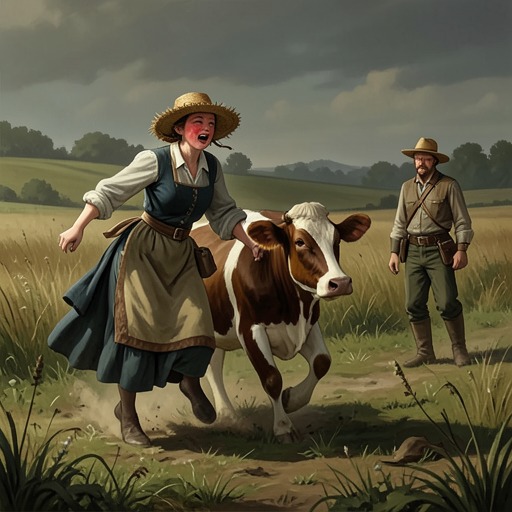
The vision ended when a Jersey cow bolted down the lane and [J. A. Harrison](entity:character-recall-character-j-a-harrison-84d90cfa4afd) arrived in fury. His cow had been found in his oats, and he blamed Anne for letting it trespass.
The same August afternoon
The Neighbor's Rebuke
Anne explained that the cow, Dolly, belonged to her, apologized for the damage, and pointed out that the fence was in poor repair. Harrison, still angry, insulted her red hair and accused her of neglecting the animal.
Anne answered with a sharp reference to his baldness, then regained her composure and promised Dolly would not enter his oats again. She was unsettled by the encounter and concluded that Harrison lacked the kindred spirit she usually hoped to find in people.
That evening
News of the Newcomers
[Marilla Cuthbert](entity:character-recall-character-marilla-cuthbert-bf4a0a7fd1a3) told Anne that the farm would soon be transferred to Mr. Barry and that the unreliable hired man had still not returned. She also spoke of [Mary Keith](entity:character-recall-character-mary-keith-34f322a640f4), who was dying and worried about the future of her six-year-old twins, [Davy](entity:character-recall-character-davy-f48d61c26341) and Dora.
[Rachel Lynde](entity:character-recall-character-rachel-lynde-cf7e3fe8ae61) arrived with news of other newcomers, including the Donnell family and [Paul Irving](entity:character-recall-character-paul-irving-93d263bdc5b2), who was coming from the United States to live with his grandmother. Anne defended the prospect of new pupils and told Rachel about plans for a Village Improvement Society.
The following day
The Improvement Plans
Anne and [Diana Barry](entity:character-recall-character-diana-barry-bb69c4bc47d4) discussed how to make [Avonlea](entity:location-recall-location-avonlea-5fb88633986b) more attractive, beginning with the shabby hall and a neglected crossroads. Anne imagined clearing the overgrown ground and making a flower bed, while Diana worried that a cow would eat the flowers.
Their conversation about the abandoned Boulter house exposed a difference between them: Anne imagined its lost family and remembered joys, while Diana saw only an old building. Anne understood that her deepest flights of fancy were often a solitary pleasure.
The next afternoon
The Cow Sold in Error
Returning from [Carmody](entity:location-recall-location-carmody-50a1db65efa5), Anne saw a Jersey cow standing in the middle of Harrison’s oats. She and Diana charged through the wet crop to drive it out before Harrison could discover the damage.
Mr. Shearer appeared and offered twenty dollars for Dolly. Anne sold her impulsively, relieved to be rid of the troublesome animal, then realized at home that Dolly was still safely shut in the pen: the cow she had sold was Harrison’s.
That evening
Anne Confesses to Harrison
Anne carried the twenty dollars and a cake to Harrison’s house, expecting an angry reception. His parrot [Ginger](entity:character-recall-character-ginger-7a5f4669310e) insulted her, but Harrison himself listened as she admitted she had mistakenly sold his cow.
Harrison forgave her and accepted Anne’s cow in exchange. Over tea, the two discovered a warmer understanding than either had expected, and he invited Anne to visit again. Their quarrel became the beginning of a genuine neighborly friendship.
The evening before school opens
A Debate About Discipline
Anne discussed teaching with [Jane Andrews](entity:character-recall-character-jane-andrews-864507957e25) and [Gilbert Blythe](entity:character-recall-character-gilbert-blythe-3fdbcec6568b). Jane intended to whip disobedient pupils, while Anne insisted that she would govern through affection and seek the good in each child.
Gilbert proposed corporal punishment only as a last resort, satisfying neither girl. Anne remained firm in her ideals, though Harrison later warned that she would eventually lose her temper and use the rod.
September 1
Anne's First Morning
Anne arrived at [Avonlea school](entity:location-recall-location-avonlea-school-0efcec9971be) anxious and unable to remember the carefully prepared opening speech she had written. She began the day by asking the pupils to take out their Testaments, then studied the children as they read.
Among the newcomers she noticed [Anthony Pye](entity:character-recall-character-anthony-pye-e1f9df22ecf4), who seemed hostile, and [Paul Irving](entity:character-recall-character-paul-irving-93d263bdc5b2), whose answering smile immediately made them friends. Anne sensed that Paul shared her imaginative nature and might be the exceptional pupil she had hoped to find.
Anne's first day of teaching
The First Classroom Trials
Anne managed the school mechanically at first, punishing Morley Andrews by making him stand on the platform after he drove crickets through the aisle. She later released the confiscated insects in the woods, though Morley believed she had kept them.
When Anthony poured water down a girl’s neck, Anne kept him in at recess and appealed to his sense of what a gentleman should do. He listened without being moved, leaving Anne hopeful but unsure how she would win his respect.
After school on Anne's first day
The Donnell Correction
[Mrs. H. B. Donnell](entity:character-recall-character-mrs-h-b-donnell-43dfa47681d0) came to complain that Anne had pronounced the family name incorrectly and called her son Jacob instead of St. Clair. She explained that she had renamed him after her wealthy uncle married and had children of his own.
Anne promised to use the preferred name, though the boy himself liked Jacob better. On her way home, Paul gave Anne wild orchids because he thought she would appreciate them, lifting her spirits after a tiring day.
Early autumn
The Society Takes Shape
Anne and Gilbert helped establish the [Avonlea Village Improvement Society](entity:organization-recall-organization-avonlea-village-4ecfd7dd9e43), with Gilbert as president, Anne as secretary, Diana as treasurer, and [Fred Wright](entity:character-recall-character-fred-wright-056b71737628) as vice-president. The young members planned meetings and hoped to improve the appearance of the settlement.
Their project attracted jokes and suspicion, but they chose to raise funds to repaint and reshingle [Avonlea Hall](entity:location-recall-location-avonlea-hall-e6feac1cc442). Anne and Diana were assigned to canvass the [Newbridge](entity:location-recall-location-newbridge-158f1a756e37) road, where they encountered skeptical neighbors and learned how difficult civic improvement could be.
A Saturday in early autumn
The Newbridge Canvass
Anne and Diana asked residents along the [Newbridge](entity:location-recall-location-newbridge-158f1a756e37) road to contribute to repairs for the hall. Eliza Andrews rejected the cause, while her optimistic sister Catherine secretly gave the girls money and urged them not to be discouraged.
At Daniel Blair’s house, Anne helped him make a cake while his wife was away, and Blair responded with a generous contribution. At the White household, the girls walked across newspapers laid down to protect a spotless floor; the odd visits and varied refusals tested their patience but helped build the fund.
Later on the canvassing route
A Baby's Fortunate Arrival
Anne heard that Lorenzo White had just welcomed a son after seven daughters. Knowing the proud new father would be unusually generous, she persuaded Diana to make a detour and ask for a donation.
White promised a dollar more than the largest contribution they had received. Anne named five dollars, matching the opportunity, and the delighted father paid it before proudly showing them the baby.
Late autumn
The Blue Hall
The Improvers had ordered green paint by its number on a color card, but confusion between two numbers resulted in Joshua Pye painting [Avonlea Hall](entity:location-recall-location-avonlea-hall-e6feac1cc442) a brilliant blue. The group had no legal grounds to refuse payment for his work, so they paid him despite their dismay.
Anne feared the mistake would destroy the society, but residents sympathized with the young organizers and began supporting other improvements. The blue hall remained a local byword, while the public response helped the society survive its first major failure.
Late autumn
The Keith Twins Arrive
After [Mary Keith](entity:character-recall-character-mary-keith-34f322a640f4) died, Marilla brought [Davy](entity:character-recall-character-davy-f48d61c26341) and Dora home to [Green Gables](entity:location-recall-location-green-gables-e9744a21c012) for the winter. Davy was restless, impulsive, and affectionate; Dora was quiet and orderly. Anne welcomed both, while Marilla worried about the responsibility of raising two six-year-olds.
At supper Davy showed how little discipline he had received, taking Dora’s cake and defending himself by saying he was not yet a gentleman. Anne began teaching him what good manners meant, and Marilla’s household entered a new, noisier phase.
The first Sunday after the twins arrived
Davy's Caterpillar at Church
[Davy](entity:character-recall-character-davy-f48d61c26341) resisted being washed until Anne persuaded him that [Paul Irving](entity:character-recall-character-paul-irving-93d263bdc5b2) washed his face every day. At church he watched the other boys, then dropped a caterpillar down Lauretta White’s dress during [Mr. Allan](entity:character-recall-character-mr-allan-3a9d7379bf8f)’s prayer.
Marilla sent Davy to bed without dinner, but Anne’s sadness made him reflect. He admitted that Paul would not have done the same thing, though he still found the girl’s screams entertaining. The episode revealed both Davy’s mischief and his growing desire to measure himself against Paul.
A Tuesday soon after the twins arrived
Dora's Pigpen Fall
While the [Ladies' Aid Society](entity:organization-recall-organization-ladies-aid-socie-b3493111d3dc) met at [Green Gables](entity:location-recall-location-green-gables-e9744a21c012), [Davy](entity:character-recall-character-davy-f48d61c26341) persuaded Dora to walk along a pigpen fence by calling her a coward. She fell into the pen, and Davy’s attempt to wash her dress under the pump left her soaked and no cleaner.
Anne spoke seriously with Davy, who admitted that he felt sorry only after doing something wrong. He asked whether Paul would have behaved that way, and Anne’s answer gave him another model of the conduct he hoped to learn.
A November afternoon
The Lost Dora
Marilla returned from visiting the sick [Thomas Lynde](entity:character-recall-character-thomas-lynde-02fe1487cf7e) to find Dora missing. Anne and Marilla searched the house and outbuildings, then feared Dora might have fallen into the deep well. Mr. Barry dragged it but found nothing.
Anne went to Harrison’s empty house and heard a cry from the tool shed. Dora was inside, cold and frightened; she explained that [Davy](entity:character-recall-character-davy-f48d61c26341) had shut her in after taking her to see [Ginger](entity:character-recall-character-ginger-7a5f4669310e). Davy had denied knowing where she was, and Anne was hurt most by his deliberate lie.
That evening
Davy Learns About Lying
Anne and Marilla confronted [Davy](entity:character-recall-character-davy-f48d61c26341) after Dora was safe. At first he thought his falsehood had been necessary for the prank, but Anne’s tears made him understand that he had caused real pain.
Davy promised never to lie again, saying no one had explained that falsehoods were wrong. Later he argued that Marilla had lied about something dreadful happening if he stopped saying his prayers. Anne persuaded him that the wrongdoing itself was the consequence; Marilla concluded they would have to teach him patiently from the beginning.
Late autumn
The Hallway of Advertisements
The Improvement Society learned that [Judson Parker](entity:character-recall-character-judson-parker-d6339d4b5937) intended to rent his roadside fence to a patent-medicine company for advertisements. Its members feared that signs would spoil one of [Avonlea](entity:location-recall-location-avonlea-5fb88633986b)’s prettiest roads, but Parker rejected Anne and her committee’s plea.
Anne later overheard Parker accept a political bribe from Jerry Corcoran. Parker mistook her silence for leverage and withdrew the fence plan, not realizing that Anne had no intention of exposing or bargaining with him. The episode preserved the road but left Anne troubled by the dishonesty she had witnessed.
During the school year
Anne's Schoolroom Stories
Anne found teaching enlivened by her pupils’ comic misunderstandings, from a child who defined a glacier as a man who installed window frames to another who thought a honeymoon was a special bicycle. Their candid answers and compositions revealed the unexpected workings of young minds.
Paul’s letter about his imaginary rock people showed Anne that his make-believe was not a mistake but a gift. He described sailors, a golden lady, and a voyage to the sunset, then confessed that the story was not literally true. Anne recognized a kindred imagination and treasured his trust.
A winter school day
Anne's Jonah Day
After a sleepless night with toothache, Anne arrived at school irritable and spoke sharply to Barbara Shaw after an accident. She also ordered Joe Sloane to throw a parcel into the stove, believing it contained forbidden cakes; it actually held firecrackers and pinwheels, which exploded through the room.
Later a mouse startled Anne, and [Anthony Pye](entity:character-recall-character-anthony-pye-e1f9df22ecf4) admitted putting it in her desk. In a burst of anger she struck him with her pointer, then immediately regretted breaking her own rule against whipping pupils. She feared she had lost her chance to win Anthony’s regard.
The morning after Anne's Jonah Day
Anthony's Unexpected Respect
Anne awoke ashamed of her outburst, but Anthony surprised her by carrying her books through the snowy road and speaking politely. His behavior suggested that her discipline had earned his respect, even if it had not been the method she wanted to use.
Rachel later reported that Anthony thought Anne’s blow had been as good as a man’s. Anne disliked the lesson, but she recognized that Anthony’s hostility had eased and that he now regarded her differently.
Spring
The Golden Picnic
For her adopted spring birthday, Anne invited Diana, Jane, and Priscilla to explore the woods and make a day of noticing beauty. They found a woodland pool, a winding lane, and, beyond a steep hill, the neglected garden of [Hester Gray](entity:character-recall-character-hester-gray-0bdddcaec424).
Diana told them how Jordan had made the garden for Hester and cared for her until she died among her roses. Anne imagined Hester’s quiet happiness as something worth envying rather than pitying, and the discovery became a treasured birthday gift.
The following spring
The Storm of Advertisements Averted
The Improvement Society continued its work, clearing the crossroads and improving roadsides despite its earlier setbacks. When Parker’s fence-advertising plan threatened the [Newbridge](entity:location-recall-location-newbridge-158f1a756e37) road, Anne’s committee failed to change his mind directly.
After Anne encountered Parker accepting a political inducement, he abruptly abandoned the plan. He believed she understood his position and would keep his secret; Anne had simply refused to turn the matter into a bargain. The Society’s wider efforts meanwhile began to win support from older residents.
The end of Anne's first school year
Paul's Grief for His Mother
As school closed for summer, Paul accompanied Anne to the graveyard with flowers for his grandfather and his dead mother. He told her that the loss still hurt as much as ever, and that he missed his mother deeply.
Anne understood that he would not want the pain erased if it meant forgetting her. Paul also spoke of his father and hoped they would live together again once he was older, trusting Anne with feelings he could not easily share with anyone else.
The following summer
The Failed Morgan Dinner
Anne prepared an elaborate dinner for the celebrated author [Charlotte E. Morgan](entity:character-recall-character-charlotte-e-morgan-c8694c7a1d2f), whose books had shaped her ideals. She and Diana decorated [Green Gables](entity:location-recall-location-green-gables-e9744a21c012) and cooked carefully, but [Davy](entity:character-recall-character-davy-f48d61c26341) fell onto the lemon pies, and a series of mishaps spoiled parts of the meal.
Charlotte E. Morgan and Priscilla never arrived because Morgan had sprained her ankle. The guests who did come ate a simpler dinner, but the day’s disappointment deepened when a conch shell fell onto and shattered Miss Barry’s borrowed willow-ware platter. Anne resolved to replace it.
The next afternoon
The Search on Tory Road
Anne and Diana set out for [Spencervale](entity:location-recall-location-spencervale-31cb4311a983) to find a replacement for the broken platter. At the Copp homestead they spotted a matching piece through the pantry window, but Anne’s excitement made her jump through the weak roof of an old duck house.
A thunderstorm trapped Anne in the wrecked structure while Diana sheltered the horse and buggy. When the rain passed, Sarah Copp freed Anne with an axe and agreed to sell the platter. The girls left with the precious replacement and a story Anne planned to tell Miss Barry.
Late summer
Paul's Evening Thoughts
Anne stayed for tea with Paul while his grandmother was away. He asked whether something was wrong with his “upper story,” after hearing a servant call him queer for his imaginative ideas.
Paul described an angel singing flowers to sleep, a golden boat made from the new moon, and violets as scraps of sky. Anne assured him that his thoughts were beautiful rather than foolish and encouraged him to keep them. Their shared make-believe became an important source of confidence for Paul.
Late summer
Davy's Growing Kindness
[Davy](entity:character-recall-character-davy-f48d61c26341) worried that Anne liked Paul more, and threatened to stop saying his prayers. Anne explained that she loved each boy for who he was, not in identical ways, and Davy was reassured.
He proudly described giving Dora the larger slice of bread and jam, though she later shared half of it with him. Anne praised the generosity, recognizing that Davy had become kinder even if his mischief had not disappeared.
An October afternoon
Anne's Unexpected Path to Echo Lodge
Walking with Diana toward a tea invitation, Anne took the wrong road through autumn woods. Rather than turn back, the girls sought directions and came upon [Echo Lodge](entity:location-recall-location-echo-lodge-d0fbebed599d), the ivy-covered stone house of [Lavendar Lewis](entity:character-recall-character-lavendar-lewis-09de85e9f0c7).
Lavendar welcomed them to a tea party she had prepared for imaginary guests because she was lonely. Anne delighted in discovering another person who pretended and imagined, and the two formed an immediate bond. Lavendar’s wistful reaction to Paul’s name hinted at her old connection with his father.
A snowy evening in December
The Old Romance Revealed
During a visit to [Echo Lodge](entity:location-recall-location-echo-lodge-d0fbebed599d), Lavendar confessed to Anne that she and [Stephen Irving](entity:character-recall-character-stephen-irving-206d481825d0) had once been engaged. A trivial quarrel, her sulking, and their shared pride ended the engagement before either could repair it.
Lavendar said that her heartbreak had been real but had not made her permanently miserable; ordinary pleasures and dreams had continued to sustain her. She admitted that she wanted to meet Paul, though she feared the encounter might reopen old wounds.
About a month later
Paul Meets Lavendar
Anne brought Paul to [Echo Lodge](entity:location-recall-location-echo-lodge-d0fbebed599d), where Lavendar was visibly moved to see how much he resembled Stephen. She quickly hid her feelings and welcomed him warmly, and Paul responded to her as a trusted friend.
When Paul offered to let her kiss him, explaining that she looked like his mother when she wanted to, Lavendar accepted. Their affection gave her a living connection to the family she had lost and made the old romance more than a private memory.
About a month after the first Echo Lodge visit
The Twins' Inheritance
A letter informed Marilla that Richard Keith had died and left money in trust for [Davy](entity:character-recall-character-davy-f48d61c26341) and Dora. The inheritance would provide for the twins’ maintenance, removing the financial uncertainty that had made Marilla fear she could not keep them.
Anne and Marilla were relieved that the children could remain at [Green Gables](entity:location-recall-location-green-gables-e9744a21c012) permanently. Dora worried that her uncle might return as a ghost, remembering a frightening story from school, but Anne reassured her.
The following spring
Emily Returns to Harrison
A woman arrived at [Green Gables](entity:location-recall-location-green-gables-e9744a21c012) asking for [James A. Harrison](entity:character-recall-character-james-a-harrison-e0d055ddfb03) and revealed that she was his wife, Emily. She had seen a newspaper joke implying he might marry someone else and had come to investigate.
The revelation stunned Anne and Marilla, who had assumed Harrison was a bachelor. Rachel went to meet Emily and soon became her friend, while the settlement’s gossip filled in conflicting versions of why the couple had lived apart.
The days after Emily's return
Harrison's Account of the Separation
Harrison told Anne that Emily’s relentless cleaning, criticism, and attempts to reform his habits had made their marriage intolerable. He admitted that his stubbornness and careless manners had contributed to the conflict.
Their final rupture came when Emily demanded that he choose between her and [Ginger](entity:character-recall-character-ginger-7a5f4669310e). Harrison refused to give up the parrot and left town. Now that Ginger was dead, Emily had returned, and Harrison was glad to have her home despite pretending to mourn his lost freedom.
May 23
The May Twenty-Third Hailstorm
A huge black storm rolled over [Avonlea](entity:location-recall-location-avonlea-5fb88633986b) just after Anne dismissed school. Hail struck [Green Gables](entity:location-recall-location-green-gables-e9744a21c012) with such force that windows shattered, branches tore against the house, and Marilla, Anne, and the twins huddled together in terror.
The storm killed [Ginger](entity:character-recall-character-ginger-7a5f4669310e) after lightning struck Harrison’s house and knocked over his cage. Harrison grieved openly over the bird who had been his companion, while the village soon discovered how extensive the storm’s destruction had been.
The days after May 23
Avonlea After the Hail
Hailstones covered the roads, and when they melted, residents saw that crops, blossoms, and fruit trees had been devastated. Most of the ornamental trees planted by the Improvement Society were destroyed, though the storm also demolished the old Boulter house that the society had failed to remove.
[Uncle Abe](entity:character-recall-character-uncle-abe-e45a31e43a5b) enjoyed his unexpected vindication as a weather prophet, and the event became known as his storm. Anne mourned the damaged landscape but took comfort in the certainty that more springs would come and the trees could be planted again.
Early summer after the storm
Lavendar's Waning Spirits
Anne noticed that Lavendar had grown tired and withdrawn. [Charlotta the Fourth](entity:character-recall-character-charlotta-the-fourt-0269e1fd43f0) explained that Lavendar no longer pretended company was coming, had lost interest in cherished things, and seemed lonely even in her garden.
Anne proposed a week of visits and picnics during her vacation, hoping to restore Lavendar’s spirits. The concern revealed how much Anne and Paul had become part of the life that had sustained Lavendar at [Echo Lodge](entity:location-recall-location-echo-lodge-d0fbebed599d).
The end of Anne's second school year
The Last Day at Avonlea School
Anne’s pupils gave her an address and a writing desk at the close of the year. Their attachment made her departure painful, especially as Paul confessed he could hardly imagine school without his teacher.
Anne reflected that teaching had taught her as much as she had taught the children. She believed they would remember lessons in kindness, truth, and courtesy even after forgetting their geography and history. Her years in [Avonlea](entity:location-recall-location-avonlea-5fb88633986b) had changed her ideals through experience.
Early in Anne's summer vacation
Stephen Returns to Paul
During a visit to Paul, Anne learned that [Stephen Irving](entity:character-recall-character-stephen-irving-206d481825d0) had arrived unexpectedly from the United States. Paul was overjoyed to see his father, who had not told the family he was coming.
Stephen thanked Anne for understanding and encouraging Paul’s imaginative temperament, which his practical mother had not always known how to meet. In conversation, he asked Anne about Lavendar, revealing that the old attachment still mattered to him.
The next morning
Stephen Seeks Lavendar
Stephen asked Anne to find out whether Lavendar would receive him. Anne carried the message to [Echo Lodge](entity:location-recall-location-echo-lodge-d0fbebed599d), where Lavendar had already guessed that Stephen was home.
Lavendar agreed to see him but tried to treat the meeting as an ordinary visit between old friends. Anne, convinced that the long-delayed romance was beginning again, waited with Charlotta as Stephen came to the house.
That evening
The Reunion at Echo Lodge
Stephen and Lavendar met again after twenty-five years. Anne and Charlotta waited anxiously while the former lovers spoke privately, then saw them walking together in the garden with Stephen’s arm around Lavendar.
Anne recognized that they had reconciled and felt both joy and a trace of sadness at the story’s turn. The reunion transformed [Echo Lodge](entity:location-recall-location-echo-lodge-d0fbebed599d) from a refuge of old dreams into the beginning of a shared life.
Later that summer
Diana's Engagement
Anne accidentally saw Diana and [Fred Wright](entity:character-recall-character-fred-wright-056b71737628) standing together beneath the willow, with Fred holding Diana’s hand and speaking earnestly. She fled before they noticed her, startled by the realization that her closest friend had entered a new stage of life.
Diana soon confided that she and Fred were engaged. Anne was happy for her, though the news made her feel that something had shifted between them. She promised to be Diana’s bridesmaid whenever the wedding came.
The evening after Diana's engagement
Anne's Imagined Future
Diana described her preparations for marriage and spoke of the man she had once imagined marrying. Anne initially wondered how Diana could love Fred, who differed from that ideal, but understood that love made him the right person precisely because he was himself.
Anne began imagining a future home of her own. A dark, romantic stranger occupied it in her fancy, yet Gilbert kept appearing there too, helping with its practical details. She did not yet understand what that persistence meant.
The last Wednesday in August
The Wedding at Echo Lodge
Stephen and Lavendar married in the garden under the honeysuckle, surrounded by a small circle of friends. The sun broke through the gray clouds as they were pronounced husband and wife, and Paul rang an old bell whose sound returned in the garden’s echoes.
After the guests left, Anne and Charlotta returned to put the house in order. The wedding had carried Lavendar from a life of dreams into a fuller reality, while [Echo Lodge](entity:location-recall-location-echo-lodge-d0fbebed599d) remained ready to welcome her back in future summers.
The evening of the wedding
Gilbert's Quiet Confession
Anne sat beneath the poplar, thinking about Stephen and Lavendar’s reunion. Gilbert suggested that their story might have been still more beautiful without the separation and misunderstanding.
His words unsettled Anne. For the first time, she sensed that romance might come not as a dramatic stranger but through a friendship already beside her. The realization was fleeting, but Gilbert read the blush as a promise of what might come.
The days after the wedding
The End of Anne's Avonlea Years
As Anne prepared to leave for [Redmond College](entity:location-recall-location-redmond-college-815c1c2d5111), several changes gathered around her: the Allans were leaving, Rachel would move to [Green Gables](entity:location-recall-location-green-gables-e9744a21c012), and the twins would remain with Marilla. Anne was glad to go but grieved to leave the pupils and friendships that had become part of her daily life.
She had grown from a young teacher with fixed theories into someone more willing to learn from experience. Her time in [Avonlea](entity:location-recall-location-avonlea-5fb88633986b) had strengthened her ideals while teaching her that a good life could be built wherever she found herself.