Hera
ArtemisHera, Queen of the Gods, is a central antagonist whose jealousy becomes a force that reaches beyond the divine household and into the lives of mortal women. After Zeus’s relationship with Leto, she curses Leto’s pregnancy and pursues her with Python; much later, she transforms Callisto into a bear and steers Artemis toward a fatal hunt. Across these episodes, Hera turns personal grievance into prolonged punishment, using divine authority and influence over others to make women’s bodies the terrain on which her conflicts are fought.
Identity and Background
Hera is Zeus’s wife and Queen of the Gods. The narrative presents her as acutely jealous of women who attract Zeus’s attention, and as someone whose anger can make even Zeus fear her response. Her authority is not merely domestic: she is described as governing the land and nature, and she can call upon supernatural agents and enchantments to pursue her purposes.
Her conflict with Leto begins after Leto becomes pregnant by Zeus. Hera treats the relationship as a treachery against her household, and the resulting hostility extends from the adult relationship to the children Leto is carrying. The story thus makes Hera’s response consequential well beyond the marriage that provokes it: Leto and her children become targets of a dispute they did not choose.
The Curse and the Pursuit of Leto
Hera’s curse forbids Leto from giving birth anywhere the sun shines. It establishes the conditions of Leto’s ordeal: she must find a place where she can deliver her children, while Hera’s power makes ordinary refuge unsafe. Hera sends Python to hunt her, and the serpent can locate Leto as long as she remains on terra firma. Leto consequently flees from place to place, but the threat follows, and no land dares welcome her.
Hera’s pursuit operates through watchfulness as well as force. The narrative says she is always observing and knows where Leto goes; Python is the means by which that knowledge becomes an immediate danger. Leto eventually escapes the serpent by reaching Delos after twelve days and nights. The island floats, is not attached to the ocean floor, and is not considered land, making it a refuge beyond the curse’s stated reach. When Python swims after her, Zeus sends Leto across the water and moves the island beyond the serpent’s reach. Hera’s pursuit is thwarted, but only after it has deprived Leto of safety across the earth.
Childbirth and the Conflict with Eileithyia
Hera also obstructs Leto’s labor by keeping her own daughter, Eileithyia, from assisting. Eileithyia protests that her confinement causes suffering to mothers in labor, but Hera insists that Leto must suffer for her relationship with Zeus. Hera says she would let humanity burn in Hades if that were the cost of making Leto endure pain that could claim her life. The statement places her retaliation above the welfare of others, including the wider community of mothers affected by the withheld aid.
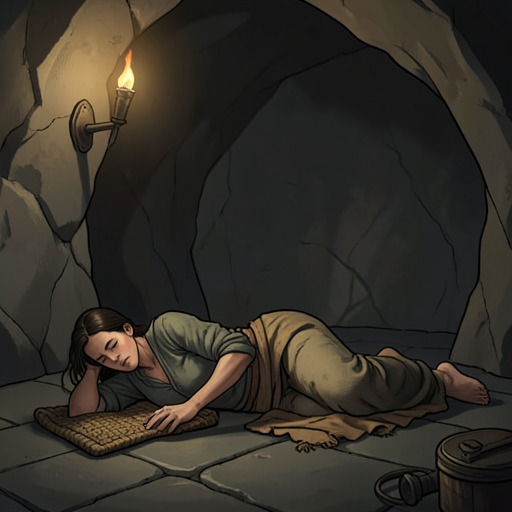
Eileithyia reminds Hera that Leto’s children are Zeus’s children and that Zeus will love them and want them in his royal house. Hera knows this is true but remains determined to delay the birth. She throws Eileithyia into the palace dungeon and keeps her locked there for thirty days, while Leto faces childbirth without her aid. Leto endures nine days and nights of pain before Rhea and Dione help her into a cave on Delos; other immortals guide her to a resting place away from Hera’s reach. The episode shows Hera trying to enforce her hostility not only through a curse and a pursuing monster, but through confinement within her own household.
Callisto: Transformation and the Hunt
Hera’s later actions against Callisto repeat the pattern of turning jealousy into bodily punishment. After Callisto’s confrontation with Artemis, Hera concludes that Zeus is responsible for what has happened. Inflamed by jealousy and resentment toward Artemis, she enchants Callisto and transforms her into a large brown bear. Callisto remains in flight, and the roars of her bear form carry across the land even after she has disappeared from view.
Hera then uses her influence to direct the danger toward Artemis. As Callisto flees through the foliage, Hera urges Artemis to aim at her; later, she weaves her words into the wind and tells the huntress to shoot. Artemis’s hand trembles, though she has never trembled before, and she does not understand why. Callisto, meanwhile, is trapped near the lake between two hunting bands. As the hounds attack, she fights them off and escapes the nymphs’ attempts to pin her with arrows. Hera’s intervention makes the hunt a collision between a transformed Callisto and the very hunting company with which she had been associated.
Relationships and Narrative Role
Hera’s relationship with Zeus is a recurring source of conflict, but the account does not limit the consequences to the couple. Her response to his relationship with Leto falls upon Leto and the children she carries; her response to the events surrounding Callisto falls upon Callisto and also draws Artemis into danger. In both cases, Hera’s grievance travels through other people, and the women who bear the cost have little power to control the terms of the conflict.
Her interventions also contrast with acts of refuge and aid. Delos accepts Leto after other lands refuse her, and Zeus ultimately carries her beyond Python’s reach. During childbirth, Rhea, Dione, and other immortals help Leto when Hera has removed Eileithyia’s assistance. These moments do not erase Hera’s power; they show that the consequences of her pursuit depend on whether others offer shelter or protection. Hera’s narrative role is therefore both personal and structural: her jealousy initiates particular acts of vengeance, while her command of curses, confinement, transformation, and persuasion allows those acts to reshape the lives and relationships of others.