Eileithyia
ArtemisEileithyia is the goddess of childbirth and midwifery, a divine helper whose presence can ease the ordeal of labor but whose capacity to act is vulnerable to the same power politics that shape the lives of mothers and children. Her story turns on two sharply contrasted moments: Hera’s confinement of her to prolong Leto’s suffering, and her later decision to help Callisto give birth when she cannot protect her from Artemis.## Identity and Divine Office Eileithyia’s office is to aid women in childbirth. She understands this not simply as a title but as a duty: when Leto is in labor on Delos, Eileithyia appeals to Hera on the ground that women suffering in childbirth are entitled to her help. The goddess’s role therefore links divine power to practical care, while also making her ability to intervene consequential for the mortal and divine families involved.
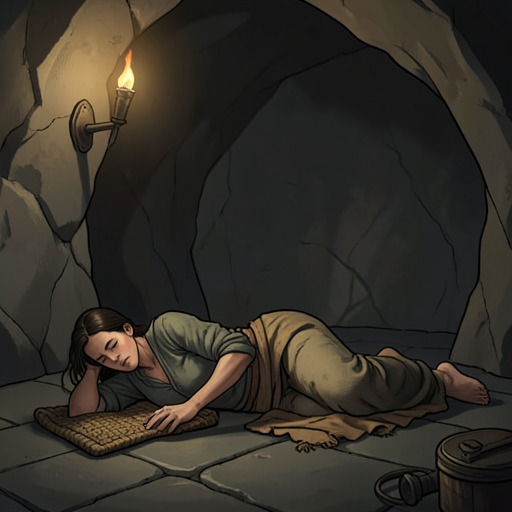
That duty is especially significant in the story of Leto because the birth of Leto’s children is already entangled with conflict among the gods. Hera’s hostility follows from Leto’s relationship with Zeus, and Hera has cursed Leto so she cannot give birth where the sun shines. When Leto reaches Delos, the island gives her refuge, but it cannot spare her the agony of labor or overcome Hera’s obstruction of the goddess who could assist her.## Hera’s Confinement and Leto’s Labor As Leto suffers, Hera prevents her daughter from reaching the island. Eileithyia protests that she is responsible for helping women in labor, but Hera refuses to let her go. She drags Eileithyia through the palace and confines her in a dungeon, using a mother’s authority over her daughter to make Leto’s childbirth more painful. Eileithyia’s attempts to resist do not change the outcome: Hera’s power exceeds hers, and the goddess who should be able to help is made unavailable.
The confrontation also exposes the political purpose of the confinement. Hera is not unaware that Leto’s children are Zeus’s; Eileithyia points out that their father will love them and want them at Olympus. Hera’s stated aim is to keep them from entering the divine household, and she holds Eileithyia so Leto cannot receive help while Hera waits for Zeus to intervene. The result is that Leto labors alone for nine days and nights. Only on the tenth day do Rhea, Dione, and other divine attendants guide her into a cave at the center of Delos, where she gives birth. Eileithyia’s absence does not stop the birth, but it extends the suffering that Hera intends to impose.
Eileithyia remains imprisoned for thirty days, a period that outlasts the immediate crisis of Leto’s labor. Her confinement is thus more than a temporary failure to arrive in time: it is the means by which Hera tries to control whose children can be born with divine assistance and welcomed into Olympus. Eileithyia’s plea identifies childbirth care as a responsibility to women in pain; Hera’s answer shows that, in this conflict, a goddess’s formal office cannot secure her freedom to fulfill it.## Later Aid to Callisto Much later, Eileithyia appears in a changed condition: the narrative identifies her as the former goddess of childbirth. Callisto, now living in bear form and unable to speak in human words, is pregnant and facing labor in a cave. Eileithyia approaches her and says she cannot defend her from Artemis’s anger, but can help her care for the child. The distinction is central to the encounter: she cannot undo Callisto’s danger or restore her former life, yet she can still offer assistance where a mother and child need it.
By morning Callisto’s strength is failing and labor is imminent. The cave becomes the place where she gives birth, and Eileithyia helps make that birth possible. She also declares that the child will be called Arcas, describes him as the father of the Arcadians, and foretells that he will lead mortals to triumph and be honored by cities. Zeus later sends Hermes to take the infant to King Lycaon so that he can grow up among humans rather than beasts; Callisto accepts the arrangement and remains a bear. Eileithyia’s aid therefore reaches beyond the delivery itself: she names the child’s future and helps secure the beginning of a life that will continue apart from his mother.
The contrast with Leto’s labor is decisive. In the earlier episode, Eileithyia is prevented from helping because Hera makes childbirth an instrument of vengeance. In the later one, she cannot protect Callisto from the goddess who has cast her out, but she chooses the care that remains within her reach. Across both episodes, her story measures divine power not only by the ability to cause or prevent suffering, but by whether anyone can still act in the service of a woman in labor and the child she bears.## Narrative Role Eileithyia’s two appearances connect the book’s conflicts over divine authority to the bodily and familial consequences of pregnancy and birth. Her enforced absence sharpens the injustice of Leto’s ordeal: the goddess assigned to assist women is restrained by Hera so that Leto will suffer longer. Her later assistance to Callisto reverses that pattern without erasing the danger around it. Eileithyia cannot prevent punishment or restore safety, but she offers help at the moment when Callisto is most vulnerable, and her words frame Arcas’s birth as the start of a future beyond the cave.