Pan
ArtemisPan is the god of shepherds and hunters, a wilderness deity whose ties to the mountains and forests make him a natural source of aid when Artemis begins pursuing her chosen life as a huntress. His relationship with her is marked by an early act of generosity: he blesses her ambition and gives her ten hounds. Later, however, Artemis must protect the nymph Pholoe from Pan himself, revealing a conflict between his role as her kinsman and benefactor and his pursuit of a vulnerable maiden.
Identity and Introduction
Pan lives in the rugged countryside of Arcadia, where Artemis seeks him out as she begins collecting the gifts she requested from Zeus. He is described as her cousin and as the god of shepherds, hunters, meadows, and mountain wilds. His goat-like appearance—horns, legs and tail, beard, snub nose, and pointed ears—visually associates him with the untamed landscape over which he presides. He carries a reed pipe, which he plays in his idle hours.
Pan is thus introduced through both kinship and domain. Artemis approaches him not as a stranger but as someone connected to her family, and she appeals to his authority over nature as she asks for help becoming a huntress. His importance to her story is practical as well as symbolic: he can furnish the hounds that will make her new vocation possible.
Artemis’s Request and Pan’s Gift
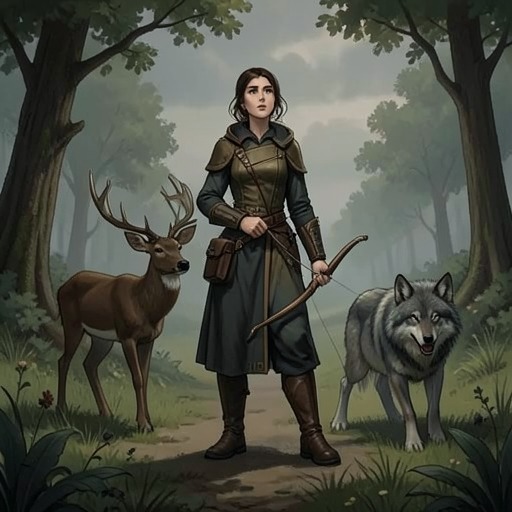
Artemis tells Pan that she wants to become the mightiest hunter. Of the six wishes she made to Zeus, one was to receive Pan’s hounds. She explains that she wants to call the wild her home, and asks both for his blessing and for his dogs. Pan pauses to consider the request, then says Zeus had warned him that she might come. He cites his admiration for Leto and respect for Zeus as reasons for granting his blessing to Artemis as lady of the mountains and forest; he also agrees to give her the hounds if she truly believes she can become the greatest hunter.
Pan lets Artemis choose among the animals. Three of the hounds are described as huge black-and-white dogs able to catch a live lion and drag it back to a hunter; the others are lean white deerhounds, each capable of outrunning a stag. When Pan points out that the largest dog is female, Artemis chooses her. In the end, Pan gives Artemis his ten best dogs, turning his initial blessing into concrete support for her ambitions.
Artemis immediately tests her new gift. She sends the white hounds after two deer and instructs them to bring the animals back unharmed. The dogs obey, and she selects those deer as her favorites, deciding to harness them to her chariot. Pan recognizes her skill in the chase and wishes her success in her hunts. Artemis responds with thanks and a kiss on his cheek. The exchange presents their early relationship as warm and mutually respectful: Pan recognizes her capability, while Artemis treats him with affection and gratitude.
Conflict over Pholoe
Pan’s later appearance complicates the image of the generous kinsman. One morning, he pursues a troop of nymphs as if they were quarry, singling out Pholoe and pursuing her through copse and stream into the Caelian wilds. He believes her to be his bride. When she becomes exhausted, she sits by a bank; Pan catches her by the ankles and hovers over her as she struggles to escape.
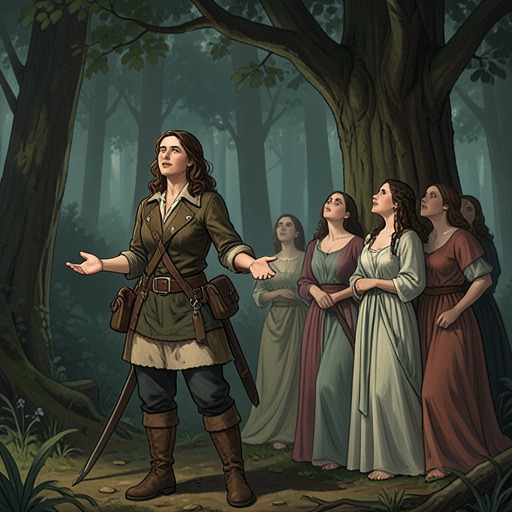
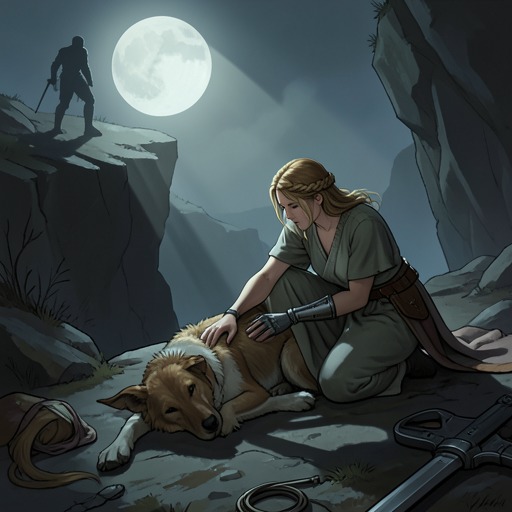
Artemis, ranging the seven hills and tracking a deer on Aventine, hears Pholoe cry for help and runs toward her. Disgusted by the pursuit, she asks her attendants for her quiver. Although she draws a short shaft, she does not fit it to her silver bow: Pan is still her cousin, and he has given her many of her favorite hounds. Instead, Artemis throws the shaft with one hand toward the pair. Its feathers touch Pholoe’s left hand, and the nymph and her clothing turn into water that flows into the lake, allowing her to escape Pan.
The rescue places Pan’s earlier generosity beside a later threat. The hounds he gave Artemis remain among her favorites, but that history does not prevent her from intervening when he pursues Pholoe. Her choice of a thrown shaft rather than an arrow from her bow also distinguishes the rescue from a direct attack on her cousin: the action frees Pholoe through transformation rather than depicting Pan’s injury or death.
Narrative Role and Significance
Pan connects Artemis’s emergence as a huntress to the natural world she claims as her home. His blessing and hounds equip her for the chase, and his recognition of her early skill affirms her new identity. The later rescue scene reverses the direction of their relationship: the giver of hunting dogs becomes the pursuer, while Artemis uses her own authority and quick judgment to protect a nymph.
This contrast makes Pan a consequential, if episodic, figure in Artemis’s development. Kinship and gratitude matter in the rescue, but they do not override her intervention on behalf of Pholoe. Pan’s actions therefore help define the limits of his earlier alliance with Artemis: his gift supports her hunting life, while her duty to protect a maiden leads her to oppose him when his pursuit threatens that life’s vulnerable inhabitants.