Depression
AsylumDepression is a defining part of Stella Raphael’s response to the crisis around Edgar Stark. It is described not simply as sadness but as a condition that limits her capacity to sustain emotion: even a brief flare of hostility fades because she is already deeply depressed. Later, as she waits for news of Edgar, depression coexists with hope and a determined avoidance of practical thought, leaving her outwardly functional but inwardly detached.
Emergence and Emotional Blunting
When asked how her attraction to Edgar began, Stella initially gives no satisfactory explanation and becomes vague. A suggestion that it might have been readily aroused household lust provokes a moment of spirited hostility, but the feeling quickly disappears. The narrator understands this failure to sustain affect in the context of her existing depression. Her response shows the condition shaping not only periods of overt despair but also the intensity and duration of emotion as it arises.
The narrator also anticipates that Stella’s sense of betrayal could trigger a depressive episode. The prediction is cautious rather than a report that a new episode has already begun: Stella may become angry with herself, and the people around her will need to remain vigilant. Depression is thus presented as a vulnerability that can be intensified by the crisis, not as a simple or automatic reaction to a single event.
Waiting for Edgar
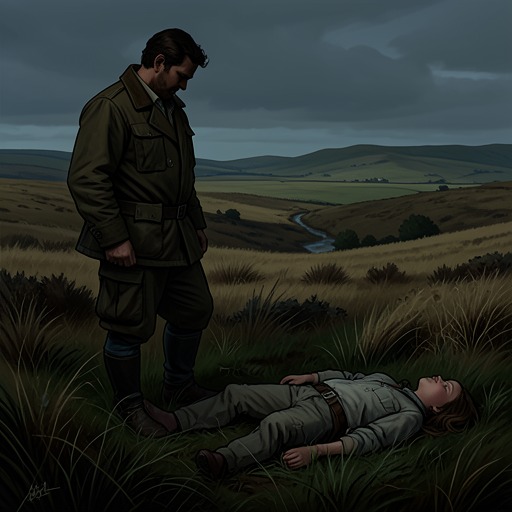
After Edgar goes to ground, Stella tries to believe that he is safe and still thinking of her. As the days pass and September arrives, that hope is interrupted by moments of despair in which she confronts the possibility that she may never see him again. She pushes the thought away and returns instead to remembered conversations and the conviction that he will not abandon her. Her sense of being suspended—nothing finished, yet everything changing—captures a life held between attachment and loss.
Stella avoids imagining what will happen next because practical questions have no answer and make her miserable. Instead, she asks herself what Edgar would want her to do and settles on patience, silence, and relief that he is safe. This inward routine protects her from confronting uncertainty, but it also leaves her dependent on faith in Edgar’s return rather than on any knowledge of what will happen.
Drinking and Detachment
Stella drinks constantly, treating gin as necessary to maintain some equilibrium. She recognizes at moments that blind faith and alcohol cannot remain her sole spiritual nourishment forever, but continues to rely on both while she can. The pattern makes her coping strategy visible without suggesting that it resolves her depression: it helps sustain a precarious interval of waiting rather than restoring certainty or emotional engagement.
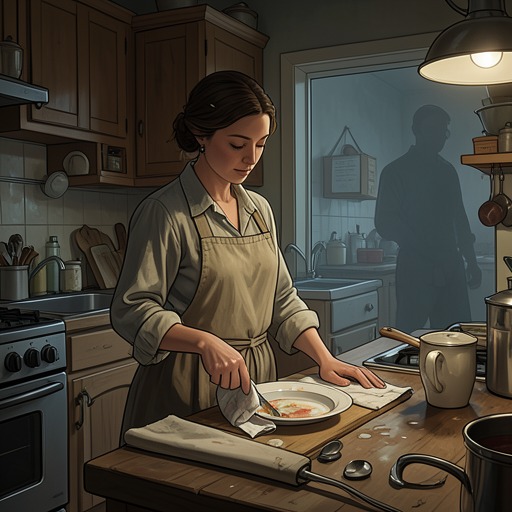
Around her, the crisis commands attention, yet others fail to notice how detached Stella has become. She moves through her days in abstraction and performs what is expected of her without being fully present. The narrator is the one who notices this distance. Depression therefore appears in a contrast between outward functioning and inward absence: Stella continues her daily life, but her attention and emotional participation remain suspended with Edgar’s uncertain fate.