Stella’s clay head
AsylumStella’s clay head is Edgar Stark’s sculpture of her, but it becomes more than a likeness: its scarred and gouged surface records the volatility of the relationship in which it is made. The work’s changing form links Edgar’s frustrated return to sculpture with Stella’s effort to interpret his violence as artistic struggle, and with Nick’s recognition of the sculpture as serious work.
Materials and Making
After a long period without sculpting, Edgar began working in clay, but his first efforts went badly. He worked standing up, pressing clay onto a wire frame roughly shaped as a head and setting it on a battered wooden stand. Nick found the clay and tools; Stella paid for them, even as she grew increasingly worried about money. The work was therefore materially dependent on the small household economy around the couple, as well as on Edgar’s solitary effort.
His difficulty was not simply a lack of technical ease. Whenever he began to make an impression on the clay, he would grow quietly furious and destroy what he had done. Stella tried to tell him that skill might take time to return, but he would not accept reassurance or explanations. From its beginning, the head was caught between the possibility of making and the impulse to damage.
Damage Becomes Part of the Sculpture
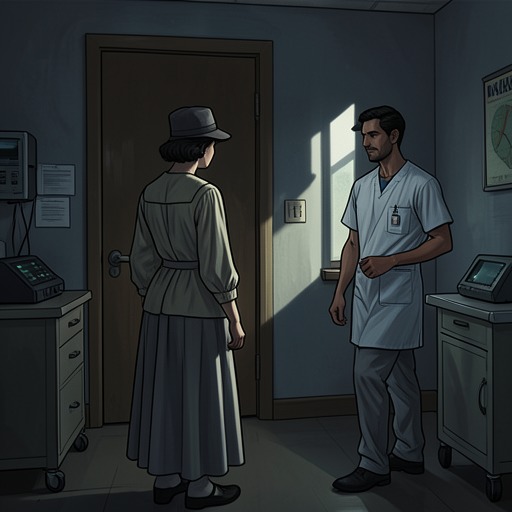
At dawn, Stella went down to the studio while Edgar slept. In the pale autumn light she uncovered the clay, which had been kept beneath damp cloths. The head and shoulders were still recognizably hers, but now violently scarred and gouged; she could see where Edgar had attacked the clay with his tools and fingers. Sickened, she covered it again. Yet she did not leave. She returned to bed, took Edgar in her arms, and held him.
Edgar continued working on the head, and the disfigurement ceased to be only evidence of a destroyed attempt: it became a stage in the sculpture’s evolution. That transformation does not make the damage harmless. The work’s artistic development runs alongside the danger Stella is failing to acknowledge. Even after seeing what Edgar had done to the figure of her, she remained with him and treated his work, and his unstable moods, as things she might help him through.
Likeness and Interpretation
When Edgar showed the work to Nick, Stella saw the head as both itself and an account of Edgar’s increasingly tortured relationship with her. Its recognizable likeness and its violent surface coexist: the sculpture depicts Stella while also bearing the marks of what is happening between them. She understood it as a kind of pathology expressed in clay, rather than as a neutral portrait.
Nick immediately recognized that Edgar was doing something important. His response mattered to Edgar, and Stella noticed that it mattered more than hers: Nick was an artist, and Edgar trusted his judgment about the work. Nick’s admiration also offered Stella a different interpretation of the couple’s turmoil. She wondered whether their suffering might belong to the demands of a serious artistic project, and whether the damage and strain could be understood as part of creation. The possibility briefly recast what she was living through, without removing the danger or resolving it.
Place in the Loft
Nick’s presence changed the atmosphere around the sculpture. Stella had become fond of him, and his visits brought groceries, drink, and money to the loft; he had also borrowed a small flat in Soho to give Edgar and Stella more room. After responding to the head, Nick went out with Edgar, and they returned with red wine and groceries. That night, with food and drink in the loft, the two men talked and laughed, while Stella quietly watched Edgar’s mood and took pleasure in seeing him spirited and affectionate again.
The head thus occupies two roles in the story of the loft. It is the focus of Edgar’s work and a visible trace of his attack on the clay, but it also gives Nick a way to engage with Edgar that Stella cannot. Its damaged likeness offers Stella a compelling artistic explanation for the couple’s distress; Nick’s recognition briefly eases their isolation. The sculpture’s development makes that explanation credible to her, even as its gouges preserve the violence she has seen.