Die Zeit im Auerhaus ist seine schönste Zeit gewesen
AuerhausThe phrase “Die Zeit im Auerhaus ist seine schönste Zeit gewesen” is Frieder’s written assessment of the time he spent at Auerhaus. His father discloses it while speaking to the gathered housemates after Frieder’s death, making the words a rare direct testimony from Frieder about what their shared life meant to him.
The diary and its reader
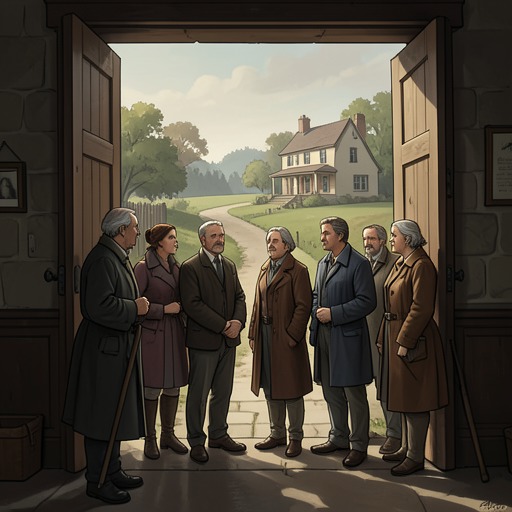
Frieder’s father approaches the table and says he has sorted Frieder’s belongings and found a diary among them. He speaks quietly, in a warm and friendly voice; sadness sometimes makes his voice falter, but he presses on. The statement about Auerhaus therefore reaches the group through two layers of recollection: Frieder wrote it in his diary, and his father now reads its meaning aloud to those who shared that period with him.
A house claimed by its inhabitants
The father repeats the judgment softly: the time at Auerhaus was Frieder’s happiest time. The wording matters beyond its praise of a particular period. The narrator is struck that Frieder’s father also calls the place Auerhaus, though it is his own house. In that moment, the name marks the home not simply as property but as the shared life Frieder and his friends made there, a place his father recognizes through his son’s attachment to it.
The Christmas tree and the remembered present
The diary passage also recalls the Christmas tree Frieder chopped down on Christmas Eve. His father begins to recount what Frieder wrote, then tries to shift from his broad dialect into standard German for the words: “Da war ich ganz da. Alles war gut.” The remembered happiness is thus grounded in a particular act and a particular holiday, not just in a general fondness for the house. Beside the statement that Auerhaus was the best time of Frieder’s life, the Christmas Eve line gives that judgment an image of being fully present and, for that moment, well.
Meaning after Frieder’s death
The phrase is delivered at a gathering shadowed by grief: Frieder’s father stands bent over the table while the people around him listen. His diary turns private experience into testimony shared with the housemates, confirming the importance of the time they lived together without erasing the sadness of its retelling. The father’s halting voice and his effort to speak the words as Frieder wrote them make the scene an act of remembrance as well as disclosure.