Orphanhood
BabelOrphanhood in the novel is not merely a biographical absence; it is the condition through which Robin Swift becomes available to institutional power. With his mother and grandparents dead, his father unknown, and no extended family to protect him, Robin stands outside both familial security and the social guarantees of the British world. His orphanhood makes him vulnerable to poverty and disease, but it also enables Professor Richard Linton Lovell to present assimilation, guardianship, and education as a single package of rescue.
Definition and Initial Condition
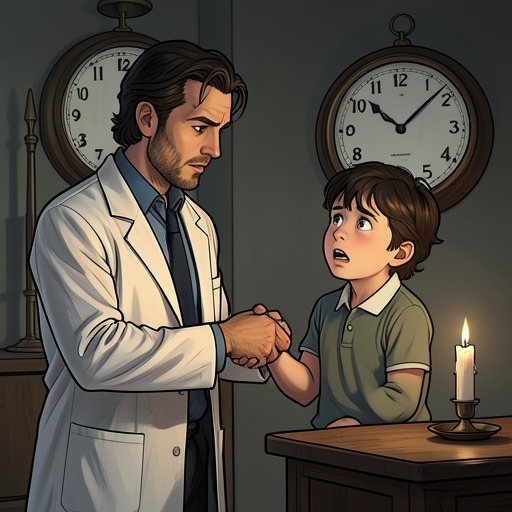
Orphanhood is first established through Professor Richard Linton Lovell’s assessment of Robin’s circumstances in Canton. The professor tells him that his mother and grandparents are dead, that his father is unknown, and that he has no extended family. Without intervention, Robin will remain without money and face poverty, disease, and starvation; even the most favorable adult future available to him would be physically punishing labor on ships after years of begging or stealing. The prediction is delivered with such emotional flatness that Robin finds it difficult to distinguish concern from calculation. The professor describes the boy’s probable early death almost as if listing ingredients for a stew, making orphanhood appear not as a temporary sorrow but as a social sentence.
The condition also places Robin at a sharp material disadvantage. He is still small and cannot yet support himself through dock work, while the absence of relatives removes the ordinary network through which a child might obtain shelter, employment, or protection. His future is therefore described in terms of survival rather than self-determination. Orphanhood strips away the private relationships that might mediate between Robin and the harsh economic world around him.
Guardianship as Rescue and Incorporation
Professor Richard Linton Lovell responds to Robin’s orphanhood with a formal proposal rather than an intimate act of adoption. Robin is invited to live at the professor’s estate, receive room and board until he can make his own living, and follow a curriculum designed by his guardian. The proposed education centers on Latin, Greek, and Mandarin, and promises the comfort and opportunities that Robin could not obtain in Canton. In exchange, he must apply himself diligently to his studies. The arrangement gives him safety, but its carefully stated terms make it resemble a business contract as much as a family bond.
This ambiguity is crucial to the meaning of Robin’s orphanhood. The professor does not simply replace the family Robin has lost; he assumes authority over a child whose lack of family leaves him with little power to negotiate. Protection is offered through dependency, and education is tied to obedience. The orphan is saved from one form of exposure by being placed under another structure of control.
The transformation becomes legally explicit during Robin’s first afternoon in London. Professor Richard Linton Lovell takes him to a physician, a barber, a hatter, a bootmaker, and a tailor, arranging the bodily and material signs of British respectability. The physician examines Robin, declares him free of tropical diseases and fleas, recommends raising him on mutton and mash, and gives him a smallpox vaccination. His curls are cut short, and new clothing is selected for him. These practical interventions treat Robin as a body to be inspected, corrected, and prepared for entry into British civil society.
At the courthouse, a solicitor drafts papers intended to make Robin a legal citizen of the United Kingdom and a ward under the guardianship of Professor Richard Linton Lovell. Because the desk is too high, a clerk brings a bench for Robin to stand on while he signs. The image captures the unequal scale of the arrangement: Robin is made legally legible within the state while remaining physically and socially a child beneath an adult’s authority. He notices that the language resembles the guardianship contract already given to him in Canton, linking his new citizenship to an earlier act of possession and demonstrating that legal incorporation does not erase the vulnerability from which it arose.
Orphanhood and Colonial Identity
Robin’s orphanhood is inseparable from the novel’s treatment of nationality, race, and imperial belonging. He is not only without parents; he is repeatedly positioned as someone whose identity can be reclassified by stronger institutions. The courthouse papers make him a citizen, while the afternoon’s medical, sartorial, and bodily adjustments are meant to make him an Englishman. His lack of a family name or protective kinship structure allows Professor Richard Linton Lovell to supply a new social identity, but that identity is shaped by the needs and assumptions of British society.
The later language of Professor Richard Linton Lovell makes the hierarchy behind this process unmistakable. He praises Robin as humble, intelligent, industrious, and less corrupted by his heritage than Griffin Harley Lovell. He says that, if he had only just met Robin, he would have difficulty guessing that Robin was Chinese, and warns him that his exceptional talent has earned a second chance but not a third. The compliment depends on distance from Robin’s inherited identity: the more convincingly Robin can appear unlike the stereotype attached to his origins, the more valuable his talent becomes to the institution judging him. Orphanhood thus intersects with cultural erasure, since the protection offered to Robin is conditional upon his usefulness and assimilability.
Relations, Solidarity, and the Limits of Legal Protection
The absence of family does not leave Robin permanently without bonds. In Oxford, his relationships with Ramiz Rafi Mirza, Victoire Desgraves, and Letitia Price become an alternative form of kinship, especially when institutional protection turns against him. Their solidarity is tested after the death of a white man aboard the ship. Ramiz Rafi Mirza initially faces the possibility of prison, but Victoire Desgraves insists that all of them are implicated because they are foreigners returning from a foreign country on a ship with a dead white man. Although her statement technically excludes Letitia Price, no one corrects her, and the group treats the danger as collective.
Ramiz Rafi Mirza then makes the commitment explicit: none of them will allow Robin to go to prison, and they will all keep silent. This response contrasts sharply with the legal guardianship that first rescued Robin. Professor Richard Linton Lovell’s protection depends on hierarchy, paperwork, study, and assimilation; the students’ protection depends on shared risk and chosen loyalty. For someone whose original condition is defined by the loss of family, this collective refusal to abandon one another becomes a practical substitute for inherited kinship.
Development and Narrative Significance
Robin’s orphanhood changes from an immediate material threat into a lasting structural vulnerability. At first, it explains why Professor Richard Linton Lovell can persuade him to leave Canton: the alternatives are presented as hunger, disease, theft, and hard labor. Once Robin has been made a citizen and ward, however, the underlying dependence remains. His legal status, education, and apparent success do not free him from the authority of the person who sponsored his transformation.
The condition also gives Robin a distinctive position from which to perceive the institutions around him. He enters British society as an outsider being taught how to inhabit it, and the process exposes the gap between its language of civilization and its practices of classification, discipline, and exclusion. His orphanhood makes him dependent, but it also makes the mechanisms of belonging unusually visible. The novel therefore treats the orphan not simply as a figure needing rescue, but as someone whose lack of family allows the state, the academy, and imperial authority to claim an unusually direct role in producing his identity.