Tetrazinni report
BarkskinsThe Tetrazinni report is a genealogical investigation into the descendants of Charles Duquet, and its significance lies in the distinction it draws between adopted inheritance and blood descent. It identifies a legitimate line through Outger Duquet that may have a stronger claim to the Duke fortune by ancestry, challenging the accepted succession through Charles’s adopted sons. The report remains unfinished in practical terms: it names no living heirs, but its rediscovery makes an old uncertainty a current corporate and legal concern.
Discovery and Rediscovery
Decades after Lavinia Duke commissioned an investigation, Sophia finds a folder labeled “Genealogy?” among papers she has been sorting. Inside are torn, yellowed pages and a letter from R. R. Tetrazinni in Philadelphia. The letter says that the investigation has reached the point set out in the report; if Lavinia wants the names and addresses of the heirs pursued, she should contact him promptly, since he has other work. The record leaves Sophia with a basic question: who are these heirs, and what have they inherited?
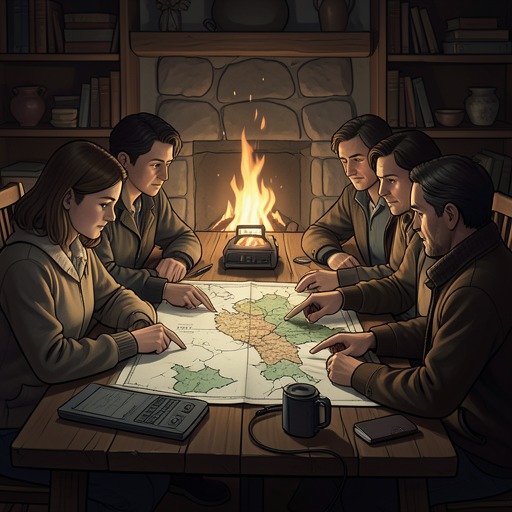
Sophia brings the report to James Bardawulf, who initially dismisses the possibility as a fraud claim of the sort made by people asserting they are long-lost relatives. At a later company meeting, he explains that he contacted Tetrazinni’s successor, Chandler Tetrazinni, a lawyer who heads Tetrazinni Search Services. Chandler found the relevant papers within two days and said the case was not dead. James regrets having revived it: he believes his inquiry alerted the firm to a possible financial opportunity that it might otherwise never have pursued.
The Genealogy in the Report
Tetrazinni’s account begins with Charles Duquet’s informal adoptions. In 1713 Charles adopted Jan and Nicolaus, both nine years old, from an Amsterdam orphanage; he later adopted Bernard, a boy from the streets of La Rochelle. The report says Charles treated the boys as sons and left them his goods in equal parts. Their descendants thus inherited his property and established the lineage from which the later Dukes descended, but they did not share his blood.
The report separates that adopted succession from Charles’s legitimate children with Cornelia Roos. Their daughter Doortje’s line ended with her only son, Lennart Vogel, who died unmarried. Their son Outger Duquet lived for a time on Penobscot Bay and had a daughter, Beatrix Duquet, with a Mi’kmaq woman. Outger educated and favored Beatrix, but when he moved to Leiden she remained in Maine. She later married Kuntaw Sel, a métis descended from Mi’kmaq people and a French habitant.
Tetrazinni identifies Beatrix and Kuntaw’s sons, Josime Sel and Francis-Outger Sel, as the surviving branches of Charles Duquet’s legitimate bloodline. The grandchildren of these two men, rather than descendants of the adopted sons, would be Charles’s living blood descendants. The report does not establish their names or whereabouts: Tetrazinni says further investigation would require travel to Canada and contact with Indigenous communities, and he had waited for Lavinia’s wishes before undertaking that work.
Inheritance and Corporate Stakes
The report’s family tree destabilizes the history by which the Duke descendants understand their authority. Lavinia is descended from Nicolaus, one of Charles’s adopted sons, and therefore has no Duquet blood. Tetrazinni nevertheless notes that Charles treated the adoptees as sons and divided his goods among them. His investigation exposes a tension between a recognized, long-standing succession based on adoption and possession, and a possible competing claim grounded in direct descent.
Tetrazinni himself gives an opinion as well as a genealogy. He considers the adopted sons’ descendants to have a stronger claim to the family fortune than the still-unidentified Indigenous descendants, and invokes the principle that possession carries great legal weight. James Bardawulf likewise emphasizes that the company has been accepted for almost three centuries as the legitimate owner of its properties, first under the Dukes and later under the Breitsprechers. Yet he acknowledges that the report makes Lavinia’s own direct claim to Duquet ancestry untenable if blood relationship is the measure.
At the meeting, Hazelton Culross counsels caution rather than certainty. The present heirs have not been identified; Chandler Tetrazinni would have to locate them, persuade them that they have a viable claim, and obtain a contract before proceeding. He would also have to bear the costs of investigation, and the Canadian location of the presumed heirs would add practical difficulty. Culross judges the prospect of success slim, but not impossible. The report therefore creates exposure and anxiety without establishing that any legal action will follow.
An Unresolved Claim
The report becomes consequential again just as the company discusses a possible sale to International Paper. James warns that selling would not prevent the presumed heirs from pursuing individual family members. The company’s legal adviser asks how much anyone actually knows about them; the answer is that they are believed to be Mi’kmaq descendants in Canada, but their present-day names are unknown. Andrew Harkiss raises the possibility that the line may have died out, while acknowledging that the old report cannot settle the question.
The investigation’s incompleteness is central to its force. It offers a specific genealogy and a clear distinction between adopted and legitimate descent, but stops before locating the people whose claim could make that distinction legally active. Its pages pass from Lavinia’s private inquiry to Sophia’s puzzled discovery and James’s corporate alarm; each reader inherits not a resolution, but an unsettled question about who counts as family, who may claim the fortune, and how much an accepted history of ownership can answer.