Ricky
BeautifulRicky is the owner of Magic Kebab, a funny, irreverent boss whose practical help and offbeat gestures make the shop an unlikely place of connection for Ava Spirini and Gideon. He turns unruly customers into the targets of a running joke, gives Gideon a route into work, and shows care without setting aside his teasing manner. His presence links the everyday business of shifts and cleaning to the story’s larger concerns with grief, friendship, and starting again.
Identity and Place in the Story
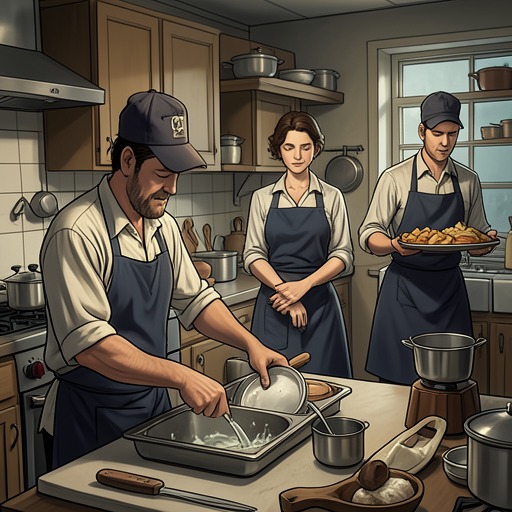
Ava describes Ricky as the funniest person she knows and says he inherited Magic Kebab from his father. The shop is not an ideal workplace: weekend shifts bring drunk customers, shouting, and mess, and Ava recalls men telling her to smile. Yet Ricky’s humor changes the atmosphere. His policy for difficult customers gives the staff a private joke and, on some nights, cash tips. The business is both a job Ava complains about and a place whose people and routines matter to her.
Ricky’s comic style is direct and physical. When Ava’s hands are bandaged and she says she cannot get them wet, he shakes his head at her inability to do the wet cleaning jobs. She replies that he pays her because he loves her; he agrees, then puts window cleaner in her hand and tells her to clean the windows. The exchange holds affection and work in the same breath: he does not exempt her from the shift, but their banter makes the instruction feel like part of a familiar relationship rather than a formal reprimand.
The Shop’s Rules and Everyday Comedy
Ricky’s “dickhead policy” divides obnoxious customers into two classes. Class A customers get jalapeños or his homemade hot chilli sauce added to their kebabs. Class B customers are charged more: Ricky works the till and adds an extra zero, turning an $8.50 order into $85.00. Ava says they never notice, and that Ricky gives the staff cash-in-hand tips on those nights. The scheme is comic retaliation, but it also supplies a small sense of solidarity among workers dealing with customers who make their shifts unpleasant.
The shop’s less glamorous work becomes part of its social life, too. Ava and Gideon check use-by dates and throw food away, laughing when they find olive tins six years out of date. In a back corner, behind a box of meat, they discover a many-coloured mouldy mass. Ava keeps as far away as she can; Gideon tries to handle it with a rubbish bag, bows as though he were a knight, and then throws the bag at her. She screams and bats it back, turning the unpleasant clean-up into a nervous, playful contest. Ava thanks Ricky for the cheap jackets that have helped break the ice between her and Gideon. The shop’s work, its discarded food, and even its clothing become the setting and equipment for their growing ease with each other.
Help for Gideon and Care for Ava
Ricky’s connection to Gideon begins through Robbie. After Gideon’s last session with Robbie, Robbie calls his friend Ricky to ask whether he needs help at Magic Kebab. Ricky does, and Gideon is told to come in. The introduction is brief rather than the conversation he expects: Ricky asks the newcomer’s name as soon as he enters, and Gideon answers, “Gideon.” The small exchange opens a practical door at a time when the job gives him a new place in which to meet people, including Ava.
Ricky’s care for Ava appears in a different register after Kelly Waititi dies. He leaves a bottle of homemade chilli sauce on Ava’s doorstep with a note reading, “For the dickheads. Love Ricky.” The gift borrows the shop’s familiar joke, but its arrival at her home gives that joke a personal purpose: it is a gesture of support, offered in the language they already share. Later, when Ava has bandaged hands at work, Ricky’s impatience and affection remain intertwined. He notices the bandages, lets her explain why she cannot do certain tasks, and still gives her another job to do.
Ava, Gideon, and the Meaning of the Shop
Ricky’s influence also appears indirectly in the correspondence between Ava and Gideon. One page Ava opens is covered with the words “Make Magic” in large bubble letters and includes a tiny, badly drawn sketch of Ricky’s kangaroo tattoo. The accompanying note says that history was boring and that kangaroos are hard to draw. In another letter, a kangaroo sketch falls from the envelope; Ava judges it better than the earlier drawing. These images make Ricky’s tattoo a small recurring reference shared through their letters, carrying the atmosphere of the shop into a connection that continues beyond a shift.
Later, Ava tells Gideon that she misses him at work and that Ricky does too. She recounts Ricky’s reaction to learning that Ava and Gideon kissed in the cold room: “I don’t blame you for doing the kissy-kissy in the cold room with that boy. He was nice. Quiet, but nice. A real catch.” His approval is characteristically teasing, but it also recognizes Gideon’s gentleness and treats the kiss as something he can acknowledge without condemning either of them. Ava places this memory alongside her apology to Gideon and her gratitude for what he gave her, so Ricky’s offhand judgment becomes part of how she explains their relationship.
Narrative Role
Ricky is not presented through a separate history or a dramatic transformation; the evidence of his character accumulates in repeated acts at work and in small exchanges beyond it. He can make customers pay for being obnoxious, send a familiar joke to a grieving employee, arrange a job for a friend’s client, and return to the shift’s ordinary demands a moment later. That mixture keeps his kindness from becoming solemn or abstract. In Magic Kebab, care takes the form of practical help, a bottle left on a doorstep, a ridiculous drawing, or a teasing remark that makes room for affection without pretending the harder circumstances have disappeared.