Ava Spirini
BeautifulAva Spirini’s story follows the collision between grief that resists easy explanation and the ordinary demands to return to school, make choices, and imagine a future. After Kelly Waititi, her closest friend, dies, Ava cannot accept consoling language that makes the loss sound manageable. Her anger brings public consequences, but it does not exhaust her character: over time, she begins to tell what happened, to recognize the complexity of her relationships, and to distinguish moving forward from leaving Kelly behind.
Identity and Introduction
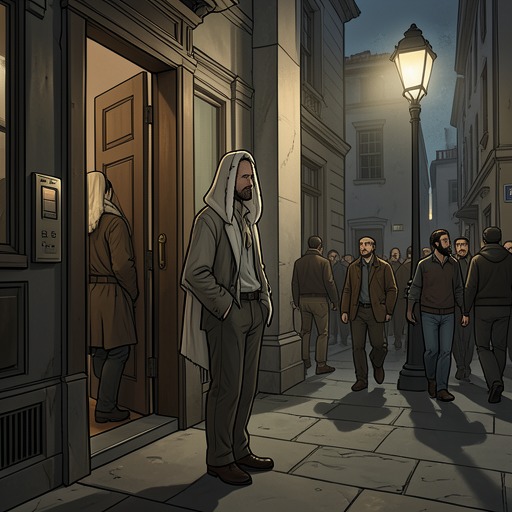
Ava understands Kelly as more than a friend. When Gideon asks how she is, Ava first gives the familiar response before admitting that she does not know. She then begins at the beginning, naming Kelly and explaining that she was her best friend. The exchange marks a change in what Ava can say aloud: instead of accepting a routine answer as a substitute for feeling, she starts to give another person the story behind her silence.
That story is difficult partly because Ava feels that other people keep offering comparisons that cannot contain it. Since returning to school, she has faced staring, whispering, and attempts by others to relate Kelly’s death to losses in their own lives. Ava does not experience those comparisons as understanding. Her grief is bound to the particular person she has lost, and she resists being hurried into an explanation or conversation before she is ready. The result is not simply sadness but a painful distance between what others expect her to say and what she can bear to say.
School Conflict and Its Consequences
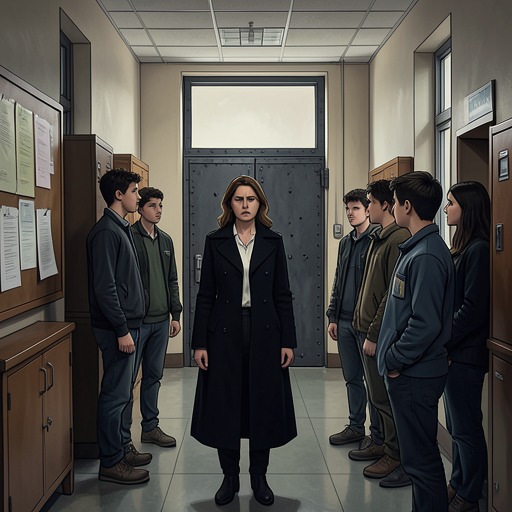
Ava’s return to MacGreggor State College has already been difficult. She has attended part-time before coming back full-time, and she describes the intervening weeks as a blur of struggling to pay attention, skipping school, and zoning out. The pressure to keep up with Year 11 work does not make her grief more manageable. Instead, the ordinary school routine feels out of proportion to the physical numbness and sadness she carries, while other people’s efforts to comfort her often deepen her sense that they do not understand.
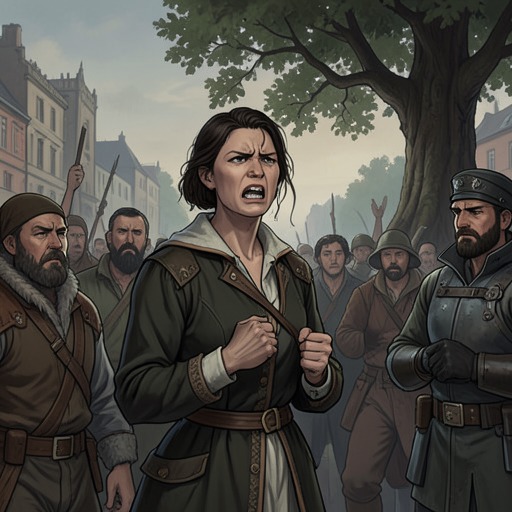
At a school gathering around a memorial tree, Mrs Bryan presents the school community as a source of support for a member who has fallen. Ava breaks into the speech and objects to its central image: Kelly did not fall; she died. The blunt correction makes the loss impossible to soften in the way the ceremony’s language does. Hundreds of people turn to look at her. Ava then gives Mrs Bryan the finger with both hands and walks out through the auditorium doors as the crowd laughs and cheers.
The outburst reverses Ava’s private intention to be unobtrusive. That morning she had written Be beige on the back of her hand as a reminder to blend in, after weeks of feeling watched and discussed. Instead, she becomes the focus of the room. Her anger does not make her indifferent to the consequences: after she punches a student and is expelled, she feels she has disappointed her father, Kelly, and herself. She also sees how much has changed in only a few months: Kelly is gone, things are strained with Kelly’s parents, her connection with Lincoln is uncertain, and school has become another source of conflict.
Her father decides that she will meet with TAPs, an alternative school program, and Ava has no say in the decision. She protests that she is not like the students there, while her father insists that she has no choice. He believes MacGreggor State College cannot support her adequately at present, even though he does not share Ava’s harsh assessment of Mrs Bryan. The meeting represents a practical change in Ava’s education, but it arrives when she already feels that events are moving beyond her control.
Telling Kelly’s Story
Ava’s memories of Kelly make room for both ordinary intimacy and painful uncertainty. She recalls an afternoon when Kelly looked at a framed photograph and then repeatedly erased and redrew a heart on Ava’s mirror. At the time, Ava treated the scene as familiar: Kelly often wrote or drew on the mirror, and they had joked about the photograph before. Looking back, Ava wonders whether the heart carried a farewell or an expression of love that she did not recognize then. She cannot know what Kelly intended, and her account keeps that uncertainty intact rather than turning it into certainty after the fact.
Ava also recounts the circumstances of Kelly’s death. Kelly spent the evening with her family, said goodnight as usual, and later drank a large amount of vodka in her room. She left no note and died after choking in her sleep. Ava’s memory of the final night is accompanied by questions about what Kelly might have thought or been able to do. Those questions show how the loss continues to return in specific, difficult images, even as Ava recognizes that she cannot revise what happened.
Telling the story to Gideon matters because he does not demand that Ava reduce it to a reassuring answer. His question gives her room to pause, decide what she wants to share, and proceed in her own order. The movement from not knowing how she is to beginning Kelly’s story is small in outward terms, but it changes Ava’s relation to her grief: she is no longer carrying every part of it in silence.
Relationships, Therapy, and Difficult Choices
Ava’s relationships do not resolve into simple categories of comfort and harm. She tells Nola about Gideon: their kisses, her difficulty stopping them, and the argument that follows when he tries to hold her hand. Ava tells him to stop trying to be her boyfriend if he wants to be her friend. The account registers both their closeness and the strain of negotiating what that closeness means. Ava is not merely receiving support; she is also trying to set terms, even when the feelings involved remain unsettled.
Her bond with Lincoln is similarly complicated. At Kelly’s first-anniversary gathering, Lincoln hugs Ava tightly when he sees her. They have not spoken much in the preceding months, though they sometimes exchange texts. Ava describes their connection as something between friendship and family, and she neither celebrates nor disowns what happened between them. In therapy, she later judges sleeping with Lincoln as a poor choice. Her account can acknowledge regret without pretending the relationship has a simple meaning.
Ava continues seeing Nola every fortnight. Nola’s box analogy gives Ava a way to think about grief without treating it as a problem that can be permanently put away, and therapy also helps her consider how feelings shape actions. By the time Ava reflects on her breakup with Gideon, she can say that it was the right choice even though it hurt. That distinction matters: pain alone does not prove that a decision was wrong, just as love does not remove the need to make difficult decisions.
After Gideon’s graduation, Ava has not heard from him, but she sends one final letter. She apologizes for hurting him and thanks him for the poems, the laughter, and the way he helped her feel beautiful. She credits knowing him with helping her see that her life was not wholly wasted and with wanting to put things right. The letter does not claim to undo the breakup; it lets Ava recognize what the relationship gave her while taking responsibility for the pain she caused.
Moving Forward Without Moving On
At Kelly’s first-anniversary gathering, Ava stands with Kelly’s family beneath a rotunda at the park as they exchange stories, laugh, and cry. The gathering celebrates Kelly’s life rather than requiring grief to disappear. Later, walking past that place, Ava finds herself calm while still aware of sadness, hurt, anger, confusion, grief, and love. The feelings remain; for the moment, they are not larger than everything else she is.
Ava rejects the idea that she must move on from Kelly. She believes the death will always shape her, and that the love between them does not end. Yet she distinguishes being shaped by the loss from being unable to live. She concludes that she can move forward, and connects that choice to what she believes Kelly would want: Ava must not let her own pain end her life. Her conviction develops from the earlier inability to find words for grief into a commitment to live with it rather than erase it.
The future she imagines remains open. She is willing to see what the year brings, while considering work on helplines, a job at Magic Kebab, or becoming a poet. Her father has begun a counselling course with the aim of supporting young people, an example that makes helping others one possible path for her, not a settled plan. In the closing moment, Ava finds a pale blue envelope in the mailbox and opens a small card. Her eyes fill with tears, but this time she recognizes them as tears of happiness. The ending does not promise that grief has passed; it shows that happiness can exist alongside it.