Kelly Waititi
BeautifulKelly Waititi is Ava Spirini’s best friend and Lincoln’s sister, and her death by suicide is the loss around which much of the novel’s grief turns. She is remembered not as a symbol of tragedy but as a striking, irreverent young person whose particular tastes and gestures resist the polished version of her life that others try to commemorate. In Ava’s memories, Kelly remains both intensely loved and unmistakably individual; that distinction shapes Ava’s anger, mourning, and eventual ability to carry the loss without being wholly consumed by it.
Identity and Presence
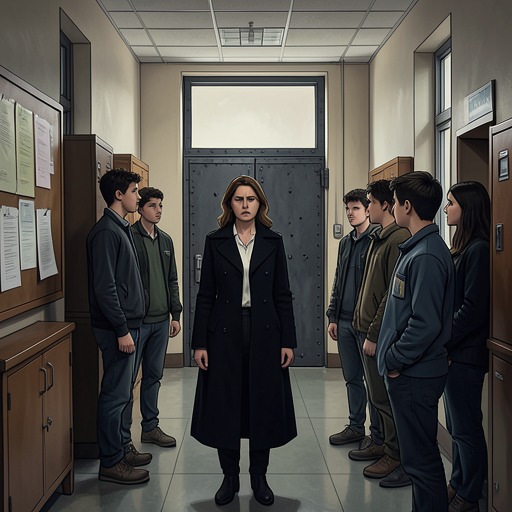
Kelly is widely known at school, where her presence is inseparable from Ava’s. Gideon, who says he was among the last to learn of her death, recalls that their lockers were near each other and that everyone seemed to know Kelly; by association, knowing Kelly meant knowing Ava, because the two were always together. He remembers Kelly as beautiful and self-possessed, but also recalls the ordinary surprise of seeing her come to her locker, change, and leave after asking whether he was wagging school. It was the only time she spoke directly to him, a small encounter that nevertheless gives his account a person rather than a reputation to remember.
Ava’s recollections make Kelly’s force of personality still more apparent. At the school memorial assembly, Ava objects to the focus on a plaque and a newly planted tree, insisting that Kelly hated nature and that any tribute should at least say her name. Her protest is not simply against the choice of memorial. She is furious at the gap between the institution’s public gestures and the person those gestures claim to honor. The detail of the tree matters because it makes Kelly’s individuality—and Ava’s fear that it is being erased—concrete.
Friendship, Intimacy, and Independence
Kelly and Ava are presented as close friends whose shared life is recognizable even to people who only observe them from a distance. After Kelly’s death, school feels to Ava like a place she can barely endure: she has returned full-time only recently, struggles to pay attention, and resents other people’s comparisons between her loss and the deaths of their relatives or pets. She insists to herself that Kelly was her best friend and that no easy analogy can explain what her absence means. The novel thus gives the friendship weight not through a single defining anecdote but through its absence from Ava’s altered daily life.
A memory of Kelly with Faye Donaldson reveals another aspect of her intimate life. Kelly places an earbud in Ava’s ear, then walks over to Faye, tells her she is beautiful, and kisses her gently before returning to Ava. Ava watches the moment as if it were a romantic scene unfolding in front of her, and the two friends leave together, sharing the music. The episode shows Kelly initiating tenderness with confidence, while Ava’s role as witness suggests the openness of the bond between them. It does not, on its own, define Kelly’s sexuality; it records a specific act of affection and the way Ava remembers seeing it.
Death and Memorial
Kelly’s death enters Ava’s life in a sharply remembered sequence. At 5:37 a.m., a call to the family landline wakes her. Seven minutes later, Ava’s father comes into her room in tears and struggles to tell her what has happened. Ava initially fears the news concerns her grandparents; when her father begins to say Kelly’s name, the expected explanation gives way to the fact of Kelly’s death. Ava recalls the moment as a rupture in her life, with the news leaving her unable to move or properly hear what followed.
Kelly’s funeral follows Māori traditions as closely as the family can arrange without being in New Zealand. A marae is set up in the family’s living room, where the open coffin remains for two days and visitors ensure Kelly is never left alone. The service takes place in a large church hall because too many people are expected for the house. Ava is the only student from school to visit the house. Afraid of seeing Kelly and of causing further distress, she goes with her father; Kelly’s mother, Tina, draws her over, and Ava sits beside her friend. The memory of Kelly’s stillness and changed appearance is difficult, but the vigil also records the family and friends’ collective care around her.
Grief and Continuing Influence
Six months after Kelly’s death, Ava believes she may feel this way for the rest of her life. Time seems to have slowed with Kelly’s death, and Ava experiences other people as impatient with both the fact of the loss and her inability to get over it. At the assembly, that grief becomes public anger; elsewhere, it presses into ordinary schoolwork and her sense that daily life has lost its purpose. Kelly’s absence is not presented as a problem Ava can solve by returning to routine on schedule.
Ava’s memories also show how grief can coexist with temporary relief and connection. Being with Lincoln sometimes makes the rest of the world matter less and allows Ava to feel something other than misery, though she recognizes the painful contradiction: this closeness would not have happened if Kelly were alive. In another aftermath, Ava looks back with embarrassment and gratitude on having stopped an encounter with Lincoln from going further. These moments do not diminish Kelly’s importance or imply that Ava has forgotten her; they show how the surviving characters continue to make choices amid a loss that remains present.
By the first anniversary, Ava can take part in remembering Kelly with her family beneath the park rotunda, sharing stories that bring both laughter and tears. Later, Ava describes her sadness, hurt, anger, confusion, grief, and love as still present, though no longer larger than everything else in her. The change is not an escape from grief but a different relation to it: Kelly remains part of Ava’s emotional life, while Ava can also feel calm and continue forward. In this way, Kelly’s significance persists not only in the tragedy of her death but in the specificity of the person her friends keep remembering.