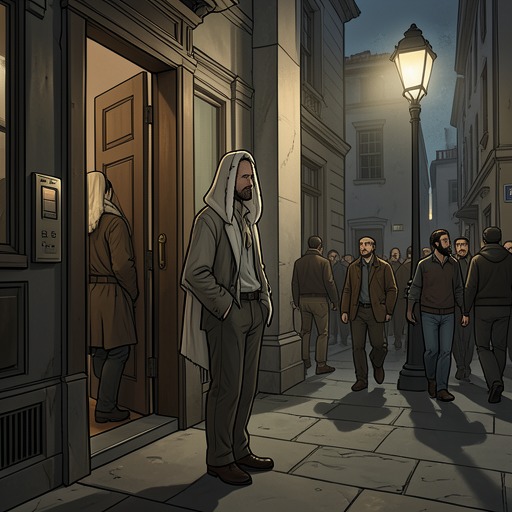
Gideon
BeautifulGideon is introduced as a nervous new dishwasher at Magic Kebab, but the glimpses of him also reveal a young person accustomed to anxiety and to being judged by assumptions. Therapy with Robbie gives him a rare experience of being accepted without having to fit someone else’s idea of who he is; his letters and eventual disclosure of his scars extend that possibility of connection to Ava Spirini.
Identity and Background
Gideon describes himself as someone who can fail to reach job interviews, then tell his parents that they went well. He links this avoidance to panic attacks, among other difficulties, and even to becoming stuck in a toilet cubicle thinking about what kind of person he is. The self-description is comic in its bluntness, but it also shows how quickly he turns a particular difficulty into a judgment about his whole identity.
He has been seeing Robbie since his family moved. Robbie is the fourth therapist Gideon has tried; the previous three struck him as old, frustrating, or patronising. Gideon recalls that people had made assumptions about him based on what he said or wore, his mothers being gay, and his scars. Robbie stands out because he does not presume to know Gideon in advance, including by assuming his sexuality.
Therapy and Self-Understanding
Robbie’s informality helps establish trust. He wears jeans and T-shirts, has a beard and a ponytail, and does not resemble Gideon’s idea of a typical therapist. At their first meeting, he asks quick questions about Gideon’s favourite film, food, and school subject, and asks whether he has a girlfriend or boyfriend without presuming the answer. He also tells Gideon that it would be all right if he did not like him or return. That permission matters: the relationship is offered without being made into another test Gideon can fail.
A small gesture makes the same point more concretely. Robbie brings two cans of Coke from a tiny fridge and puts them on the coffee table. Gideon’s mothers have been restricting sugar, even making their own toothpaste, so the drink feels like a welcome break from the rule. He remembers the Coke as part of why Robbie seemed cool to him at thirteen. Robbie also becomes the reason Gideon gets into poetry, joining the practical business of therapy to a form of expression that will matter elsewhere in the story.
Work, Letters, and Ava Spirini
At Magic Kebab, Ricky introduces Gideon as the new dishwasher. Tall and skinny, with curly hair over his forehead, Gideon wraps one arm around his elbow and bites his lip. Ava Spirini notices his nervousness, but initially assumes he will not last long: dishwashers often quit after discovering the work means washing salad dishes and meat trays and hosing out drains. The introduction places Gideon in a difficult, unglamorous job before the relationship between him and Ava has had time to develop.
Gideon’s first letter to Ava carries the tentative quality of that beginning. He admits that he does not know how long a letter should be or what important thing to say, then writes, “I’m glad we met.” The letter is modest rather than polished; its significance lies in the fact that he writes at all and makes the meeting matter in words. Later, after Ava has watched him perform and stays to learn more about him, the two talk and listen to music in his room. A Gil Scott-Heron poster hangs above the record player and crates of records, details that give the scene a particular setting as their conversation moves toward disclosure.
Scars and Disclosure
Gideon rolls up his sleeves and holds out his arms. Ava sees thin, raised white scars arranged in ordered, symmetrical lines along his veins, of varying lengths, with very little unmarked space. She catches her breath and raises a hand to her mouth; when she asks how old he was, she reaches for his right arm. Gideon flinches, but allows her to touch the scars. He says the self-harm began five years earlier, then pulls his sleeve down. There are no new cuts visible in this scene, though the marks preserve evidence of a serious history.
The moment does not erase the earlier experience of being defined by other people’s assumptions. Instead, Gideon chooses to show Ava something that had been part of those judgments, and Ava responds by asking about his history. Set beside his first hesitant letter, the disclosure gives shape to a developing connection: Gideon moves from saying he is glad they met to letting Ava see more of what he has lived through, while the scene remains careful not to suggest that one conversation resolves it.