Ava interrupts Kelly’s memorial assembly
BeautifulAva interrupts MacGreggor State College’s memorial assembly because its tribute to Kelly Waititi seems to preserve the appearance of remembrance while leaving out the person and the circumstances she cannot forget. Six months after Kelly’s death, the school offers a tree and a plaque; Ava answers by insisting that Kelly be named and that the ceremony face the truth of her death. The outburst breaks the assembly’s public decorum, but it also makes visible the distance between an institution’s consoling language and one friend’s continuing grief.
Background and Stakes
Mrs Bryan presents the gathering as an occasion for the school community to support one of its members after a fall, describing the newly planted tree as a reminder of that solidarity. In the assembly’s framing, the tree and plaque stand for collective care. Ava hears a different message: the speech has not named Kelly, and the reference to a fall softens what happened. The gap between the official account and her knowledge of her best friend is the immediate source of the confrontation.
By this point, Ava has been back at school full-time for only a month, following several weeks of part-time attendance. She has been struggling to concentrate, sometimes avoiding classes, and resenting comparisons between Kelly’s death and other people’s losses. She feels that classmates and teachers expect her to recover on their timetable, although only six months have passed. Against this background, the assembly brings private bereavement into a room of roughly seven hundred students and gives Ava a public occasion to challenge the school’s account.
The protest is also a sharp reversal of Ava’s intention for that day. She had resolved to keep a low profile and written Be beige on the back of her hand as a reminder. Instead, the school’s memorial language proves impossible for her to sit through quietly. The difference between the plan and the outburst captures the pressure building beneath her effort to appear unobtrusive: silence might help her blend in, but, in this moment, it would also leave the omission unchallenged.
The Interruption
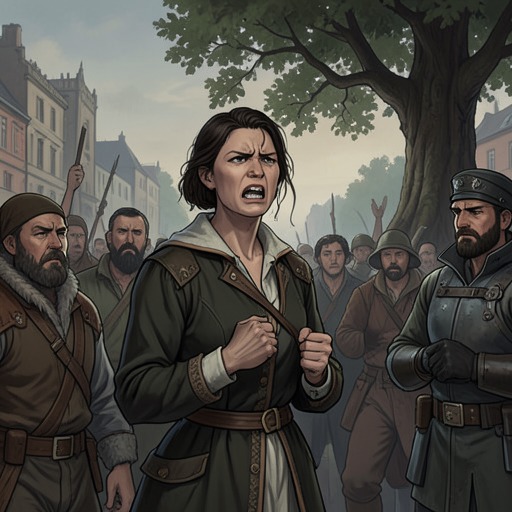
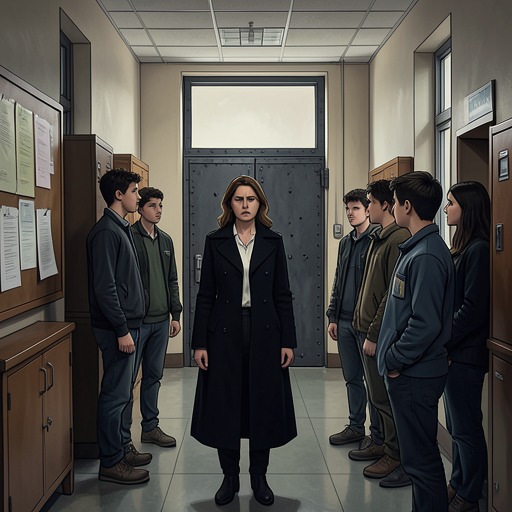
As Mrs Bryan continues speaking, Ava suddenly rises and shouts that Kelly did not simply fall: she died. She then challenges the choice of a tree, explaining that Kelly hated nature. Her objection is not only to the memorial object but to the way the ceremony has made it stand in for Kelly. Ava is angry at what the school says and, more emphatically, at what it leaves unsaid. The plaque, the concrete beside it, and the delayed planting seem to her like evidence of an achievement the school can display without having to speak plainly about the girl being commemorated.
Ava calls on the school to say Kelly’s name. The demand turns an absence into the center of the event: the memorial is ostensibly for Kelly, yet the assembly has not named her in the remarks Ava has heard. Around Ava, students whisper and giggle while Mrs Bryan tries to calm the room. Ava makes her way over the row toward the aisle, aware that the crowd is watching. Once she reaches the center of the auditorium, she freezes, looks at Mrs Bryan, and begins laughing. The laughter does not settle the scene; it registers the loss of control she has been trying to maintain, as she recognizes how strange she may look and continues regardless.
She then challenges the choir’s choice of The Climb, the Miley Cyrus song selected for the tribute. To Ava, a song about overcoming hardship is not a neutral expression of sympathy: performed in Kelly’s memory, it makes the assembly’s consoling tone feel especially false. The speech, the tree, and the song therefore become connected parts of a ceremony Ava experiences as a distortion, each offering a manageable symbol where she wants an honest acknowledgment of Kelly.
Public Confrontation and Departure
The auditorium responds to Ava’s criticism with laughter and cheers. She raises both middle fingers toward Mrs Bryan, turns, and walks out through the large double doors, which slam behind her. The exit ends the assembly’s immediate confrontation but does not reconcile Ava with its tribute. Instead, it leaves the room’s reaction—part amusement, part spectacle—hanging beside the seriousness of what she has tried to say.
The scene also makes Ava’s protest costly in social terms. Students have already stared at her, whispered, and laughed; her outburst draws the entire assembly’s attention rather than allowing her to become inconspicuous. Her attempt to defend Kelly’s memory is consequently inseparable from the exposure of her own grief. The crowd sees a disruption; Ava sees herself reacting to a ceremony that treats a death as a lesson in communal solidarity without saying the name that gives that lesson its meaning.
Aftermath and Significance
After leaving, Ava recalls that she had hoped to be quiet and unobtrusive, then recognizes that the shouting has made her just as conspicuous as she had feared. She also places the assembly within the longer difficulty of returning to school: work feels pointless against the numb sadness she carries, and time seems to have slowed since Kelly died. The outburst is not presented as a resolution of that grief. It is one moment in it, when accumulated anger at euphemism and pressure to appear recovered breaks through her effort at self-control.
Later reflections sharpen the contrast between public memorial and private remembrance. Ava recalls counting thirty-one Sundays since Kelly’s death and continues to question the details of Kelly’s final night, as well as what a last afternoon together might have meant. At another point she remembers Kelly drawing a love heart on her mirror and wonders whether it expressed a farewell. These memories do not make the assembly’s tree meaningless in itself; they show why a general symbol cannot contain the particular person Ava is trying to remember. Her insistence on naming Kelly is part of an enduring bond, not a claim that grief can be settled by one public ceremony.
The episode also anticipates Ava’s later distinction between moving on and moving forward. She comes to believe that Kelly’s death will continue to shape her, while also deciding that she must keep living rather than let pain end her life. Seen against that later understanding, the assembly captures an earlier, raw form of the same commitment: Ava refuses a version of remembrance that asks the bereaved to accept comfort without truth. Her protest does not repair the loss, but it makes the omission impossible to mistake for remembrance complete.