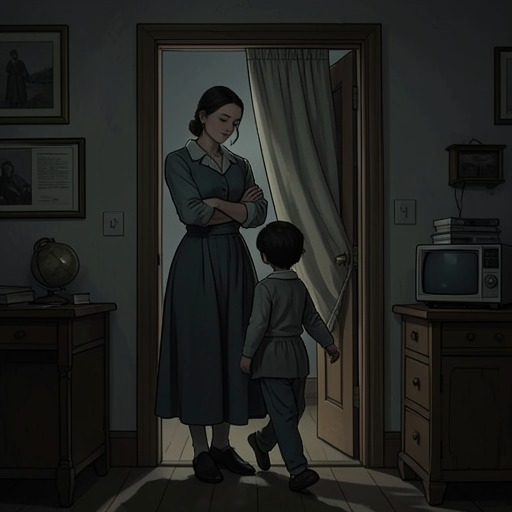
Kelly Waititi’s funeral
BeautifulKelly Waititi’s funeral gives public form to a loss that Ava Spirini cannot yet comprehend. The family holds a two-day vigil at home before a third-day service, gathering relatives and visitors around Kelly and observing Māori funeral traditions as fully as they can away from New Zealand. For Ava, the farewell is not a clean passage from grief to acceptance: it is a sequence of difficult acts of presence, ending with the departure of the hearse and the knowledge that she will not see her friend again.
Arrangements and the Home Vigil
Kelly’s family makes the home the centre of the first two days. They establish a marae in the lounge room, where Kelly’s open coffin remains, and visitors come to see her. The family ensures that she is never left alone. The actual service is moved from the house to a large church hall because so many people are expected. The funeral is described as traditional Māori, though limited by the fact that the family is not in New Zealand.
Ava is the only schoolchild who goes to the house. She is frightened of seeing Kelly in the coffin and uncertain whether she can manage the visit, while also fearing that her distress might add to the family’s pain. Her father accompanies her. He sits beside Kelly’s father near the coffin, and the two men cry; Ava sees her father kiss Kelly’s forehead. Tina then gestures Ava over and puts an arm around her as Ava sits beside her friend. The scene places Ava’s private attachment within a room full of family grief, without asking her to find words for what she feels.
The vigil lasts through a second night. Kelly’s family sit together, play guitar, cry, and talk to her. Ava finds it difficult to speak in the company of so many people, so her farewell is made in quieter moments: she holds Kelly’s hand and tries to make sense of the fact that her friend is gone. She spends the second night in the room with the family, but does not sleep; she lies awake or holds Lincoln’s hand. The ritual of keeping Kelly company thus becomes, for Ava, an ordeal of remaining close to a reality she cannot yet absorb.
The Third-Day Ceremony
At sunrise on the third day, Kelly’s aunties sing and people say prayers before the coffin is closed. Ava remembers Tina embracing it and expressing grief that Ava cannot forget. The family then watches as the coffin is placed in the car. When the hearse leaves, Ava’s legs give way and her father holds her up. The departure marks the funeral’s decisive change: Kelly is no longer present for the family to visit, sit beside, or speak to. For Ava, that finality is bound to the knowledge that she will never see her friend again.
The ceremony does not end the gathering of mourners. Many students from school attend the service, including girls Ava remembers as having disliked Kelly. Seeing them cry angers her, and she wants to challenge their presence, but she does not. Instead, she stays beside her father, feeling detached and saying little. The difference between the small home vigil and the crowded service underscores how widely Kelly’s death is witnessed, while Ava’s response remains intensely personal and difficult to share.
Faye Donaldson and Kelly’s Affection
Faye Donaldson attends at least the service portion of the funeral. She approaches Ava to express her sorrow, looking down as she speaks. Ava answers by reminding her that Kelly had thought she was beautiful. The remark refers back to a moment Ava had witnessed before Kelly’s death, when Kelly approached Faye, told her what she thought of her, and kissed her. At the funeral, Ava’s words carry that earlier kindness into the farewell: she confirms to Faye that Kelly’s affection was sincere.
Faye takes a shaky breath, squeezes Ava’s hand, nods, and walks away. Their brief exchange is one of the few conversations Ava has at the service. It gives Faye a direct connection to Kelly’s memory and lets Ava bear witness to something Kelly had done, rather than attempting a broader explanation of the loss. The gesture is small beside the scale of the funeral, but it makes a private moment of tenderness part of the public remembrance.
What the Farewell Leaves Behind
The funeral is a pivotal memory in Ava’s account of the six months after Kelly’s death, but it does not resolve her grief. She later describes time as slowed and life as still marked by the moment she learned Kelly had died. She counts the Sundays since that morning and says that each one begins with the weight of the loss. These later reflections place the funeral within an ongoing pattern of remembrance: the ceremonies provide a communal way to accompany Kelly, while Ava’s grief continues after the visitors disperse and the coffin has left.
Ava’s recollection also resists the idea that attendance or ritual can make bereavement orderly. At the house, she struggles to speak; at the service, she holds back her anger toward mourners she believes did not value Kelly; with Faye, she finds one precise thing worth saying. The funeral therefore gathers distinct forms of grief without making them identical. Its lasting significance lies both in the farewell itself and in the relationships it preserves in memory: a father supporting his daughter, Tina holding Ava close, Lincoln beside her through the night, and Kelly’s words about Faye carried forward by Ava.