Roland Horn–Valentin Fulbright relationship
BlackwaterRoland Horn and Valentin Fulbright’s relationship transforms from a high-performing Naval Academy classmateship into a personal and unresolved battlefield conflict. Their recognition unfolds twice—first during Roland’s rescue operation near the Lusatia cluster, then in combat over Naval Air Station Richtoften—and the contrast between Val’s remembered promise and his present actions gives their rivalry its moral force.
Academy Classmates and Unequal Paths
Roland first recognizes Val Fulbright during an encrypted exchange with an ice hauler near the Lusatia cluster on 2 November 2135. Val asks whether Roland graduated from the Naval Academy in May; Roland identifies him as his former classmate and asks what he is doing. Val answers that he is working in intelligence, joking that explaining more would require killing Roland and spoil the rescue operation. The exchange reopens a familiar connection in circumstances that are already dangerous, but Val’s remark also establishes how much of his present work must remain undisclosed.
Roland describes Val to Novac as the top graduate of their class, far ahead of the others in the Panzerter section and successful in his flight trial before transferring to intelligence. Roland regards that career choice as less glamorous than the prestigious fleet roles associated with piloting or gunnery. Novac remains uneasy about trusting him, making the reunion a point of tension even before the two former classmates meet in combat. Roland’s confidence rests on their shared history and Val’s record; Novac’s doubts reflect the uncertainty created by Val’s covert occupation.
The academy’s competitive memory persists when Roland prepares for a later launch. Recalling training simulations, he remembers that Val mastered the catapult takeoff on his first attempt, while Roland repeatedly mishandled it. The detail is more than a comparison of flying skill: Val remains the standard against which Roland measures himself, even when Roland is preparing for a real mission and Val is now the opponent he must confront.
Recognition in Combat
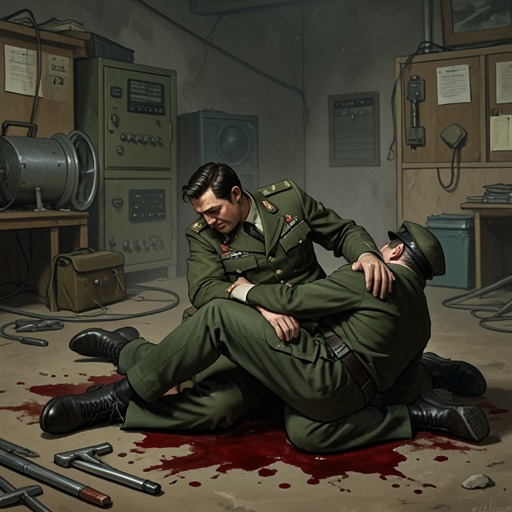
The relationship changes abruptly when Roland fights a Panther whose pilot has been conserving enough fuel to remain dangerous. After Roland cuts through the Panther’s rifle barrel, the voice from the enemy machine identifies him by name and remarks on their predicament. Roland recognizes Val in return. The surprise nearly unbalances him: the familiar voice and the hostile machine cannot be reconciled as ordinary combat opponents.
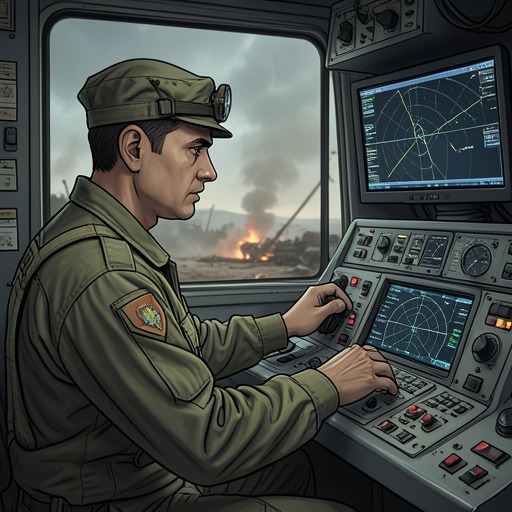
Over Naval Air Station Richtoften, the recognition does not end the fight. Roland clashes with Val’s Panther again, trying to use his own machine’s superior thrust in the atmosphere against the heavier opponent. When blade attacks fail to settle the engagement, Roland breaks away and fires his Vulcans, aiming for sensors or thrusters rather than expecting their 8-mm rounds to penetrate the Panther’s armor. Val turns toward the docking collar, intent on reaching space; Roland pursues him because he cannot allow him to escape into orbit.
That pursuit places academy memories beside immediate danger. Roland recalls Val’s high grades, natural leadership, hockey success, and standing as a top pilot before his transfer. He also remembers that Val came from a family with means and could have entered its business rather than remain in military service. These facts leave Roland unable to explain the Union allegiance before him. His question is not simply how Val became an enemy, but what could have persuaded someone who appeared to have so many choices to take this path.
Competing Moral Explanations
Val offers Roland a partial explanation over a private channel while their machines are still engaged. He says he is deeply involved and insists that his actions will pay off in the end; he describes ingratiating himself with the Union as a necessary price, invoking “eggs and omelettes” and the “greater good.” The explanation frames his conduct as instrumental: present losses are, in his view, justified by an eventual benefit. It does not resolve what he is doing or establish the full purpose of his intelligence work.
Roland rejects the argument directly. He tells Val that he does not understand and asks how many people Val has killed. The question shifts their dispute from abstract political calculation to the human cost of Val’s choices. Val repeats his appeal to the greater good, dismisses Roland as narrow-minded, and says that he tried. Neither their shared education nor their former competitive respect produces agreement; the conversation instead exposes how differently they interpret responsibility for the violence around them.
The conflict is made harder to dismiss by Roland’s awareness that Val’s Panther is better positioned in the immediate exchange. The heavier machine’s thrust forces Roland back, while Roland must evade another strike and use his shield to stop Val from attacking his face. Their relationship is therefore not a contest of moral arguments detached from events: each assertion is made while they are actively trying to defeat one another, and each former classmate’s skill makes the other’s choices more consequential.
Rivalry, Consequences, and Narrative Role
The evidence preserves a sharp contrast between Val’s former promise and the uncertainty surrounding his present allegiance. At the academy he excelled in several fields and was capable of mastering a difficult takeoff immediately; as an intelligence officer and Panther pilot, he now invokes sacrifice and strategic necessity without persuading Roland. The contrast prevents the past from serving as an easy explanation or absolution. Roland’s memories make Val’s actions more difficult to comprehend, not less serious.
The relationship also links personal rivalry to the wider conflict between the Union and Tharcian forces. Their first meeting occurs during a rescue operation, where Val’s intelligence role is concealed behind an ice-hauler encounter; their later recognition occurs amid an armed defense in which Val is trying to reach the docking collar and Roland is trying to stop him. In both circumstances, private familiarity is embedded in military stakes, and the former classmates cannot return to an uncomplicated peer relationship.
The account does not supply a final reconciliation or a complete explanation of Val’s motives. It leaves the relationship at the point of active opposition: Roland continues to judge Val’s stated justification against the deaths he attributes to him, while Val maintains that his actions serve a greater good. Their unfinished conflict is significant because it turns a familiar training rivalry into a question of moral accountability, without allowing either shared history or asserted purpose to settle the dispute.