“We come from water. We belong to it.”
BluebackDora Jackson’s declaration that she and Abel Jackson come from water and belong to it gathers family memory, bodily experience, and the sea into a single statement of belonging. Spoken on the shore the day before her death, it echoes the story of Abel’s first encounter with the water and gives their final time together the shape of an inheritance.
Origin and Family Memory
The saying is prepared by Dora Jackson’s recollection of Abel’s infancy. When Abel was born, Abel’s father wanted him to meet the sea straight away so that he would not become homesick: Dora reasoned that he had been swimming inside her throughout her pregnancy. His first immersion was in warm shallows, where his parents knelt and lowered him gently into the water. He stiffened for a moment, then kicked like a fish about to be set free; when Dora took him back to the house, he cried. Her conclusion that he had always been a swimmer makes the later declaration more than a general image. In her telling, Abel’s attachment to the sea began before he could choose it or name it.
Spoken at the Shore
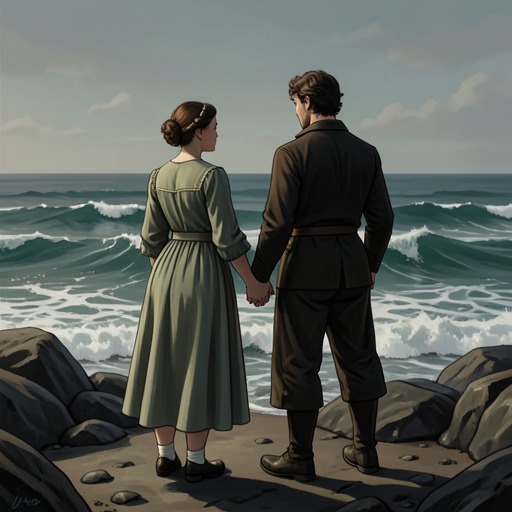
The words return in a changed family circumstance. By then Dora is too frail to walk along the beach or dive, and Abel carries her from the verandah down to the shore. With whiting darting past his feet, he cradles her and lets her float against him in the clear, still water. Dora whispers, “We come from water,” and then, “We belong to it, Abel.” The shift from the earlier scene is intimate: as a newborn, Abel was gently lowered into the sea by his parents; now he supports his mother in the water. The statement links the two gestures without making them identical, turning an old family story into words addressed directly to the son who is carrying her.
Meaning and Narrative Role
The expression joins origin to belonging. Dora’s memory of Abel swimming before birth and her account of his first immersion make water part of his family history; her final words extend that history into a shared claim, spoken at the place that has shaped their lives. The plural “we” includes Dora and Abel, while her address to him makes the inheritance personal rather than merely proverbial.
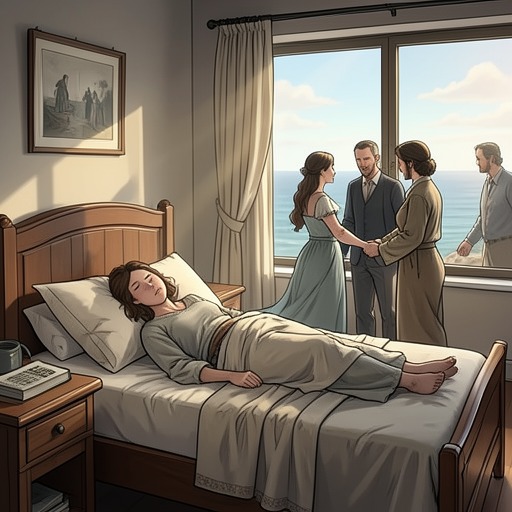
The timing gives the saying its elegiac force. A long blue shadow swims around them in the shallows, and the next afternoon Dora dies in her sleep. Abel makes a new cross for the little graveyard behind the orchard. The statement does not undo that separation; instead, set beside the last shared time in the water, it leaves Abel with a language of connection that reaches beyond the moment of her death.