“the language of the sea”
Blueback“The language of the sea” is Abel Jackson’s name for the understanding he seeks throughout his life: not merely information about marine life, but a way to grasp what connects the sea and its inhabitants. The phrase begins as a child’s wish to know what Blueback thinks, then becomes an adult scientist’s question about how the whole system holds together. Its meaning changes when Abel recognizes that Dora Jackson’s close attention to one place has taught her a form of understanding his education and travels have not supplied.
A wish formed underwater
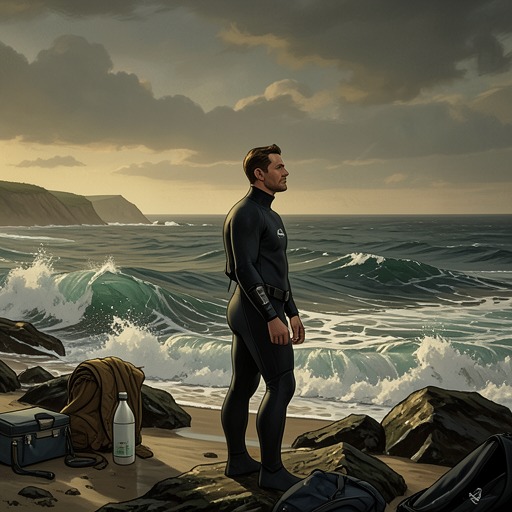
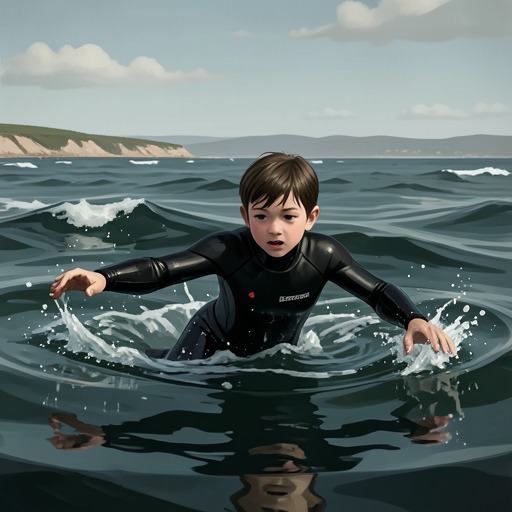
Abel’s wish grows out of a childhood spent diving with Dora at Longboat Bay. At ten, he cannot remember a time when he could not dive; Dora tells him that he swam in the ocean before he was born. She teaches him what he knows on land and under water, and he watches her move through the sea with ease. Their work has its own discipline: they collect only a couple of abalone from each clump, leaving the rest to breed and grow. Abel’s first knowledge of the sea is therefore practical and shared, learned through his mother’s example and through attention to the life around them.
That knowledge is bodily as well as observational. Abel follows Dora down, feels pressure prick his ears, and must return to the surface when his breath runs out. On their repeated dives, breath determines how long they can work; meanwhile, reef fish pick through the meat and sediment stirred up as they gather abalone. The sea is not a passive setting for Abel’s questions. Its depth, currents, living creatures, and limits shape what he can see and how long he can remain there. His later wish to “learn the language of the sea” grows from this early experience of understanding as something encountered through the body and sustained attention.
Blueback, memory, and what cannot be retrieved
Blueback gives Abel’s curiosity a particular focus. As a boy, he wants to know what the great fish thinks about things; the question registers his desire to understand a creature whose life is not reducible to human explanation. In adulthood, Blueback continues to appear in Abel’s dreams. Far from Longboat Bay, Abel dreams of swimming with the fish through a cold, blue crevice and past drowned people, including Mad Macka and Abel’s father. Blueback leads him through the depths but keeps his father beyond reach. As they rise, his father’s body grows small below them. The dream joins the wish to know the sea with a limit knowledge cannot overcome: Abel can return to the memory, but he cannot bring his father back.
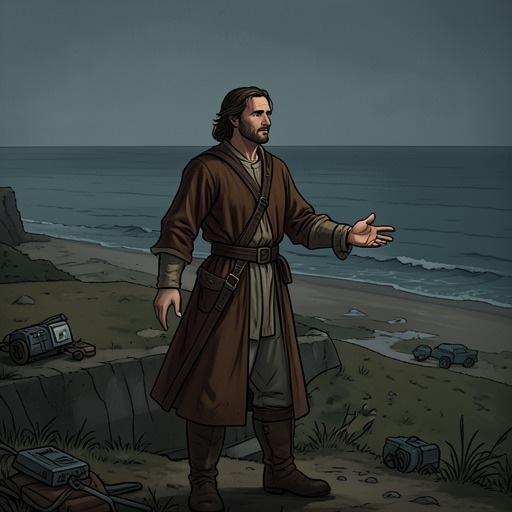
Distance also makes the sea a felt absence in Abel’s daily life. Inland, amid wheat fields and crowded rooms, he dreams of Blueback and listens to a turban shell Dora has sent with her letters and other marine keepsakes. He knows the sound in the shell is not really the sea, yet it helps him close his eyes to the school and dormitory around him and picture the ocean. The phrase therefore gathers not only curiosity but attachment: the sea is what Abel longs to understand and the place to which his memory repeatedly carries him.
Science and the knowledge of staying
Abel leaves home for school and work, travels with Stella, studies, and becomes a scientist who gives lectures. His pursuit of understanding takes him across coral atolls, polluted estuaries, unfamiliar countries, and other oceans. Yet travel and professional expertise do not settle the question that began in childhood. When an oil tanker breaks apart off Longboat Bay, Abel watches the slick spread and later burn as bad weather breaks it up; the oil does not reach shore, but he recognizes how close the coast came to disaster. He calls Dora, who describes the event as a warning. Their exchange connects scientific observation at a distance with the intimate concern of someone who lives beside the bay.
On the journey home after Longboat Bay is declared a marine sanctuary, Abel names the difference between his learning and Dora’s. He has studied and travelled, but says that his mother is still the one who understands the sea. She has stayed in one place, watching and listening, and has helped save it. Dora’s knowledge is grounded in continuity with the bay rather than in movement between sites or in credentials. Abel does not dismiss science; he recognizes that it has not given him the same relation to a particular place.
Beyond words
Abel’s formulation begins with a desire for explanation: he wants to figure out what keeps the sea’s life connected and to know what Blueback thinks. Dora’s example broadens that desire beyond verbal or technical mastery. When she suggests that understanding may not require words, the phrase becomes less a promise that the sea can be translated than a measure of the attention it demands. Abel’s return to Longboat Bay brings that understanding into view through Dora’s sustained work to protect it, and through the homecoming celebration where she holds the official sanctuary papers. The language Abel has sought is thus linked to both interpretation and responsibility: knowing the sea also means learning how to remain attentive to the place that sustains it.