“let the sea be itself”
Blueback“let the sea be itself” is the closing principle of Abel Jackson’s life at Longboat Bay: a call to protect the bay while accepting that the sea exceeds human knowledge and control. The phrase carries a history of taking from the water into a different relationship with it, one in which living alongside the sea also means allowing its life to recover on its own terms.
A Practice of Restraint
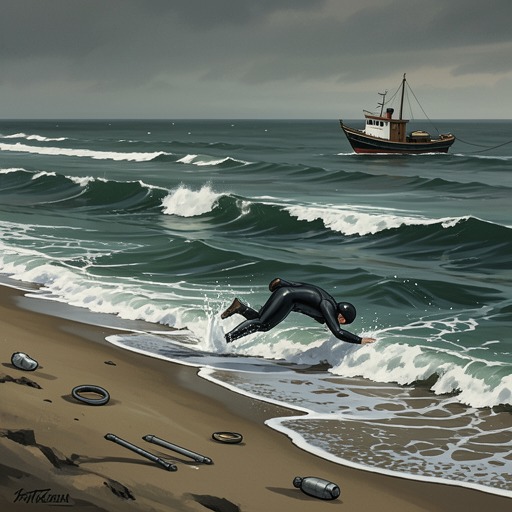
Abel’s earliest knowledge of the sea comes through work with his mother, Dora Jackson. While gathering Abalone, they take only a couple from each clump and leave the rest to breed and grow. The distinction is practical as well as ethical: they depend on the bay, but their harvesting makes room for its continued life. Beneath them, reef fish feed on scraps and sediment stirred up by the divers, placing human work within a larger ecosystem rather than outside it.
That intimacy does not amount to mastery. As a boy, Abel experiences the underwater world through restricted breaths and repeated descents; later, Blueback appears to him in dreams as a guide through depths that remain partly inaccessible. The book’s ending makes the limit explicit: even after a lifetime of observation, Abel and Stella never discover the sea’s secret. The phrase therefore does not promise complete understanding. It expresses a decision about how to act despite that uncertainty.
A Coast Inherited
The principle is set against the history of the Jackson family. The family has lived at Longboat Bay for generations, first arriving in wooden ships through whaling and sealing. Dora recalls how the Jacksons watched for whales from a ridge, rowed out in longboats, and hunted them. When Right whales later pass the family’s boat, she acknowledges that the family once hunted them and hopes the whales do not remember. She also reflects that the sea has taken its share of the family in turn.
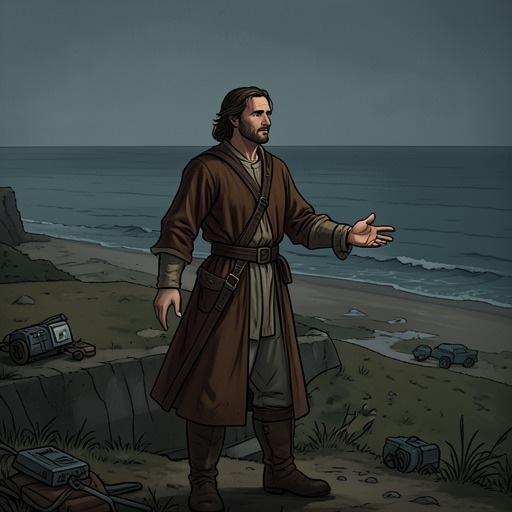
A storm makes that history physically visible. It exposes thousands of whale bones buried along the bay, remains Dora has unknowingly walked over for decades. The bones turn the shore into a record of the industry that helped pay for the family’s land. With generations of Jacksons gone and only Dora and Abel left, she understands their inheritance as a responsibility: having lived from the sea, they must now help it live. The phrase’s restraint is thus not a rejection of the past but a response to what that past has left behind.
From Extraction to Protection
The contrast sharpens when Abel and Dora encounter Costello’s fishing boat at Robbers Head. Its deck is covered with fish, many undersized, while crates hold live Abalone and a box contains illegal crayfish. Abel proposes returning the Abalone to the water, but Dora warns him not to board the boat. The scene sets their limited, selective harvesting against commercial stripping of the reef.
Dora’s response develops into a sustained campaign. After a further encounter leaves Blueback sheltering from harm, she and Abel wait for trouble, but Costello’s operation resumes. A Fisheries patrol eventually boards the boat; it leaves under tow, and Costello’s fines cost him his licence. Dora’s larger effort continues through hundreds of letters to politicians, business leaders, and scientists. When Longboat Bay is declared a marine sanctuary, the legal protection turns her conviction into a lasting boundary around the bay, extending to Robbers Head. At the officials’ ceremony, she watches marker buoys establish the sanctuary’s limits, including politicians who had once wanted hotels built there.
The Sea Allowed to Recover
The phrase reaches its fullest meaning in the changes that follow protection. Fish return to the bay to breed in the haven, and their numbers contribute to stocks beyond it. Seagrass, coral, and sponges thrive; Abalone grow abundantly; dolphins and sharks arrive, and sea lions return to Robbers Head after a century away. Visitors can dive into a living reef, while Abel and Stella observe it, study Abalone breeding, and take divers to see Blueback on his reef.
Yet recovery does not end in a claim of scientific possession. Abel and Stella continue to watch, listen, and read, but they do not uncover the sea’s secret. Abel imagines that Dora and his father knew more, and that his own understanding may come in time; for now, he lets the sea be itself. The ending leaves that knowledge unfinished. Protection is concrete—the sanctuary is established, and marine life flourishes—but the sea remains more than the sum of what people can study, remember, or use.