Armenian Genocide
BluebeardThe Armenian Genocide enters the novel as both mass violence and family history: Rabo Karabekian’s parents escaped the destruction of their Armenian community, but survival divided their memories and shaped the family life that followed. The account moves between the narrator’s later conversations and a history pieced together from what his parents told him, tracing a passage from massacre to flight, migration, and uneasy remembrance.
Historical Context and Scale
Rabo describes the killings as a massacre of Armenians under the Turkish Empire, in which about one million people died. In his account, Armenians were regarded as suspect because they were educated and resourceful and because many had relatives across the border in the Russian Empire, Turkey’s enemy. The German Empire, allied with the Turks, sent military observers to assess the violence. The narrator’s retrospective commentary places the episode in an age of empires and defines genocide as a planned effort to kill every member of a group perceived as distinct.
The account stresses both the systematic nature of the killings and the limits of the perpetrators’ means. The Turks, in the narrator’s description, gathered Armenians from homes, workplaces, places of worship, education, and recreation, then drove them into the countryside and deprived them of food, water, and shelter. He contrasts this with the specialized machinery and industrial capacity the Germans would display a quarter-century later. The comparison is the narrator’s framing of the historical violence; the human consequence within his own family is that both parents lost relatives and escaped under radically different circumstances.
Rabo’s father’s recollections give the catastrophe a wider historical and cultural frame. He might repeat that one million Armenians had been killed: about two-thirds of the Armenians in Turkey and roughly half of Armenians worldwide. Rabo also recalls his father invoking Musa Dagh, where a small group of Armenian civilians held Turkish militiamen at bay for forty days and nights before being exterminated. His father’s references to Mesrob Mashtots, inventor of the Armenian alphabet, and to Armenian identity mark the cultural history that stands behind the family’s displacement. Rabo contrasts these inherited memories with his own descendants, who know little and care little about Mashtots.
The Parents’ Escape
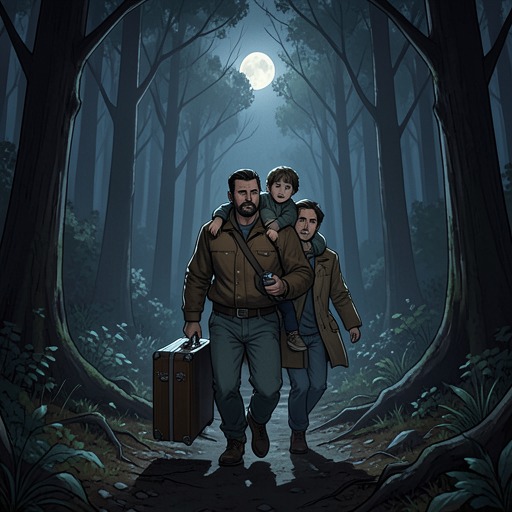
Rabo’s mother survived by pretending to be dead among the victims. His father, then a teacher, was alone in the schoolhouse after the school day had ended and was writing poetry when he heard soldiers approaching. He hid in a privy behind the building and never witnessed the killings themselves. The two parents therefore survived the same catastrophe through sharply different experiences: his mother was in the place of killing, while his father escaped by concealment and later remembered the deserted village.
The mother’s account also turns on a specific act of restraint. She gathered jewels that had fallen from an old woman’s mouth, but insisted that she had not taken the jewels still inside it; she regarded those as the dead woman’s personal property. She crawled away after nightfall, when the killers had left. The detail complicates the survival story: the jewels became essential to the family’s escape, but her account preserved a boundary around what she believed she had no right to take.
The parents did not meet in the village. They were from different places and encountered one another only after crossing the lightly guarded border into Persia, about seventy miles from the massacre. Persian Armenians took them in. They decided to travel together to Egypt, and the father did most of the talking while the mother carried the jewels. At the Persian Gulf, she sold the first of the compact treasures to pay for passage on a small freighter to Cairo by way of the Red Sea.
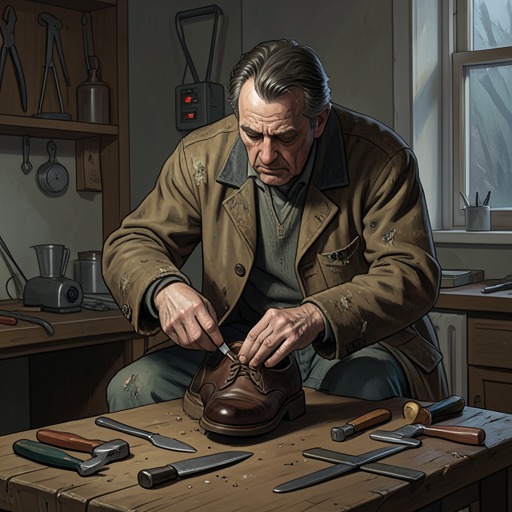
In Cairo they met Vartan Mamigonian, an Armenian shoe manufacturer and survivor of an earlier massacre. He persuaded the inexperienced couple that they could find prosperity in San Ignacio, California. Rabo presents this migration story as a family history whose consequences extend far beyond the immediate escape: the jewels helped finance the journey, and a fellow survivor’s advice redirected his parents toward the place where their son would grow up.
Memory, Shame, and Inheritance
The parents carried different relationships to the past. Rabo says his mother, despite having endured the killing directly, managed to put the massacre behind her and find much to like in the United States; she could imagine a future family there. His father never did. The contrast is not a difference in whether either parent had suffered, but in how each could live afterward: his mother looked toward a new life, while his father remained bound to what had been lost.
Years later, on the beach, Circe Berman names the father’s condition as survivor’s syndrome and suggests that he felt ashamed not to have died alongside his friends and relatives. Rabo adds a more painful possibility: his father was ashamed that Rabo’s mother had survived too. Rabo says he had forgiven his father many times and jokes that this time he would get a receipt, suggesting that the conversation reopens a familiar wound even as it offers another occasion to reckon with it.
Rabo also argues that his mother had at least as much claim to survivor’s syndrome as his father. She had been amid the victims, pretending to be dead with people lying on top of her, while the father had escaped without seeing the killings. He recalls that she was then not much older than Celeste, the cook’s daughter. His comparison does not erase his father’s trauma: the father’s most terrible memory was the stillness of the village at nightfall, when he believed he was its only inhabitant. Instead, the parents’ sharply different memories show how a shared historical catastrophe can leave survivors with distinct forms of pain and shame.
Narrative Role and Afterlife
The history is disclosed in stages rather than as a single, detached account. Rabo first discusses his father with Circe, then returns to the parents’ escape and the story of the jewels. The movement between present conversation and family recollection makes historical violence part of the narrator’s effort to understand his father, his mother, and the conditions of his own arrival in America. The private family story does not replace the catastrophe’s larger scale; it gives that scale names, choices, and consequences.
The novel also makes survival inseparable from transmission. The parents’ escape leads through Persia and Cairo to California, while the father’s repeated figures and historical references preserve a memory that Rabo’s children and grandchildren do not share. Later, as Rabo considers what he knows about the universe, Celeste turns to him because he reads The New York Times every day. The moment returns the narrative to ordinary life, but it sits beside a family history in which displacement, inherited memory, and cultural distance remain unresolved. The genocide’s afterlife is thus present not only in what Rabo remembers of his parents’ accounts, but in the uneven passage of that history to the next generation.