Baron Vordenburg
CarmillaBaron Vordenburg is a grotesque, learned antiquary who appears in the final chapters of the narrative as the indispensable agent of the vampire's destruction. His peculiar appearance—tall, narrow-chested, stooping, with high shoulders, dressed in black, a brown dried face deeply furrowed, an oddly shaped broad-leafed hat, long grizzled hair, gold spectacles, and a perpetual smile—marks him as a figure of eccentric scholarship. He walks with an odd shambling gait, his long thin arms swinging and his lank hands, in oversized black gloves, waving and gesticulating in utter abstraction. Yet beneath this bizarre exterior lies a mind saturated in the literature and jurisprudence of vampirism, a man who has devoted his life to the minute and laborious investigation of what the narrative calls the marvelously authenticated tradition of vampirism.
Origins and Scholarly Obsession
The Baron lives in Gratz on a mere pittance, all that remains of the once princely estates of his family in Upper Styria. His entire existence is given over to the study of vampirism: he has at his fingers' ends all the great and little works upon the subject, including "Magia Posthuma," "Phlegon de Mirabilibus," "Augustinus de cura pro Mortuis," and "Philosophicae et Christianae Cogitationes de Vampiris" by John Christofer Herenberg, among a thousand others. He has compiled a voluminous digest of all judicial cases concerning vampires, from which he has extracted a system of principles that appear to govern—some always, others occasionally—the condition of the vampire. This systematic knowledge, not mere superstition, is what enables him to succeed where others have failed.
The Discovery of the Tomb
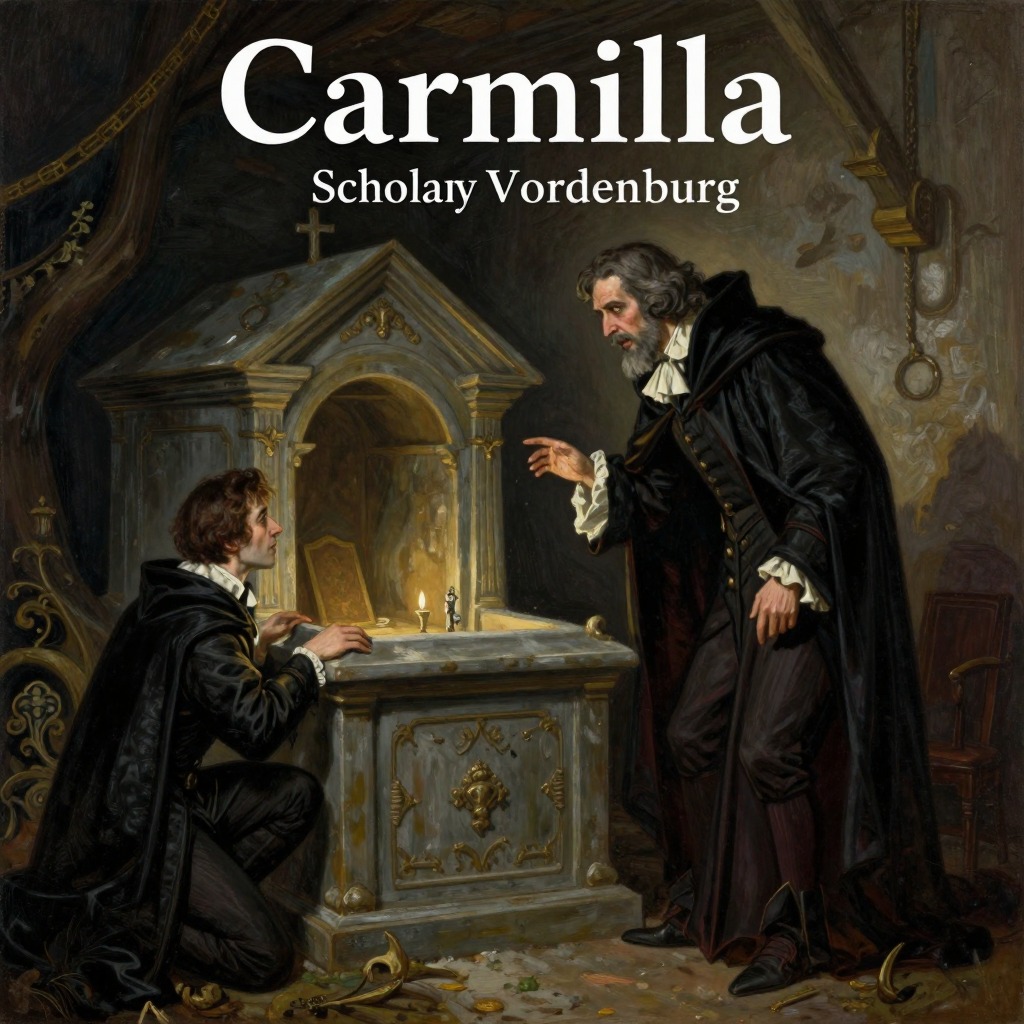
When General Spielsdorf, Laura's father, and the party arrive at the ruined Chapel of Karnstein, the Baron produces a roll of paper from his pocket—a plan of the chapel—and a pencil case with which he traces imaginary lines. He accompanies his lecture with occasional readings from a dirty little book whose yellow leaves are closely written over. Together they measure distances by paces, examine a piece of sidewall with great minuteness, pull off the clinging ivy, rap the plaster with their sticks, scrape and knock until they ascertain the existence of a broad marble tablet with letters carved in relief. With the woodman's help, a monumental inscription and carved escutcheon are disclosed: those of the long-lost monument of Mircalla, Countess Karnstein. The Baron's arcane learning has triumphed where a century of search had failed.
The Ancestral Secret
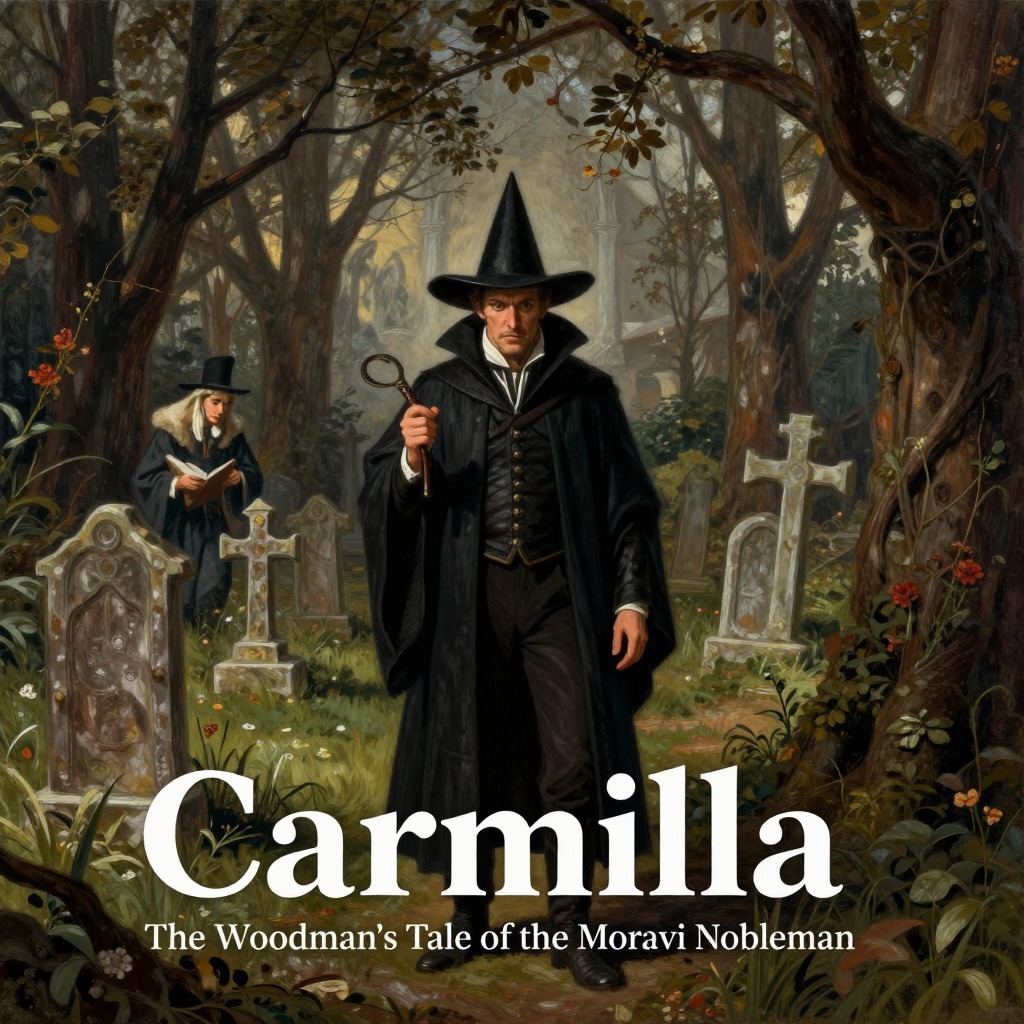
After Carmilla's expulsion, Laura's father relates to the Baron the story of the Moravian nobleman who destroyed a vampire at Karnstein churchyard. The Baron's grotesque features pucker up into a mysterious smile; he looks down, still smiling, on his worn spectacle case and fumbles with it. Then he reveals the truth: the man who performed that act was his own ancestor, a native of Upper Styria who had in very early youth been a passionate and favored lover of the beautiful Mircalla, Countess Karnstein. Her early death plunged him into inconsolable grief. When he discovered that Mircalla had become a vampire—haunted by one of those demons, as suicides under certain circumstances become vampires—he conceived a horror of her remains being profaned by posthumous execution. He adopted the stratagem of a pretended removal of her remains and a real obliteration of her monument. But when age stole upon him, he looked back in a different spirit, and a horror took possession of him. He made the tracings and notes that have guided his descendant to the very spot, and drew up a confession of the deception he had practiced. Death prevented any further action, and the hand of a remote descendant has, too late for many, directed the pursuit to the lair of the beast.
Narrative Role and Significance
Baron Vordenburg thus serves as the narrative's key to resolution, the figure who transforms the story from a tale of helpless suffering into one of methodical, learned retribution. His knowledge is not merely theoretical: he corrects popular misconceptions, noting that the deadly pallor attributed to vampires is a mere melodramatic fiction, and that they present in the grave and in human society the appearance of healthy life. He explains the vampire's amphibious existence, sustained by daily renewed slumber in the grave, its horrible lust for living blood, and its tendency to become fascinated with particular persons with an engrossing vehemence resembling the passion of love. He also reveals the anagrammatic constraint on the vampire's name—Carmilla, Millarca, Mircalla—a detail that confirms the identity of the predator across centuries. The Baron embodies the paradox at the heart of the novel: that the most effective weapon against a supernatural evil is a love that, having once hidden the monster out of devotion, preserves the knowledge needed to destroy it.