The Bar Owner's Moral Responsibility
ChowringheeThe question of a bar owner’s moral responsibility turns on a distinction Sohrabji cannot make peace with: customers choose to drink, but the owner earns his living by serving them. His struggle moves beyond the claim that he is merely conducting an honest business. When his daughter makes him see the grieving families behind his customers, he sells his bar; when the sale leaves him broke, he returns to bar work as an employee, carrying the same unresolved question with him.
The Bar as Business and Moral Ledger
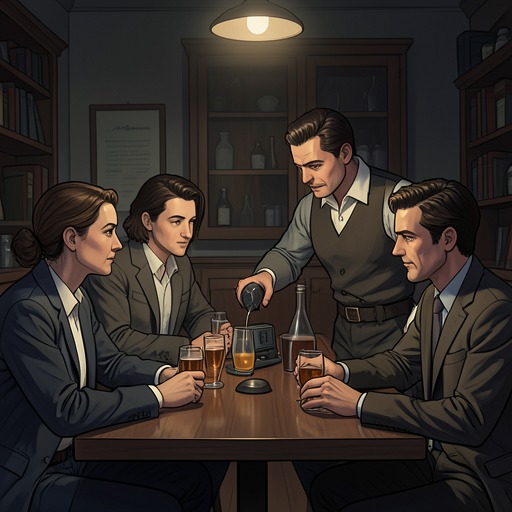
Sohrabji’s story is introduced through an observation about what a bar takes from its customers. Recalling Sata Bose’s view, Hobbs describes drink as consuming not just money but time, character, self-control, childhood happiness, and even the soul, while the bar owner profits from what patrons spend. The image turns the bar into a ledger: the customer’s losses become the proprietor’s income. It makes the owner’s position central to the moral problem, rather than treating drinking as a private transaction between a customer and a glass.
Sohrabji has seen the force of that exchange from both sides of his working life. He had once left Hafezji’s bar and opened his own establishment, buying out a partner who would not return. He managed this with his scant savings and the sale of his wife’s jewelry. He took pride in offering good liquor without watering it down, and in keeping women out of the bar. Yet those rules and his reputation for honest dealing could not give him peace. The question was not whether he cheated customers in the measure; it was what it meant to profit from the damage their drinking could do.
The Routine and Its Costs
The bar’s closing hour made the conflict visible night after night. The licence required it to shut at half past ten, but customers resisted leaving and sometimes demanded that Sohrabji keep the doors open. When he invoked the licence, some insulted him or smashed glasses. The disorder was not an abstraction: it was part of his daily work, repeated despite the bar’s reputation as a quiet place for people who wanted to drink without trouble.
Sohrabji tried to limit some immediate dangers. For customers too drunk to get home safely, he sometimes called a taxi or a rickshaw. The next day, the same patrons might arrive smiling, greet one another, and ask after each other. Their return made the cycle ordinary without making it harmless. Sohrabji was tempted to tell them to stop after a couple of drinks and go home to the wives waiting for them, but he never dared to say it. He could see the likely human cost and still found himself unable to intervene.
The bar’s customers are shown as participants in their own drinking, not as people Sohrabji physically compels to enter. He privately rehearses that defense: they choose how many drinks to order, can leave for another bar if he refuses them, and are not forced to stay. Yet the repeated trouble, the difficulty of closing, and his efforts to send intoxicated people home expose the limits of treating each purchase as an isolated choice. His income depends on a routine whose consequences he witnesses but cannot control simply by wishing his customers would stop.
The Daughter’s Question
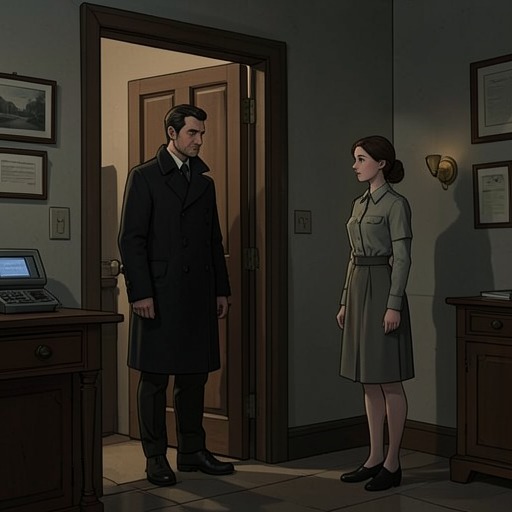
Sohrabji’s daughter gives that conflict a new human scale. He loves her deeply and speaks proudly of her intelligence, education, and beauty. Though he feels embarrassed by his poor spelling, she writes to him daily and encourages him to send long letters. He has never allowed her or his wife to visit the bar. His separation of family life from his business has therefore been both practical and protective: the bar is where he earns a living, not a place he wants his family to see.
Before leaving for Bombay and continuing her journey by ship, his daughter tells him she is afraid. The people she saw in the bar had mothers, sisters, wives, and daughters at home who must be weeping; she asks whether those women will ever forgive them. Sohrabji has no answer. He is on the verge of defending himself by pointing out that he does not force anyone to drink and runs the business honestly, but he cannot speak. His daughter’s question connects the bar’s customers to the people absent from it—their families—and makes the consequences of his trade harder to keep outside the room.
After she has gone, the question continues to confront him. He tries to reason that customers could order fewer drinks or leave, and that refusing service might only send them elsewhere. He also tells himself that their wives and daughters could stop them. But these arguments do not settle the matter: the women are not the ones receiving the bar’s profits, and their possible influence does not erase his own participation. He begins to dream that the customers’ mothers, sisters, wives, and daughters are cursing him through their tears, and fears that the curses will reach his family, including the daughter he loves. His unease is not presented as proof that supernatural punishment has fallen on him; it shows how completely the family’s accusation has entered his conscience.
Selling the Bar, Returning to It
In desperation, Sohrabji sells his bar. That night he writes to his daughter, still trying to explain that customers came of their own will and destroyed their own families. The letter shows that selling the business has not resolved his reasoning: he continues to argue his innocence even as his action suggests he can no longer live comfortably with the role he has occupied.
He plans to place the sale proceeds in a bank and support his family with them. Two days after he deposits the cheque, the bank fails. The loss leaves him needing work to pay for his daughter’s education, while his lack of schooling narrows his prospects. He is forced back behind a bar, now as an employee rather than its owner. To the narrator, he says that he is no longer responsible for anything and that curses against the bar will not affect him. He then closes his eyes, perhaps in prayer, and insists that working there is not wrong when he has a family to support.
That change in status offers Sohrabji a defense, not an escape. As an owner, he had held the proceeds and made the decisions; as an employee, he can tell himself the responsibility belongs elsewhere. But he still earns his living in the same trade, and the story leaves his reassurance beside his visible distress. After a long silence, he gets up and goes home with his heart tormented. The ending neither declares him innocent nor condemns him with certainty. It preserves the pressure between personal need and complicity in a business whose harms he has come to recognize.
Narrative Significance
The story makes moral responsibility difficult to reduce to a single rule. Sohrabji does not dilute the liquor, does not pretend that customers are forced to drink, and sometimes helps dangerously intoxicated patrons get home. At the same time, he profits from their purchases, sees the trouble that follows, and has imagined urging them to stop without finding the courage to do so. His daughter’s question makes the cost legible not through an abstract argument but through the people waiting at home.
The movement from proprietor to employee sharpens the distinction between formal control and moral unease. Selling the bar briefly separates Sohrabji from ownership, but the bank’s collapse returns him to the same livelihood under altered terms. His story therefore resists an easy division between a culpable owner and an uninvolved worker: economic necessity explains his return without making his doubts disappear. In the narrator’s account, Sohrabji’s struggle becomes a measure of the distance between conducting a business honestly and believing that honest conduct alone makes its consequences someone else’s responsibility.