Rome
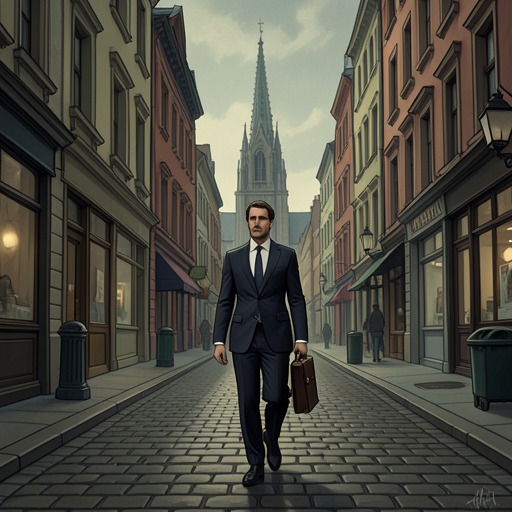
ConclaveRome is the setting in which the Pope’s death becomes a question of Church governance, and in which the conclave turns competing ambitions into a new papal election. The city receives cardinals from across the world, hosts the private consultations and voting, and frames the Church’s internal divisions against the noise of public protest and an imminent security threat.
The Pope’s death and the cardinals’ arrival
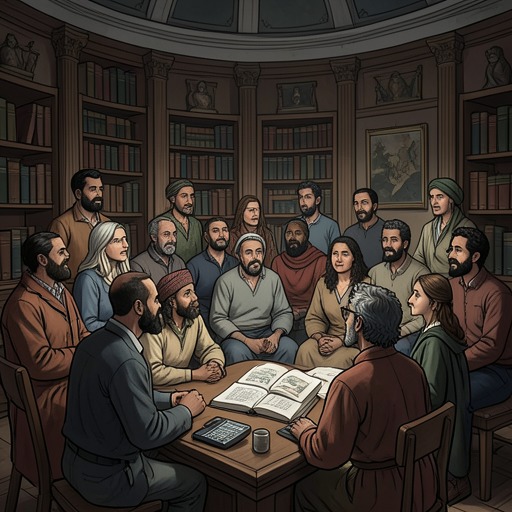
The Pope died on 19 October, the day after the feast of St Luke the Evangelist. His funeral and the almost daily congregations of the College of Cardinals occupied the rest of October and the beginning of November, as cardinals arrived in Rome to elect his successor. The private meetings addressed the Church’s future; although progressive and traditionalist divisions surfaced, they passed without major controversy.
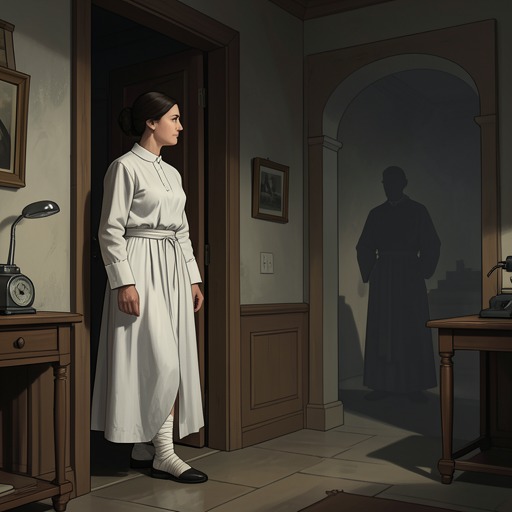
The official account of the Pope’s last evening was set out in a printed timeline. It placed his dinner with Archbishop Janusz Woźniak at Casa Santa Marta at 7.30 p.m., his retirement to his apartment and reading from The Imitation of Christ at 8.30, and his going to bed at 9.30. Archbishop Woźniak checked on him at 11.30 and found no vital signs; a doctor began emergency treatment at 11.34, and the Pope was pronounced dead at 12.12 a.m. The care taken over this chronology reflected concern that discrepancies in the account could fuel rumors about the unexpected death.
A city around the conclave
On Sunday 7 November, the feast of St Herculanus the Martyr, the preparations for the conclave were underway in the Sistine Chapel. The cardinal-electors were to be confined within Vatican City that night, with balloting beginning the next day. Rome was the larger setting for this carefully bounded process: the cardinals had gathered from across the world, while the election itself would take place behind the conclave’s closed doors.
The approach of the election also brought a conspicuous security operation. Authorities regarded the threat of terrorism as serious and imminent. The plans included missiles and snipers on nearby roofs, five thousand uniformed police and army personnel patrolling surrounding streets, and hundreds of plain-clothes officers among the crowds. The measures made the city’s public spaces part of the election’s tense setting, even as the voting remained enclosed within the Vatican.
Public discord and Church divisions
Outside the conclave, demonstrations brought sharply opposed causes into the same urban soundscape. Supporters and opponents of gay marriage and civil unions, advocates for divorce, groups promoting Catholic family unity, women pressing for ordination or for abortion and contraception, and Muslim and anti-Muslim demonstrators all contributed to a cacophony that could not be separated into distinct demands. The crowd did not speak with one voice; its competing claims made the city appear to surround the Church with a rising flood of discord.
That public unrest echoed, without simply duplicating, the divisions within the Church. Inside the conclave, cardinals negotiated among candidates and factions; outside, protesters represented an even wider range of conflicts over social and religious questions. Rome thus situates the election between institutional deliberation and the unresolved demands beyond it.
Election, governance, and accountability
The ballot counts show how the gathering in Rome developed from a crowded contest into a changing alignment of support. In the first ballot, thirty-four cardinals received at least one vote. The leading candidates were Goffredo Tedesco with 22, Joshua Adeyemi with 19, and Aldo Bellini in third place; Jacopo Baldassare Lomeli received five. No candidate was close to the 79 votes required for a two-thirds majority. The election rules could require as many as thirty ballots over twelve days before a simple-majority procedure became available.
In the second ballot, Adeyemi gained sixteen votes from candidates who had fallen away, while Tedesco added seven. Bellini and Joseph Tremblay changed little, and Vincent Benítez rose from one vote to two. Later, after Adeyemi’s support collapsed following an incident reported among the cardinals, Tremblay gained eleven votes, Bellini eight, Lomeli six, Tedesco four, and Benítez three. The shifts repeatedly altered the apparent prospects of the leading candidates and forced them to consider alliances and the consequences of strategic support.
Rome is also where the election’s political stakes intersect with questions of Church administration. A hidden dossier in the Pope’s apartment contained financial records and a list of official residences, including properties occupied by cardinals. One accompanying report estimated the area of the Administration of the Patrimony of the Apostolic See’s holdings at 347,532 square metres, with a potential value above €2.7 billion but a stated book value of €389.6 million; it also noted a paid occupancy rate of 56 percent and suspected that income was not being properly reported. The Pope’s efforts to demand transparent accounts and outside scrutiny had intensified his conflict with the Curia. Against that background, the conclave in Rome is not only a contest for office but a decision about the direction and accountability of the institution.
The eighth ballot produced a decisive result: Benítez received 92 votes, Lomeli 21, and Tedesco five. The city that had drawn the electors together for a prolonged, uncertain contest became the setting for the election of a new Pope, while the public tensions and administrative questions surrounding the Church remained part of the larger story.