Styles as a place where misery and violence recur
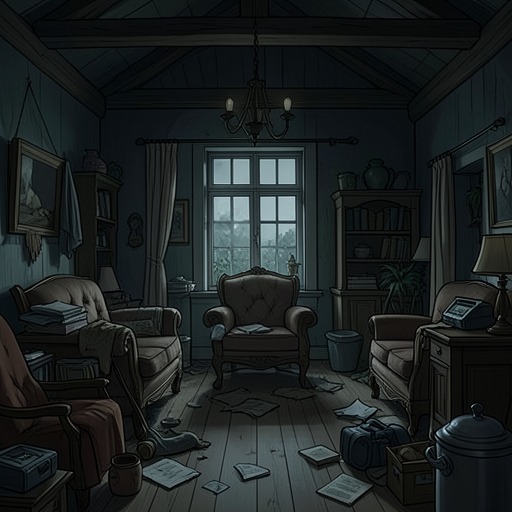
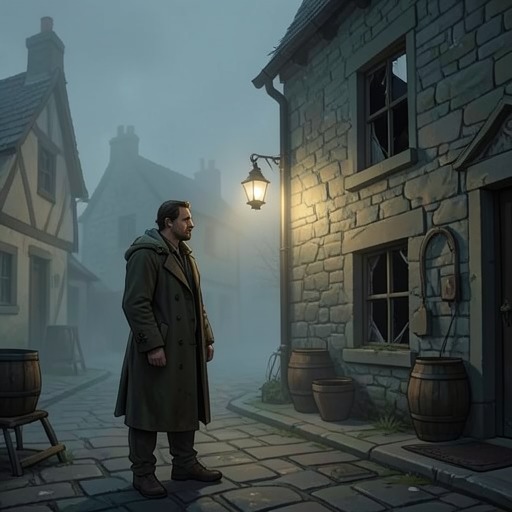
CurtainStyles as a place where misery and violence recur is more than a backdrop: it is the house where Arthur Hastings first encountered Hercule Poirot amid a murder, and where a later return brings old grief, present unhappiness, and the possibility of another crime into uneasy alignment. Hastings’s changing memories make Styles seem at first like a lost happy home, then reveal it as a place where trouble had already taken root.
The first visit and the return
Hastings’s journey to Styles began as a visit to his old friend John Cavendish, whose recently remarried mother lived at the country house. He expected only a renewal of familiar acquaintances; instead, the visit plunged him into a mysterious murder and brought him face to face with Poirot, whom he had first met in Belgium. The house thus became the starting point of a friendship that would shape Hastings’s life and his later work alongside the detective.
When Hastings returns, the years have altered both the people and the place. Styles has been sold by the Cavendishes. John Cavendish is dead; Mary, his wife, is still alive and living in Devonshire; and Lawrence Cavendish has moved with his wife and children to South Africa. Against these absences, one continuity feels striking: Hastings is again going to Styles to meet Poirot. The return is therefore not a simple recovery of the past, but a journey into a setting whose familiar name carries changed circumstances and accumulated loss.
A house shadowed by its first murder
The possibility that Styles bears the imprint of its earlier violence is raised through Hastings’s conversation with Nurse Craven. She speaks of an atmosphere that feels wrong, and Hastings considers whether a murder committed in a particular place might leave traces perceptible years later. He does not establish that the house is literally haunted. Instead, the thought gives form to the way a known history of violence can alter how a place is experienced: the gardens and rooms are no longer neutral surroundings once they are associated with a murder.
That association becomes newly urgent when Poirot says that another murder has been arranged. For the second time, Styles is to house a crime. Poirot claims to know the murderer’s identity, though Hastings does not, and the suggestion turns the house’s past into a practical warning: if the threat is real, they must prevent it. Styles’s violent history is not merely a memory or an uneasy impression; in the present investigation it appears poised to repeat itself.
Unhappiness beneath the remembered past
Hastings’s return also exposes the gap between nostalgia and what the past was actually like. When asked whether Styles had once been a happy house, he begins to recognize that his regret attaches to the past as an idea, not to the lived reality. He remembers John Cavendish and Mary as unhappy and chafing at their constrained life, Lawrence as sunk in melancholy, and Cynthia as bright yet diminished by her dependent position. Inglethorp, too, had married a wealthy woman for her money. Hastings concludes that there had been no happiness at Styles then, and sees no happiness there now.
This recognition changes the meaning of the house’s recurrence. The return does not contrast a happy past with a troubled present; both periods contain dissatisfaction, while the later visit is further burdened by deaths, separation, and the expectation of violence. Hastings directly tells Elizabeth Cole that Styles was never a happy house and is not one now. His correction of his own sentiment turns the house into a place where the attractive simplicity of memory gives way to a more difficult continuity of unhappiness.
Repeated confinement and renewed violence
Elizabeth Cole’s disclosure adds another history of suffering to Styles’s wider pattern. She identifies herself by her real name, Margaret Litchfield, and recalls her father, Matthew Litchfield, as an invalid and a tyrant who forbade his daughters an ordinary social life and kept them short of money. She describes their life under his rule as imprisonment. Her account does not make the earlier murder and the later threatened crime identical, but it connects the recurring violence at Styles to a broader history of lives constrained by domestic authority and misery.
The prospect of repetition sharpens when Hastings reconsiders the shooting of Mrs Luttrell. He reasons that Colonel Luttrell may not have been the person who shot her: another shooter, X, could have fired at the same instant that the colonel fired at a rabbit, so that only one report was heard or a slight difference was mistaken for an echo. The hypothesis is framed as a difficult inference, not as a settled conclusion. Yet it extends the house’s atmosphere of uncertainty beyond memory and premonition: even an event Hastings witnessed may have concealed another act within the apparent single shot.
Narrative significance
Styles gathers separate periods and kinds of evidence into one charged setting. Hastings’s first visit marks the beginning of his friendship with Poirot and his involvement in murder investigations; the return confronts him with the loss of old acquaintances, an earlier murder’s lingering reputation, and the announced danger of a new crime. Meanwhile, his corrected recollection of the Cavendish household and Elizabeth Cole’s account of the Litchfield family prevent the past from becoming an uncomplicated idyll.
The house’s recurrence thus works through both plot and memory. Its earlier murder gives later unease a concrete history, while the characters’ accounts reveal that misery at Styles predates and exceeds any single crime. Hastings’s sense of repetition is not proof that a building itself causes violence; it is the narrative pattern by which old harm, present unhappiness, and renewed suspicion meet again in the same place.