The idea of “useless lives”
CurtainThe idea of “useless lives” is a belief that a life judged burdensome may be better ended, and in the novel it becomes a means by which Stephen Norton manipulates others toward lethal acts. Norton does not simply persuade by stating the belief: he finds where it touches another person’s convictions and desires, then disguises provocation as skepticism. The resulting contrast between a supposedly impersonal moral principle and its concealed personal uses gives the idea its dangerous force.
A belief turned into a dare
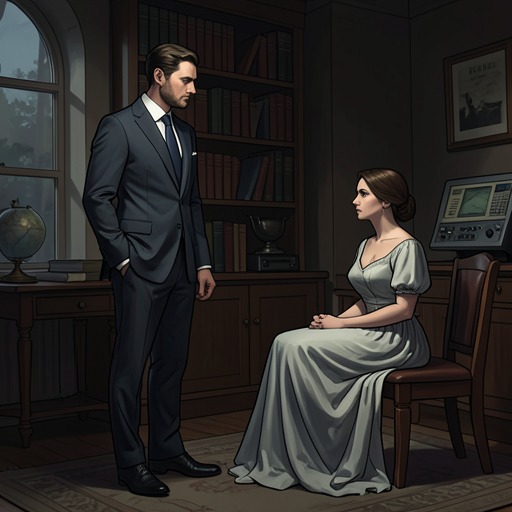
Judith Hastings already treats the idea as an article of faith. Norton recognizes that her secret desires accord with it, even as she refuses to acknowledge that connection to herself. Rather than openly urging her to act, he takes the opposing position and gently mocks the prospect that she would have the nerve to do anything decisive. His challenge works because it presents action as proof of resolve: a person who regards certain lives as useless is invited to demonstrate that the conviction is more than talk.
The tactic exposes a gap between principle and motive. Judith’s belief is not presented as a detached argument; Norton knows that private desire makes it useful to him. At the same time, he ensures that the personal element stays out of the open. The proposed removal of Barbara Franklin is framed as clearing a path for John Franklin and Judith, but that consequence is never openly admitted as the reason. Norton understands that if Judith recognized the personal angle, she would react violently. The idea’s apparent moral neutrality therefore serves as cover for a desire it cannot safely name.
The Franklin case and the appearance of research
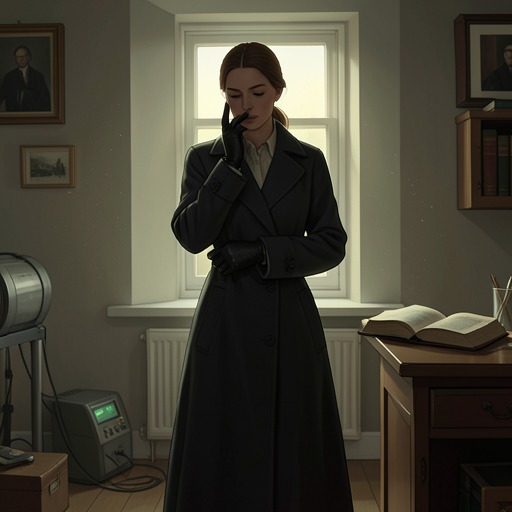
Barbara Franklin’s conduct gives the idea another, more calculated application. Her early remarks about how fond she is of her husband, and her references to “ending it all” because she is a drag on him, prepare those around her to interpret his death through the language of burden and self-sacrifice. She then introduces a new concern: that John Franklin might experiment on himself. This prepares an ostensibly scientific explanation for his death from physostigmine poisoning. The proposed account is that he took an alkaloid harmlessly and discovered too late that it was harmful—not that anyone deliberately poisoned him.
The scheme depends on making a possible murder resemble the unintended consequence of research. That distinction matters: the language of uselessness can make death seem compassionate, while the scientific explanation can make it seem accidental. Norton recognizes Barbara as a ready instrument, but the account also establishes the personal future she imagines: if John were to die, she could become Lady Boyd Carrington. Her professed concern about burden and her hopes for a different life coexist, exposing how readily a moral explanation can conceal self-interest.
A reversal in the ordeal
The Calabar bean episode gives the theme its sharpest reversal. When Barbara stages the scene in her room, she makes coffee with conspicuous fuss; her own cup is beside her, while her husband’s is placed on the other side of the bookcase table. The narrator recalls being left alone with a crossword puzzle and memories after the others go outside to watch shooting stars, then turning the bookcase to look for a Shakespeare quotation. The arrangement and the moment of privacy belong to the explanation of how the plan was set in motion, not to an abstract debate about whether some lives deserve to end.
In retrospect, Hercule Poirot says the Calabar bean spared the innocent and slew the guilty. The outcome overturns the moral sorting on which the “useless lives” argument depends: a claim that purports to authorize the death of someone else instead rebounds upon the person who set the danger in motion. Across Judith’s susceptibility, Barbara’s staged explanation, and the bean’s unexpected result, the idea is shown less as a stable ethical principle than as an adaptable instrument—one that can disguise a dare, a private ambition, or an intended killing.