Killing in the name of mercy or social utility
CurtainKilling in the name of mercy or social utility is the belief that ending a life can be justified as an act of love, compassion, or public benefit. The novel gives the belief force through Judith Hastings’s passionate defense of a woman who killed an abusive father, then develops it into a broader claim that people should assume responsibility for ending lives judged painful, unfit, or useless. Against that certainty, the evidence surrounding Barbara Franklin’s death remains medically and legally qualified: witnesses describe her illness differently, and the jury ultimately returns a suicide verdict rather than finding that another person killed her.
The precedent of Margaret Litchfield
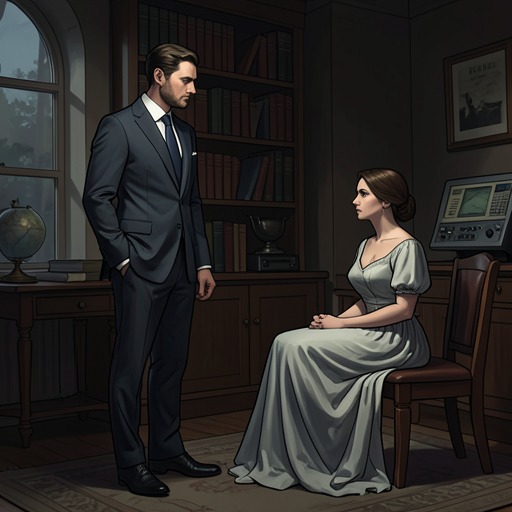
Judith’s argument first emerges in a conversation with Arthur Hastings. Speaking with unusual intensity, she recalls a case involving Margaret Litchfield, the eldest daughter of a wealthy father who kept his daughters isolated and deprived them of ordinary freedom. Judith describes the father as abusive and says Margaret acted to free the people she loved. When Arthur points out that Margaret murdered her father, Judith does not deny the act; she disputes the moral label’s sufficiency as an account of what happened.
Margaret, Judith says, went directly to the police and gave herself up. Her willingness to accept the consequences becomes part of Judith’s admiration: she regards both the act itself and the surrender afterward as requiring courage. Asked whether she means courage to confess or to commit murder, Judith answers that she means both. The example therefore does not present mercy as an escape from accountability. Judith’s praise rests on her belief that Margaret acted without personal advantage and accepted the legal consequences of her choice.
Arthur objects to treating murder as justified in particular circumstances and asks what Dr John Franklin thought of the case. Judith answers that he thought the father had deserved it, then presses the principle further: some people, she says, practically invite their own murder. Arthur hears this not as a detached judgment about a past case but as an alarming position his daughter may be applying more generally. When he asks who has put the idea into her head, she denies that anyone has.
From mercy to a claimed duty
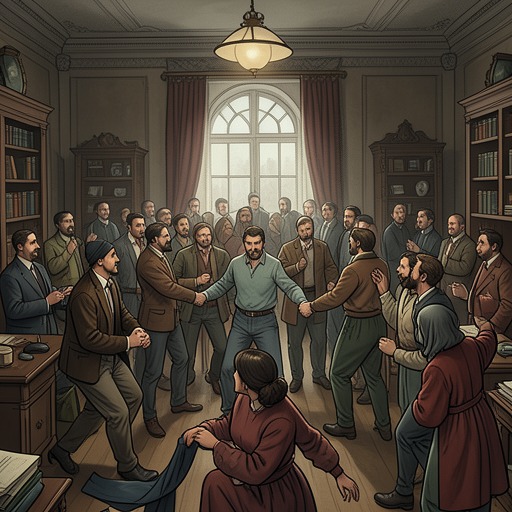
The argument becomes explicit in a conversation about euthanasia among Judith, Arthur, Sir William Boyd Carrington, and Stephen Norton. Sir William does most of the talking, Norton contributes occasionally, and Judith listens closely. Arthur admits that although the case for euthanasia can appear persuasive, he feels a sentimental resistance to it. He also worries that allowing relatives to decide could place too much power in their hands.
Judith rejects the assumption that a sick person must make the decision. Someone who is weak, ill, or in pain, she argues, may lack the strength to decide; a person who loves them must decide instead. In her account, this is not merely permission but a duty. Sir William raises the risk of ending up charged with murder, but Judith answers that love may require taking that risk. Norton identifies the burden of responsibility in her proposal; Judith replies that people already accept responsibility for animals and asks why they should not do so for human beings.
The exchange exposes a conflict between care and authority. Judith presents intervention as selfless love, while Arthur’s concern points to the danger of giving relatives power over another person’s life. Her argument assumes that an observer can recognize when someone else’s life should end and can act with a sufficiently pure motive. The conversation does not resolve who could verify that motive or protect the vulnerable person from a mistaken judgment.
Social utility and the limits of impersonal motive
Judith insists that a personal motive would disqualify someone from making such a decision. The act, she says, must be absolutely impersonal and selfless; only certainty about one’s motive could warrant taking responsibility for ending a life. But her proposed test of worth extends beyond relieving suffering. She says she does not regard life as sacred in the way others do and argues that unfit or useless people should be removed, while only those able to contribute decently to the community should be allowed to live.
Sir William agrees in principle that only the worthwhile should survive. That assent gives Judith’s argument a public and social dimension: it is no longer limited to a loved one’s suffering or the exceptional case of Margaret Litchfield, but involves classifying people by their usefulness. The apparent impersonality of the rule does not make it neutral. It depends on someone deciding which lives count as contributions and which do not. Judith presents that judgment as a brave acceptance of responsibility; the disagreement with Arthur and Norton makes visible the peril of turning a private conviction into authority over another person.
Illness, interpretation, and Barbara Franklin
The novel places these claims alongside competing descriptions of Barbara Franklin’s condition. Earlier, Nurse Craven suggests that Barbara may use her poor health to get her way, characterizing her as someone who can appear pathetic or suffer a nervous episode when opposed. At the inquest, however, the witnesses provide more complicated accounts. Dr John Franklin describes a prolonged low and nervous state, depression, and rapidly alternating moods, but says Barbara had recently seemed improved. He reports that she had spoken occasionally of ending her life, though he did not take the remarks seriously and did not believe she was suicidal.
Nurse Craven, who had cared for Barbara for more than two months, says she heard her speak at least three times about wanting to end it all and feeling that her life was useless and that she burdened her husband. Craven connects those statements to Barbara’s awareness that her husband had declined an appointment abroad rather than leave her. When asked whether Barbara was likely to take her own life, Craven hesitates before answering that, on the whole, she was, because she was very unbalanced. The evidence makes the same words and symptoms available to different interpretations: a passing expression of despair, an indicator of suicidal intent, or part of a fluctuating illness.
Sir William offers another perspective. He says Barbara had mentioned suicide in an earlier conversation, but that she was devoted to her husband, ambitious for him, and distressed by the belief that her health obstructed his career. On the night of her death, when they played picquet, he noticed no sign of depression. His testimony therefore supports both the seriousness of her concern about burdening her husband and the difficulty of inferring her immediate state from that motive alone.
The verdict and the question of responsibility
The inquest establishes that Barbara died from physostigmine sulphate poisoning, but leaves the manner of death to be decided. The coroner tells the jury to consider whether she took the poison accidentally, deliberately, or whether another person administered it. The laboratory evidence shows that a bottle intended to contain a strong Calabar-bean alkaloid solution had been refilled with water containing only a trace of its original contents. Dr John Franklin cannot say when that occurred. The laboratory was usually locked, he generally carried its key, Judith had a duplicate as his assistant, and Barbara had sometimes borrowed access when her belongings were there.
Hercule Poirot’s testimony that he saw Barbara leaving the laboratory with a small bottle becomes important to the coroner’s summing-up. The coroner also draws attention to her poor health, episodes of melancholy, and belief that she impeded her husband’s career, while acknowledging that her husband had been kind and had not complained that she hindered him. The bottle that had originally contained the poison was not found. Nurse Craven’s suggestion that Barbara might have washed it and put it away is presented as a possibility, not an established fact.
After a short deliberation, the jury finds that Barbara took her own life while temporarily of unsound mind. That verdict does not prove every uncertainty about the poison’s route or the missing bottle; it records the jury’s conclusion from the evidence presented. Set beside Judith’s confidence that a person may have a duty to end another’s suffering, the inquest demonstrates how difficult it is to distinguish compassionate intervention from an imposed judgment, and despair from a settled intention. The novel’s tension comes not from a general endorsement of killing as mercy or utility, but from the gap between the moral certainty of those who would decide for another and the imperfect evidence by which illness, motive, and responsibility are judged.