Nostalgia and an idealized past
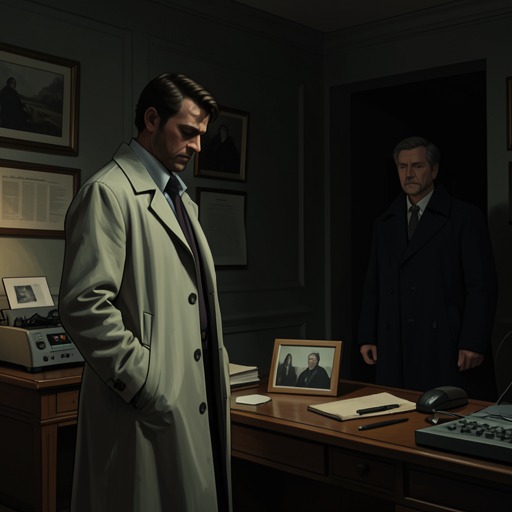
CurtainNostalgia and an idealized past shape Arthur Hastings’s return to Styles in Curtain, but the novel ultimately treats cherished memory as an emotional reconstruction rather than a reliable account of former happiness. The familiar journey awakens longing for an earlier life; returning to the same place, however, brings back not only old affection but the wounds, frustrations, and unhappiness that nostalgia had pushed from view. Through Hercule Poirot’s challenge and Hastings’s later reconsideration, the past becomes less a refuge than a pattern that must be examined honestly.
The return and the pull of memory
On the train across the flat Essex landscape, Hastings wonders at the startling force of feeling that an experience has happened before. The journey recalls his first arrival at Styles in 1916, when, young and wounded, he had believed that the best of his life was already over. Looking back from a later war, he can recognize the error in that judgment: life had only been beginning. Yet the return still carries a wish to recover the earlier self and the emotions attached to that time. The movement of the scene is double: the train brings him toward the old house, while memory carries him back toward the person he was when he first travelled there.
The years have changed the people and the place. Styles has been sold by the Cavendishes; John Cavendish is dead, Mary lives in Devonshire, and Lawrence has made his home in South Africa with his wife and children. Hastings’s own wife has died in Argentina, leaving him lonely and unhappy. Amid these losses and departures, one continuity seems almost miraculous: he is returning to meet Poirot. The familiar destination is thus burdened with absences. It can promise reunion with an old friend, but it cannot restore the vanished household or undo the changes that have made Hastings’s return an encounter with bereavement as much as remembrance.
Poirot disputes the happy-days story
Hastings voices a common logic of nostalgia: as people grow older, he says, they return in thought to earlier days and try to recapture old emotions. Being at Styles is painful, yet it restores a hundred thoughts and feelings he had forgotten. He assumes Poirot must share this response. Poirot refuses the assumption, insisting that his own first arrival at Styles St Mary was a sad and painful time. He had been a refugee, wounded and exiled from home and country, living by charity in a foreign land. England became his home, and he eventually found happiness there, but that later happiness does not make the beginning cheerful in retrospect.
Poirot’s disagreement is more than a difference in temperament: he points out that Hastings has mistaken his own feelings for everyone else’s. In Hastings’s version, the past becomes a scene of general happiness simply because he feels moved by it now. Poirot then challenges the memory of Hastings’s own youth. The young man had been severely wounded, frustrated at being unfit for active service, and deeply depressed by a dreary convalescent home. He had also complicated his emotional life by falling in love with two women at once. Hastings laughs and flushes at the recollection, an immediate sign that the past he had idealized includes awkwardness and distress as well as youthful feeling. Memory preserves the glow but can leave out the circumstances that produced it.
Styles as a test of idealization
The contrast between remembered and present-day Styles sharpens when Elizabeth Cole describes guest houses occupied by people she sees as failures: people defeated by life, old, tired, and finished. Hastings feels the sadness of the room spread through him. He sees a collection of diminished lives: his own loneliness, Cole’s bitterness, John Franklin’s thwarted ambitions, Barbara Franklin’s ill health, Stephen Norton’s quiet bird-watching, and Poirot’s physical decline. The scene gives nostalgia a social as well as personal dimension. Against the worn present, the earlier Styles seems to offer youth and possibility; at the same time, the present’s sadness makes the temptation to idealize the former house especially strong.
Cole’s bleak judgment prompts Hastings to think of how different the place had been when he first came there. But the thought does not settle into a simple contrast between a happy past and an unhappy present. His memories shift and rearrange, and then, as he puts it, settle into their true pattern. He recalls John and Mary as unhappy and constrained, Lawrence sunk in melancholy, and Cynthia’s girlish brightness dampened by her dependent position. Inglethorp, too, had married a wealthy woman for her money. The recollected household was not a community of uncomplicated happiness. Its members were already frustrated, melancholy, dependent, or bound by motives that complicate the picture Hastings’s nostalgia had supplied.
Recognition and narrative significance
Hastings states the result plainly: he has been indulging in false sentiment; Styles was never a happy house, and its inhabitants are unhappy now as well. That admission does not erase the value of what the past meant to him. It distinguishes the emotional force of remembered experience from the claim that the remembered world was objectively joyful. His attachment to the old days is real, but the feelings stirred by return had encouraged him to overlook the troubles that belonged to them.
The novel makes that correction through a sequence of return, disagreement, and reconsideration rather than through memory alone. At first, the old journey seems to offer access to a recoverable past; Poirot’s account supplies a perspective Hastings has neglected; the later conversation at Styles turns recollection into a more searching inventory of particular people and conditions. The result is neither simple rejection of nostalgia nor endorsement of it. Longing reveals how much the past still matters to Hastings, while self-correction prevents that longing from becoming a false account of the people who lived through it. Styles remains emotionally powerful precisely because it is not the happy house he had briefly wanted it to be.