The Calabar bean ordeal
CurtainThe Calabar bean ordeal is presented as a supposed physical test of guilt or innocence, but Dr John Franklin’s account undermines the belief that it can deliver a simple verdict. The beans’ different effects, and the difference between a person’s moral convictions and the judgment of others, turn the ordeal into a compact expression of the novel’s broader uncertainty about guilt, evidence and justice.
The supposed test
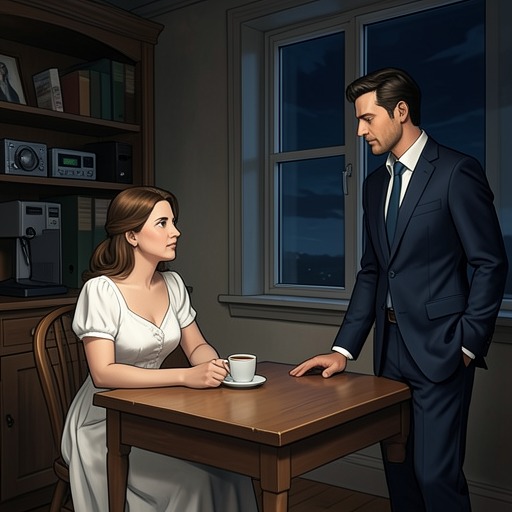
Franklin introduces the ordeal while explaining his research on alkaloids derived from the Calabar bean. As Arthur Hastings understands it, some West African tribes believed that a person who chewed the bean would die if guilty but survive if innocent. Franklin immediately qualifies this account: not everyone died, and the practice’s apparent reliability had overlooked an important difference between two species that looked so much alike they could scarcely be distinguished.
Franklin describes the active substances in both species, including physostigmine and geneserine. In the second species, he believes he can isolate another alkaloid whose action neutralizes the effects of the others. He connects that species with a secret ritual in which an inner circle regularly eats it, and with the observation that those participants do not contract Jordanitis. The additional substance also affects the muscular system without the harmful effects of the other alkaloids. Franklin calls the research interesting, but emphasizes that the pure alkaloid is unstable and that substantially more investigation in the field is needed.
Franklin’s challenge to moral certainty
The ordeal interests Hercule Poirot because a dependable test of guilt and innocence would seem to answer a question at the heart of detective work. Poirot remarks that such a substance would make his profession easier. Franklin’s response shifts the discussion from chemistry to ethics: even if the bean could identify a person’s inner feeling, that feeling would not provide an objective measure of right and wrong.
Franklin argues that ideas of good and evil change across centuries. A person may believe that killing a dictator, a moneylender or a pimp is morally justified, while other people regard the act as criminal. In that case, the ordeal would not settle guilt; at most, it would register the accused person’s own sense of innocence or guilt. Hastings initially objects that the distinction is difficult to understand, but Franklin’s example makes the problem plain: the test cannot adjudicate between conflicting moral standards merely by producing a physical reaction.
A recurring problem of evidence
The conversation gives the bean ordeal a significance beyond Franklin’s laboratory. Across the novel, the appearance of evidence does not guarantee that its interpretation is correct. In the earlier Leonard Etherington poisoning case, the evidence against Mrs Etherington was circumstantial; she was acquitted, yet public opinion continued to regard her as guilty, and her life afterward became difficult. The distance between a legal verdict and social judgment echoes Franklin’s distinction between an official or outward test and moral certainty.
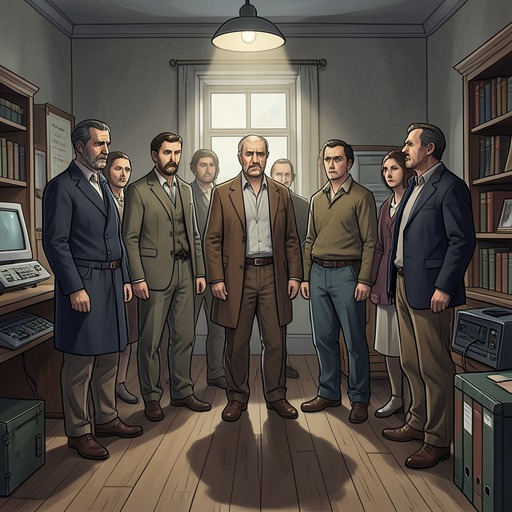
The same tension becomes immediate at the inquest into Barbara Franklin’s death. The medical evidence identifies physostigmine sulphate as the poison, but the coroner leaves open whether Barbara took it by accident, intentionally, or whether someone administered it. Hercule Poirot testifies that he saw her leaving the laboratory with a small bottle and appearing startled. The jury returns a verdict that she took her own life while temporarily of unsound mind. A witness’s observation, medical evidence and the verdict combine to produce an official explanation, but they do not make the question of guilt as simple as the ordeal’s supposed rule.
The verdict and the concealed truth
The novel repeatedly sets formal conclusions against doubt. After Barbara’s inquest, a local voice at Styles questions the suicide verdict and speculates that her husband might have been responsible. The suspicion does not itself establish what happened, but it shows how quickly a settled finding can be reopened in public conversation. In the case of Stephen Norton, the inquest likewise records suicide despite a surgeon’s observation that it was unusual for a man to shoot himself in the exact centre of his forehead. The locked door, the key in Norton’s pocket and the pistol in his hand make the death appear conclusive, while the evidence has been deliberately arranged to support a false account.
Poirot’s final explanation reveals the limits of treating objects and appearances as verdicts. He discloses that he killed Norton and used duplicate keys to make the room seem locked from the inside; he also explains that he fired the fatal shot into the centre of Norton’s forehead. The apparent proof of suicide was not a reliable test of what had occurred. Read beside Franklin’s discussion, the ordeal’s promise of a visible, decisive sign becomes an ironic contrast: neither a physical reaction nor a convincing arrangement of evidence can by itself resolve the moral and factual questions behind a crime.