Liseiwicz chess
DecodedLiseiwicz chess is a complex strategy game devised by Jan Liseiwicz and Rong Jinzhen, first known as mathematical chess. It grew from their friendship and their wish to create a contest decided by intelligence rather than by one player’s greater command of established chess variations. The game’s unusual structure makes a player contend not only with an opponent but also with the consequences of arrangements made against them; its later renaming brought Liseiwicz recognition while largely erasing Rong Jinzhen’s part in its creation.
Origins and Purpose
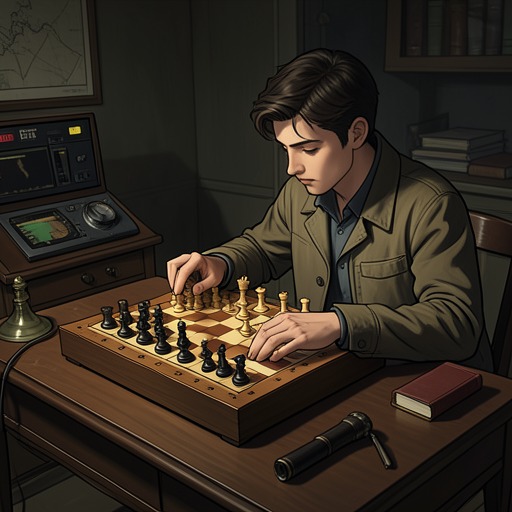
Playing chess together carried Jan Liseiwicz and Rong Jinzhen beyond an ordinary teacher–pupil relationship. They became close friends, went walking and ate together, and Rong Jinzhen spent much less time at home than before. At first, his family assumed that the pair were simply continuing to play chess. They were actually developing a new game.
The project answered a difficulty in their original games: Jan Liseiwicz was so strong a chess player that Rong Jinzhen felt he had no hope of beating him. The imbalance left Rong Jinzhen depressed and reluctant to play. Their alternative was meant to put them on equal footing, without either player relying on mastery of established variations. They wanted a game in which victory would depend on intelligence.
The two contributed different parts of the design. Rong Jinzhen said he was mainly responsible for the board, while Jan Liseiwicz worked out how the pieces could move. Rong Jinzhen estimated his own contribution at about ten per cent. That estimate is his own, not a measure established by the narrator; the later account nevertheless makes clear that the board and game were jointly developed.
Board and Rules
The board was roughly the size of a desktop. It contained two encampments: one shaped like a hash sign and the other like a Coptic cross. Players used mahjong tiles rather than chess pieces, and four routes crossed the board. Each player controlled two routes extending from the encampment on their side.
The two starting positions worked differently. Pieces in the hash-shaped encampment began in a fixed arrangement, somewhat like the starting positions in elephant chess. Pieces in the Coptic-cross encampment could begin in any arrangement, but the opponent chose that arrangement. The chooser placed the opposing pieces according to a plan of their own; once play began, however, the player whose pieces they were took control of them. An early task was therefore to move pieces out of positions favorable to the opponent and into positions useful to oneself.
Movement rules also depended on where a piece stood. In the hash-shaped encampment, pieces could not move diagonally or jump over other pieces. Both kinds of move were allowed in the Coptic-cross encampment. Pieces could travel between the encampments, but moving one into the opposing camp under the specified simultaneous conditions demanded strict preparation. Advancing along one’s own routes, improving the position of pieces arranged by the opponent, and preparing a crossing all had to be considered together.
That arrangement made play difficult in a distinctive way: a player planned with pieces initially organized for someone else’s advantage, then had to turn them toward their own purposes. The game was not simply a contest between two opponents. Each player also had to manage the internal conflict produced by the opposing player’s setup and their own emerging plan. The narrator describes it as one game that was also three: each player’s struggle with their own position, alongside the match between them.
Mathematical Ambition and Reception
Jan Liseiwicz regarded the game as the outcome of substantial work in pure mathematics. Its intricacy lay not just in the number of rules but in how a player’s choices transformed the structure of the position. He presented its invention as a challenge to the limits of human intelligence, an ambition that made the game more than a decorative variation on chess.
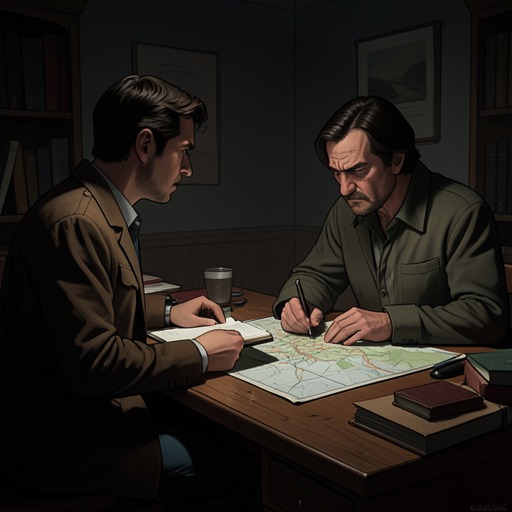
Its complexity also limited who could play. Jan Liseiwicz said it was designed for mathematicians, and the narrator found the rules and play strange and difficult. The military encampments, opposing routes, and problem of taking command of pieces arranged by another person give the contest the logic of a battle as well as a board game. Its strategic demand is to plan one’s own advances while anticipating how the pieces and routes may be turned against one’s plan.
The game later circulated among mathematicians in Europe and America, where many people played it. Its theoretical importance was sometimes compared with von Neumann’s theory of chess as a two-person zero-sum game. The comparison assigned different fields of significance to the two: von Neumann’s theory was associated particularly with economic theory, while Liseiwicz chess was associated with military strategy. The practical applications of both remained un demonstrated, according to the narrator’s account; their theoretical importance, by contrast, was considered considerable.
Credit and Legacy
The change in name changed how the collaboration was remembered. The game was no longer generally called mathematical chess but Liseiwicz chess, after Jan Liseiwicz. The narrator says that once it bore Liseiwicz’s name, there was little chance that Rong Jinzhen’s role would be recognized: Rong had been written out of the account, while Jan Liseiwicz received the credit.
That judgment sits beside the narrator’s account of their affection. Jan Liseiwicz had become convinced that Rong Jinzhen was a rare mathematical genius, and the narrator describes his care for the younger man as sincere. The unfairness therefore does not cancel the friendship or the value of the game they made together; it marks a separation between their private collaboration and its public attribution. Jan Liseiwicz, the youngest recipient of the Fields Medal, was regarded as an ornament to mathematics, but after coming to China he produced no other original research of comparable importance, in the narrator’s assessment. Liseiwicz chess was the late-career achievement for which he remained known, even as the story of its making retained Rong Jinzhen’s essential, if under-recognized, share.