Luck from Beyond the Stars
DecodedLuck from Beyond the Stars is the elusive advantage that the people of Unit 701 believe can decide whether a cryptographer succeeds: it must accompany training, experience, and genius, yet seems to arrive from beyond anyone’s control. Rong Jinzhen’s decryption of the PURPLE cipher makes this idea vivid and unsettling. His colleagues first mistake solitude and apparent indifference for incapacity; when he succeeds, the result looks at once like extraordinary talent and inexplicable good fortune.
A Luck No One Can Command
The idea arises from the particular hazards of decryption. Rong Jinzhen’s work is lonely and difficult, and technical preparation alone cannot guarantee that a cipher will yield. The people of Unit 701 speak as if luck might be caught, but their imagined method is deliberately impossible to turn into a reliable procedure: raise one’s hands at exactly the same time, morning and evening, as black smoke curls from one’s ancestors’ tombs. The image gives luck a ritual shape while making its timing—and its source—unmanageable.
That image also holds two attitudes together. The cryptographers treat luck as a practical necessity, something one must hope to encounter, but the ancestral smoke belongs to an uncanny, almost folkloric register. The book does not establish that any ritual causes success. Instead, the grand, remote image measures the limits of professional confidence: even a difficult discipline built from training and experience can depend on a turn that no method can summon at will.
Misjudged Talent
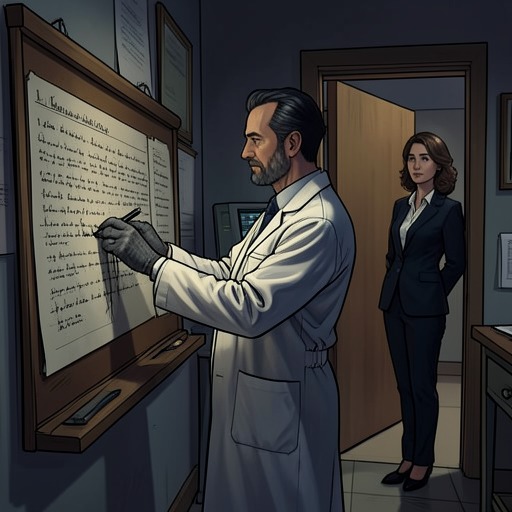
When Rong Jinzhen arrives, his colleagues do not recognize the future significance of his work. He spends his days reading books that appear unrelated to cryptography, including an English-language copy of the Complete Book of Mathematical Puzzles and worn, threadbound volumes whose titles cannot be made out. He says little, keeps to himself, and gives those around him no obvious display of creative power. The narrator distinguishes his solitude from arrogance, but that distinction does not prevent his colleagues from doubting his abilities or his interest in the job.
The absence of visible signs becomes, in their eyes, evidence of absence. They suspect that Rong Jinzhen lacks both the intelligence required for the work and the luck that might compensate for it. A deputy division chief voices this contempt in the ugly-toad comparison: he treats Rong Jinzhen as someone who has no prospect of attaining what he desires. The rebuke is not presented as one man’s isolated mistake; at the time, the whole cryptography unit thinks the deputy has judged correctly. Their certainty makes the later reversal more severe. As the narrator recalls, they should have remembered that a person’s capacity cannot be measured by appearances alone.
The PURPLE Reversal
In the winter of 1957, after just over a year at Unit 701, Rong Jinzhen decrypts the PURPLE cipher. The news overturns the colleagues’ settled estimate of him: the person they had treated as an unpromising, inattentive worker has accomplished the task they were avoiding. The narrator presents the change in compressed, emphatic beats—the year of work, then the decryption—so that the achievement lands as both fact and reversal. What had looked like wasted time becomes, in retrospect, an interval whose meaning his observers could not read.
The result seems almost effortless to those watching, and that appearance intensifies their amazement, jealousy, and excitement. The book refuses to settle on one explanation. Some people say Rong Jinzhen decrypted PURPLE in his sleep, or through interpreting another person’s dream; others connect his inspiration to chess games with the lunatic or to reading a novel. These remain competing accounts, not confirmed causes. Their accumulation makes the achievement seem to exceed ordinary explanation without proving that it came from a supernatural source.
Luck, Hindsight, and the Cost of a Wrong Path
The narrator links Rong Jinzhen’s success to both genius and luck, but does not reduce one to the other. Before the decryption, the narrator could not tell whether Rong Jinzhen was a genius or a lunatic, and was prepared for either astonishing achievement or tragedy. His eventual success brings relief as well as awe: the narrator describes being so impressed that he felt like kneeling and kowtowing. Luck here is not a casual bonus; it names the suspense surrounding an ability whose outcome no one can safely predict.
Hindsight reveals a further contingency. After Rong Jinzhen cracks PURPLE, the team discovers that Jan Liseiwicz’s suggestions about how to decrypt it were entirely wrong. The team had kept Rong Jinzhen from seeing the letters, and the narrator concludes that this protected his work: had he followed the faulty advice, he might have taken the wrong path and failed. The withholding initially seemed unfair, but its unintended benefit becomes legible only after the result. The book does not claim that luck alone produced the decryption; it shows how success also depended on a circumstance the people involved did not understand at the time.
The idea therefore carries an irony. Unit 701’s members invoke luck to explain why ability may not be enough, yet they initially fail to recognize ability when it appears in an unfamiliar form. They read Rong Jinzhen’s books, silence, and apparent lack of interest as signs against him, then discover that their judgment was as unreliable as any prediction of fortune. Luck from Beyond the Stars names the unpredictable remainder in cryptographic work, but the episode also exposes how easily observers mistake the limits of their own understanding for the limits of another person’s potential.